
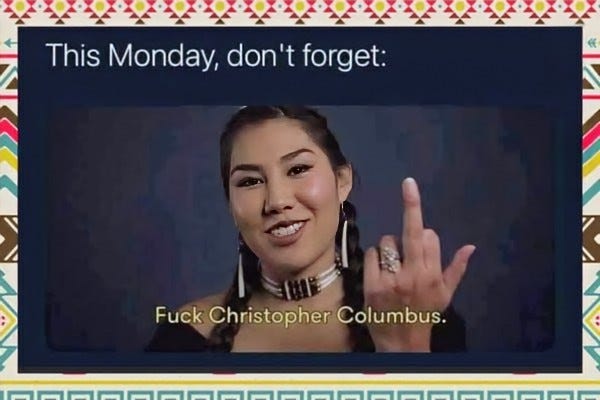
Growing up, Indigenous Peoples’ Day wasn’t a thing.
Now it seems like I’m drowning in them.
Did you know there’s been an Indigenous history month (Native American and Alaskan Native Heritage Month) in the United States since Republican President George H. W. Bush and Congress declared it in 1990?
The entire month of November is supposed to be dedicated to “celebrating the history, culture, and achievements” of Indigenous Americans and Alaska Natives and as a time to “educate the public about the traditions and contributions” of Indigenous American communities to the United States and the world.
But most Americans—and ad agencies—are either unaware or uninterested.
Black History Month and Pride may have been over commercialized, but the ads and corporate pandering still makes people aware of the intended celebration.
Auntie Mavis’ Musings is reader-supported. To receive new posts & support my work, consider becoming a free or paid subscriber.
History of Indigenous People’s Day(s)
An early precursor to Indigenous Peoples’ Day in the United States was American Indian Day, which was observed in New York, just once, in May of 1916 thanks to the efforts of one man.
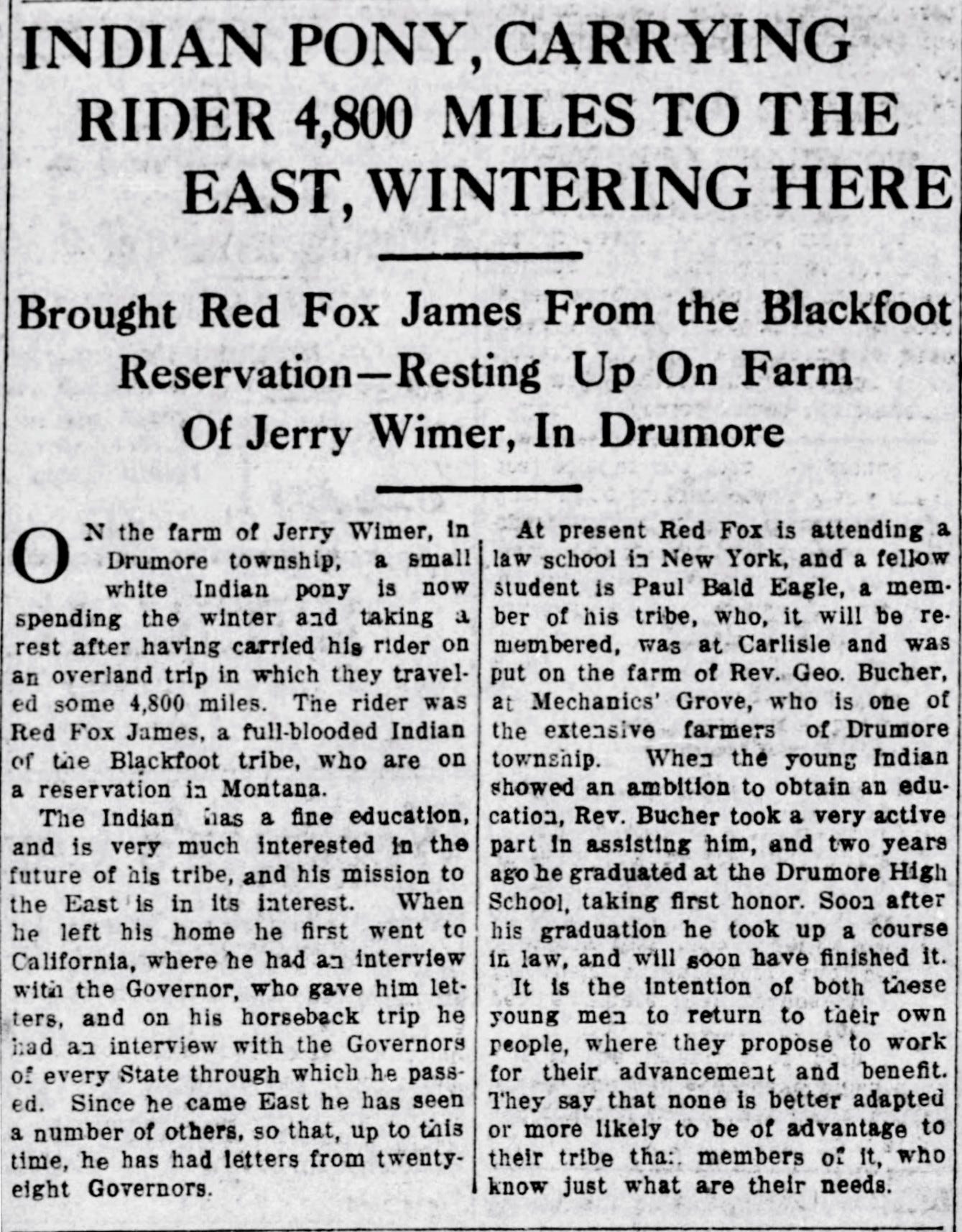
Beginning in 1914, Red Fox Skiuhushu a.k.a. Red Fox James (Blackfeet Nation) rode across the United States on horseback—from Montana to California to the east coast—seeking approval from 24 state governments to designate a day to honor American Indians.
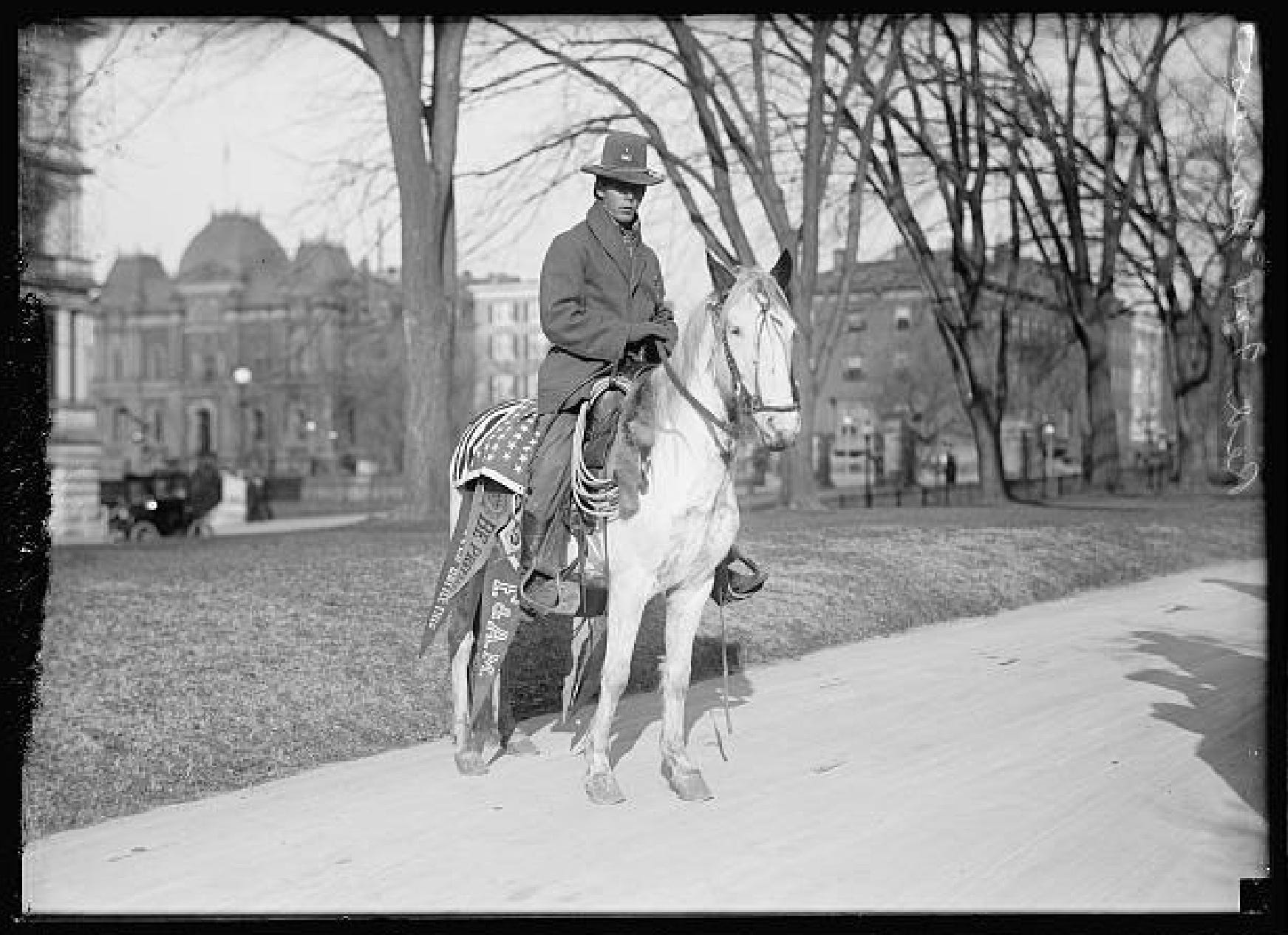
In December 1915, James presented his signed endorsements from half the state governments to the White House. The celebration was held in New York the following year.
In 1977, the International World Conference on Discrimination Against Indigenous Populations in the Americas, sponsored by the UN in Geneva, Switzerland, began to discuss replacing Columbus Day in the Americas with a celebration to be known as Indigenous Peoples’ Day.
The bill which lead to Native American heritage month—honoring the peoples Indigenous to the continental United States and Alaska (the Kānaka Maoli of Hawaiʻi are celebrated in May)—began in 1976 when NASA physicist Jerry C. Elliott-High Eagle (Tsalagi/Wahzházhi, a.k.a. Cherokee/Osage) authored Native American Awareness Week legislation. His bill was passed by Congress and signed by Republican President Gerald Ford for a one time observation during the United States bicentennial year.
In 1986, Republican President Ronald Reagan proclaimed November 23–30 would be observed as American Indian Week for another one time event.
In July 1990, at the First Continental Conference on 500 Years of Indian Resistance in Quito, Ecuador, representatives of Indigenous peoples throughout the Americas declared they would mark 1992—the 500th anniversary of the first genocidal invasion by Christopher Columbus—as a year to promote “continental unity” and “liberation” and reject any celebrations of Indigenous genocide.
That same year, South Dakota became the first state to replace Columbus Day with Native Americans’ Day.
Also in 1990, November was designated National American Indian Heritage Month by President Bush. The name has evolved over the years, but most years since 1990, the sitting President issues a proclamation.
MAGA Republican President Donald Trump, of course, has not.
The first official observance of Indigenous Peoples’ Day was in 1992 in Berkeley, California, in recognition of a protest against the 500th anniversary of Columbus’ arrival in the Caribbean.
Since then, other cities and states have ditched Columbus Day in honor of Indigenous Peoples’ Day.
In 2021, Democratic President Joe Biden became the first POTUS to officially recognize the holiday with a White House proclamation.
The United Nations (UN) observes the International Day of the World’s Indigenous Peoples on August 9 each year. The date was selected to commemorate the first meeting of the UN Working Group on Indigenous Populations in 1982.
If you're unaware of what a POS Columbus is, there are a multitude of resources on the subject. The only reason the United States has the holiday was a PR campaign to establish an Italian Catholic as a national hero during a period when both communities were under fire.
Most of the accomplishments of Columbus were embellished or outright lies to gain favor for the holiday, which didn’t get added to the federal calendar until 1937. State and local celebrations had happened sporadically since 1892 when President Benjamin Harrison recognized the 400th anniversary of Columbus’ invasion.
Meanwhile…
Thanksgiving, as taught to school children, is also complete tataŋka čheslí (🦬💩). It's also the result of a PR campaign to try to get a religious day of Thanksgiving and unity added to the federal calendar—which it was during the height of the Civil War (1863).
The first officially declared Thanksgiving celebration on American soil was in Massachusetts to celebrate slaughtering the Indigenous inhabitants of the region in a land grab that violated a longstanding treaty.
So, some Indigenous people don't celebrate Thanksgiving because of the myths and lies associated with it and it's celebration of religious zealots landing at a place that would become known as Massachusetts.
So a push was made, not by Indigenous people, for the day after Thanksgiving to be observed as Indigenous Peoples’ Day.
Part II?
The sequel?
Having all these days dilutes the meaning and purpose. It's getting out of hand.
Do I celebrate Thanksgiving?
I like a good meal as much as the next person. There's nothing inherently wrong about being thankful once a year.
Thanksgiving just needs to get rid of all the tataŋka čheslí (🦬💩) associated with it. Lose the pilgrims and Indians myth and it's a pretty great idea for a holiday.
My Thoughts On Indigenous Peoples’ Day(s)
Yeah, that Columbus holiday needs to go.
The man and the people he lead were directly responsible for an estimated 7-10 million Indigenous deaths throughout the Caribbean and coastal Central America.
He started the transatlantic slave trade and committed atrocities so egregious the Catholic Church condemned him and he was arrested for his crimes, which included killing infants to feed his dogs and gifting prepubescent girls to his men to be used as sex slaves as rewards.
It was all well documented by Columbus, his men, and church officials that traveled with him. It wasn't a matter of “a different time” with different moral standards—Columbus’ atrocities were considered atrocities when he committed them.
Columbus was never a revered figure of his time and he accomplished nothing of note—others were aware of the existence of land to the West.
If Columbus hadn't landed in the Caribbean, someone else would have eventually returned from Europe to the Americas, as the Vikings had centuries before.
Celebrating Columbus is like having a day to celebrate Adolf Hitler because of the scientific advancements achieved by the Nazis—except Columbus killed more people. If that comparison offends you, now you know how Indigenous peoples feel about Columbus Day.
But do we need another Indigenous Peoples’ Day?
Why can't we join the rest of the world and celebrate on August 9 and start observing Native American and Alaskan Native Heritage Month appropriately?
So what to do about Columbus Day?
Exploration isn't an inherently bad thing. And humanity has explored the Earth and space many times without committing genocide.
Why not Exploration Day?
But what about Italian Americans? October is Italian American Heritage Month—that's a whole month for parades and celebrations.
Then, if they want to celebrate other Italian explorers that weren't genocidal monsters on the 2nd Monday of the month…
Philámayaye, Niawen'kó:wa, Merci, Thanks for reading Auntie Mavis’ Musings! All posts are public, so feel free to share.
What Is Needed
Misplaced guilt and shame are powerful motivators, but I don’t need another day.
What I need is real action on Indigenous issues, like the ongoing cultural genocide, the challenges being mounted by Christian nationalists against the Indian Child Welfare Act (ICWA), threats to tribal sovereignty, ongoing lands claims for unceded lands and unceded treaty lands, the new White nationalist rhetoric that Native Americans don’t exist/they’re native Americans and everyone is an immigrant, all fueled by the misinformation still being fed in United States history classes.
How can you easily help achieve that?
Vote in the 2026 midterms.
Encourage everyone you know to do the same.
💛🤍🖤❤️ 💛🤍🖤❤️ 💛🤍🖤❤️ 💛🤍🖤❤️
Can’t afford to subscribe, but still want to contribute to my ability to create?
A little support goes a long way! If you’d like to help me keep creating, you can do so at KoFi.
Comments
Nothing yet. Say the first thing.
Sign in to join the conversation.