
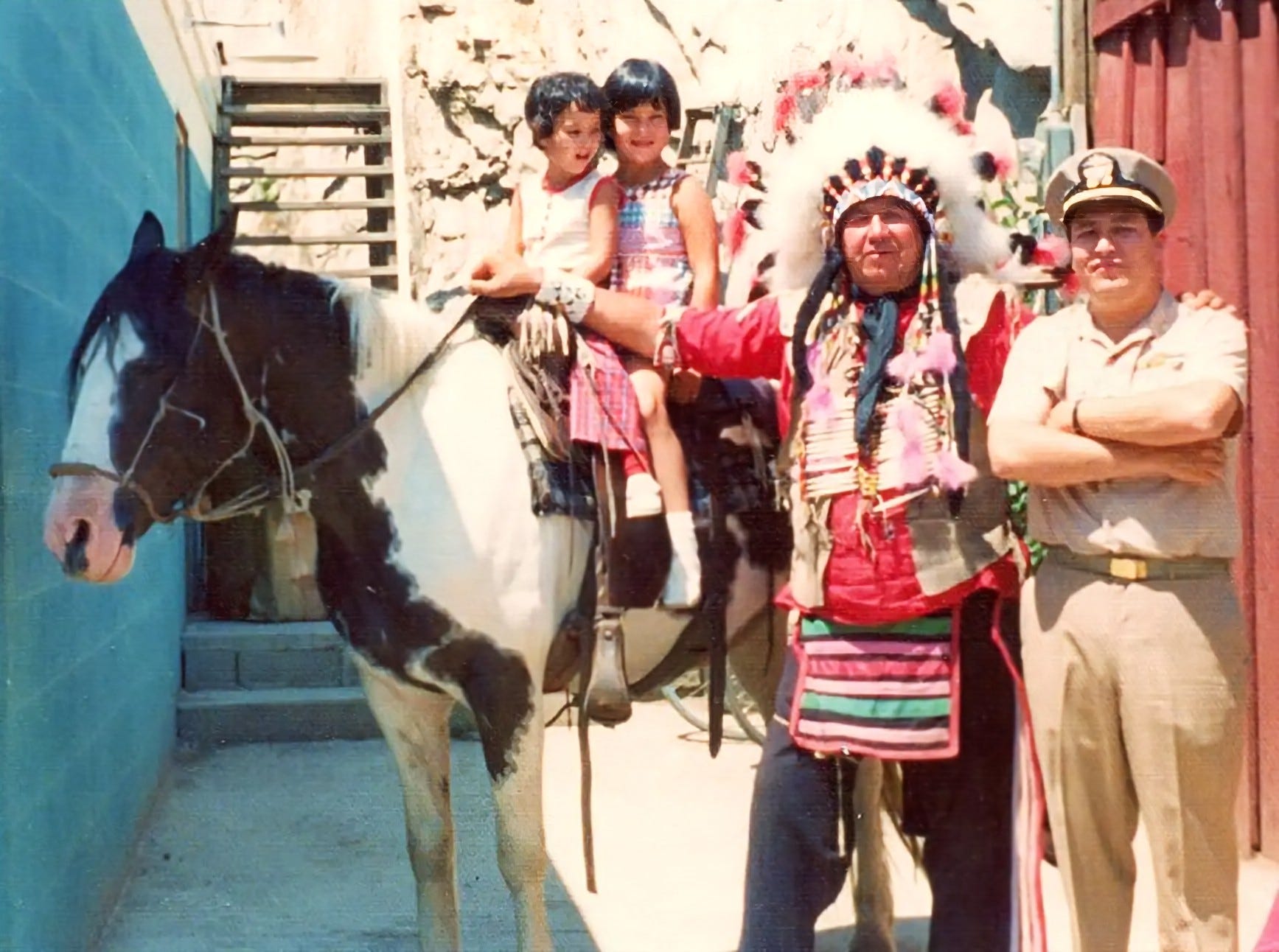
*a version of this piece was shared as a paid post by The Big Picture in October, it has been updated and reshared as a free post for the 135th anniversary of the Čaŋké Opi (Wounded Knee) massacre
The events that occurred on unceded Lakȟóta treaty land in what is now southwestern South Dakota on December 29, 1890, had a major impact on the country as a whole—but is something you probably never learned about in your American history classes.
“Unceded lands” refers to Indigenous territories never legally surrendered to a colonizing power by treaty or other agreement. “Unceded treaty lands” refers to Indigenous territories that a colonizing power legally acknowledged via treaty as being Indigenous land in perpetuity.
MAGA Republican President Donald Trump and his cronies are determined to keep the U.S. public ignorant. On March 27, Trump signed an executive order titled Restoring Truth and Sanity to American History.
It effectively instructs all federal entities to remove the accomplishments of anyone who was not a White, cisgender, heteronormative, Christian man from their websites and scrub or reframe any references to racism, slavery, or genocide perpetrated in the United States.
Slavery was alternative employment and Indigenous genocide was westward expansion, right?
But December 29, 1890 is considered the date of the last great “battle” of the “Indian Wars” on the banks of Čaŋkpé Opí (Wounded Knee) creek, so it gets to stay in history books.
It just needs a little whitewashing first.
Auntie Mavis’ Musings is reader-supported. To receive new posts & support my work, consider becoming a free or paid subscriber.
On September 25, 2025, Trump’s sycophantic Secretary of Defense, Pete Hegseth, announced on social media that the Medals of (dis)Honor awarded by the Army to soldiers who participated in that last “battle” would not be rescinded.
Medals of Honor are considered the nation’s highest military honor.
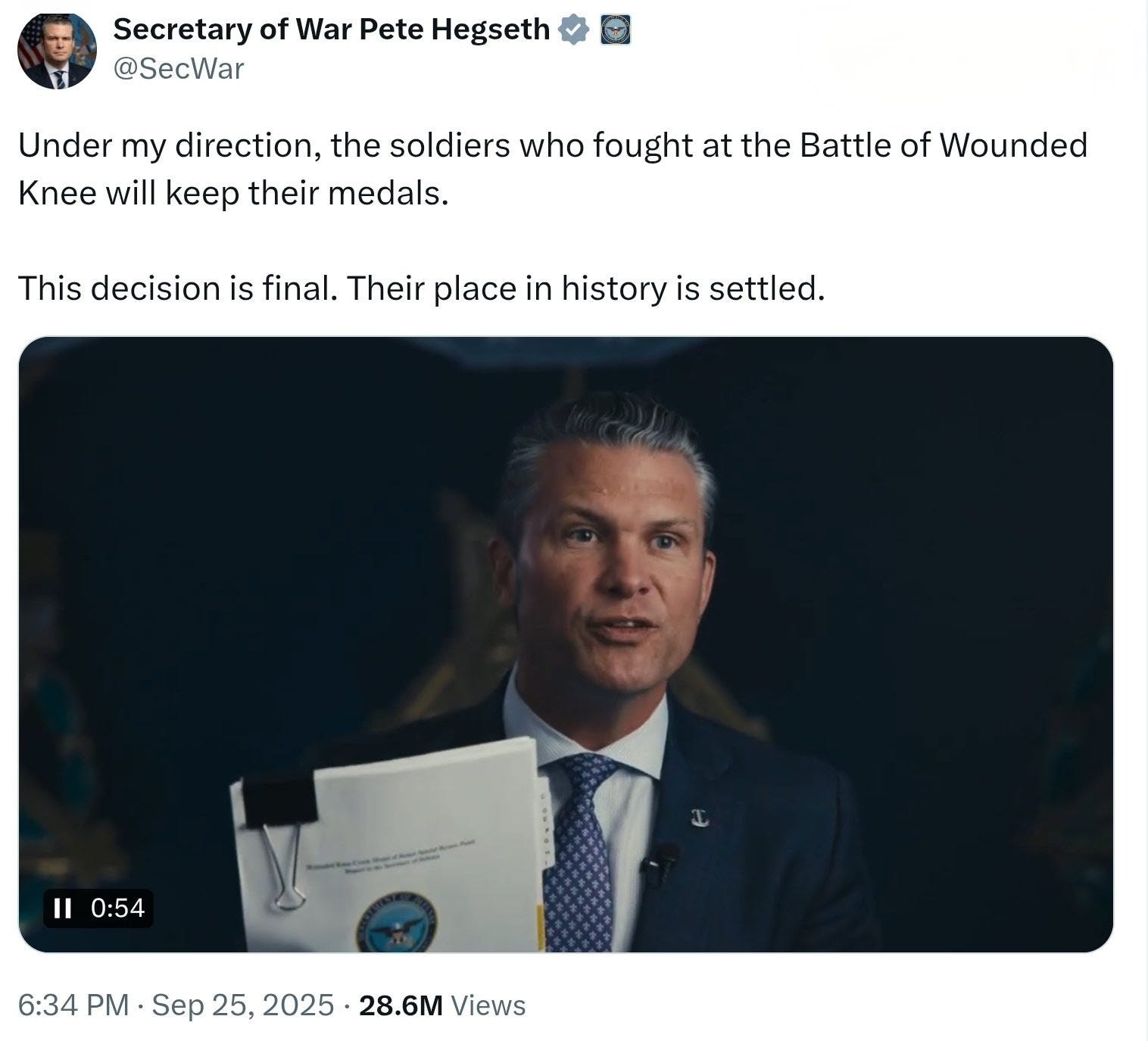
Hegseth said:
“Under my direction, we’re making it clear without hesitation that the soldiers who fought in the battle of Wounded Knee in 1890 will keep their medal. And we’re making it clear that they deserve those medals. This decision is now final and their place in our nation’s history is no longer up for debate.”
President Joe Biden’s SecDef Lloyd Austin ordered a review of the awards in 2024 after a Congressional recommendation in the 2022 defense bill, joining a long line of leaders to kick that can down the road.
In 1990, Congress apologized to the descendants of those killed at Čaŋkpé Opí (Wounded Knee), but failed to revoke the medals.
Now that blemish on the reputation and respectability of Medals of Honor has been enshrined by a woefully unqualified individual with no history of effective leadership in his military record or public sector work history.
Pete Hegseth Knows He’s Unqualified and Incompetent
People need to stop expecting members of the Trump administration to act based on what’s right, legal, ethical, or humane because they were actually selected for their unfulfilled ambitions and incompetence.
During his first term, Trump took advice to pull in loyal but competent people for his staff. But almost everyone qualified for their position, based on their prior experience, eventually “turned” on him.
For Trump, any criticism or the word “no” is an attack, so for his second term, the loyal are also incompetent by design.
At no point will anyone in this Trump administration do the “right thing” because their version of right is whatever keeps them in Dear Leader’s favor. People need to divest themselves of the notion that the perfect argument or evidence will sway them in any way.
Pete Hegseth is a Princeton ROTC graduate turned Minnesota Army National Guard officer whose service record—never finished Ranger School, Airborne School, or Air Assault School, but got assigned to the 101st—sends a clear message: a privileged man-child placed in positions just to advance his career, but who was capable of only mediocrity.
Military veterans did an excellent breakdown of his service record and why it’s a red flag for gross incompetence here.
His White supremacist, Christian nationalist views stunted his advancement in the military. A fellow guardsman reported him as a possible internal security threat due to a White nationalist associated tattoo on his bicep. He retired soon after and then drove three questionable charities into the ground amid allegations of sexual misconduct and excessive drinking.
Hegseth, an Ivy League graduate with a good on-paper military record, was then only good enough to get weekend hosting duties on Fox News, where his troubles with alcohol and sexual violence allegedly followed him.
His own mother called him out on his behavior.
Unless Hegseth is clinically deranged, he—like almost all of Trump administration 2.0 members—knows he’s grossly unqualified and incompetent. He’s a wannabe who never was and never could be without Donald Trump–a man he once said was “all bluster”.
Trump handed him a position so far beyond his capabilities, he’ll do anything to keep it.
Hegseth leapt to rewrite military history after Trump’s March dictate to eliminate racial, ethnic, and religious minorities, LGBTQ+ people, and women from any military websites.
Hegseth has undertaken multiple actions to subvert the recommendations of a Congressionally-mandated commission that examined the use of Confederate names and references in the military. He reverted the names of several Army bases back to their original, Confederate-linked names, through finding different minor figures with the same surnames.
Hegseth restored a 1914 memorial to the Confederacy previously removed from Arlington National Cemetery. The monument features a female figure crowned with olive leaves representing the Confederacy, along with sanitized depictions of slavery.
In September, West Point confirmed a painting of General Robert E. Lee in his Confederate uniform was put back on display in the school’s library—where it was first placed in the 1950s in response to the Civil Rights movement, like many Confederate monuments. The portrait shows a Black slave leading Lee’s horse in the background.
If Trump demands the My Lai massacre be retconned and medals handed out, Hegseth will do it without hesitation.
The historical account of Čaŋkpé Opí (Wounded Knee)
Čaŋkpé Opí (Wounded Knee) is where more than 300 mostly elders, women and children were killed on December 29, 1890 by the 7th Cavalry of the United States Army.
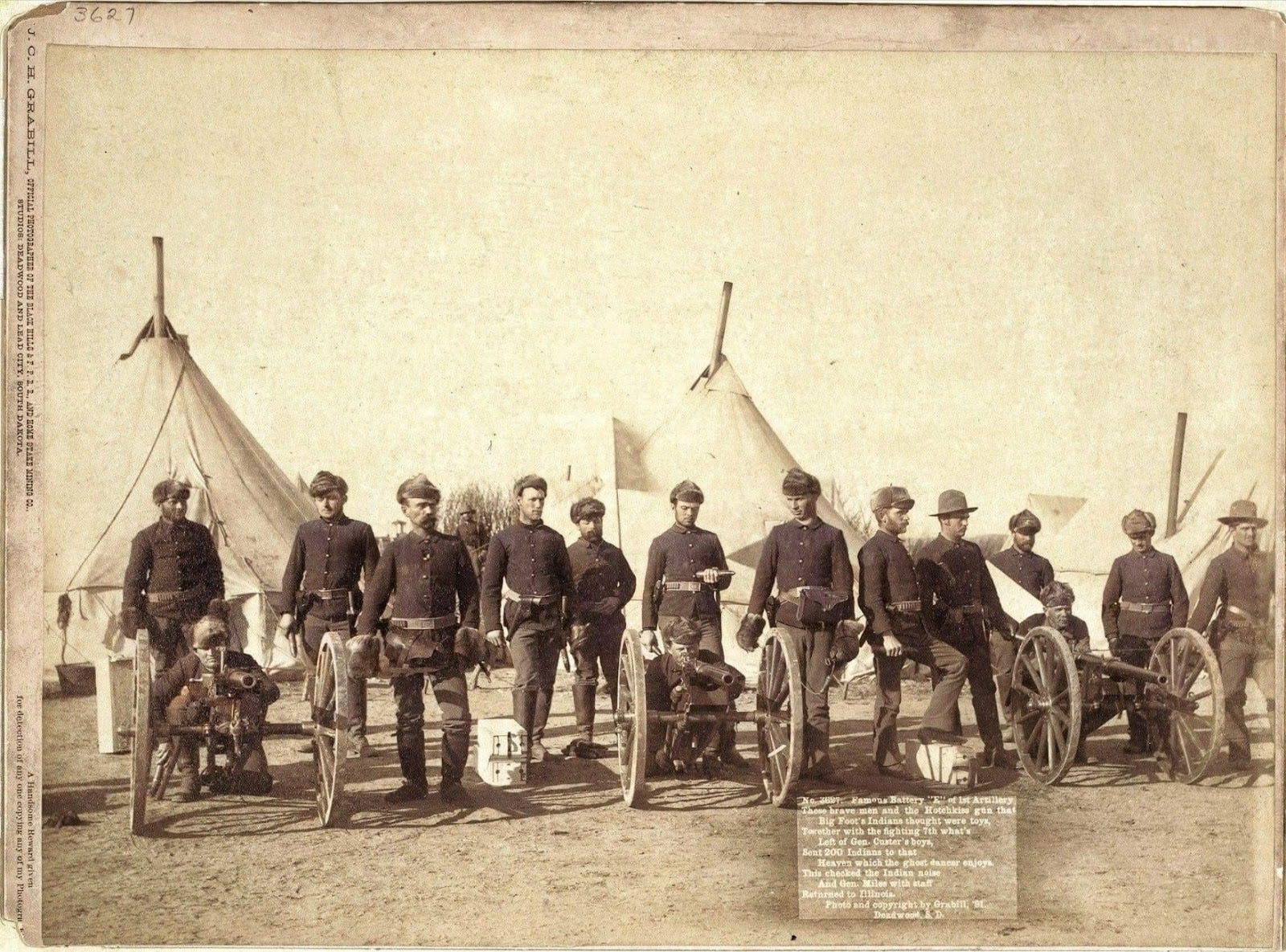
Wašigla (Big Foot)—leader of the Mnicoŋjou Lakȟóta from the Cheyenne River reservation—and his people were chased by the 7th Calvary from their camp near Bridger to where they were surrounded and slaughtered with rifles, handguns, bayonets, and four Hotchkiss mountain guns near Čaŋkpé Opí Creek on the Pine Ridge Reservation.
In one report, it was recorded there were five hunting rifles total found with the hundreds of Natives’ remains, but that figure was never verified officially. Some reports say no guns were ever found among the Lakȟóta. Another lists 20 “weapons” to include “anything with a blade or sharp edge” were found among the Natives belongings after the “battle.”
Regardless of zero, five, or 20, the Lakȟóta had nothing to compare to the four Hotchkiss mountain guns used against them.
The Hotchkiss guns used at Wounded Knee were 1.65-inch (42 mm) single-barrel, breech-loading cannons that could fire four to six shells per minute. They fired both exploding shells and canister shot—a type of anti-personnel round.
In 2024, a descendant of the inventor of the Hotchkiss mountain gun sent a letter of apology to the Lakȟóta people for his family’s part in the massacre.
The guns were placed on a hill overlooking the Lakȟóta camp where they could fire into the tipis and then into a ravine where many Lakȟóta, including women and children, fled for safety.
Once the Lakȟóta were downed, the United States Army soldiers began to walk through the corpses to shoot, bayonet, or bludgeon any survivors, including women and children.
Why they stopped the slaughter is unclear.
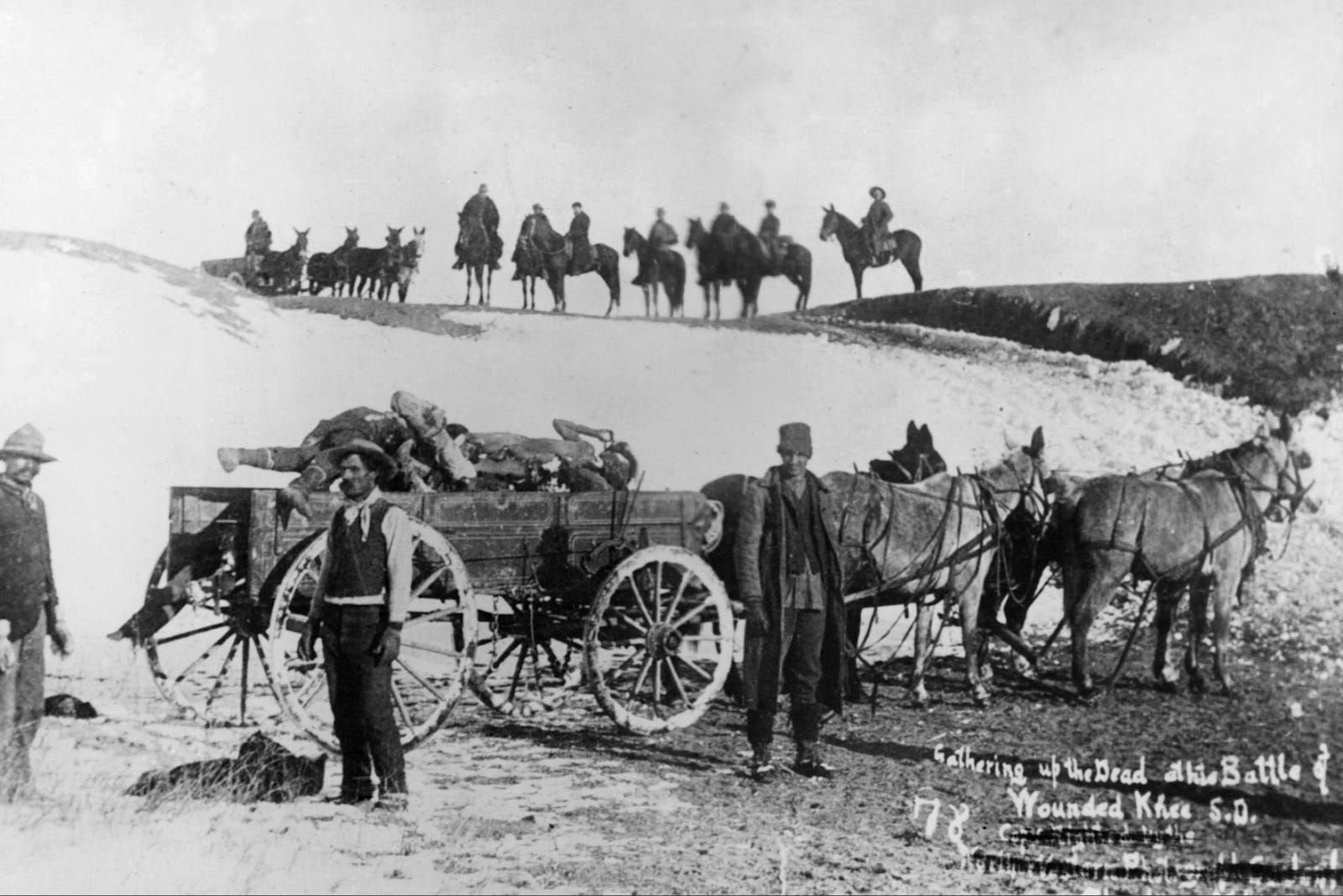
Those not moving were left in the cold, so it’s unclear how many were dead due to the attack or froze to death as they lay wounded. When all the bodies were finally gathered days later, many had to be pried from the ground.
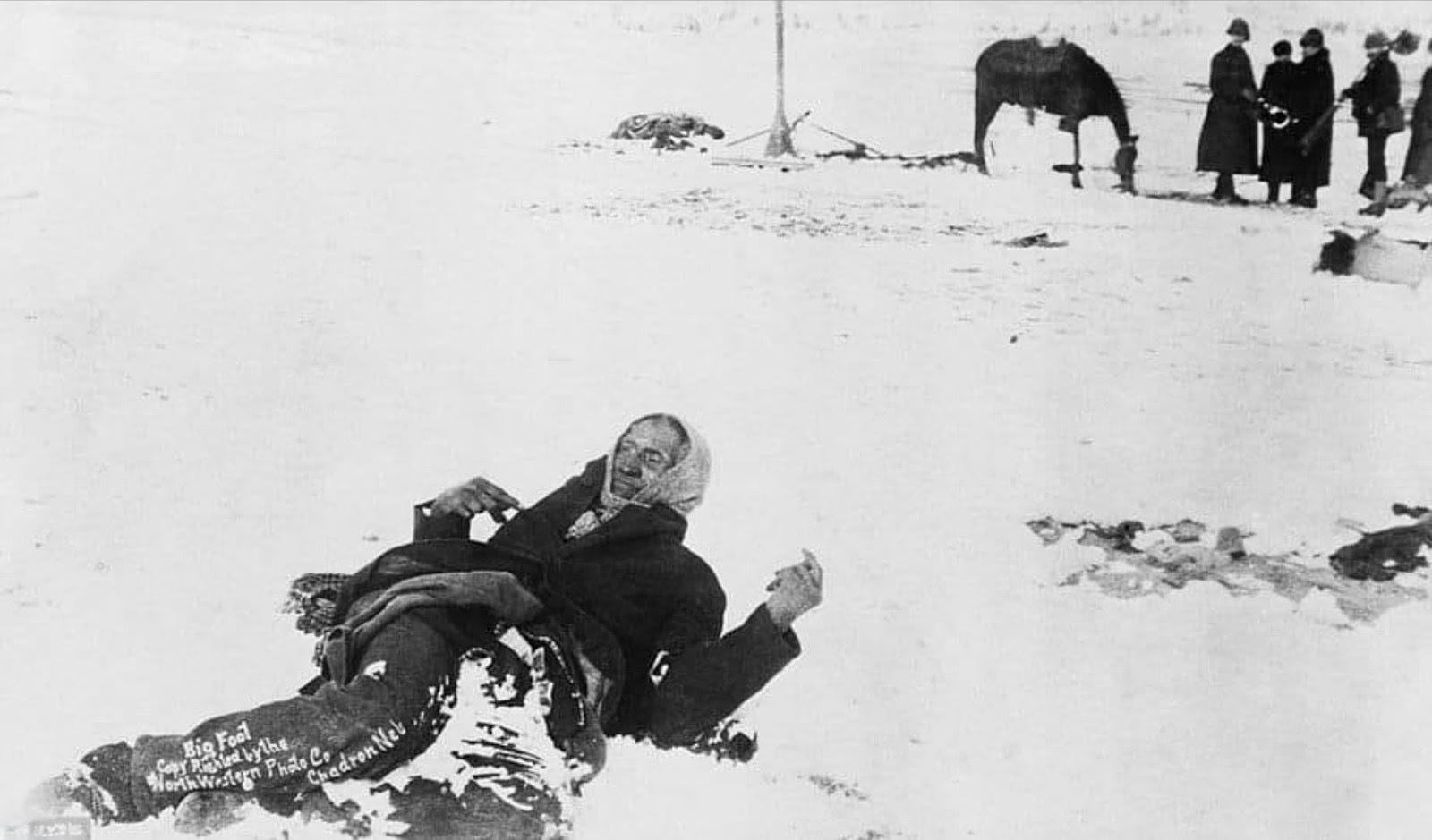
They were uncounted and piled in mass graves, so the exact number killed is unknown, but estimates are between 300 and 450.
Soldiers and those enlisted to gather bodies looted the corpses for clothing, beadwork, and anything else of value.
In 2022, the Founders Museum in Barre, Massachusetts, returned approximately 150 artifacts to the Očhéthi Šakówiŋ (Sioux Nation)–including items stolen at Wounded Knee–after nearly 30 years of negotiations. More looted items are still in the collections of other museums and private collections.
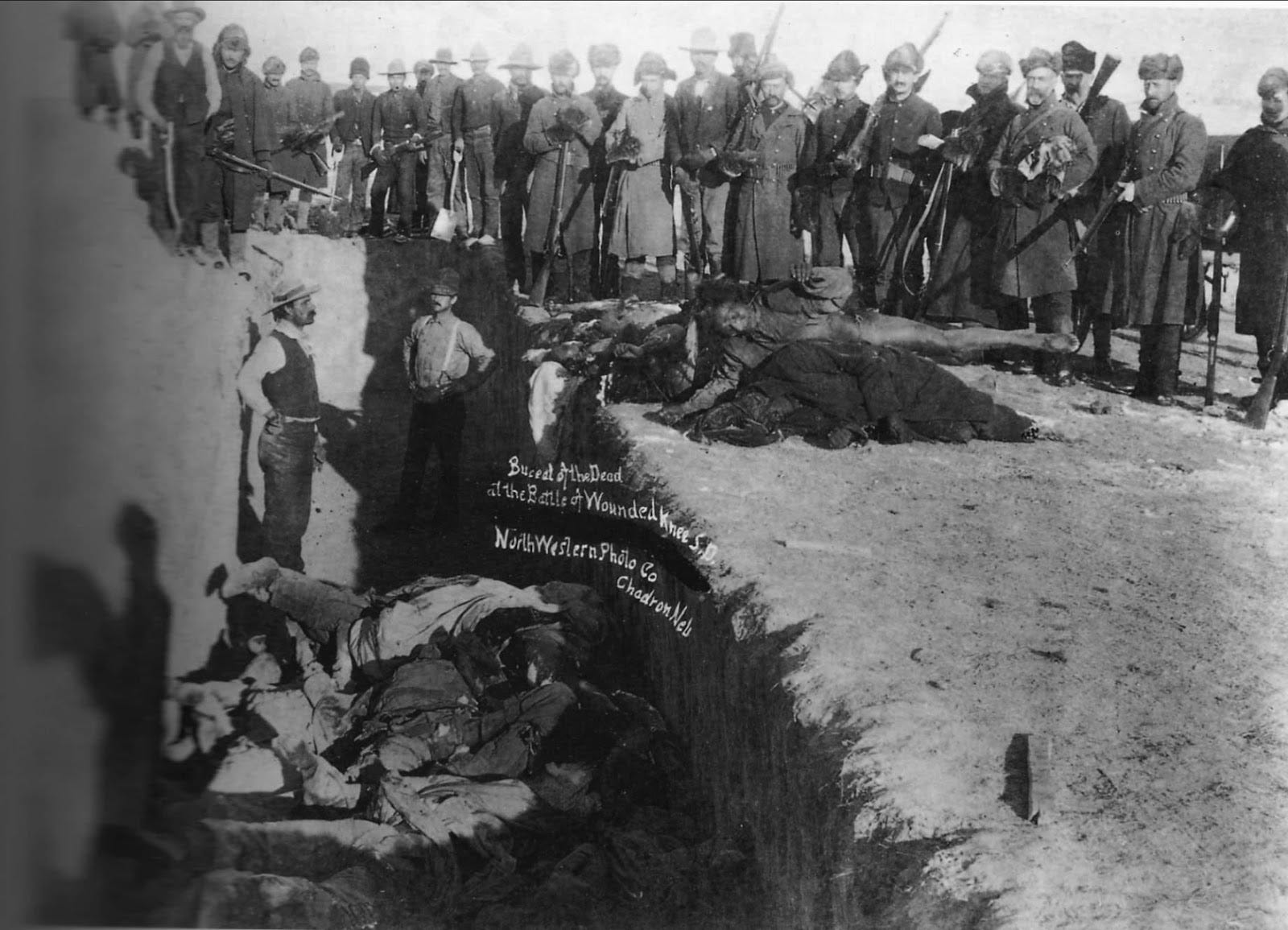
The Army stopped counting bodies at 200, but several reports from the time estimated 300 Lakȟóta killed. Lakȟóta estimates put the number closer to 450.
In his official report, the Army’s Lakȟóta interpreter, Phillip Wells, claimed the total was 350 Lakȟóta and 25 soldiers killed. Army deaths were mostly attributed to “friendly fire” incidents.
Several military members of the time were immediately critical of the massacre.
It was largely seen by both critics and supporters as revenge for the defeat of Lieutenant Colonel George Armstrong Custer and the destruction of five out of twelve of the 7th Cavalry’s companies when they decided to attack a coalition of tribes at their Peji Sla Wakp (Greasy Grass) camp in 1876.
Peji Sla Okichize is usually referred to as the Battle of the Little Bighorn River or Custer’s Last Stand. Custer led his 700 men to attack a camp of what he thought was only 800 Natives, including women, children, and other noncombatants.
Expecting at most 500 Lakȟóta and Northern Cheyenne men of fighting age with limited fighting experience, he was met by an estimated 1,100 seasoned warriors from the Lakȟóta, Dakota, Cheyenne, and Arapaho.
Despite being warned by his own Crow scouts that the village on the banks of the Little Bighorn River was the largest they’d ever seen, Custer attacked the camp for over two days in June of 1876.
Seeing their overwhelming advantage, the Natives initially counted coup. “Counting coup” amongst Plains Natives referred to a warrior’s ability to touch an enemy, their weapons, or their horse in the midst of battle without causing their enemy any harm.
A warrior would gain prestige, status, and feathers for their headdress by showing mercy rather than dealing death, especially if the warrior suffered no injuries themself. But Custer and his forces refused to retreat and their continued attacks eventually required a deadly response to protect noncombatants in the village.
The defeat was humiliating for the 7th Cavalry, the Army, and the United States government, which retaliated in several ways over the following years.
It was this lingering resentment that was blamed for the massacre, which, despite claims by White nationalists like Hegseth, was not widely celebrated at the time of its occurrence. The revisionist history, as with stories of Christopher Columbus and the “First Thanksgiving,” is the sanitized, whitewashed version created during the late 19th and throughout the 20th century that Trump and Project 2025 want restored.
Major General Nelson Miles, who did not participate but led a division that included soldiers responsible for the massacre, had communicated to his superiors that Natives in the region were dissatisfied due to treaty violations, lack of supplies, and broken promises, which he said left them “starved into fighting.”
Two days after the massacre, Miles wrote to his wife and described the events at Čaŋkpé Opí as “the most abominable criminal military blunder and a horrible massacre of women and children.”
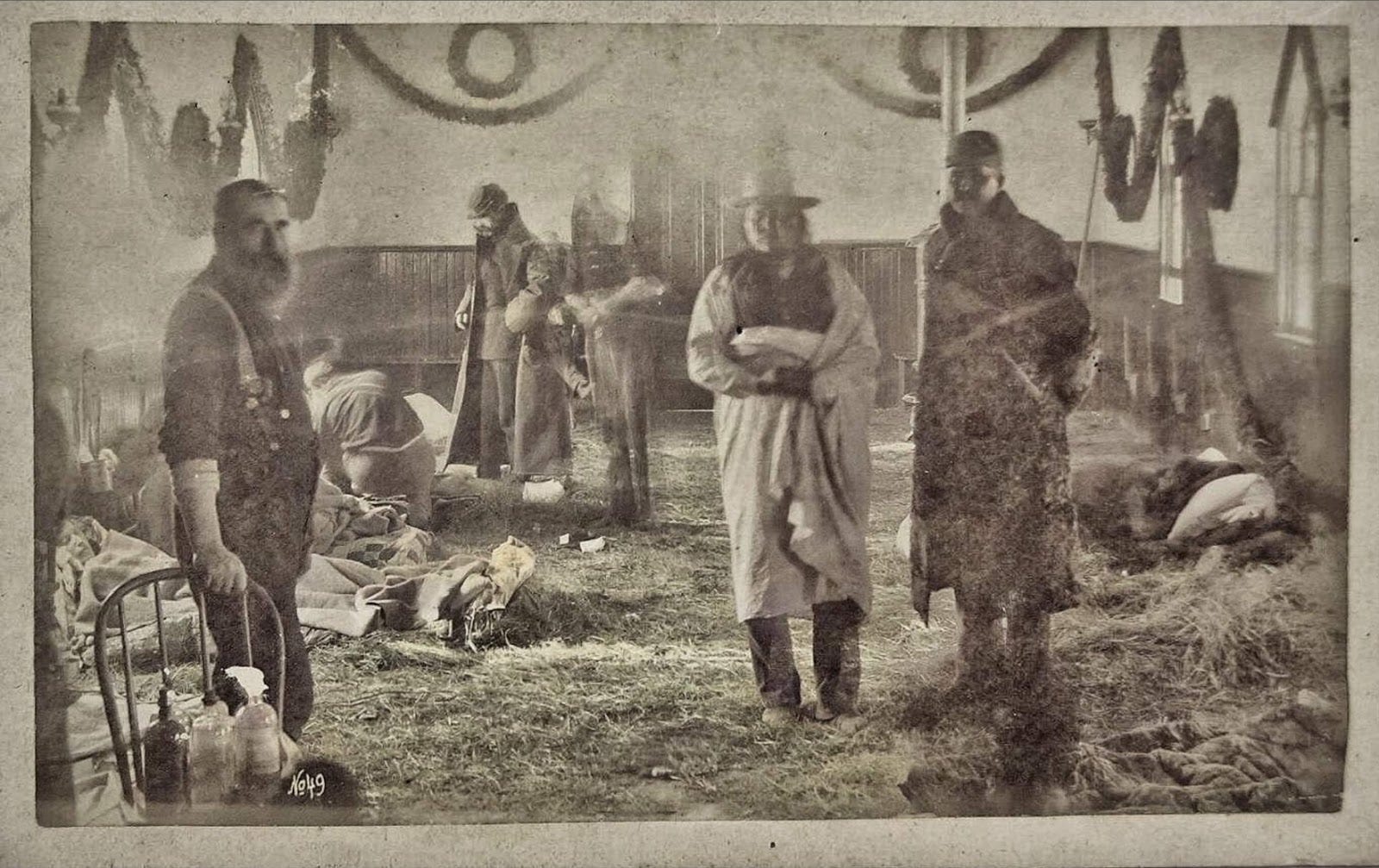
Due to potential backlash, the US Army sought to cover up what happened.
More Medals of Honor—20 total—were awarded to soldiers who participated in the Wounded Knee massacre than any other singular conflict in United States history.
The motivation was clear: to silence potential whistleblowers.
After the 1864 massacre of Cheyenne and Arapaho at Sand Creek in Colorado, Captain Silas Stillman Soule—a fellow Maineiac, born in Bath, Maine—was adamant that people know of the atrocities that really happened there.
He was jailed, intimidated, threatened and even shot at, but Soule—and his company of soldiers—refused to fire at unarmed Natives at Sand Creek. Then he made his voice heard through reports that reached from Colorado to Washington to the floor of the U.S. Senate about the savage slaughter that occurred.
Silas Soule was a Captain of the 1st Colorado Infantry Regiment during the Civil War.
On November 29, 1864, Captain Silas, Lieutenant Joseph Cramer, and the companies they led were near Black Kettle’s encampment of Cheyenne and Arapaho when Colonel John Chivington ordered the 1st Colorado Cavalry to attack. However, Soule noticed the encampment was flying the U.S. flag, a recognized sign of peace.
Colonel Chivington’s famous quote about Indigenous peoples was:
“Kill and scalp all, big and little; nits make lice!”
So when told to attack, he and Cramer ordered their men to hold fire. Other units followed Chivington’s orders leading to what is now known as the Sand Creek Massacre. Chivington reported 500 to 600 warriors were killed, but most sources estimate around 150 people were killed, with about 100 being women and children, including infants whose skulls were crushed under Army boot heels.
Details of the viciousness of the attack against Cheyenne and Arapaho elders, women, and children sparked outrage and shock around the country. The Army and Congress began investigations. Soule testified against Chivington in the military tribunal.
His testimony about the events at Sand Creek led to Chivington’s resignation, Colorado’s Second Territorial Governor John Evans’ dismissal, and Congress refusing the Army’s request for thousands of men for a general war against the Indigenous peoples living freely on their homelands.
Walking home with his new bride on April 23, 1865, Silas Soule was ambushed, shot in the head and killed by an assassin who had participated in the Sand Creek Massacre. Soule was just 26 years old.
Soule’s whistleblowing had another byproduct.
When the U.S. Army slaughtered hundreds of Lakȟóta women, children and elders at Wounded Knee, the government handed out a record number of Medals of Honor to buy the participants’ silence about the atrocities they committed.
Labeled the Medals of Dishonor almost from the day they were presented, several bills have been put before Congress to rescind these ill-gotten and badly motivated silence buyers.
But massacres like Sand Creek and Wounded Knee, whistleblowers like Soule, and increasingly unfavorable press coverage pushed the federal government to abolish the “Indian extermination policies” in favor of “assimilation.”
While the assimilation policies were cultural genocide, at least they weren’t providing bounties to settlers for “Redskin” scalps and actively, openly slaughtering Indigenous people anymore.
Čaŋkpé Opí Is In My DNA
I’ve written about Čaŋkpé Opí before.
When I last did, a well-meaning reader commented to refer me to a well-known historian so I could learn all about Wounded Knee, as she “writes about it every December.” The referral was to a reputable source of historical information.
However, the reader failed to see the irony in referring an Indigenous woman to the writings of a White woman to not only learn Indigenous history, but for a Lakȟóta woman to go to a White woman to learn about Lakȟóta history.
MiAté (my Father) Edward Franklin Christnot, MiAté (my Father/Uncle) Ralph Fletcher Christnot Jr., MiTȟuŋwíŋ (my Auntie) Marcella Rose Christnot Jazek, and MiTȟuŋwíŋ Alberta Lorraine Christnot Awana Ecker were all born on Pine Ridge Reservation and attended mandatory Indian boarding school at the Catholic run Holy Rosary School at Pine Ridge.
They were all enrolled on The Rosebud along with their Ina, MiUŋčí (their Mother, My Grandmother), Sally Marie Gerry Christnot, but spent more time at Pine Ridge. My paternal family is primarily Oglala Lakȟóta, with some Hunkpapa and Mnicoŋjou family ties.
Peji Sla Okichize is in my DNA.
Čaŋkpé Opí is in my DNA.
I grew up with stories of those days. Stories passed from eyewitnesses to their children and grandchildren.
Stories of life as a free Lakȟóta, of being hunted by the Army, of going to Washington D.C. to make peace, of having treaties ignored when the land promised to the Lakȟóta was invaded by White settlers or wanted by the government because of the gold in the Black Hills, of fighting against the Army and winning, of years of retaliation by corrupt Indian agents, boarding schools, and the federal government.
Some of these attacks are ongoing.
What Can You Do?
Indigenous cultures across the globe embrace the concept of acting on behalf of the eighth generation–a core concept of the Haudenosaunee Confederacy, my Ista’s (Mum’s) people.
What we do today must be done to protect, preserve, and promote the next seven generations that follow us.
Future generations need to know the truth–warts and all.
Philámayaye, Niawen’kó:wa, Merci, Thanks for reading Auntie Mavis’ Musings! All posts are free to share.
The most important thing every American citizen can do to protect our future generations is vote in the 2026 midterms.
Trump won in 2024 on apathy, not support. The largest voting bloc was comprised of registered voters that didn’t bother to vote.
Some Republicans already tire of running cover for people who committed sexual assault and rape against children. The cracks are already showing.
But relying on the GOP to do the right thing is also a fool’s errand.
Republican leadership has gone to great measures to protect Trump and the others implicated in the Epstein files.
Stopping the man in the White House requires thwarting his congressional enablers in the GOP and eliminating his Republican majority in the House and Senate.
The only cure for what ails America is voting out the people who work hard to protect sexual predators who prey on children instead of working for the people they represent.
The only way to protect the next seven generations is to vote out the people who want to rewrite history to fit their White Christian nationalist agenda.
Please, please vote.
💛🤍🖤❤️~💛🤍🖤❤️~💛🤍🖤❤️~💛🤍🖤❤️
Can’t afford to subscribe, but still want to contribute to my ability to create?
A little support goes a long way! If you’d like to help me keep creating, you can do so at KoFi.
Comments
Nothing yet. Say the first thing.
Sign in to join the conversation.