
I love Provence. Truly, deeply. Marseille especially, with its brash charm on the coast. But somehow, in all my years of going back, I had never set foot in the Lubéron: the inland heart of Provence, the one you already know even if you’ve never been. Hilltop villages the color of sand. Country roads zig-zagging between olive groves, pastel lavender fields, and vineyards.
It’s the postcard version of Provence… almost too postcardish.
That’s exactly why we kept putting it off. It felt like it might be too polished, too curated, too much of a “greatest hits” version of the region I already loved for its rougher edges. We didn’t want a cliché vacation, and we really didn’t want to be let down after building it up in our heads for years.
This summer, Marc and I finally took the leap. Twelve hours on the road from Brittany, with an overnight stop in Toulouse, and we rolled into the village of Bonnieux, our home base for five days.
Long story short: we were wrong to wait. We loved the Luberon.
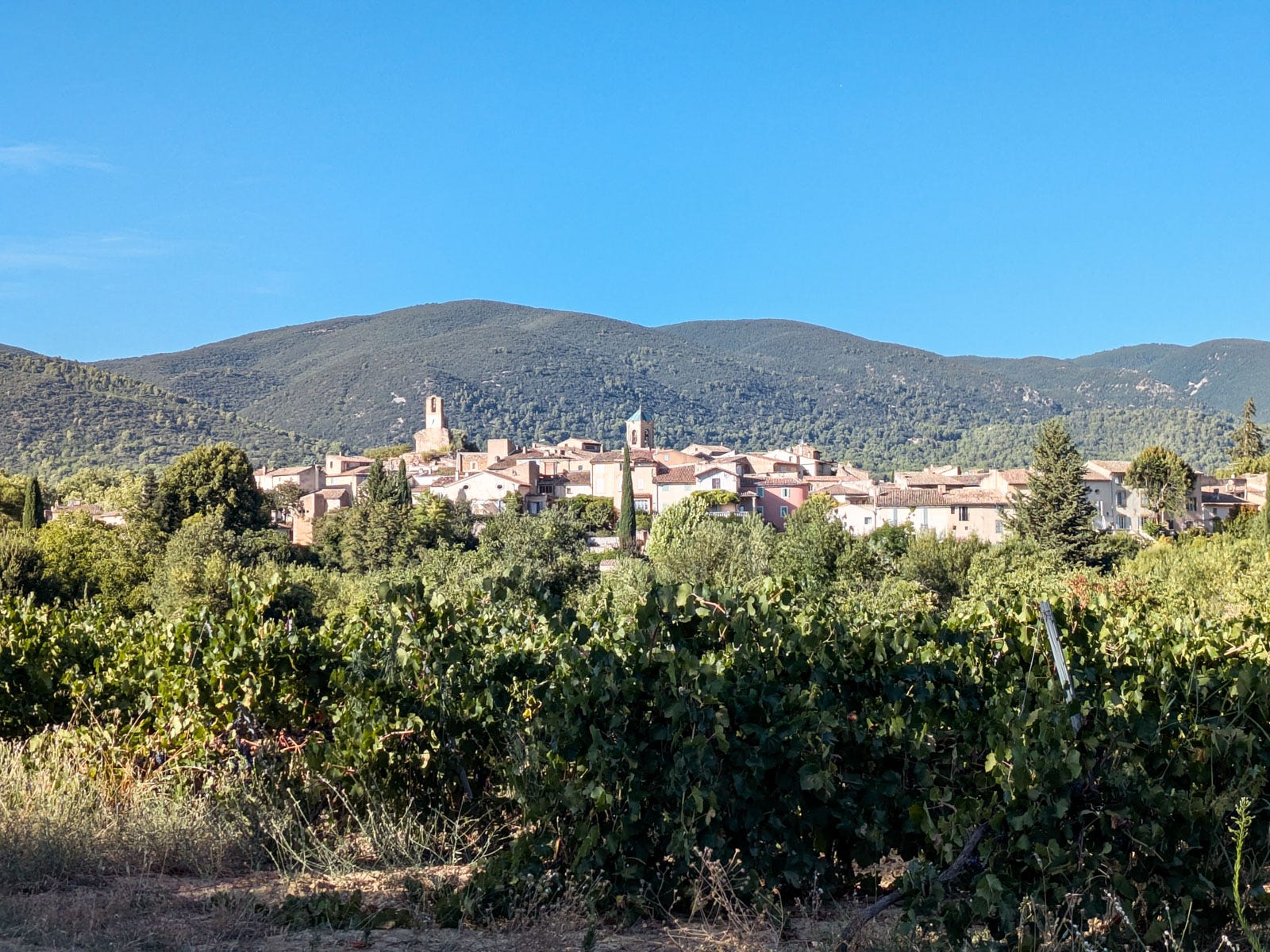
We stayed at La Ressence, a stone-walled Chambre d’hôtes (Guest House) with a gorgeous backyard, a pool that genuinely saved us from the August heat, and a lovely host, Françoise, whose breakfast spread with croissants and homemade jams alone was worth the trip. With temperatures climbing well past what we’re used to in Brittany, we fell into a very Provençal rhythm: mornings out exploring, a nap and crosswords by the pool from 2 to 5pm, then more wandering and dinner once the light softened. One night we even hiked the Forêt des Cèdres around 9pm: cool air, cicadas quieting down, and a sunset over the Luberon valley. It was perfect!
Were some villages a little disneyfied and a little thin on actual local life? Sure. Gordes and Roussillon, mostly. But when villages are that beautiful, I’ll admit the magic still works on you anyway.
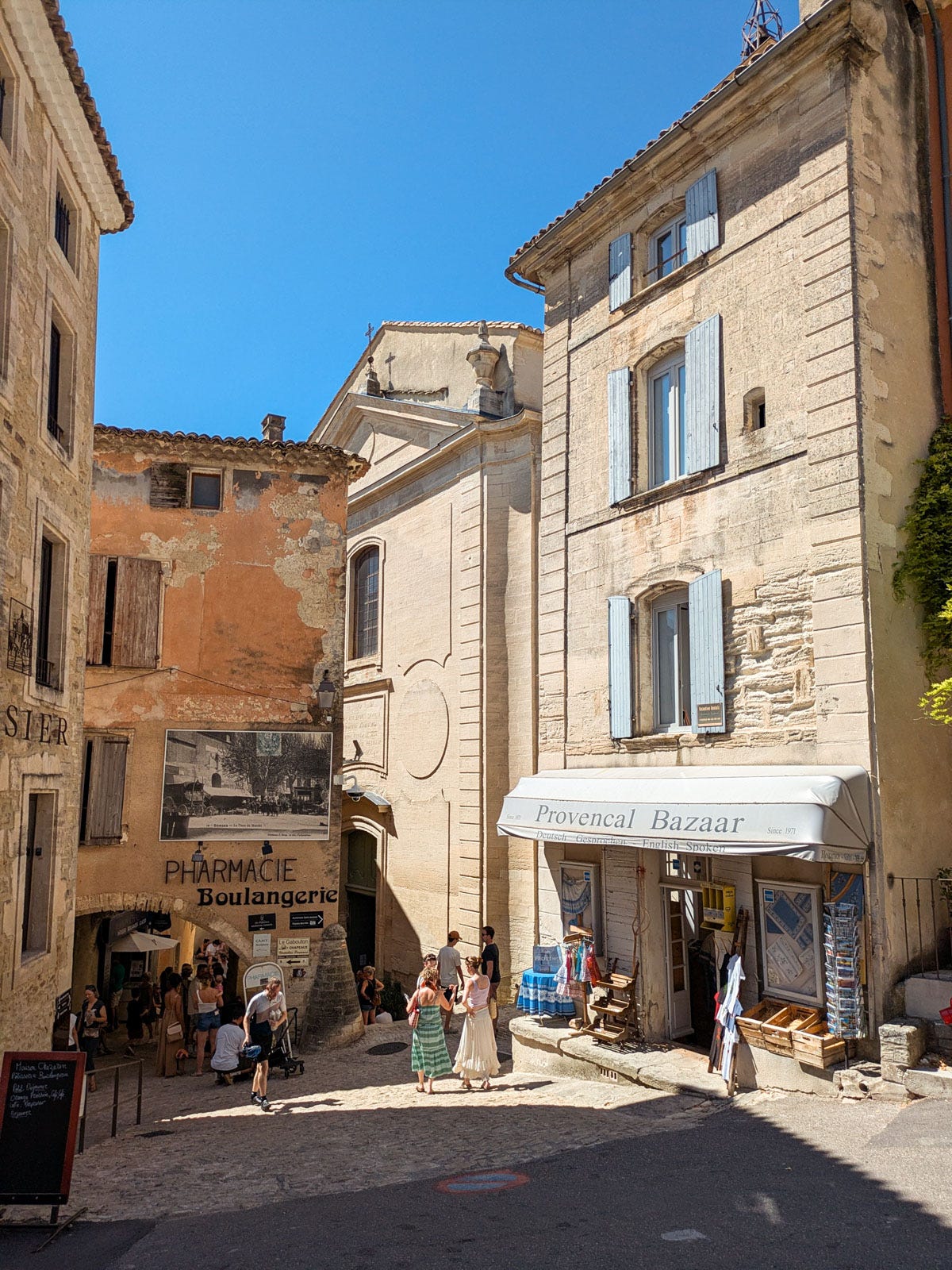
How to Actually Do the Luberon
You need a car to discover the region; there’s just no way around it. Village-hopping is the entire point here, and nothing is walkable between towns. There is very little to no public transporation between the villages and ride-sharing apps like Uber are a bit unrealiable.
Here’s a map to help you get your bearings as you read through.
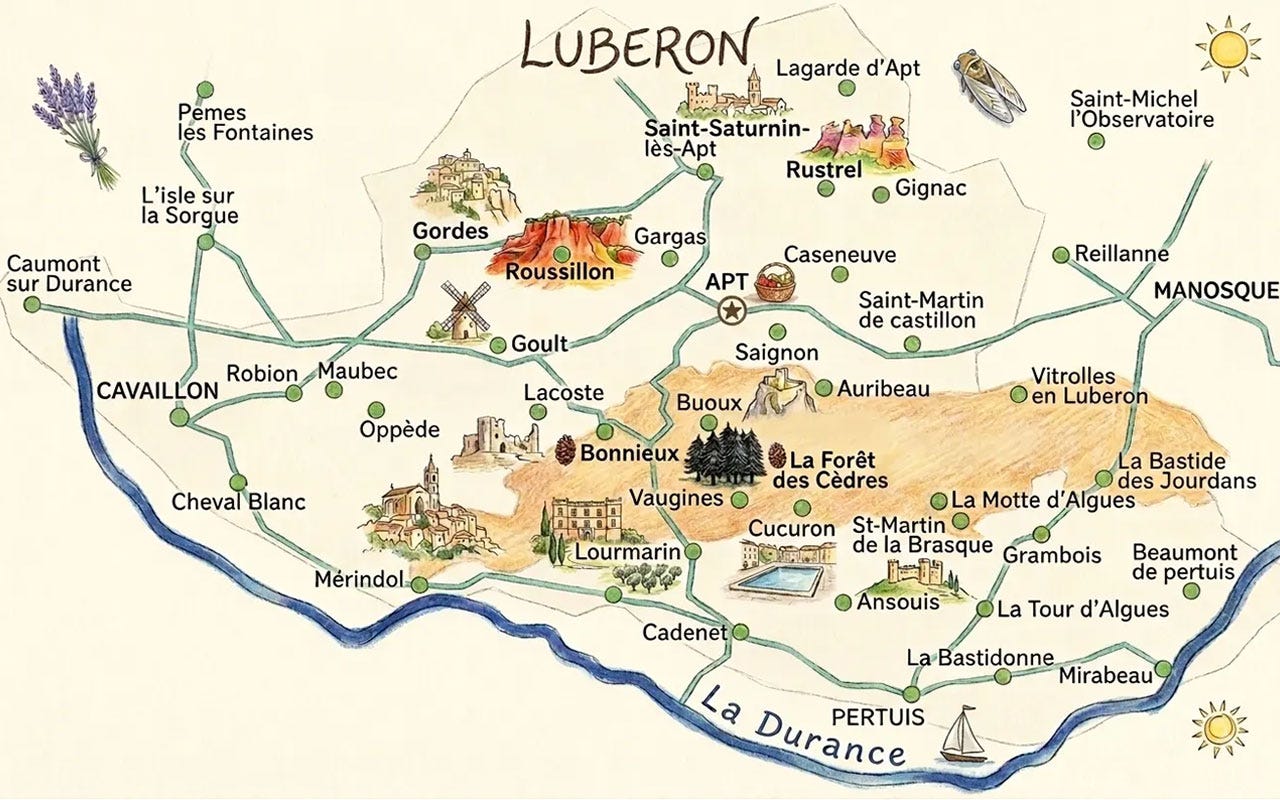
The region splits into four zones, each worth roughly a day.
Les Monts de Vaucluse (north-west)
Le Pays d’Apt (north-east)
Le Petit Luberon (south-west)
Le Grand Luberon (south-east)
I recommend spending one day in each zone, that’s a total of 4 solid days of driving, stopping, wandering.
Plus, if you’re staying five nights like we did, you can enjoy one slower day to just breathe and buy all the souvenirs you didn’t have time to get yet (ie. a few jars of olive oil, artisan soaps and Herbs de Provence).
A few practical notes about the Lubéron region: most villages are built straight up a hillside, so bring real walking shoes (and reasonably cooperative knees). The north part, with villages like Gordes and Roussillon, get the postcard views… and the postcard crowds. The south is quieter, sleepier, and honestly it was more our vibe. And wherever you go, check the local market schedule before you plan your route. Building a day around a “jour de marché” (market day) is, I think, the single best thing you can do for a more authentic trip.
What follows is everything we saw, village by village, presented in the 4 zones. This list is not exhaustive of course: if you’ve been to Lubéron and have your own favorites, I’d love to hear them in the comments.
Comments
Nothing yet. Say the first thing.
Sign in to join the conversation.