
Before settling into using Atono to build Atono, we made a conscious choice to explore the competition. Getting hands-on with other tools was the best way to understand where we stand and how we can grow.
What makes people stick with a tool? What drives them away? And how do they hold up as teams scale? This wasn’t about tearing anyone down; it was about learning what works, what doesn’t, and what we could bring back to Atono. Here’s what we found.
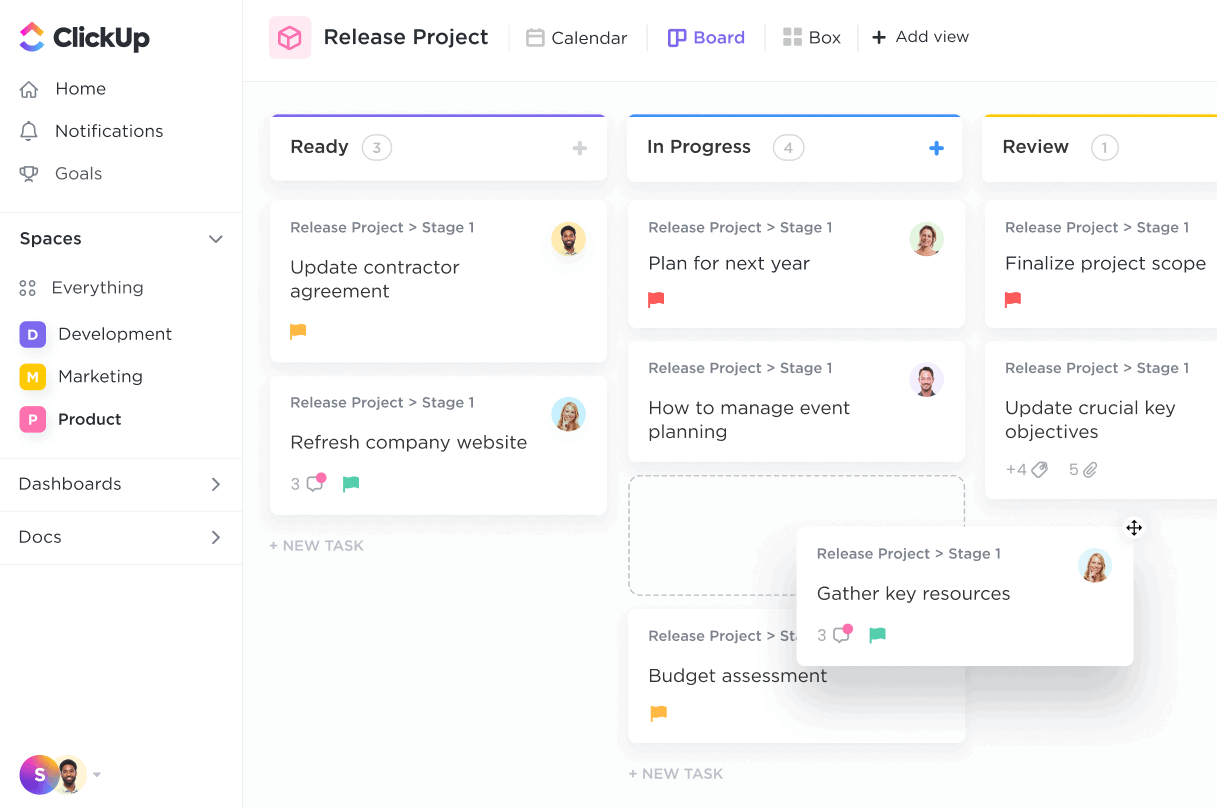
We kicked things off with ClickUp, a tool none of us had used before. Our first impression was that it’s trying to be everything for everyone. That’s a bold mission, and it comes with tradeoffs.
What we liked:
The ‘Unlimited’ plan gave us a lot to play with for a reasonable price.
Multiple views (list, board, calendar, etc.) let us explore different ways to organize work.
Docs looked promising for keeping everything connected in one place, even if we didn’t go deep into them.
What we disliked:
The UI felt cluttered, making it hard to find what we needed.
Switching between items often left us losing track of where we were.
The app could be sluggish at times, slowing us down when we needed to move quickly.
Some features, like real-time updates, didn’t work as expected, leaving us with outdated information.
Support and documentation were hard to find and slow to respond.
We were constantly prompted to upgrade our plan beyond our comfort levels.
We think it’s best for:
Teams with less technical users across multiple departments.
People who want a lot of features and customization options.
Task-oriented teams, rather than ones focused on long-term planning.
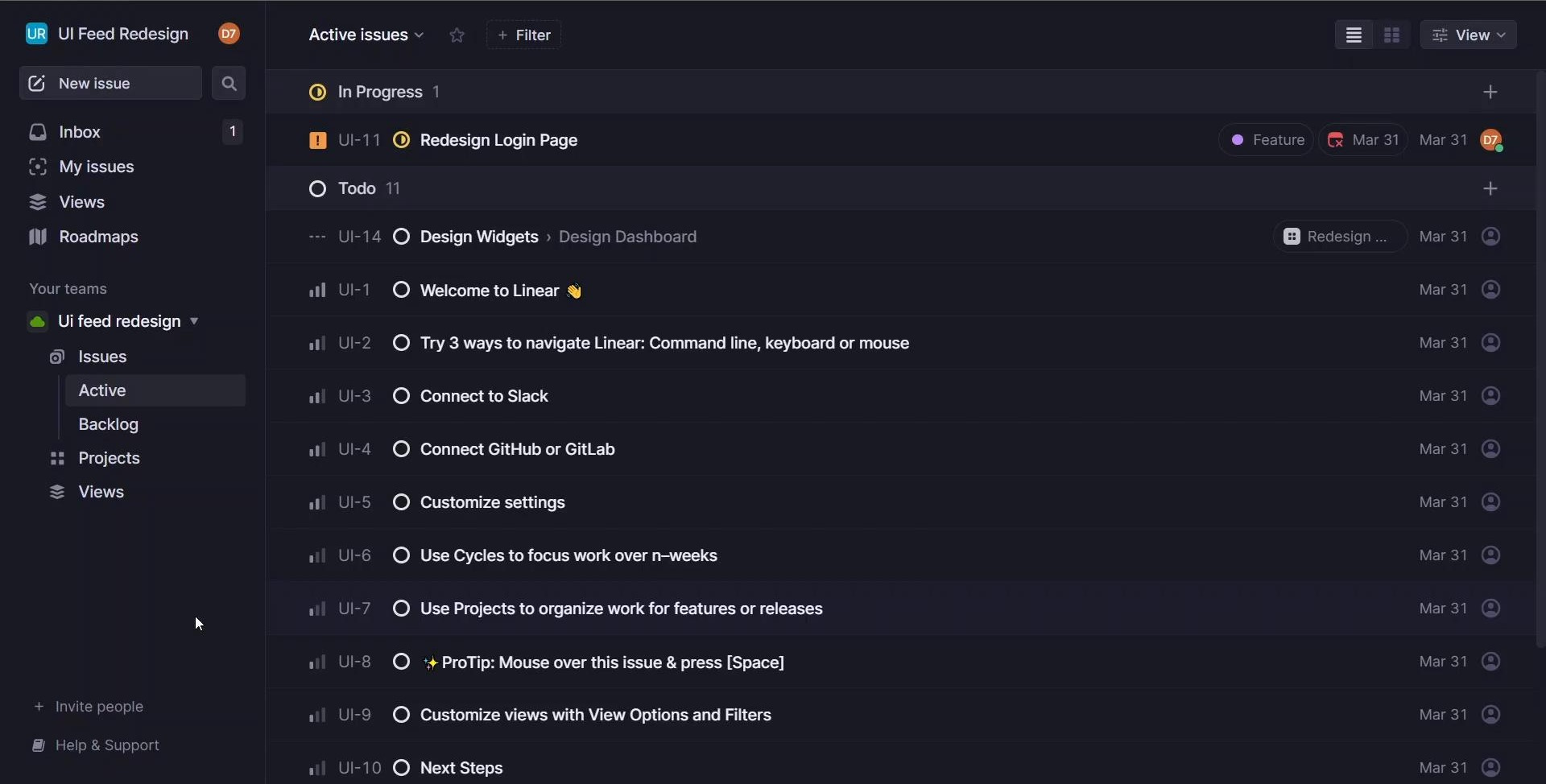
Next up, we tried Linear. The sleek, fast UI made a great first impression and its search capabilities were intuitive and easy to use. It’s clear that Linear is built for software teams, but it also came with a bit of a "this is the way to do it" mindset, pushing us to follow a specific process. That rigidity might not work for every team.
What we liked:
Thoughtful touches, like automatically linking mentioned issues under 'Related'.
The Kanban view was clean and compact, with collapsable statuses to stay focused.
The command palette (Control + K) made relevant actions easy to find.
Keyboard shortcuts made navigation fast and efficient.
Integrations with Figma and GitLab felt seamless, with pull requests linked directly to issues.
What we disliked:
Stories, bugs, and enhancements are all grouped as “issues,” which makes it harder to differentiate work types.
Limited team-specific options besides issues, backlog, projects, and views
Primarily built for developers, leaving other team roles feeling overlooked.
We think it’s best for:
Small to medium-sized startups.
Teams focused on planning and building software projects.
Those who value speed and a streamlined experience.
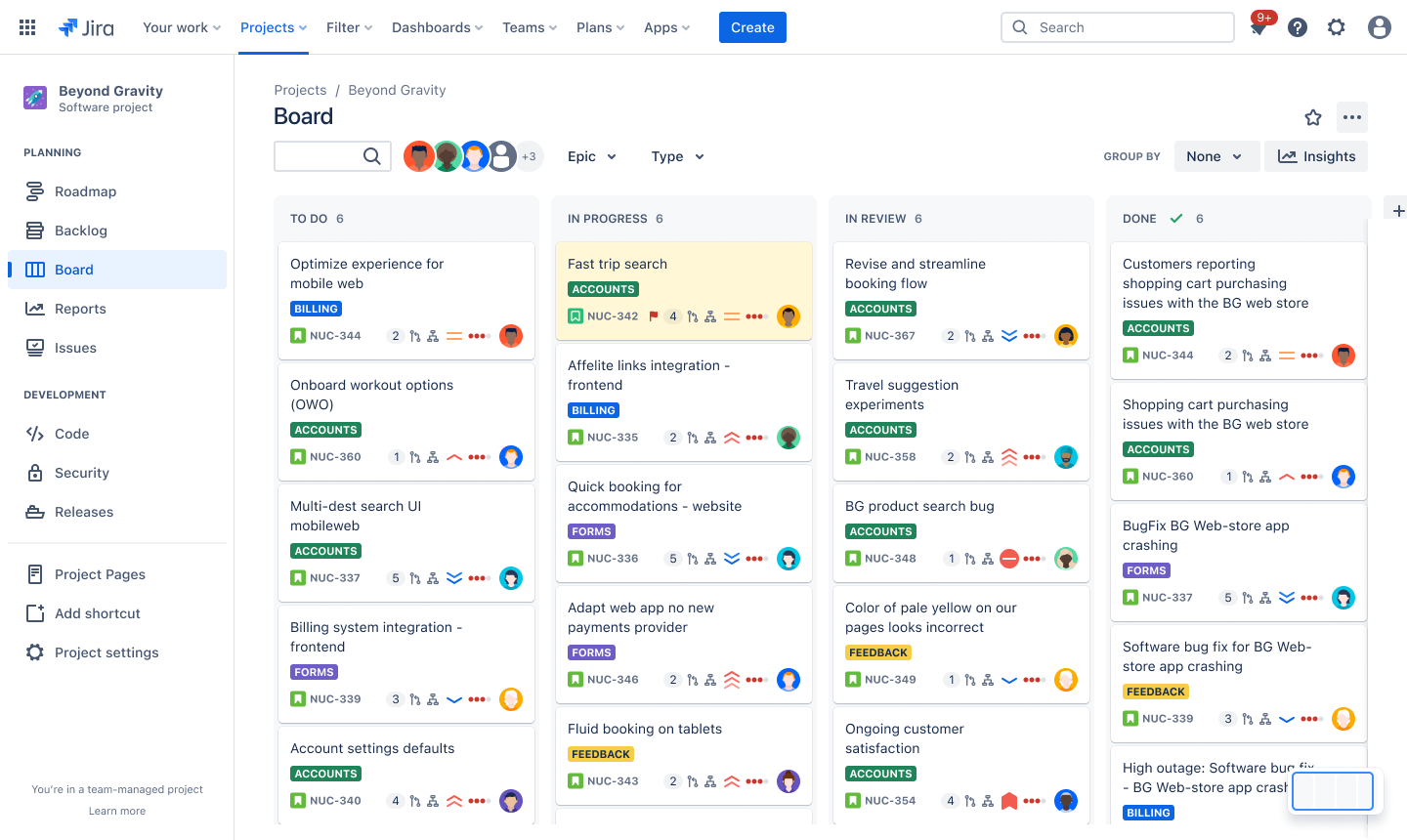
We didn’t need to revisit Jira—we all know it too well from past experiences. It’s the go-to tool for large enterprises, but it comes with baggage: slow performance, a steep learning curve, and a sense that it hasn’t evolved much over the years. If you’re unfamiliar with these challenges, there’s no shortage of feedback online.
We think it’s best for:
Large, traditional enterprises.
Teams that need complex workflows and extensive customization.
Companies requiring self-hosted or on-premise solutions.
Using these tools reminded us why we’re building Atono: to create a tool that feels intuitive, collaborative across multiple disciplines, and most importantly, unstressed.
Every tool we tried had strengths that inspired us—Linear’s speed, ClickUp’s flexibility, Jira’s customization. But they also had clear pain points we’re determined to avoid. We’re not here to be everything to everyone, and we’re not here to tell teams how to work. We’re here to make it easier for them to work together, no matter their process.
The competition isn’t our enemy; they’re proof there’s a market hungry for better tools. We’re excited to keep learning, improving, and building something teams will love.
Check out how our engineering velocity doubled when we switched from these tools to Atono.
Comments
Nothing yet. Say the first thing.
Sign in to join the conversation.