
Happy Thursday folks!
Thanks for joining us for another edition of Atlasview Insights. We use this newsletter to share our strategies, philosophies, experiences, and lessons we’ve learned along the way. Small bite-sized insights for business owners, dealmakers, and investors.
In this newsletter, we cover:
Our Investment Criteria
Reinvesting Capital in Organic Growth
Podcast Recommendation - Richard Rainwater
ICYMI - Popular Previous Issues
Our Deal Process
Make sure to subscribe and if you enjoy the content, we'd appreciate you sharing it with your network.
Before we jump into this issue, a quick reminder, Atlasview Equity Partners is a private equity firm acquiring and investing in software, business services, and other asset-light B2B businesses. For platform investments, we look for:
Business Model: software, business services, other asset-light
Business Size: minimum $2m EBITDA or $10m revenue
Business Profile: sticky B2B customer base
Business HQ: US & Canada
For add-on acquisitions for our portfolio companies, we have no size/geography criteria. We’re actively seeking add-ons in the library, legal, and government niches.
Whether you’re a business owner interested in working with us, or an intermediary with a deal to share, always feel free to contact us!
At Atlasview we generally prefer reinvesting free cash flow/capital into inorganic growth (M&A, add-on acquisitions), as outlined in our upside case. But sometimes we uncover opportunities for substantial reinvestment into organic growth as well. For the types of companies we specialize in, organic reinvestment generally falls under two broad categories:
1) Research & Development
This includes developing new features, functionalities, products, and modules to attract new customers or generate more revenue from existing customers. Also known as growth capex R&D.
Return on investment for growth capex R&D ultimately comes down to how costly the development is (driven by difficulty/complexity), and how much customers will pay for it once it's complete. We prefer to get a level of commitment from existing customers before pulling the trigger (and in some cases, a customer might be willing to pay for the entire cost of the new development).
2) Sales & Marketing
Many might view S&M as simply opex, but there is an argument to be made that it could be considered "growth capex". S&M spending enables us to acquire customer contracts, an intangible asset that generates future revenue.
Return on investment for S&M spending boils down to the cost to acquire a new customer (CAC) versus the lifetime value, specifically the total gross profit, a new customer generates (LTV). 3.0 is considered to be a great LTV to CAC ratio, but the time period should also be considered. If we can spend $1 in advertising today and generate $3 within 2 years, that is an incredible return. But if it takes 10 years to generate that $3, we might be better off allocating that $1 elsewhere.

Payback period
Payback period (how long it takes to make 1x our investment) is how we decide which organic initiatives (if any) we should reinvest capital in. It will dictate how much capital is required for growth, and how risky the organic growth initiatives are. The longer the payback period, generally, the more capital we need and the riskier the investment is. Ideally, we want payback periods of 12 months or less on organic reinvestment initiatives.
Money costs money, so any reinvestment (organic or inorganic) is always measured and compared against returning capital back to debt and or equity holders.
Check out this great podcast episode on Richard Rainwater, who is perhaps the first-ever independent sponsor.
Here are some of our previous popular issues:
Margin of Safety - Managing The Unknown Unknown
·
February 7, 2024

At Atlasview, we believe true risk means the “unknown unknown”. After you’ve thought about all the potential negative or adverse things that could happen to a business … risk is what’s remaining.
Our Approach To Upside vs Downside
·
November 8, 2023
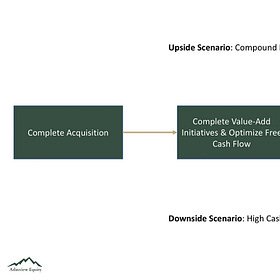
At Atlasview, for each deal we look at, we map out what the probable downside and upside scenarios look like. We want there to be an element of positive asymmetry between the upside case and the downside case.
The Lindy Effect
·
January 4, 2024

At Atlasview, we are big believers in The Lindy Effect. Popularized by author, Nassim Taleb, it states that the longer something has been around, the longer it will likely continue to be around. We consider this when looking at businesses to acquire or invest in. Businesses with longevity often come with a high degree of resilience.
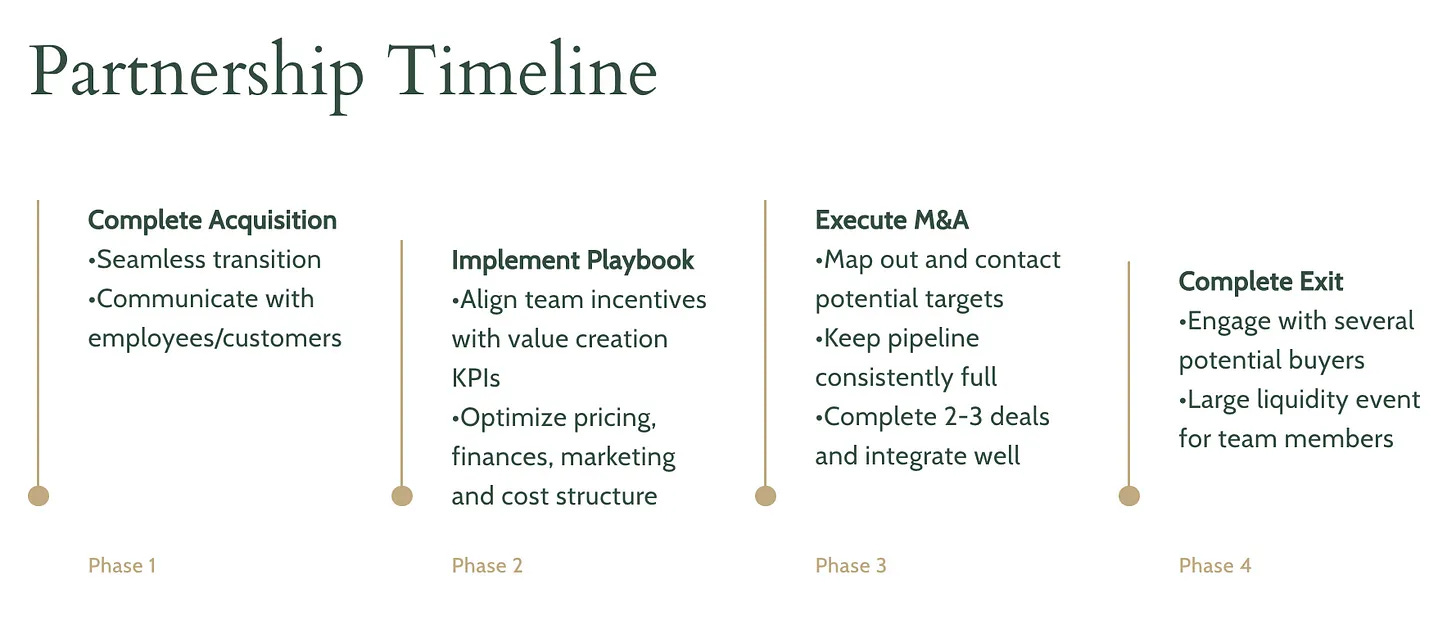
We pride ourselves on having a simple and transparent process. Our streamlined process enables us to move quickly to get you answers fast.
Step 1: Contact Us
Step 2: Execute NDA & Schedule Call
Step 3: Receive Offer & High-Level Terms
Step 4: Execute LOI & Complete DD
Step 5: Close Deal & Receive The Cash
Step 6: The Fun Part Begins!
Whether you’re a business owner interested in working with us, or an intermediary with a deal to share, always feel free to contact us!
Atlasview Equity Partners is a private equity firm acquiring and investing in software, services, and other asset-light B2B businesses. We combine patient capital with proven strategies to deliver predictable results for our stakeholders.
No posts
Comments
Nothing yet. Say the first thing.
Sign in to join the conversation.