
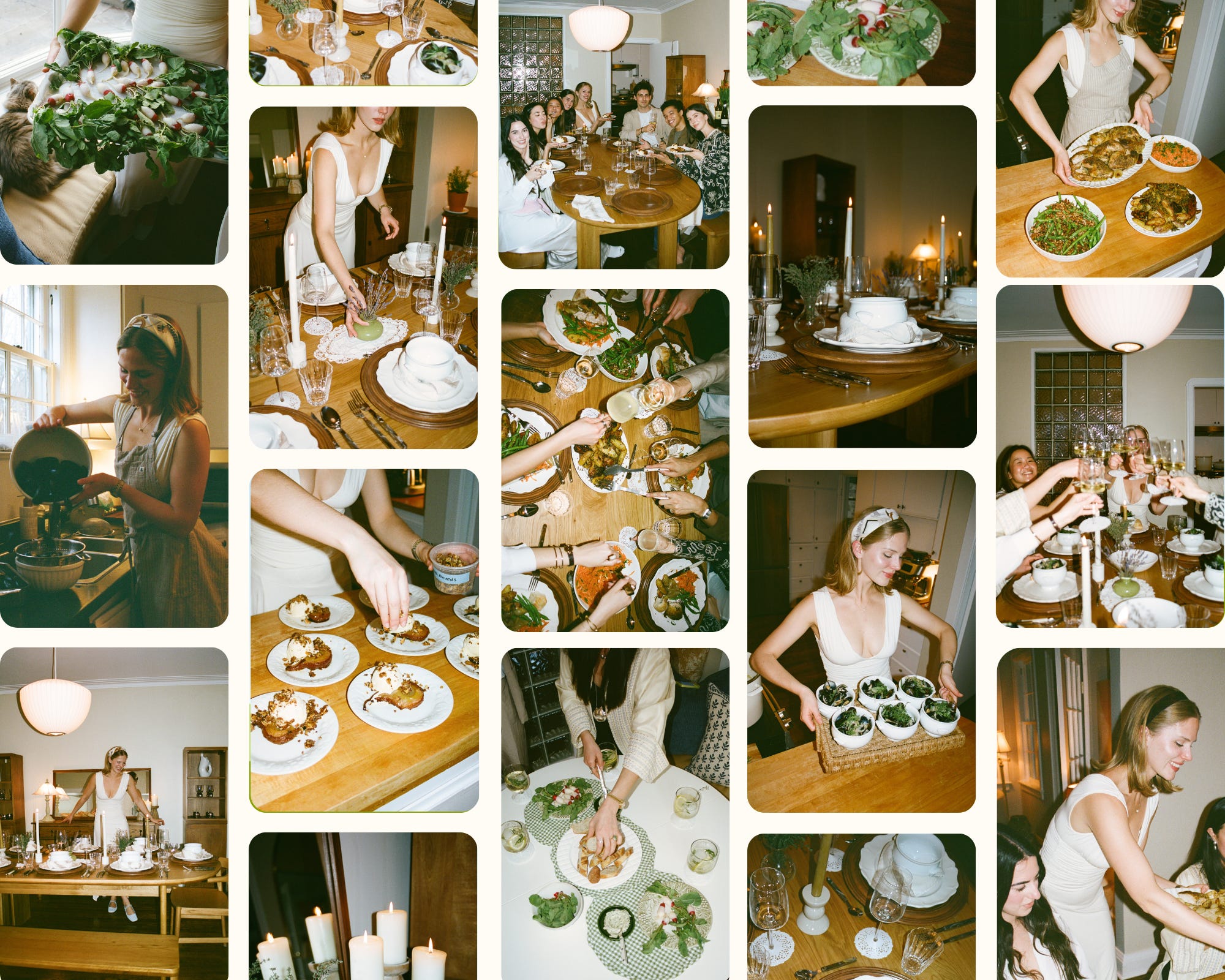
Welcome! You’re At Isabelle’s—home to all things tasteful and tasty.
Another month, another dinner party, and another 40 minute long YouTube video! The more I host, and the more menus I make, the more I realize how much I love a theme. Not because I need every dinner party to feel like a novelty, but because a good theme gives the menu a set of rules. And as a Virgo, I love rules.
I have done a few ingredient-focused themes before: tomato, citrus, stone fruit, pickled. I love them because they give you a reason to look at one ingredient from every angle. How does it work in something fresh? Something rich? Something sweet? Something unexpected? It is also usually where the tablescape starts to come together, because once you choose the ingredient, the colours and textures tend to follow.

It felt like I was overdue for another ingredient-focused dinner, and herbs felt right for late spring. They are fresh, abundant, and the kind of thing I already cook with constantly, so you would think this would have been the easiest menu I had ever planned.
It was not.
The problem with herbs is that I wanted to use all of them. But herbs are not one flavour. Thyme and rosemary are woodsy and savoury. Mint and cilantro are bright and punchy. Tarragon is anise-y. Dill? That’s a whole other ball game. The more I tried to build a menu around “herbs” generally, the more the menu started to feel like it was pulling in too many directions.
Aaron eventually suggested that I stop trying to complicate my life and narrow the theme to a specific region or style of cooking, so the flavours would naturally make more sense together. Annoyingly, he was right.
When I think of spring, I often think of French food, mostly because of radishes and butter. I also already had the idea for thyme and honey roasted pears, which lived in the same French-ish world, so the answer became pretty clear: Herbes de Provence
The classic blend usually includes thyme, rosemary, oregano, and marjoram, sometimes with lavender, tarragon, or fennel seed depending on the version. It gave the menu exactly what it needed: a little structure, a little restraint, and a very clear direction to build around.
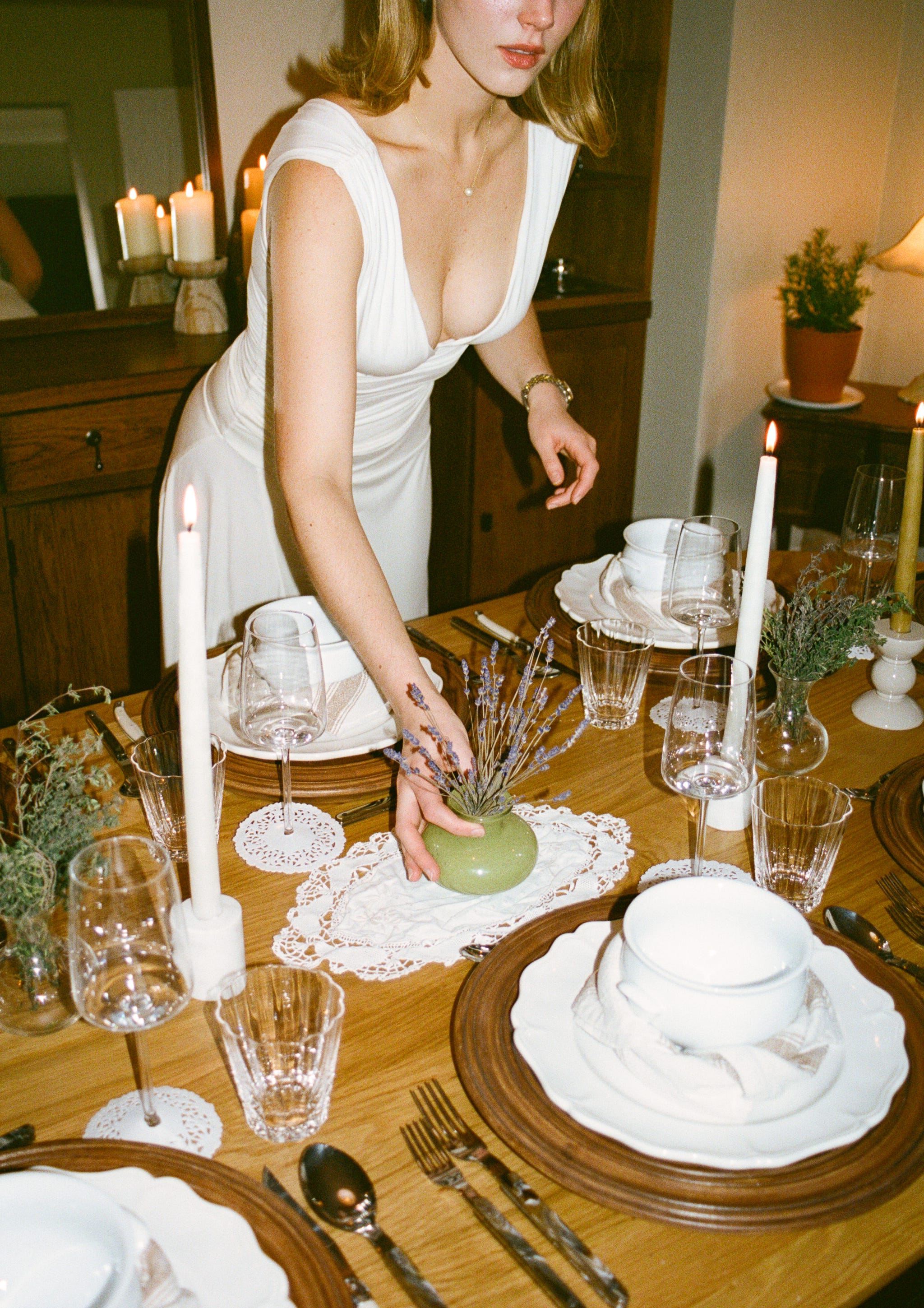
For the table, I didn’t want the Herbes de Provence theme to become too literal. It would have been easy to lean into lots of green and purple and scatter herbs everywhere. Instead, I wanted it to feel more quietly French: relaxed, unfussy, a little rustic, and built from pieces that felt collected rather than overly styled.
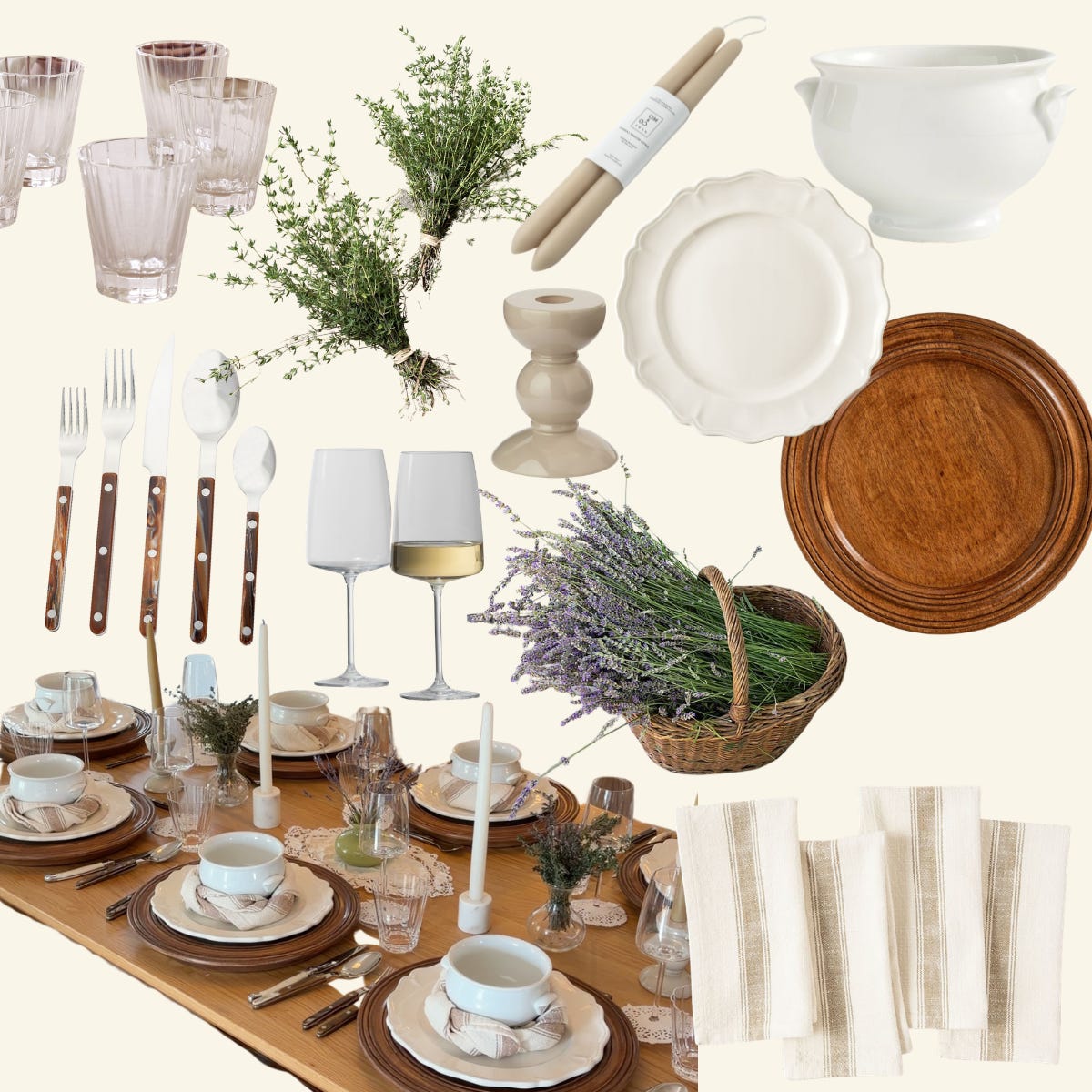
I have never been to the French countryside, so this is very much my imagined version of it, but I associate it with quality, simplicity, and a kind of casual elegance. French-made objects have such a strong association with craftsmanship, which is probably why so many of them feel like the kind of things you keep, use, and eventually pass down. That was the feeling I wanted to channel here: not a table that felt precious or overly decorated, but one built from pieces I already own and love, the things I reach for again and again.
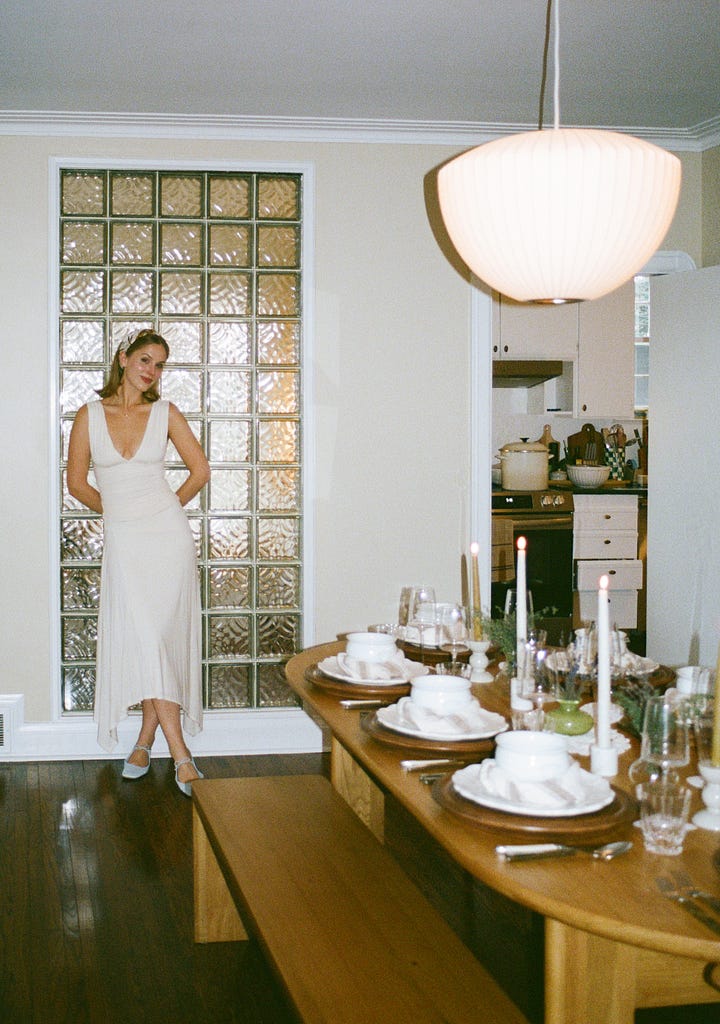
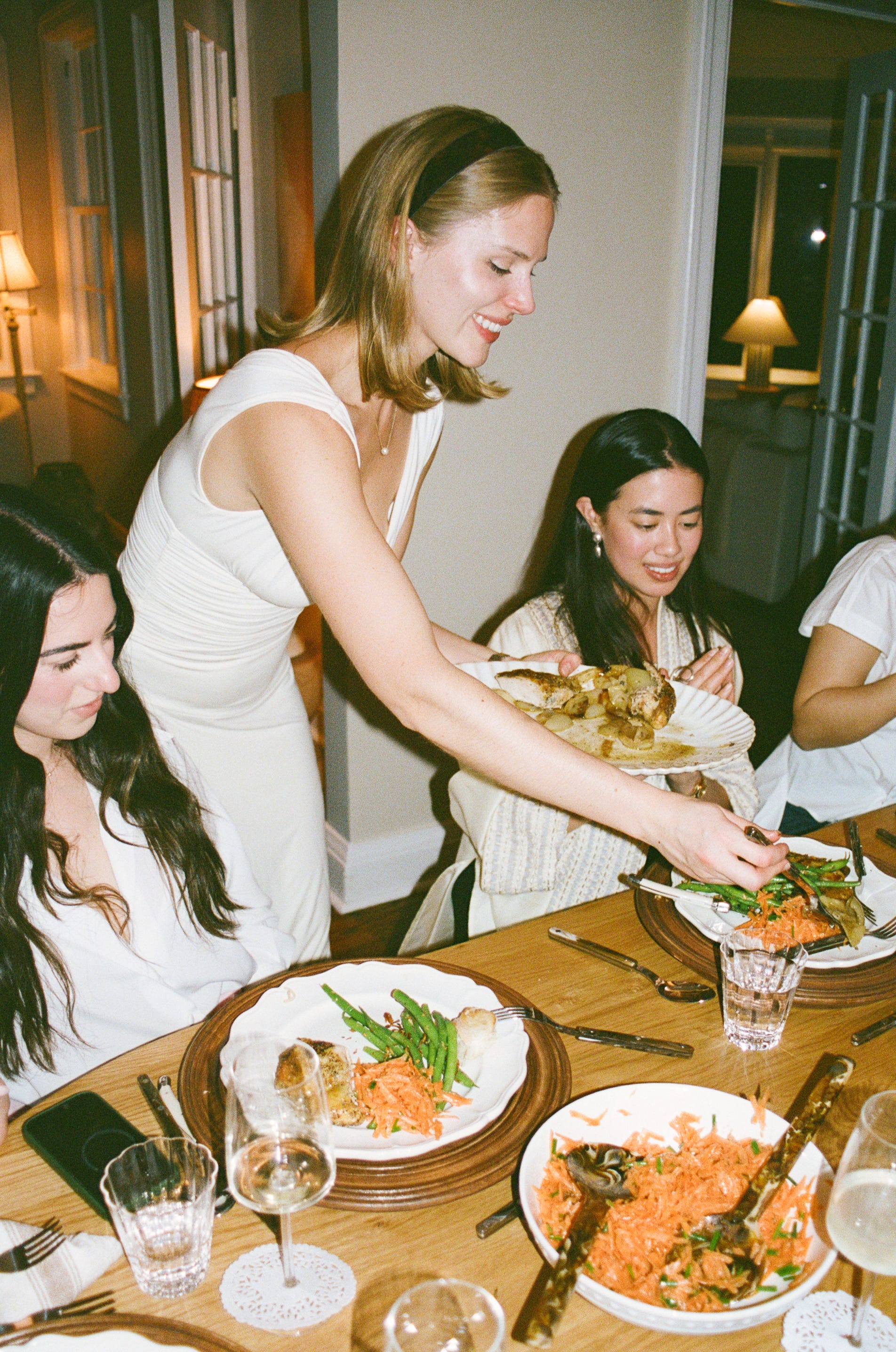
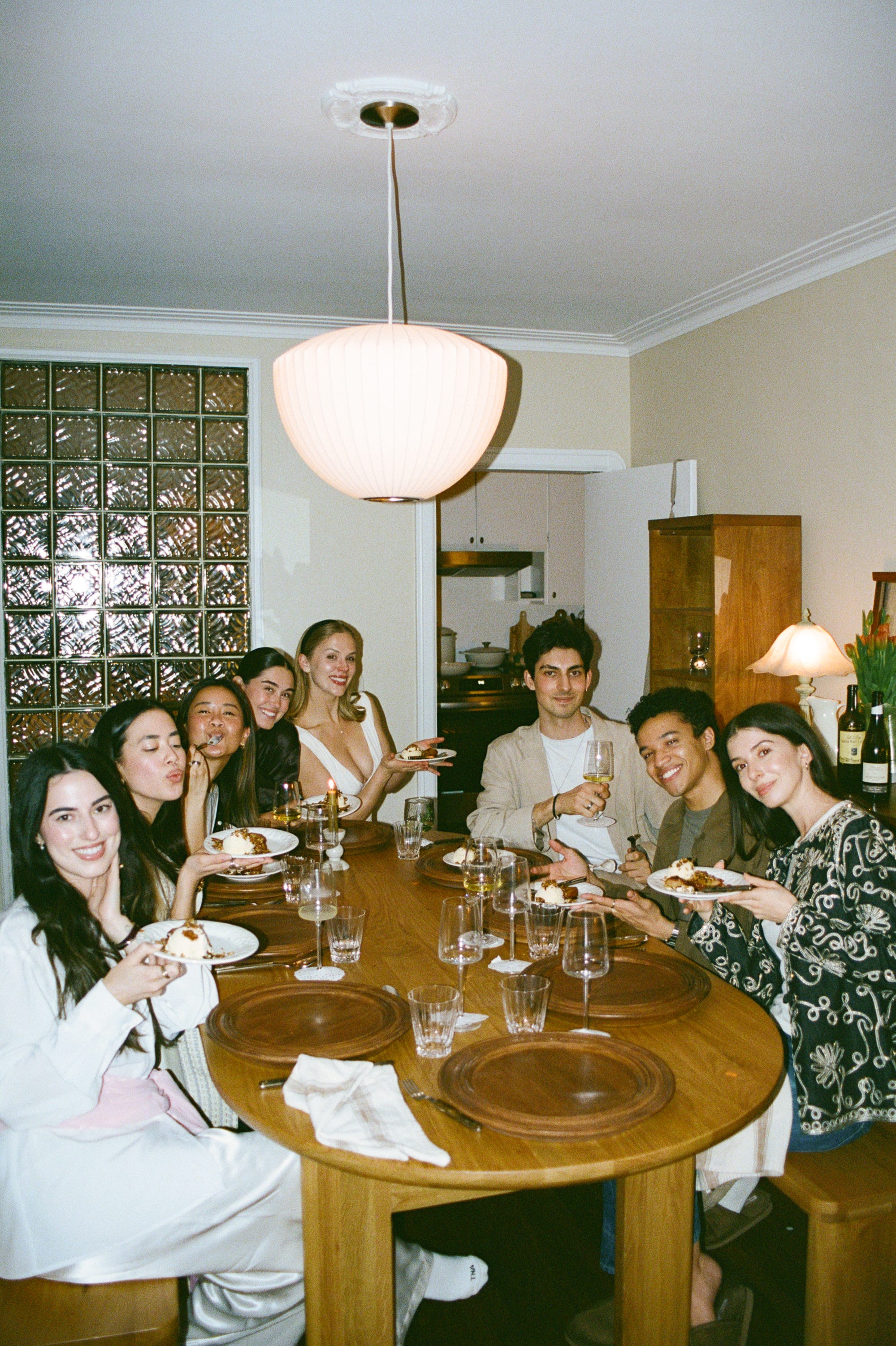
So I skipped the formal tablecloth and runner and doubled down on the wood instead, layering thick wooden chargers directly on top of my wooden dining table. I used my go-to white scalloped dinner plates, which appear at almost every dinner party, and handled soup bowls for the mussels. The forks and glassware were placed directly on the table with no coasters, placemats, or linens underneath.
I know, crazy, so casual.
The French influence came through most literally in the Sabre cutlery. Sabre makes pieces in so many colours, but I collect Buffalo horn , which has a beautiful marbled brown finish, with no two pieces exactly alike. It felt like the right balance for this table: special, but not too polished.
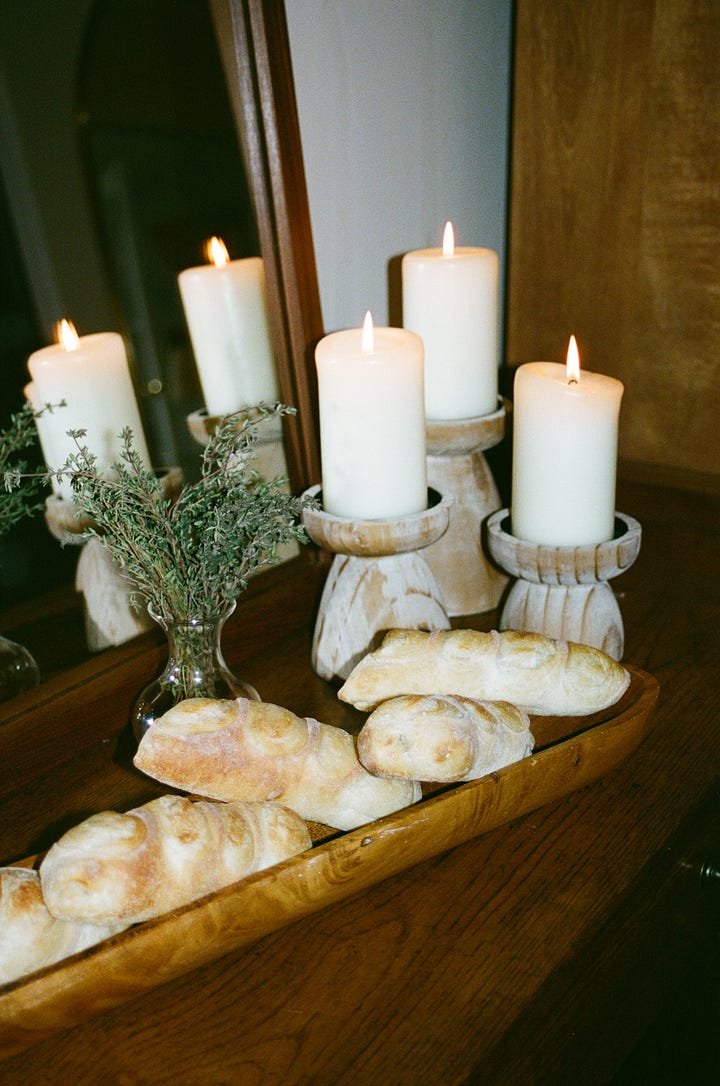
From there, I added smaller details that nodded to France and to Herbes de Provence without making the table feel too on the nose. I layered little pieces of lace under the dried lavender and made wine skirts from lace-effect paper doilies. Instead of fresh flowers, I used small bunches of thyme, rosemary, and dried lavender down the table, tying the whole setting back to the classic blend that inspired the dinner in the first place.
You may or may not have noticed, but I usually try to dress in a way that matches the theme, even on the days leading up to the party when it is just me setting the table, prepping food, and cooking alone in my kitchen. It is completely unnecessary, but I do think it makes the whole process more fun.
For this dinner, I interpreted “French” in the same loose, slightly imagined way I approached the table: lace, stripes, button-up shirts, denim, and a few romantic details. On tablescape day, I wore a white lacey blouse and on food prep day, a mariner-inspired crew neck.
The night of the party was probably the least overtly French of the three, but I decided it still counted. I wore a white halter and skirt set I bought in Australia. The skirt felt flowy and romantic, and I added a silk scarf in my hair, which only lasted half the night, I am considering it French enough. Most importantly, the set was comfortable and easy to cook in, which is the real dinner party dress code.
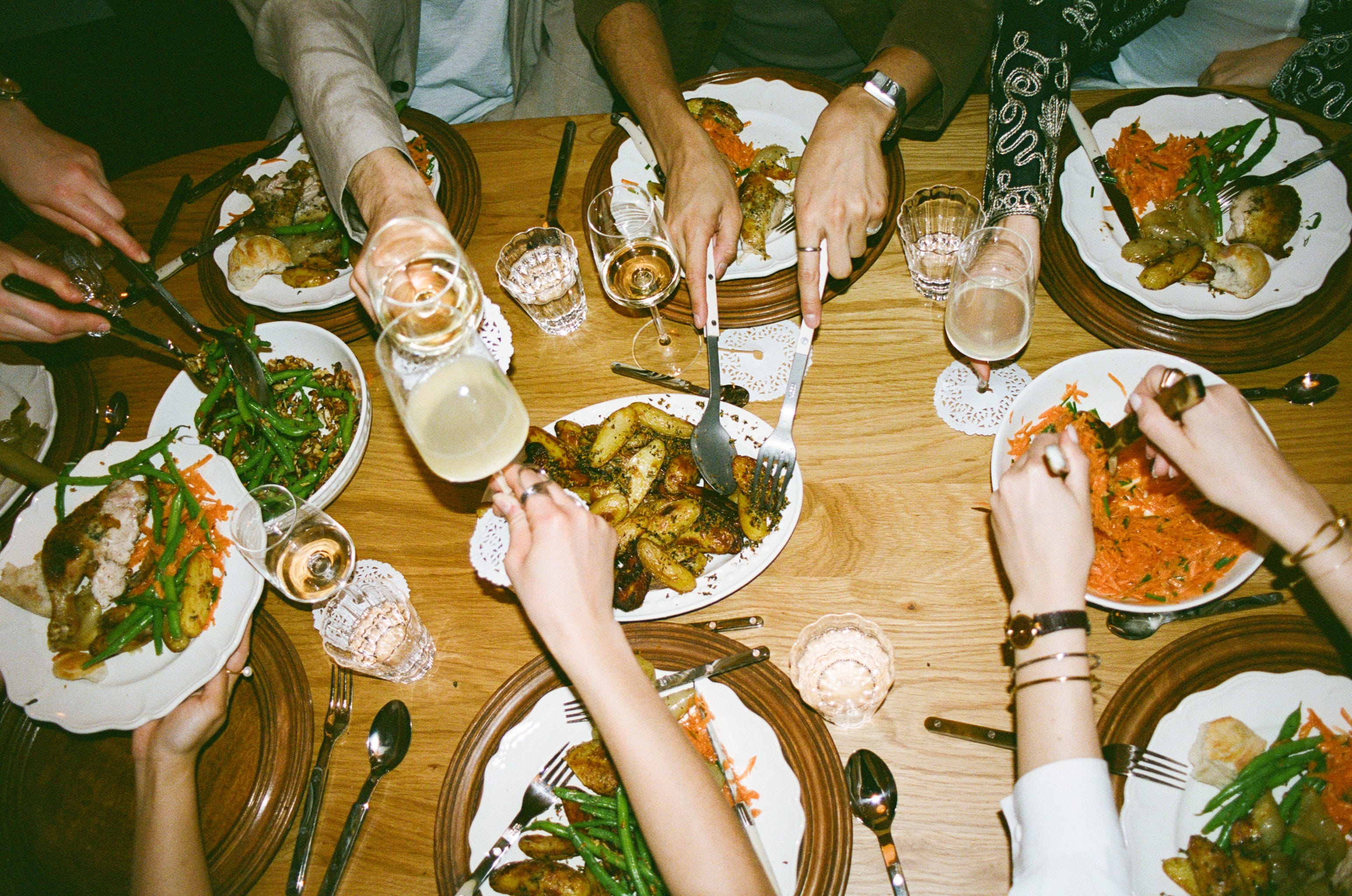
I have thrown a lot of themed dinner parties, 24 to be exact, and this one might be one of the most approachable. At its heart, it is a classic roast chicken dinner: comforting, familiar, and the kind of meal people actually want to eat. The French influence is what makes it feel a little more special: mussels in white wine, bistro-style carottes râpées, green beans almondine, and honey-butter thyme roasted pears for dessert.
Herbes de Provence is typically a dried herb blend, but I did not want to simply sprinkle it into every dish. Instead, I used the herbs that make up the blend in their fresh form, choosing one or two for each recipe. Thyme became the strongest throughline, carrying from the drinks all the way through to dessert. The goal was for the menu to feel cohesive, while still letting each dish taste distinct.
This is the kind of menu I would recommend whether you have hosted many dinner parties or are just starting out. Many of the dishes are make-ahead friendly, the ingredient lists are manageable, and there is not an overwhelming amount of chopping. Mussels may seem like a restaurant dish, but they come together in about 15 minutes. The pears can be made ahead and gently rewarmed while you sit down for dinner. And because roast chicken and potatoes are only stressful when the timing is unclear, I wrote a full guide to help you bring both to the table warm without spending the whole night in the kitchen.
Full menu breakdown below.
To Drink:
Tarragon Elderlfower Spritz
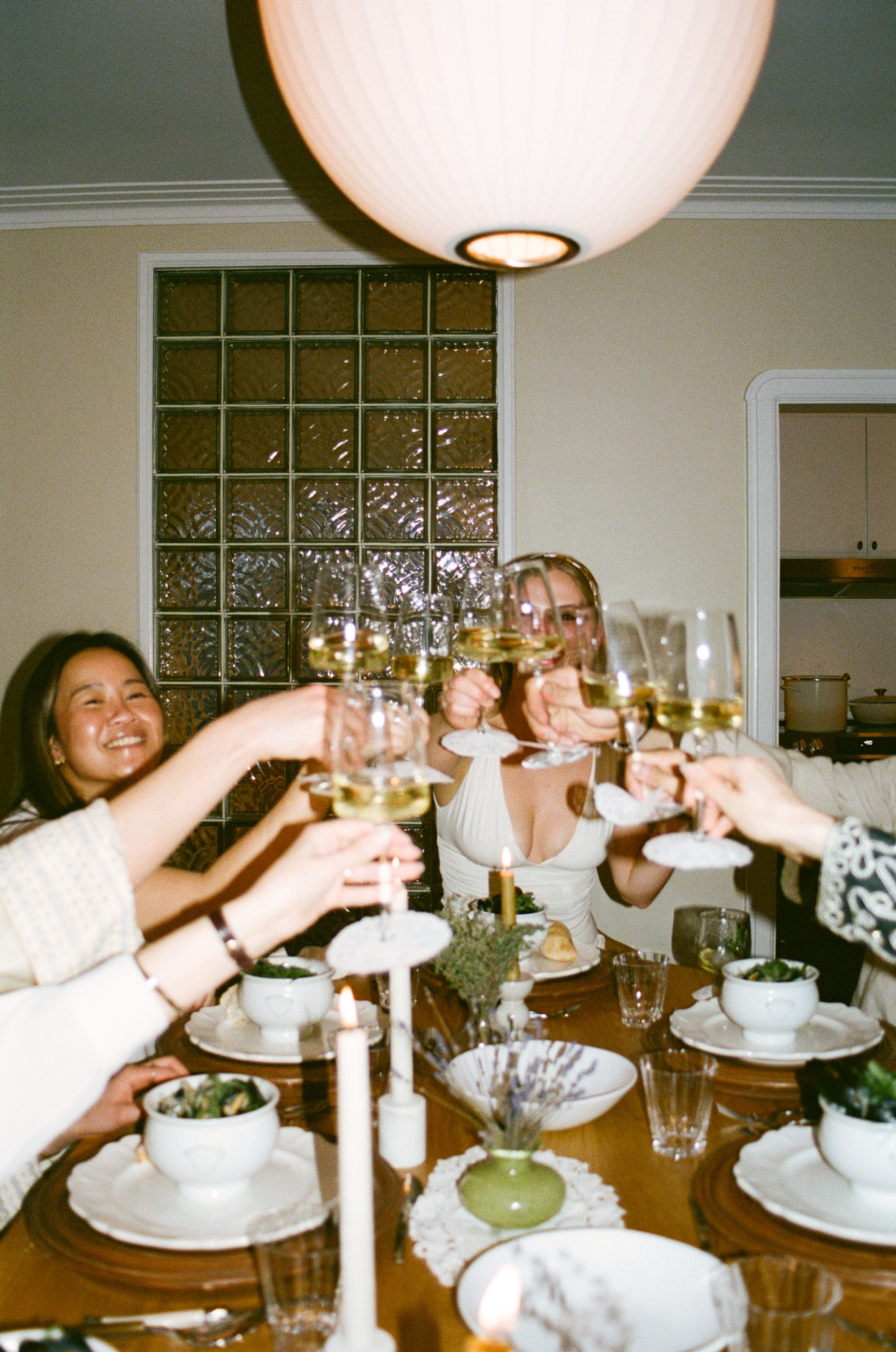
Selection of French white wines
To Start:
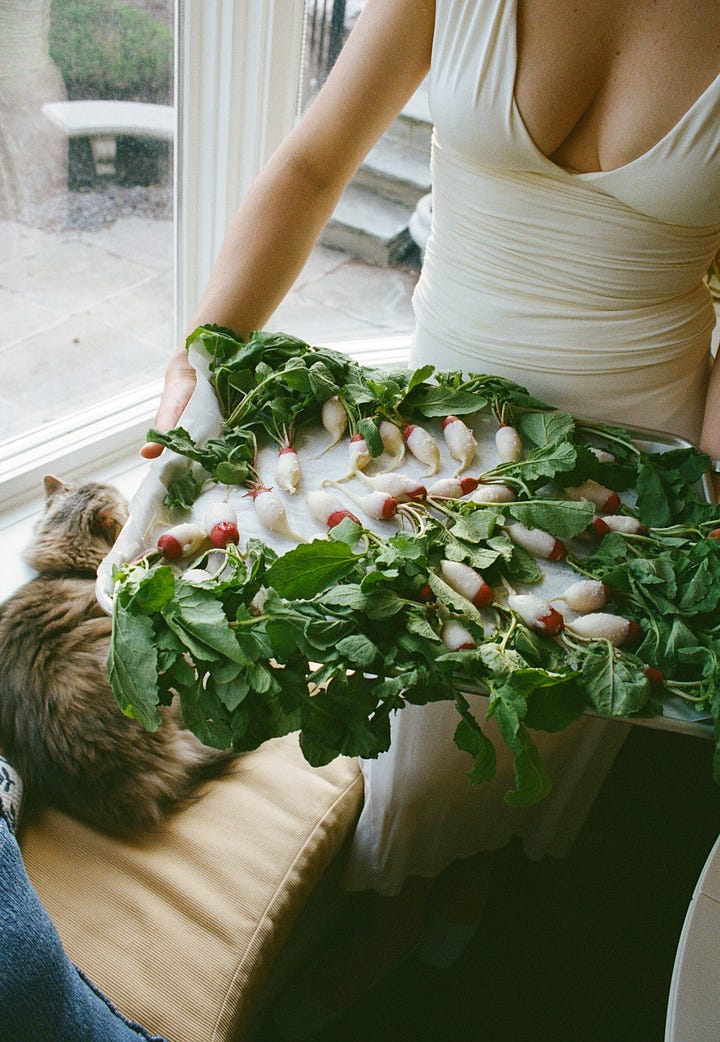
Butter Dipped Radishes
Baguette & Herbes de Provence compound butter
Mains:
Green Beans Almandine with Crispy Shallots and Rosemary
Carottes Râpées
Dessert:
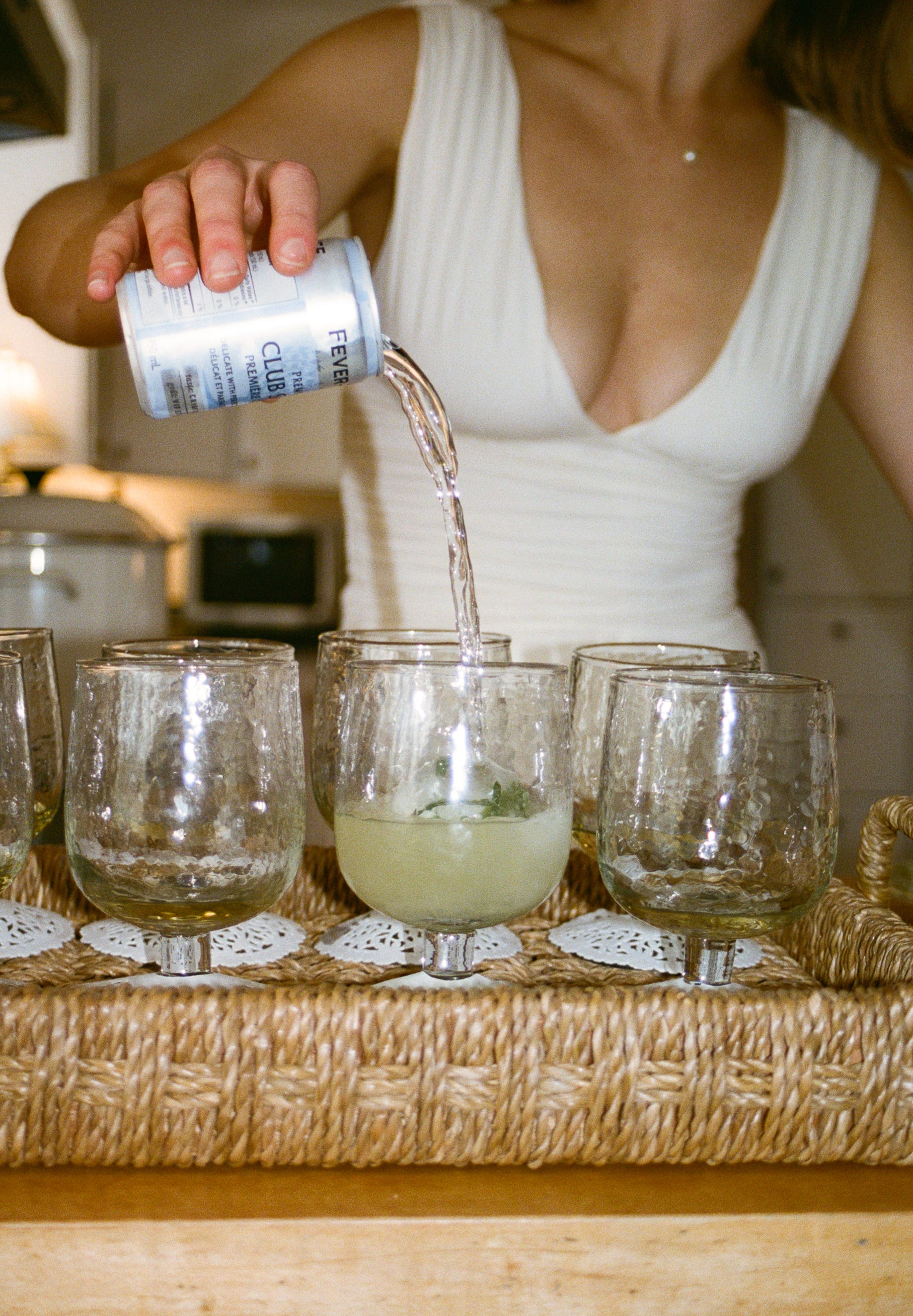
Recipe for the non-alcoholic drink in this Substack post.
(Yes, it is literally a Hugo Spritz with tarragon instead of mint.)
Ingredients:
1/2 oz St-Germain, or other elderflower liqueur
1 sprig tarragon
4 oz chilled prosecco
1 oz chilled soda water
Lemon wheel and tarragon, for garnish
Directions:
Add the St-Germain and tarragon to a glass. Muddle gently, then add ice, prosecco, and soda water. The traditional measurements are listed above, but I believe in measuring spritzes with your heart.
Garnish with a lemon wheel and tarragon.
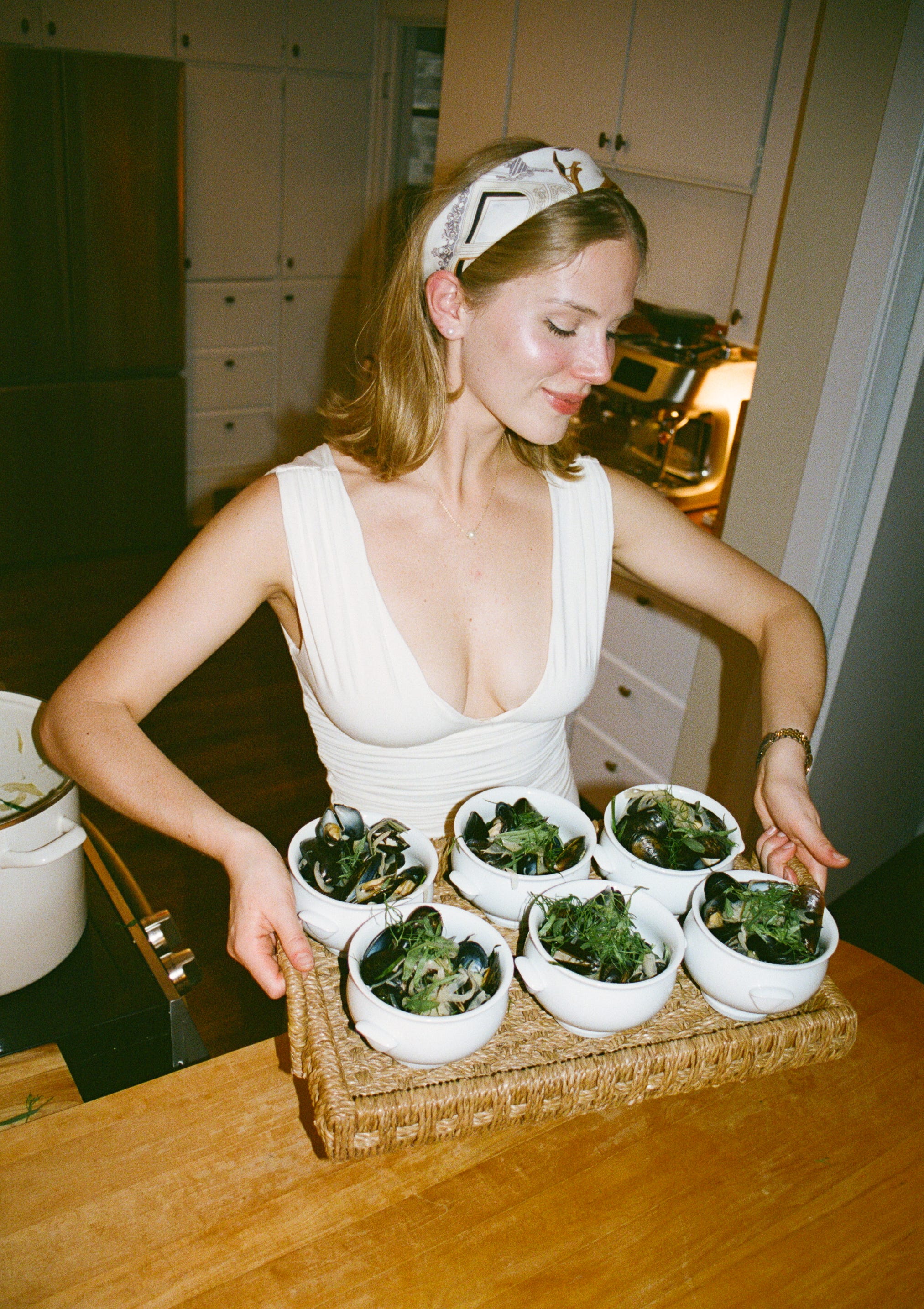
Recipe for the Mussels in this Substack Post
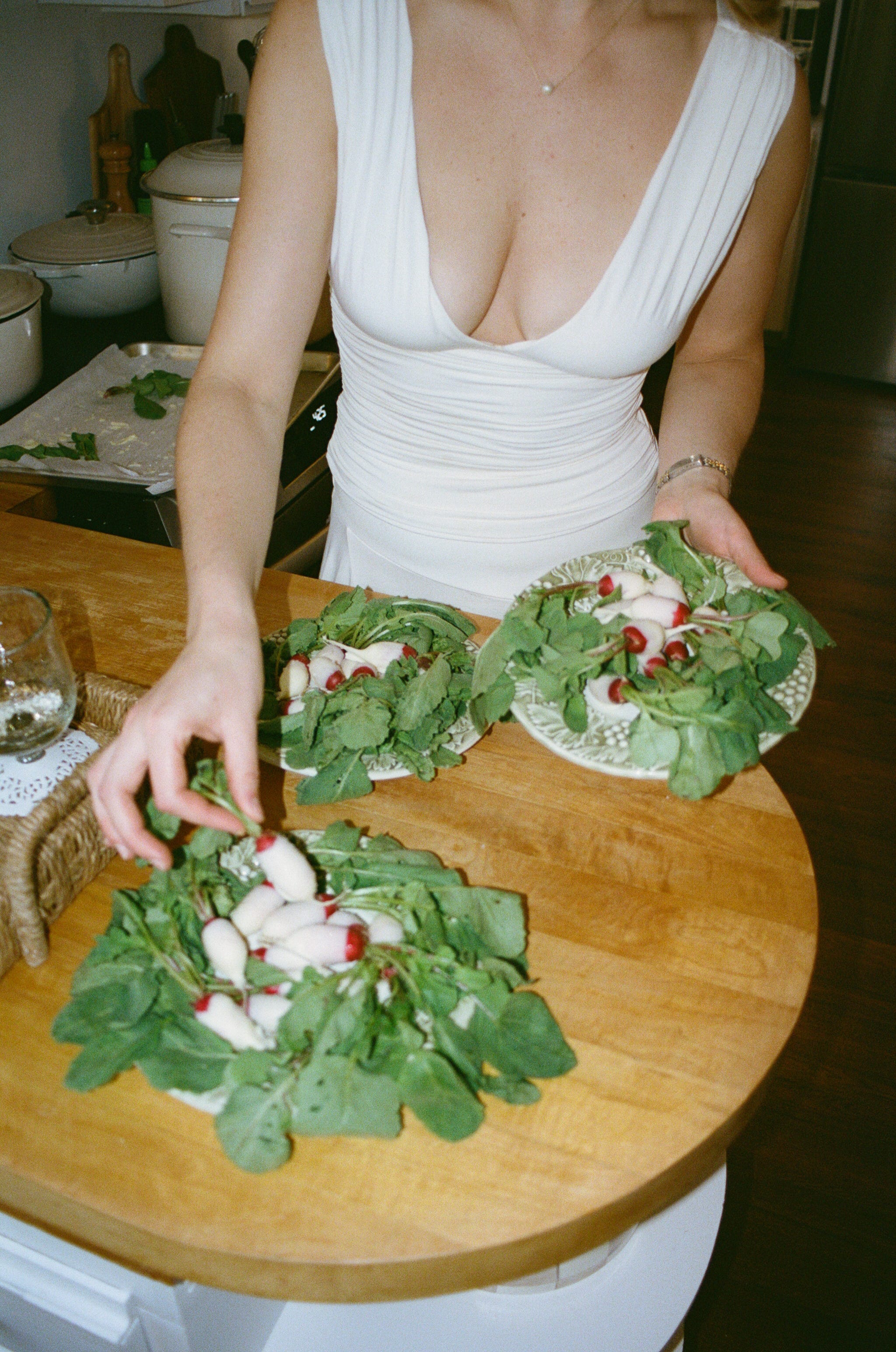
Ingredients:
Fresh radishes, preferably with green tops still attached
Salted butter
Flaky sea salt, for finishing
Directions:
Wash the radishes well and pat completely dry.
Place the butter in a microwave-safe vessel. Something taller than it is wide works best. Microwave in 5–7 second intervals, stirring well between bursts, until the butter reaches the consistency of melted chocolate and is thick enough to coat the radishes.
Dip each radish individually into the melted butter, allowing any excess to drip off, then place on a parchment-lined baking sheet. Immediately sprinkle with a little flaky sea salt.
Allow the butter coating to harden, about 5–10 minutes, before serving.
Make-ahead instructions: Radishes can be prepared a few hours before serving. I would avoid preparing them earlier than the morning of a dinner, because the greens can wilt in the fridge overnight if not covered very well, and the butter may develop condensation droplets.
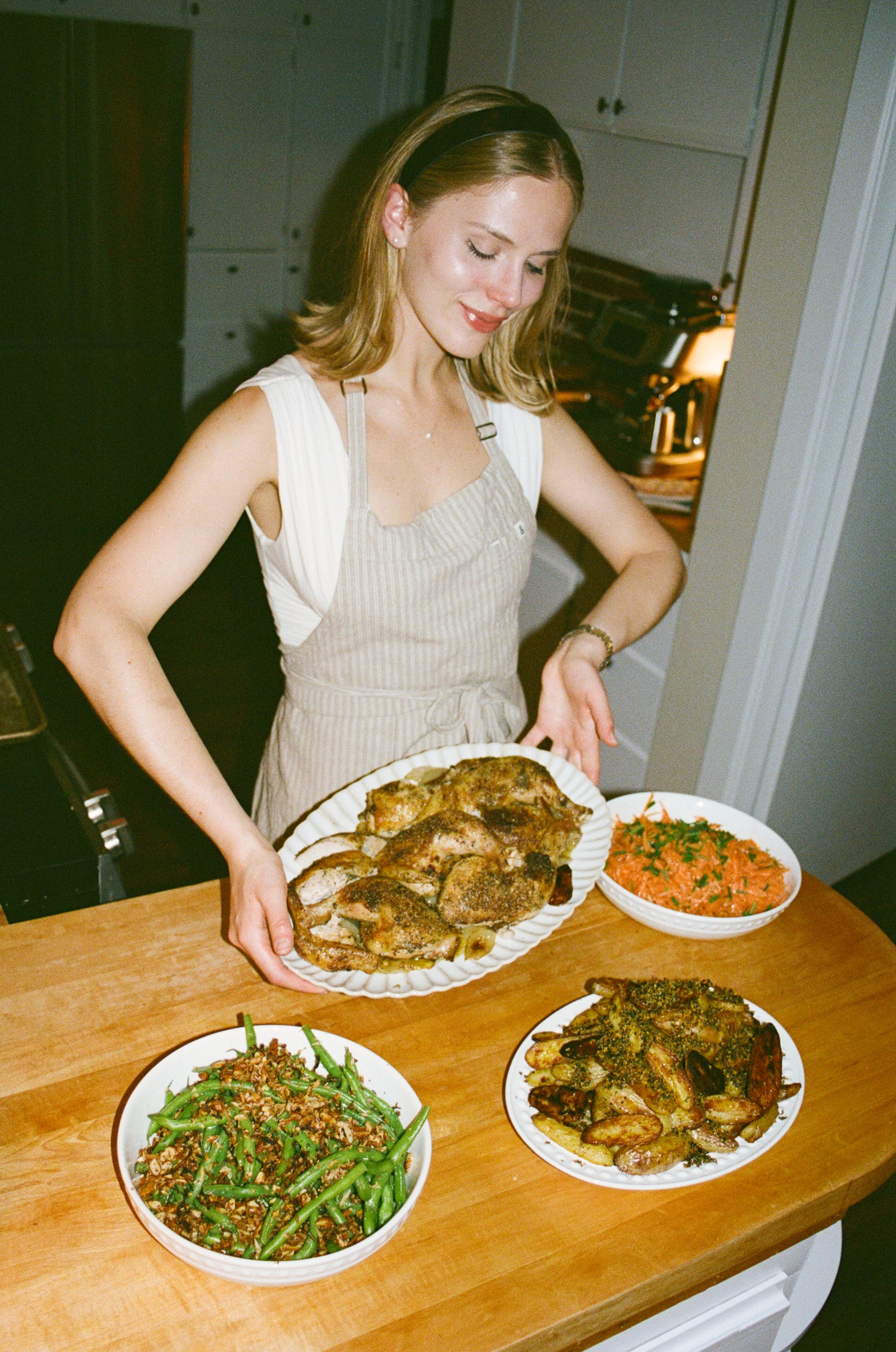
Full recipe & timing guide in this Substack post
Recipe in this Substack post, increase to 2 tsp rosemary if suing fresh
Recipe from David Lebovitz, linked here
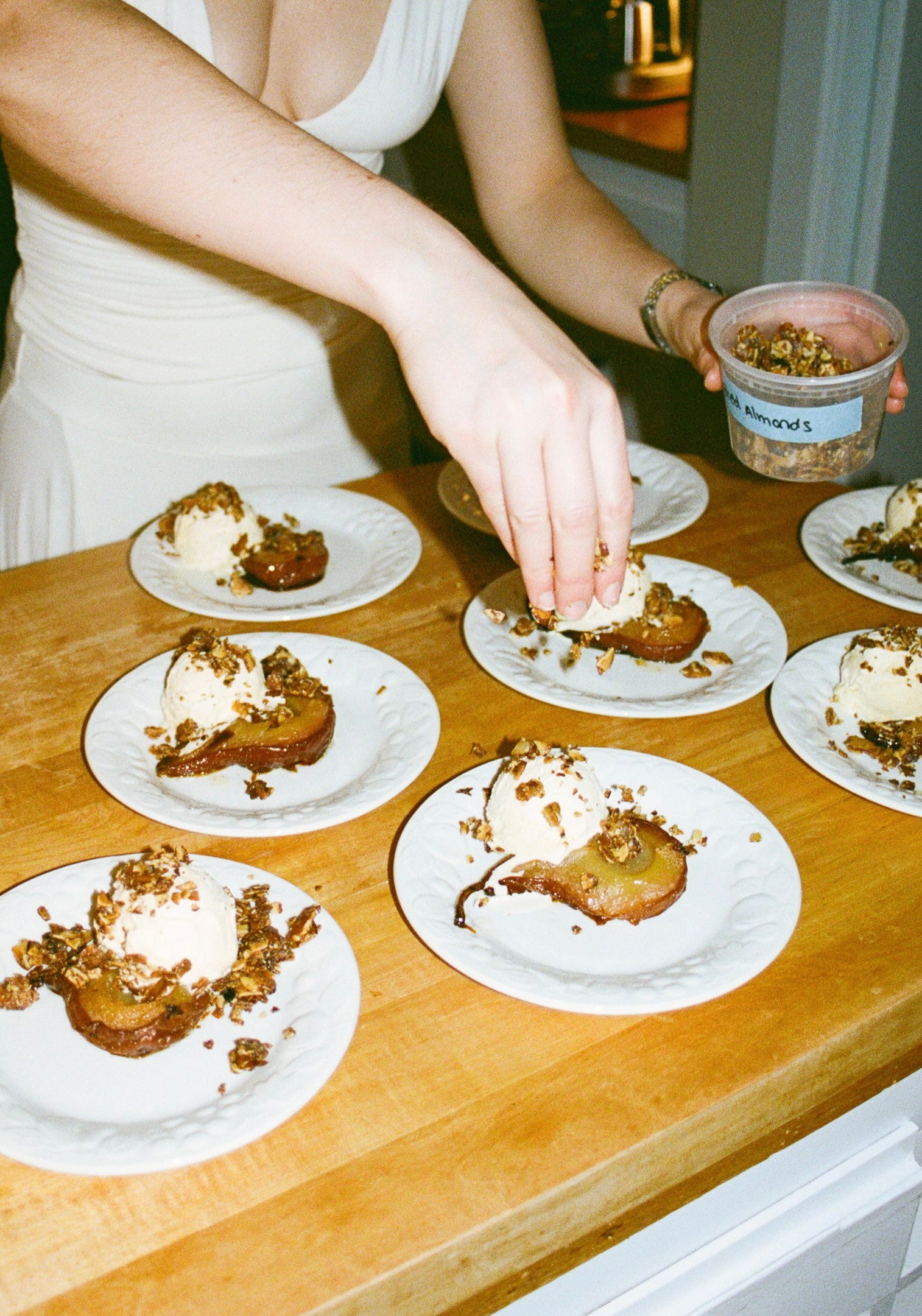
Recipe for Honey Butter Roasted Pears with Crispy Almonds & Ice Cream in this Substack post
Recipe for Vanilla Bean, Thyme and Honey Ice Cream in this Substack post
That’s all for now! See you next time At Isabelle’s.
No posts
Comments
Nothing yet. Say the first thing.
Sign in to join the conversation.