
Thank you for your interest in this matter.
Sadly, nothing today can reverse or delay menopause (ovarian aging).
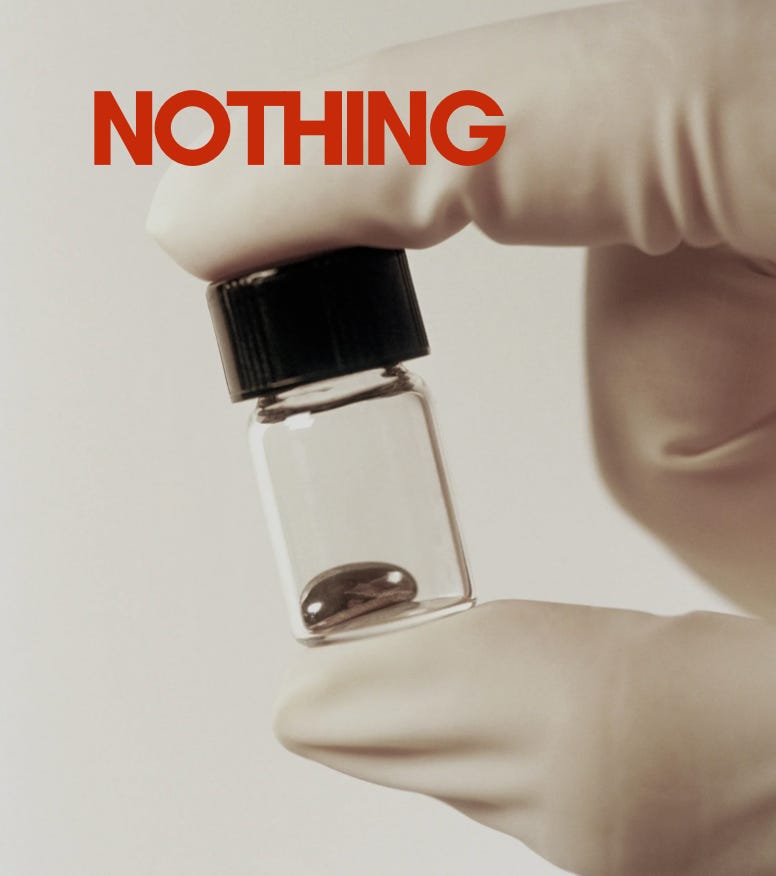
Most of what you are being sold is placebo. Though we all need some comfort, like reading our horoscope and believing it is written in the stars, there is no research to back these claims, because we have not done a lot of the research.
“Data says” might mean someone cherry-picked the literature. Also, how would any of us - mostly lay people - be able to prove the data was read correctly? Moreover, just so you are aware, it is very easy to sponsor studies and make it look like research. I have seen this done for digital health startups.
For those who know about PRP for fertility, rapamycin, or even ovarian cryopreservation, which we support as an option, it is important to know that most of these are still mostly fixes that help women go through conception. However, many of them are temporary or expensive procedures, and for many we do not know the long-term effects. Because again, it has not been studied.
For all the hate pharma gets and all the desire for clean and holistic living, to date we only have HRT (hormone replacement therapy) that treats symptoms. And this today (outside of the bio-identical compounded pharmacy options) is distributed and manufactured by Pharma.
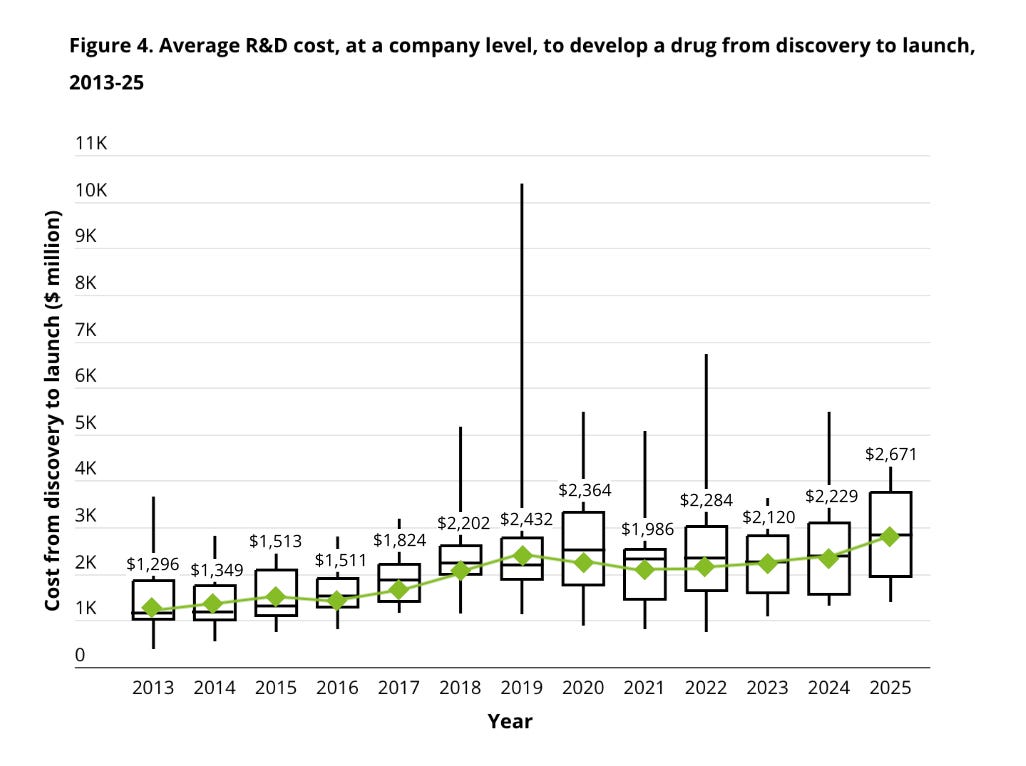
It takes over ~$2.6 billion to bring a drug to market. The journey takes 10 to 15 years, with an attrition rate where up to 90% of candidates fail during clinical trials.
Usually years of research take place (before the actual drug development starts), and then a thesis is formed for translation. This itself requires a researcher to get grants from the government, philanthropy, or organizations like ours.
Then you test things in vitro (inside a dish). If that works, then you need to spend a couple more years trying to prove this thesis, first in animal models (in vivo), which, for some, means starting at C. elegans (worms), and if that succeeds, moving up to mice. For ovarian health research, this is not ideal, as mice do not have menopause, so we have to induce it to do the testing.
A good way to increase your confidence that your drug will work in patients, and maybe save you some animal testing, is to test directly in human tissue. The problem is that human tissue is precious, and some tissues are much harder to come by than others. Ovarian tissue is a prime example. On top of all that, you need tox work: finding out how your treatment might harm people, which organs it hits, and how much room there is between a dose that helps and a dose that hurts. But just to get that far, you need millions in funding.
If you feel you had a good enough case in your hands, you may need to start a company, but please make sure it has buzzy terms attached to it (can you throw AI somewhere?) and your technology is “a platform,” because single assets are many times s*it out of luck. If industry at that stage thinks this is a hot area, if you come from one of the big Ivy Leagues, or had an exit on SaaS, or a type of venture-backed company, then you get funding. If not, then you usually don’t, and this is the end of the road, this potential lives on a shelf somewhere. (The solutions for a lot of diseases might just be sitting in a lab somewhere. The history of biotech has plenty of happenstance lore on this being the case.)
If all works up to here and you raise more rounds, or, even better, have an exit because pharma decided that your asset might just be better sitting in their libraries, you then need to pass the very critical stage of FDA approval through Phase 1, Phase 2, or Phase 3 clinical trials. These cost millions of dollars, and the success rate of each trial declines with each phase. An average of 40 drugs are approved by the FDA every year.
To do all of this, you need over 2.6 billion dollars, which only becomes possible if the funding rounds continue and pharma maintains an R&D strategy in the diseases or therapeutic areas you work on. FYI - most pharma companies in the world don’t have a women’s health strategy.
Today we have zero candidates to treat menopause.
This is partly because we lack a huge part of the research and data that would make people want to invest in it. And partly because defining an endpoint for treatment is non-existent.

Paula Amato@PaolaAmato
Women are spending more than $10 billion a year on nonmedical treatments, while some doctors-turned-influencers charge $2,000 for a consult
bloomberg.com
The Menopause Gold Rush Is Failing Women

12:03 PM · Jul 23, 2026 · 773 Views
1 Reply · 4 Likes
Bloomberg’s article by Kristen V. Brown, “The Menopause Gold Rush is Failing Women,” is a must-read in reporting on what is going on now that we are explaining all our ailments via perimenopause or menopause. I am not going to deny I have done this myself when I don’t sleep or forget things. Quick - give me the estrogen!
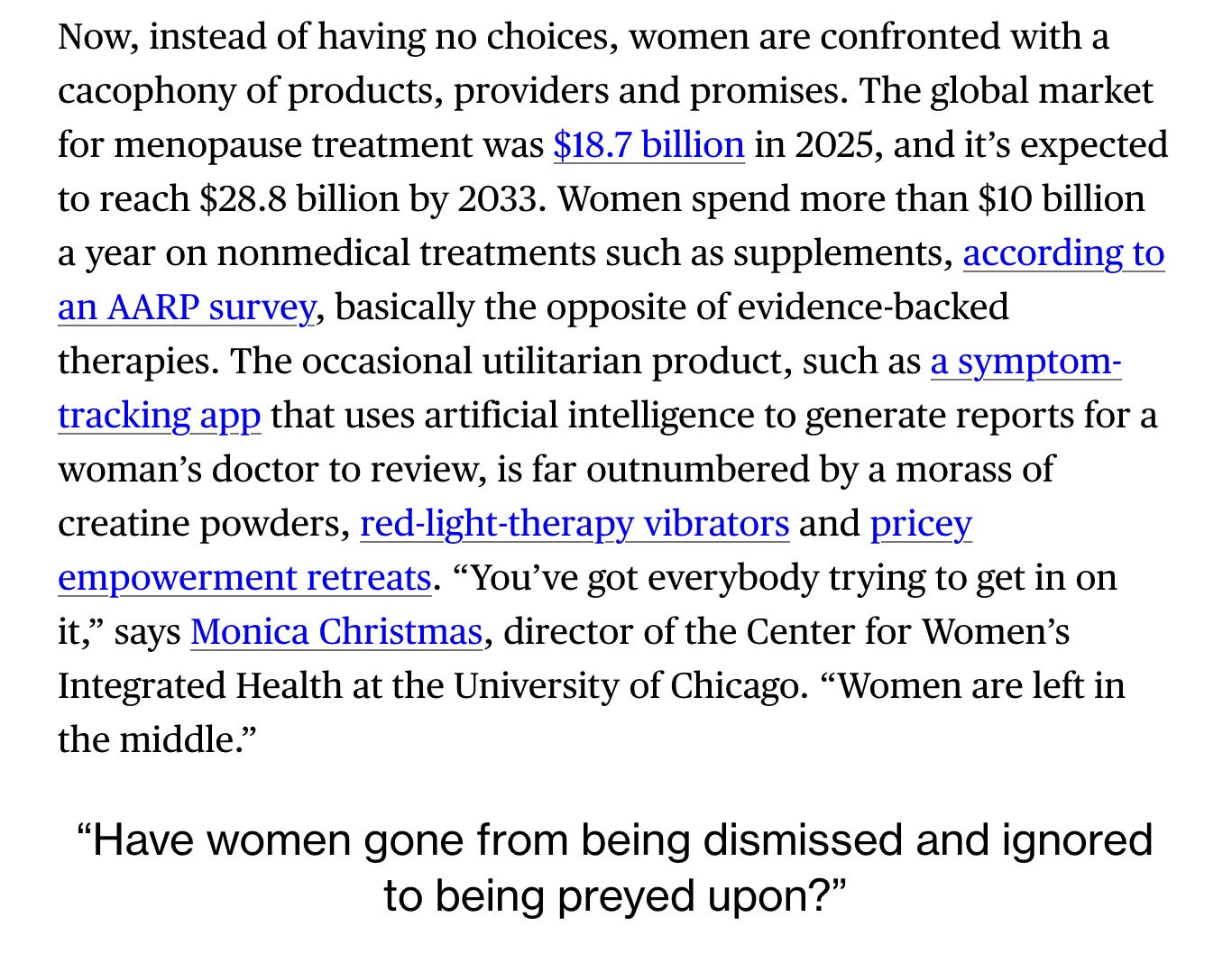
$10 billion is currently going to menopause products, providers, influencers, protocols, slogans, and companies selling you products or services that “treat” menopause.
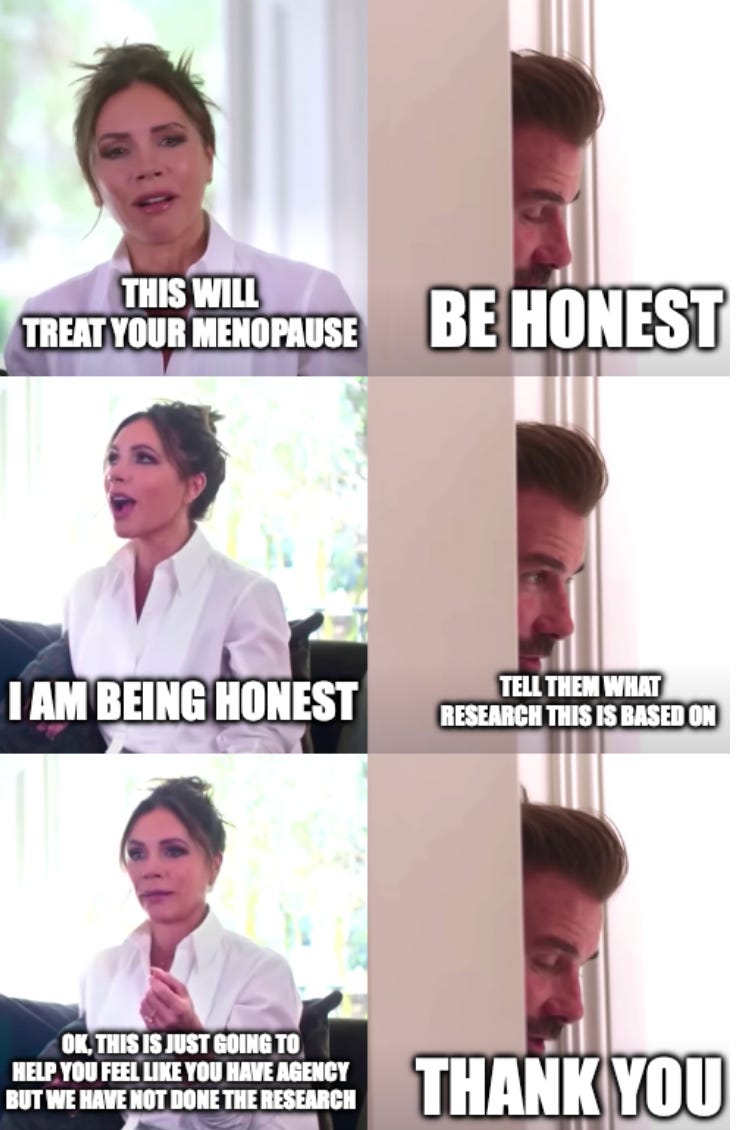
This is not me saying they should not exist. I love amazing branding, sleek packaging, and feeling I have agency. I don’t want to make enemies of all the celebrities and influencers selling you things. And your money, your choice. I, for one, love capitalism, but I just can’t help but wonder: if just 20% of those 10 billion was going to research and drug development, would we all live in better health?

Women made the luxury and beauty industry what they are. Even department stores were created at the turn of the century with women in mind (a random factoid I learned in a history podcast that helps with sleep). Women have always been the ones to generate most of the consumer spending. Bernard Arnault, the CEO and founder of LVMH, made his first move for his luxury empire by buying Dior, a dress company at the time. Dude did not have to wear dresses to understand the power of female consumer spending and how much we love stories. You and I made him rich.
Years ago, I was furious when a female Pharma consultant from a very well-respected agency with the ear and respect of the biomedical industry told me she did not know how to make a business case for women’s health. I was mad because I thought she was betraying women. Today, I fully understand what she meant, as I am constantly trying to make a case. I now fully understand the entire development pipeline and its roadblocks and know we lack the research and data needed to drive real progress and, in turn, capital. We need to put science first.
Only foundational scientific research that leads to new hypotheses and data will move the needle.
Usually only government or philanthropy can fund longitudinal data collection projects or foundational science. Without this, we will be here another decade saying about half the world’s population deserves better.
But women are good at creating new things. The system we built at AthenaBIO supports the earliest stage of research (the riskiest and where good science dies first), and it was community funded. This means it was the funders who believed in the mission who powered this endeavour. We now have a successful proof of concept and want to do more, working on a 2.0. More on that soon…
In the meantime, here is a resource about where science is today for ovarian health. It is free to download:
Or subscribe to be the first to learn more about a new initiative to get more attention on the ovarian health science we need to get the solutions we need:

I also welcome and invite the successful spokespeople and companies that are selling products to support research for a different future and to work with us.
Because if we can go to Mars, you are damn right we can figure out more than having a single solution that treats symptoms (HRT).
P.S. - Thank you to that first reader who pledged funding to our newsletter without us even asking. You know who you are, and it is people like you who help us fund research, academic conferences, and fellowships that help scientists.
We hope you know that you are making a real difference. (If you are OK with us sharing your name, let us know!)
Thanks for reading AthenaBIO Newsletter. This post is public so please feel free to share it.
No posts
Comments
Nothing yet. Say the first thing.
Sign in to join the conversation.