
Doug Block put out a post A Film R/Evolution is Coming this morning (now a week ago) that got me thinking! Go read it. He and his colleague Nina Gilden Seavey are making a case for documentary filmmakers to think about different ways of telling the stories they care about, rather than only thinking about the feature doc format (or even the short doc or doc series). The idea being that we are storytellers first, and filmmakers second. And there are more ways to tell stories than we tend to give ourselves permission to consider. This is GREAT and necessary.
I’ve been thinking about something similar and I’ve been hearing others ideating similarly. It’s in the air. I mean why shouldn’t it be? So some additional things to add...
First, I want to be clear about the framing. I’m not going to use the word rethink here. I want to go further and perhaps be more inviting. What I want to say is...open your mind. Because our film world has changed and there are now ways to connect stories with audiences that weren’t available before, or weren’t viable before, and they deserve serious attention.
These other formats we need to be open to aren’t new forms we’re inventing. Essays, podcasts, books, serialised storytelling, short video. People, artists, storytellers, are already doing these things. People are having real impact in these formats. It’s just that documentary filmmakers haven’t always seen them as part of their toolkit. Or as legitimate paths for the kinds of stories they want to tell. That’s where we need to dive in.
Doug and Nina’s core point that’s great, is that the story is the thing. Not the format. The feature doc is one way to carry a story into the world. It’s a powerful one. But it’s not the only one, and right now, for a lot of filmmakers, the format might be what is keeping their stories from reaching people.
Nina puts it directly in Doug’s post
Documentarians should think like ecosystem builders, not just filmmakers.
The idea being that you build a sandbox around your material, essays lead to podcasts, podcasts lead to books, all of it reinforcing the story’s world and broadening its reach. And somewhere in that chain a film emerges, or doesn’t, and either way the story has been alive in the world the whole time. You haven’t spent three years making something in silence and then handed it to a system that may or may not decide to do anything with it. You’ve been in conversation with your audience the whole way through (as an aside you should read this post from Ben Odell that talks about the recent distribution success of the fiction feature Obsession. There are some funs bites about how the filmmaker leveraged what he learned from creating in front of his audience).
Being in conversation with your audience, that changes things. Not just strategically. Creatively too.
There’s something I’ve been thinking about that is a natural extension of the same thinking from Doug & Nina. And that’s the question of where the TikTok or Instagram based documentary is.
Yeah give this thought a beat :)
Not in a gimmicky sense. I mean genuinely, where is the documentary story that’s been developed and told and grown through short video, the way other stories have been developed and grown through podcasts? The Telepathy Tapes is an interesting case to look at here. My understanding, and I’ll admit I’m not completely down on all the details, is that the filmmaker started out wanting to make a feature doc, couldn’t make it happen in that form, pivoted to a podcast, the podcast became genuinely successful, and now there’s a film. The podcast wasn’t a consolation prize. It was the thing that built the audience and the momentum that made the film possible.
And actually this isn’t a new idea at all, it’s just new territory for documentary filmmakers. Hollywood has been doing this for decades. You have an idea, you don’t go straight to the film. You write the book first, or the magazine piece, the Vanity Fair or New Yorker longform that legitimizes the story and builds an audience for it, and then you adapt it. Sometimes it’s a graphic novel or a comic book that gets optioned into a feature. The IP gets proven in one form and that proof of concept, that built-in audience, is what makes the film financeable. Writers and producers have always understood this, and leaned into it, sometimes by choice, sometimes because the direct path to a film wasn’t open, and finding another form first was the way to get the story made at all. Documentarians are starting to think the same way.
So outside of a book or a magazine article etc what’s the version of that on short video? The medium is different, the time spans are shorter, it’s not as easy as just cutting a 90 minute doc into one minute pieces. But the underlying principle is the same. You have access to a story. You’re a storyteller. You can start sharing that story in a form that people can receive right now, build your audience as you go, and let the bigger form come when the conditions are right for it.
There’s a version of this that feels really urgent to me around stories that are time sensitive. Think about what’s happening with recent ICE raids, in Minneapolis, across the country. If you have remarkable access to that story as a filmmaker, the traditional process of getting it funded, filming it, editing it, finishing it, and getting it out takes years. By which time the story has moved on, the political moment has shifted, the urgency has passed. What if you could share it as it evolved? Put the story out as it’s happening. Build your audience in real time. And then let that footage, those relationships, that community, feed whatever the longer form version becomes. The impact of the story doesn’t have to wait for the film to be finished.
Years ago, probably around 2010, I came across a transmedia project, which was the buzzword then, built around what happened after the L’Aquila earthquake in Italy. Residents had been relocated to temporary housing, essentially a well-appointed refugee camp, and a team of filmmakers went in and started following different characters. A mayor, aid workers, residents trying to figure out how to rebuild their lives. And instead of making a film and releasing it at the end, they built a website with a grid of boxes, one for each person they were following, and they updated each story as it developed. Aka a web series (remember that term). Sometimes weekly, sometimes less. Viewers could follow in real time. Funders could see the impact of the storytelling as it was happening. And then, when the filming was done, the team was going to cut a feature doc from all that material. (If you know this project, tell me in the comments. I’ve been trying to track down recently as an example for my students.)
That was the prototype. Before TikTok existed. Before Reels. Before the platforms that would make that kind of storytelling genuinely scalable were even a thing. Imagine what that could look like now.
There’s a personal reason this resonates with me too. I love my job. And I love painting walls.
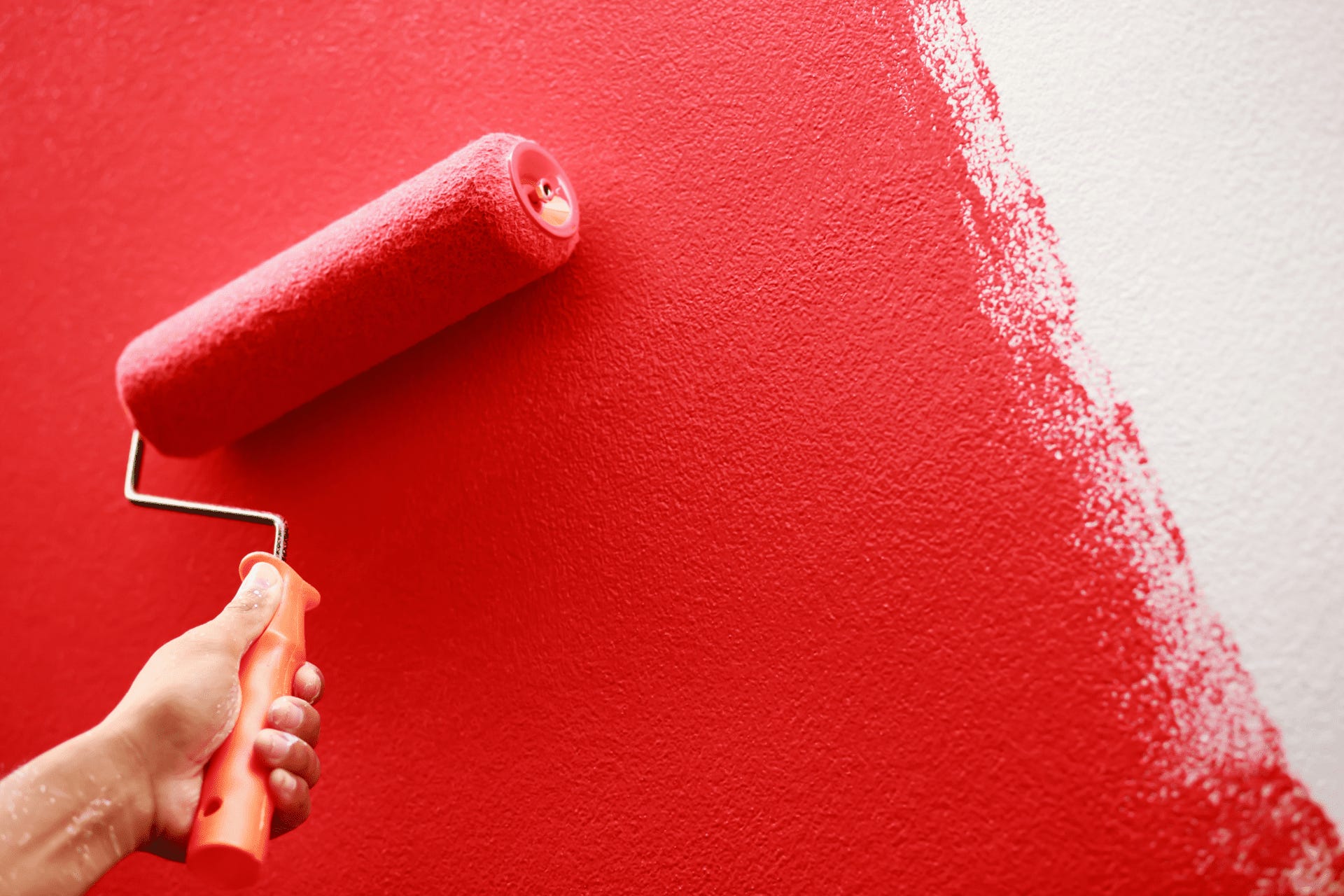
Which sounds like a non sequitur but bear with me. I like painting because I start a day, and by the end of the day the wall is painted. I can stand in the room and see what I did. My actual job, the job of making films, involves working on things for years and not being able to show anyone anything, sometimes not even being able to talk about what you’re working on because the subject is sensitive or the timing isn’t right. That gap between starting and showing is hard.
And it’s not just hard for me. It’s hard for the participants too. The people who’ve been generous enough to let you into their lives, who at some point start asking, quietly or not so quietly, why do you keep calling? Why do you want to come film at Thanksgiving? Why do you want to come to my first date, my new job? They’ve given you access to some of the most intimate parts of their lives and they’re waiting, just like you are, to see what comes of it. And we as documentary filmmakers, we really live by the willingness of our participants to collaborate. That willingness is everything. So what would it mean if they got to see the impact of what they were part of, as it was happening?
There’s something worth sitting with about the current model. The filmmaker at least has the work itself to hold onto. The participants don’t even have that. They just have to trust that something meaningful is being made. But if they could see it landing, see it resonating, receive something back from the process while it’s still going, that changes the relationship. They get to receive too. Not just give. And they might be more willing, more open, more invested, because the thing they gave their time and their story to is already doing something in the world.
And it’s not just participants. Think about funders and financiers. If they could see the impact of the thing they’re supporting as it’s being made, the audience responding, the conversation building, that’s not nothing. That might actually encourage them to stay in, or go further. The transmedia project I mentioned earlier, the L’Aquila one, had funders who could see the storytelling playing out in real time. That’s a very different relationship with your money than writing a cheque and waiting two years to see what comes back.
This kind of storytelling, opening up the format and the platform and the medium, means you get to engage with audiences and participants about the work while you’re making it. You get to see what lands. You get to adapt. You get to live with what you’re making rather than finishing it in a sealed room and hoping for the best when you finally let it out.
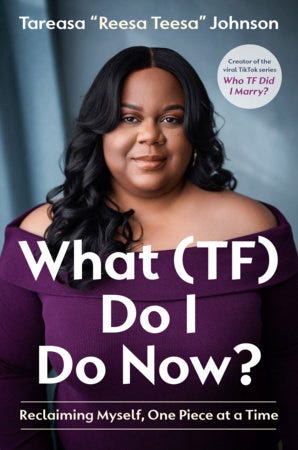
I haven’t done this myself yet and I am genuinely curious about who’s doing this well. The closest example I can point to, and it’s not from the documentary world, which is kind of the point, is ReesaTeesa. In early 2024 Tareasa Johnson, an Atlanta woman, posted a 50-part TikTok series called “Who TF Did I Marry?” talking directly to camera, telling the real story of her marriage to a man who turned out to have fabricated almost everything about his life. Nearly eight hours of content, released across a few days, 500 million views by the following year. She went from unknown to signing with CAA in weeks. A TV adaptation is now in development with ABC. She’s not a filmmaker. She just had a story and started telling it. That’s the thing.
Doug and Nina are doing a talk at the DC/DOX Film Festival on June 12th built around exactly this. Go if you can or look out for whatever they share from it. The conversation is worth being part of.
And if you’re a storyteller who’s been holding onto a story waiting for the feature doc conditions to be right, maybe just ask yourself: is there another way in? Is there a version of this story you could start telling now, in a form that people can receive, that would actually get the story moving rather than keeping it waiting?
Open to that. See what happens.
Welcome to the new subscribers and followers. If you want to know what this substack is all about, start here and then work through some other older posts like this one and this one. Participate with your comments and suggestions. Share things you like and get your friends to stop by. Here’s another plug for the OG case study post which I’m constantly updating, so send me any case studies I’ve missed that you found useful! I’m in the middle of creating a budget template for direct to audience distribution and looking for you to share with me your data around what you spend your budgets on. DM me! Lastly this past post about audience is a good companion to today’s reading.
Comments
Nothing yet. Say the first thing.
Sign in to join the conversation.