
Three months ago capex looked indestructible. Hyperscalers kept raising guidance. Earnings kept beating. That combination is what held the market up through the Iran war, when nothing else could.
That’s not the setup anymore. Over the past two months the capex story has come apart from several directions at once:
Oil higher, and inflation with it
Rates staying high, which is what finances the buildout
Credit spreads widening
Chinese open source models closing on frontier models, which pressures the margins that justify spending
None of these broke the trade on their own, but they’ve been slowly deteriorating sentiment for tech. In fact, the worst momentum stock drawdown ever recorded has happened over the last month.
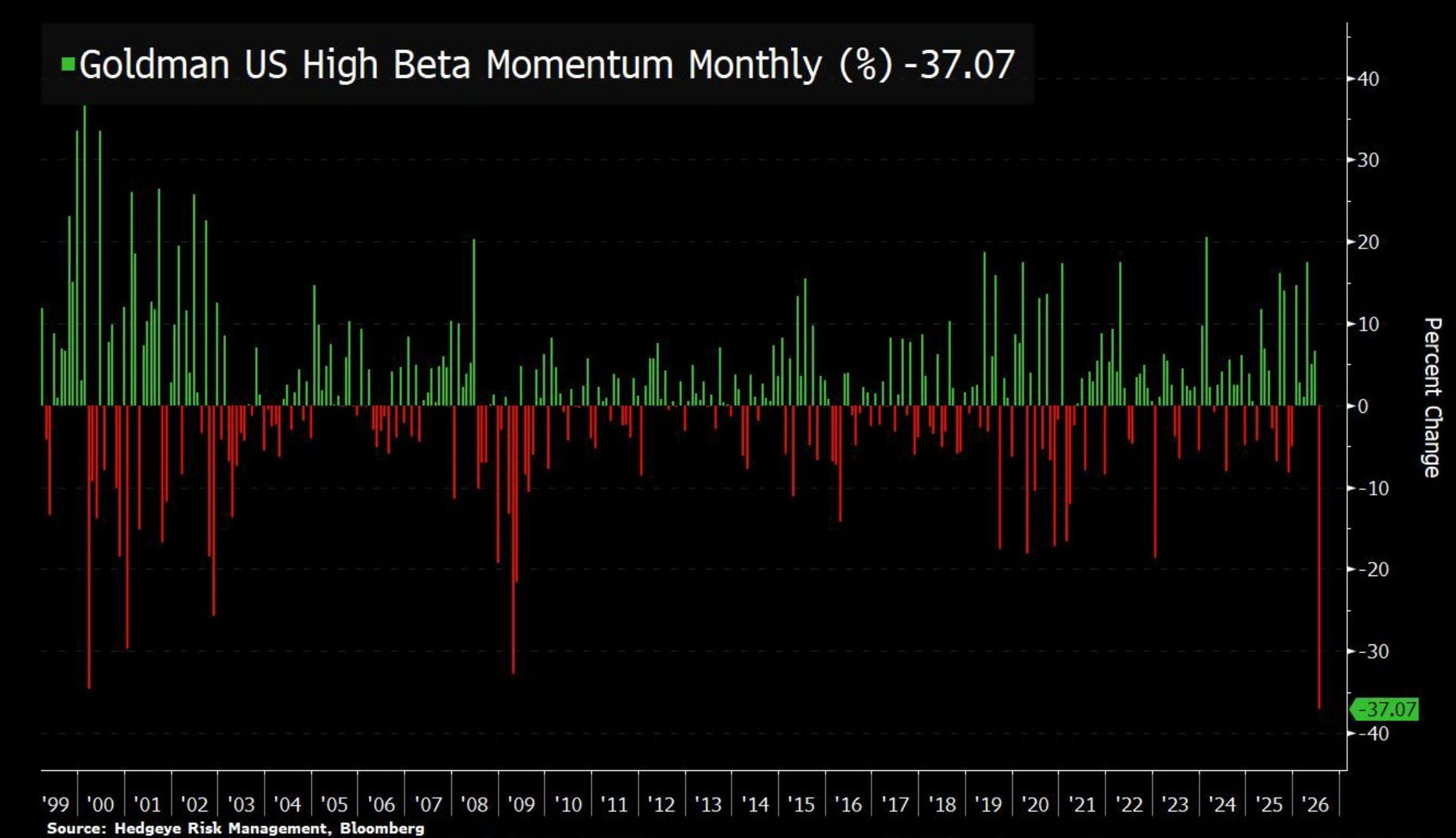
That’s the anxiety going into this afternoon.
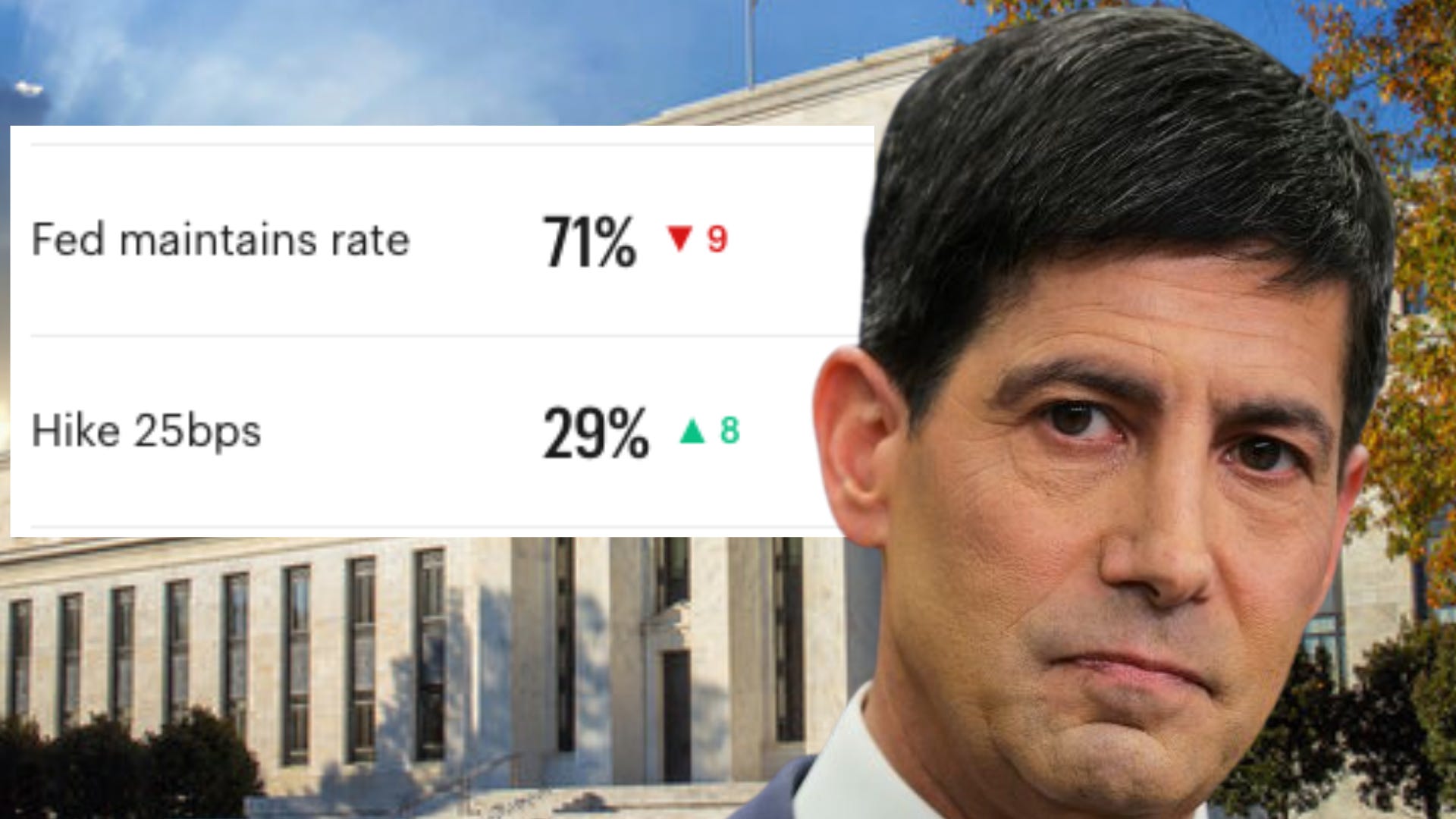
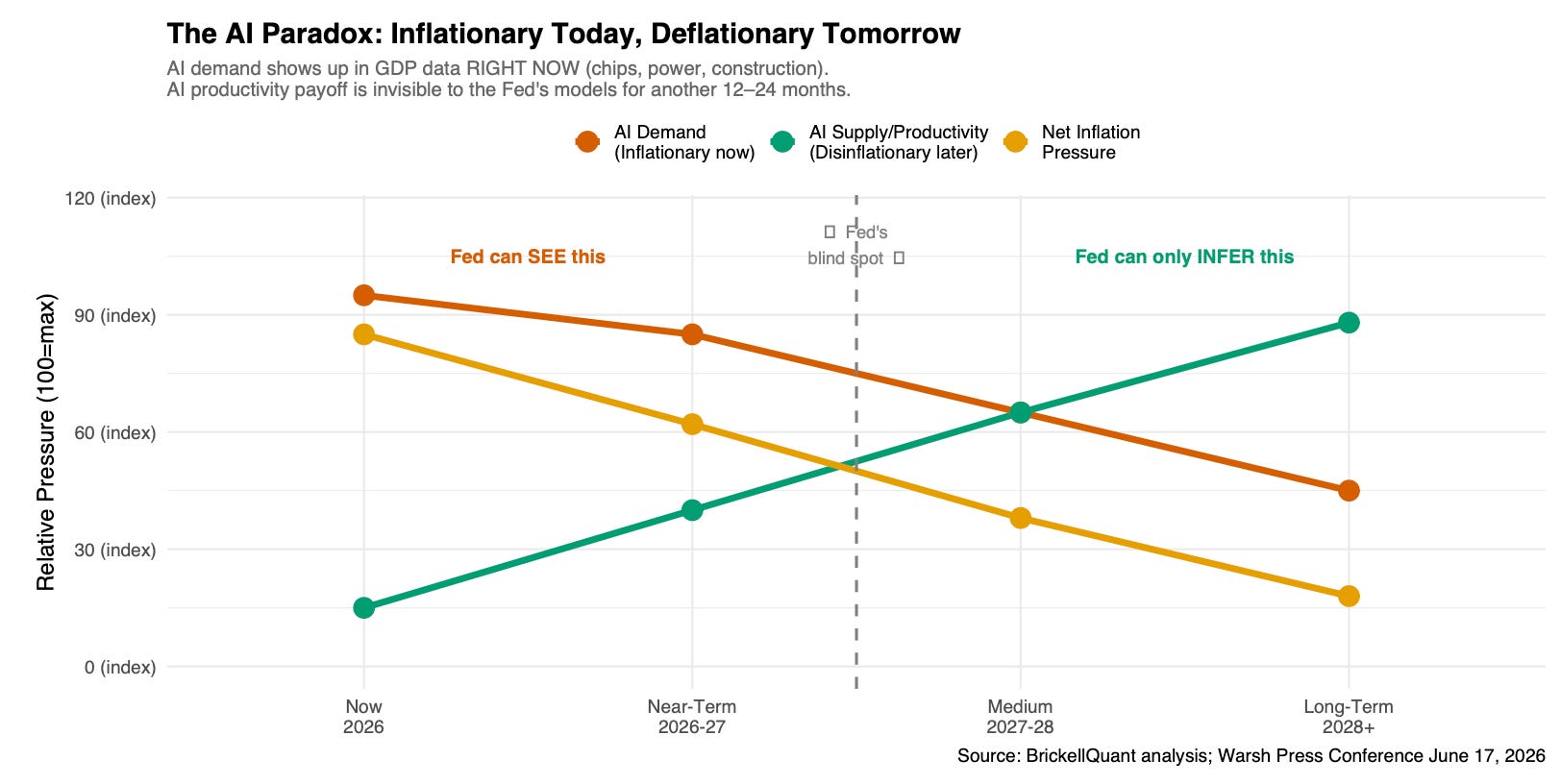
The FOMC decision will land this afternoon, and markets are pricing a hold at 3.50 to 3.75%, this is also what we expect. We’ll be focusing on Warsh’s language in the press conference afterward, specifically whether he gives any signal about September. This meeting won’t come with updated future projections, so the press conference is all we have to work with. We think that understanding how these two machines work (inflationary demand now, and deflationary productivity later), is the single most useful lens for reading whatever Warsh says.
The Fed doesn’t have every answer right now, and at this point in the cycle that’s normal. Cook said she’s watching for disinflation and will act if she doesn’t see it. However, the committee is split on where rates should go by year end, and Warsh has stayed out of that debate by not submitting a dot of his own. We don’t think that split is a warning, because the committee arguing over where rates should go while the chair keeps his options open is how the Fed is supposed to work when the data is still moving (especially with a technology as new/uncertain as AI).
The productivity payoff from AI is in the exact same spot, because we know the investment is here and we can see it flowing through the economy. Yet, we can’t see how much of that spending is making the economy more efficient.
The most important factor, outside of the US, is oil. WTI near $80 is manageable but another escalation in Iran pushes that toward $100 and changes inflation math in a way the Fed would have to respond to.
The market treated Warsh’s decision to drop forward guidance as the Fed going dark, but he explained why he did that:
“I think financial markets perform best when they react to incoming data.”
During Powell’s cadence markets have been trading off whatever the Fed says it might do next. We believe that Warsh’s way of guiding the Fed, which is trading off what the economy is doing, is much better.
The dot plot got the same market uncertainty treatment as the dropped guidance. Warsh called those submission pencil marks, meaning they reflect where each person sits today, rather than three months later.
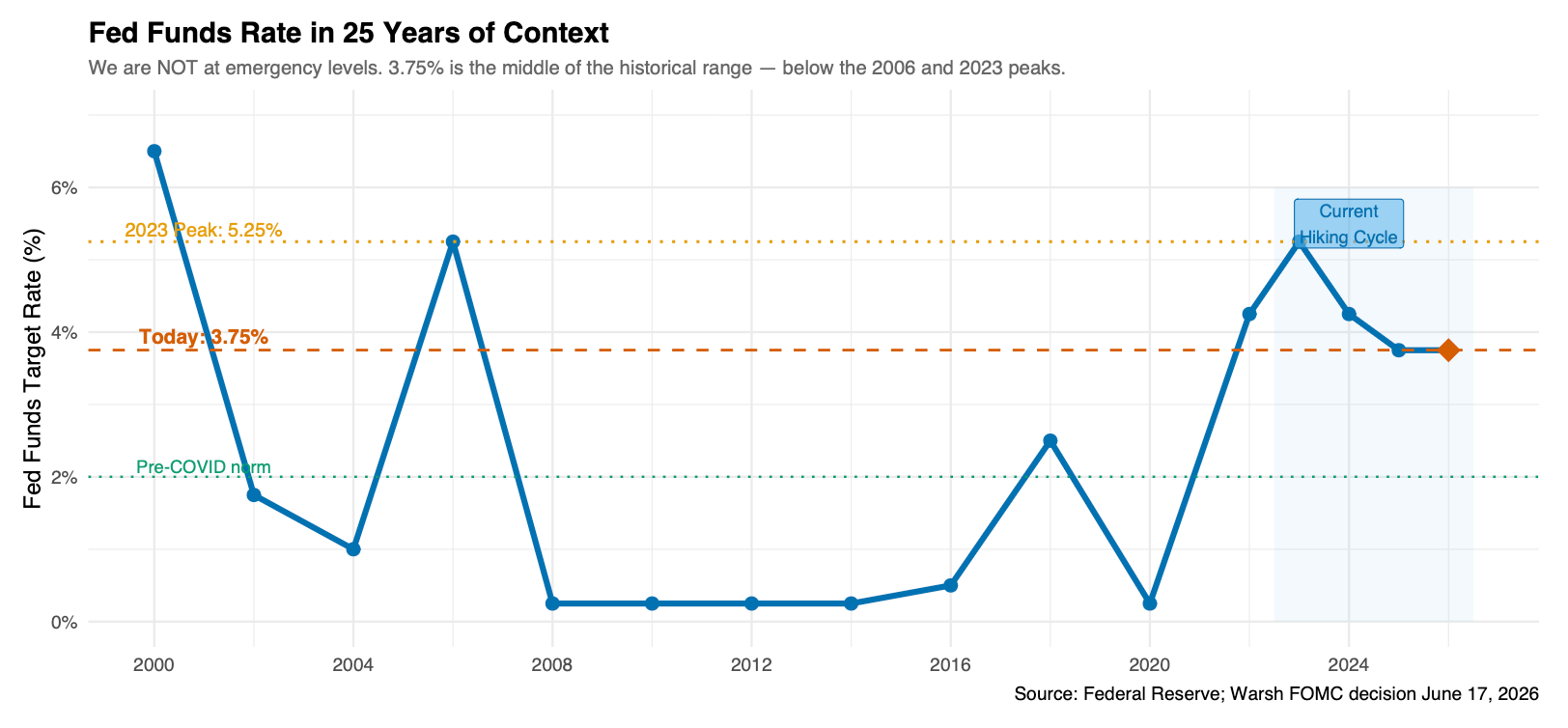
The FOMC wraps its meeting this afternoon, and markets expect a hold at these levels, which would make five consecutive meetings with no change.
At 3.75%, rates sit below both the 2006 and 2023 peaks of 5.25%. GDP is growing around 2.2% with unemployment holding steady. Warsh described the effect as uneven because housing feels the pressure but AI investment, the labor market, and corporate earnings mostly don’t.
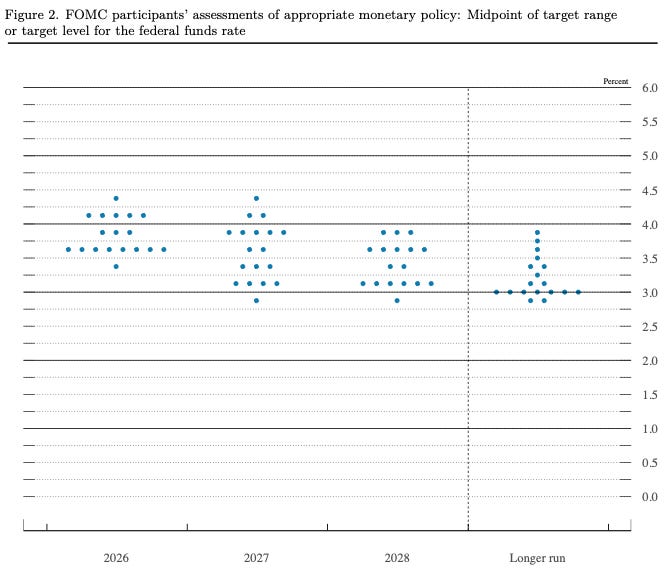
The median FOMC participant projected rates at 3.8% by year end at the June meeting, which works out to roughly one 25 basis point hike from today. The spread around that median runs wide. Some participants see room to hold near 3%, and others cluster closer to 4. According to CME FedWatch as of last Friday, 62% of the market expects a hold today and the remaining 38% is pricing a hike to the 3.75 to 4.00% range.
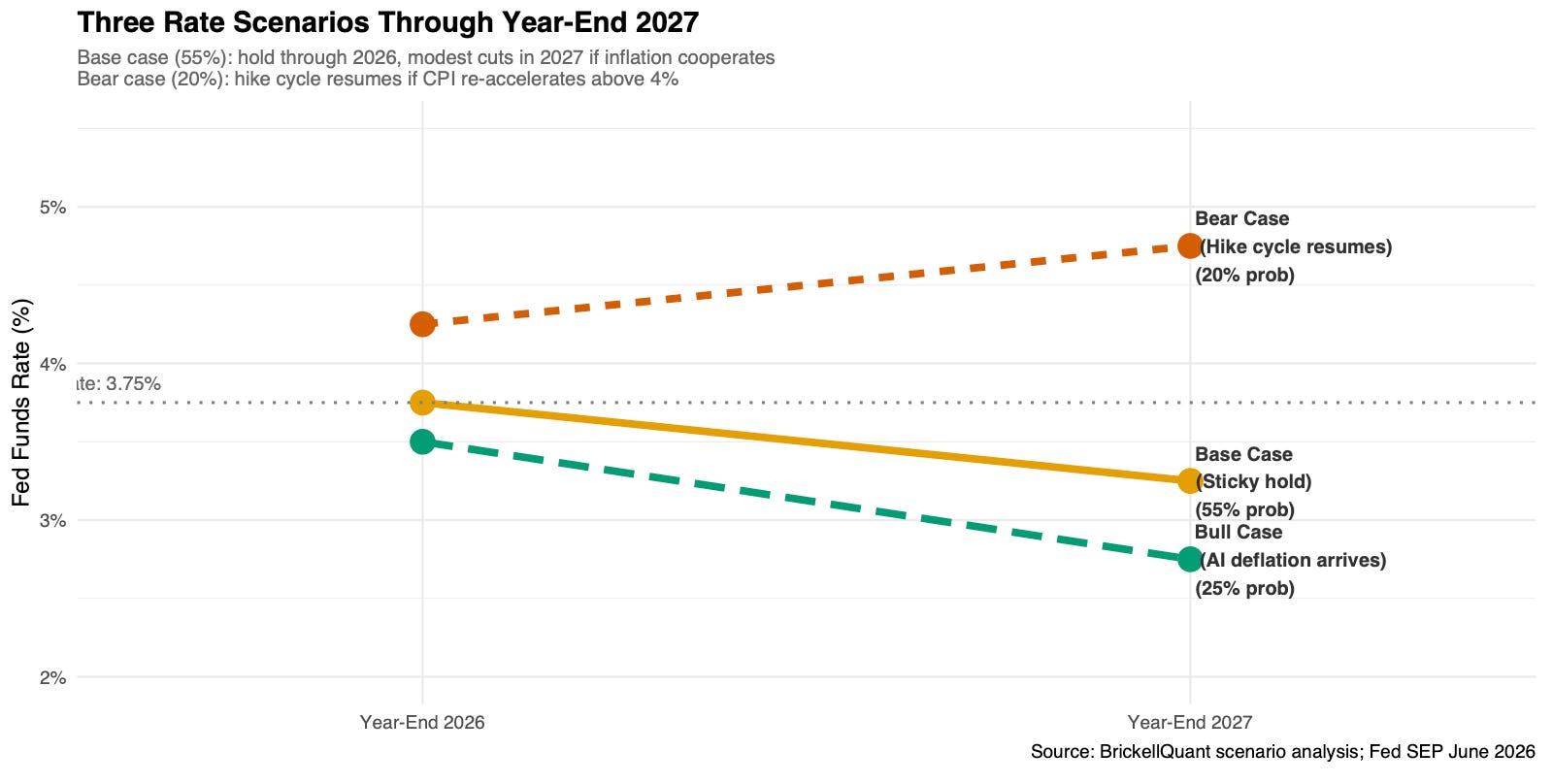
Inflation needs to sit comfortably below 3% and keep trending toward 2.5 before cuts become something possible and it’s at 3.7% right now. Getting there takes months of sustained cooling, and that will get tested in September. This will come with fresh projections and a new dot plot.
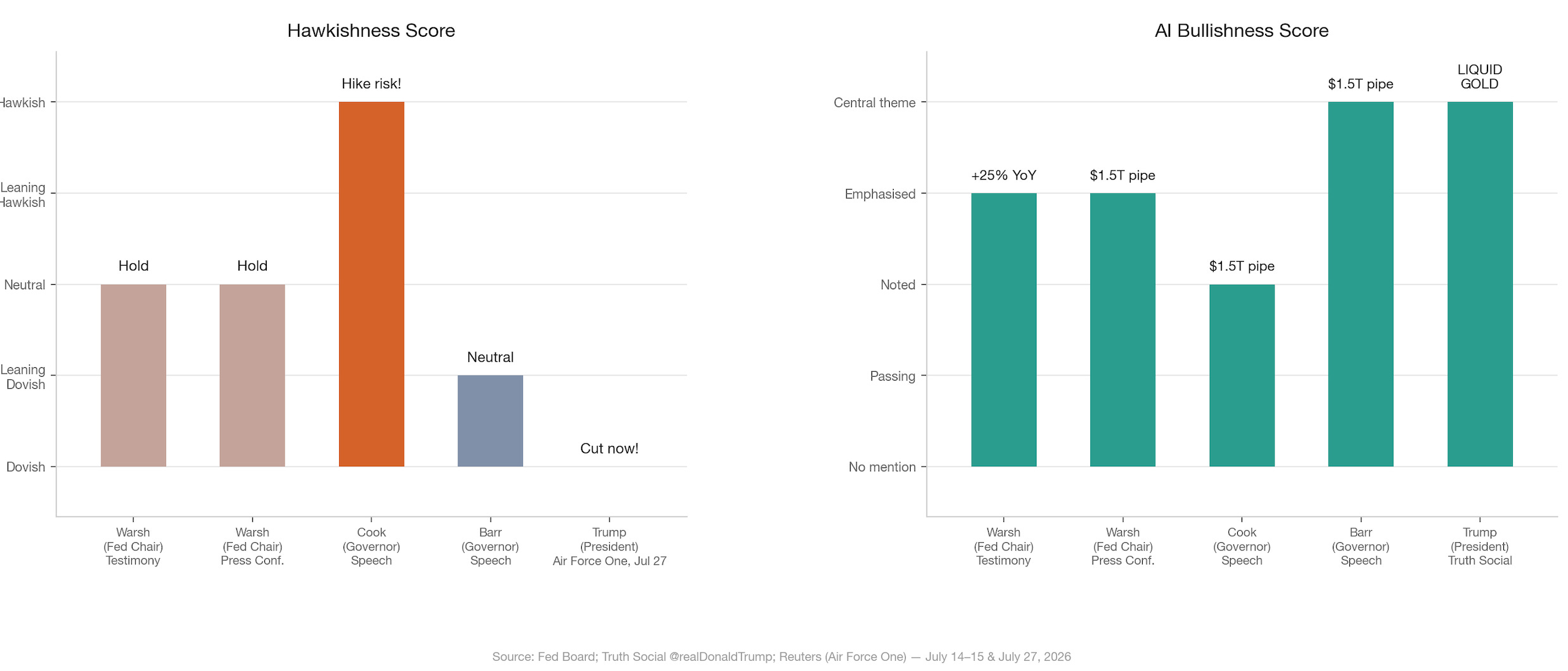
Trump told reporters aboard Air Force One two days ago that the U.S. should have the lowest interest rate in the world. He called Warsh “fantastic” but said the board members are “very political” and “perhaps have bad intentions”.

Warsh spent his first month doing something recent Fed chairs haven’t, he went through how the institution runs and questioned parts that hadn’t been reviewed in years. At his June press conference he said:
”Start with first principles, ask hard questions, examine current practice, consider alternatives, propose next steps”
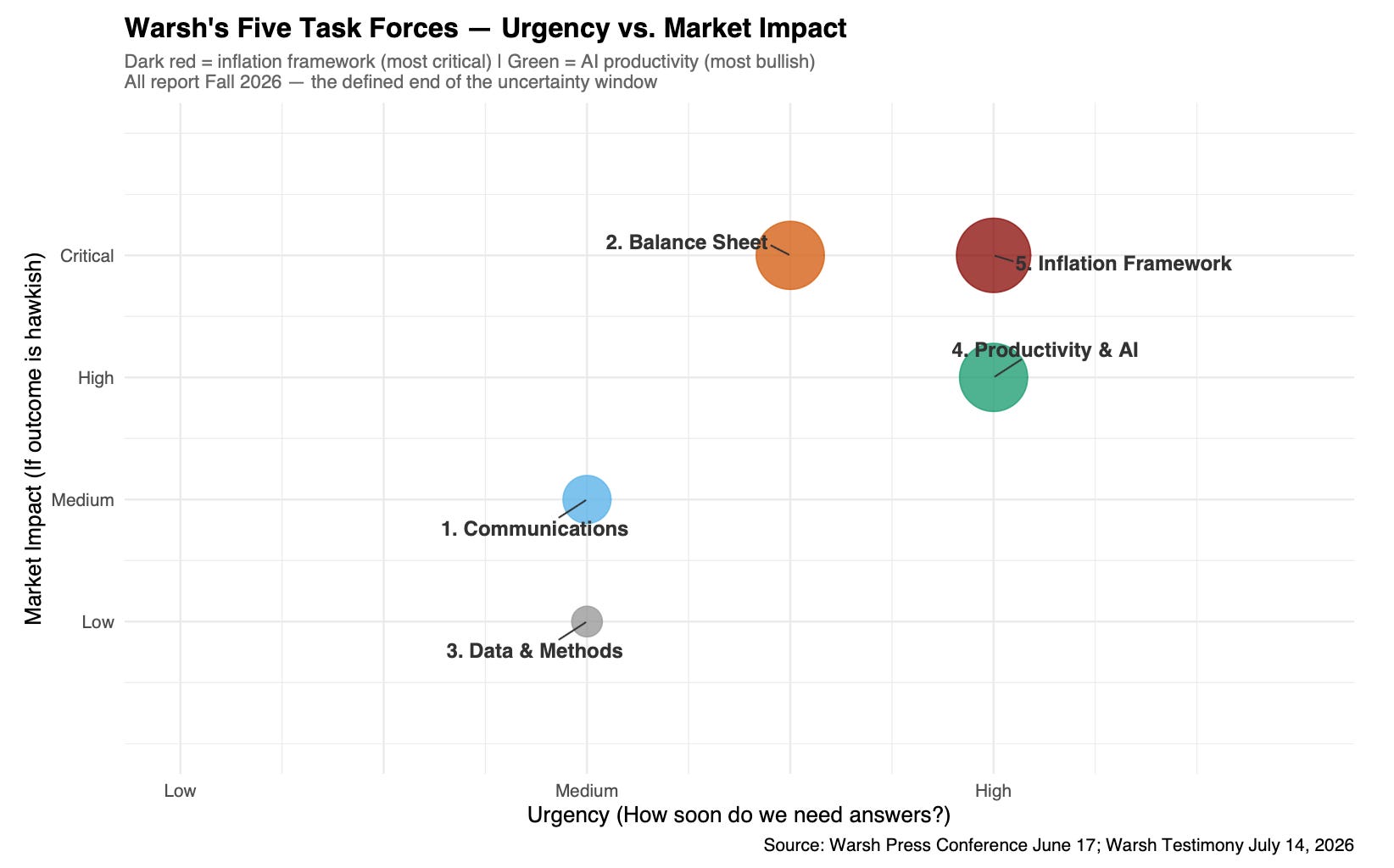
Five task forces came out of that, each aimed at a different piece of how the Fed operates.
We think this matters more than the market is giving it credit for right now. A Fed that finds its own blind spots before the next cycle is a Fed that makes fewer of the mistakes that cost everyone money in 2021 and 2022. The volatility through July is what it looks like when that kind of review happens in public instead of behind closed doors.
The communications task force is reviewing whether press conferences after every meeting and the dot plot add clarity or noise. This group decides what the new communication framework looks like going forward.
The balance sheet task force is reviewing the trillions in bonds the Fed still holds from pandemic buying. That pile of bonds created a system called ample reserves, and it’s never been tested through sustained inflation. If this group recommends shrinking the balance sheet, financial conditions tighten without anyone touching rates. Of the five, this one carries the most direct risk for markets if it lands on the wrong side.
The data and methodology task force is the one we’re watching most closely. Most of the Fed’s economic data comes from survey methods designed for a very different economy. Private companies already track their own performance in real time but The Fed waits on monthly government releases that get revised for years after they come out. Lack of this task force is what went wrong when the Fed called inflation transitory in 2021 and stuck with that read too long.
The productivity and AI task force is checking whether AI makes the economy more productive in a lasting way. If the answer comes back strong, the Fed gets room to hold rates lower than current inflation data alone would suggest, because faster productivity growth means the economy can run hotter without prices spiraling.
The inflation frameworks task force is rebuilding the model that produced the transitory call. Warsh said the 2% target stays where it is and the methods and assumptions underneath it are what’s getting rebuilt.
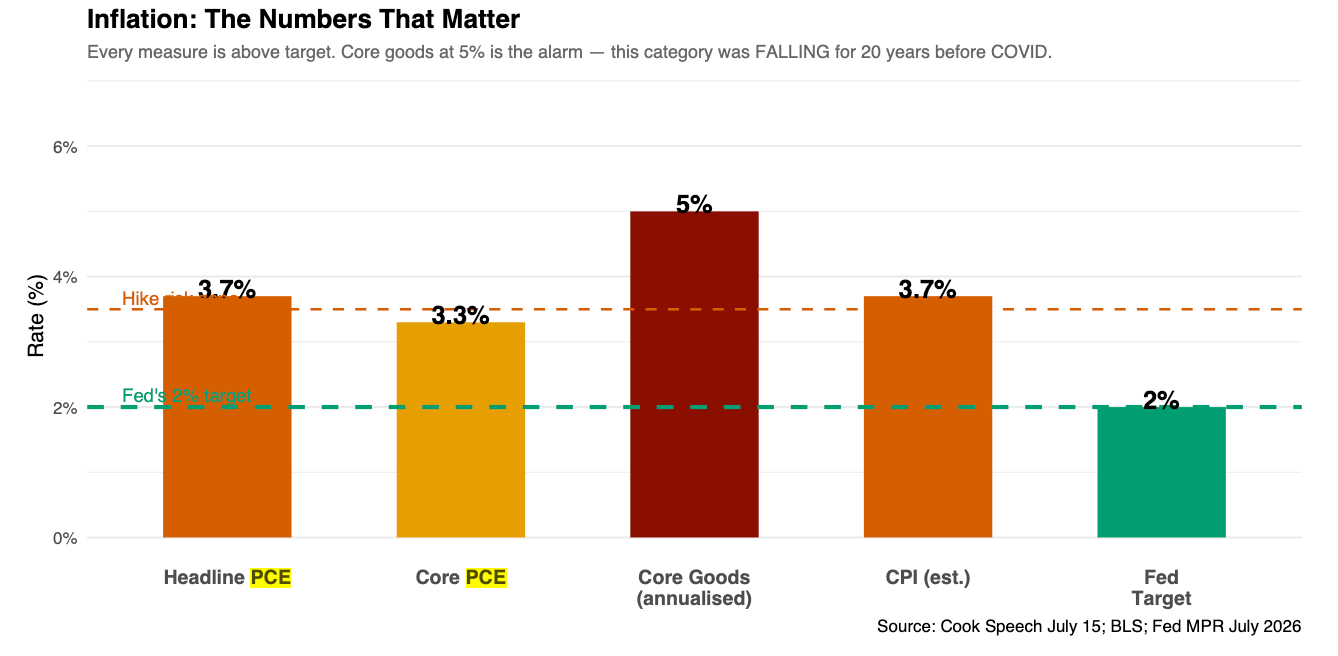
Data centers already draw roughly 3% of U.S. electricity, that number is projected to climb toward 8 to 12% by 2030, and every new facility pulls raw materials, and skilled trades away from other projects. The cost pressure spills into the rest of the economy, causing elevated prices.
Cook flagged this in her July 15 speech. Core goods prices are running at 5% annualized in 2026, a category that spent two decades getting cheaper before the pandemic. AI hardware demand is the reason why this trend reversed. Equipment investment grew 8% year over year through Q1 2026, and high-tech spending within that grew nearly 25%.
That’s the inflationary machine running right now.
The deflationary machine takes longer to show up.
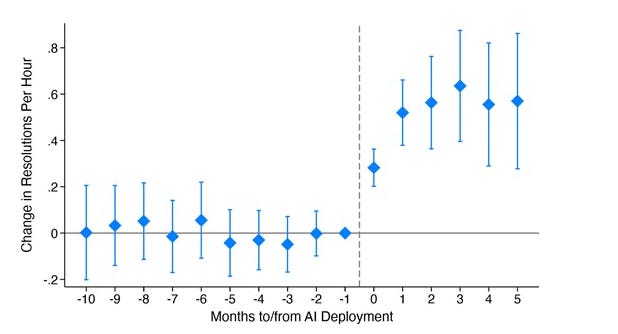
A study published in the QJE, cited by Barr in his speech, found AI cut professional task completion time by around 40% and improved quality by about 18%, with the largest gains going to the weakest performers. Once gains at that scale move beyond controlled studies and into the broader economy, the same spending driving prices up today starts working in the opposite direction.
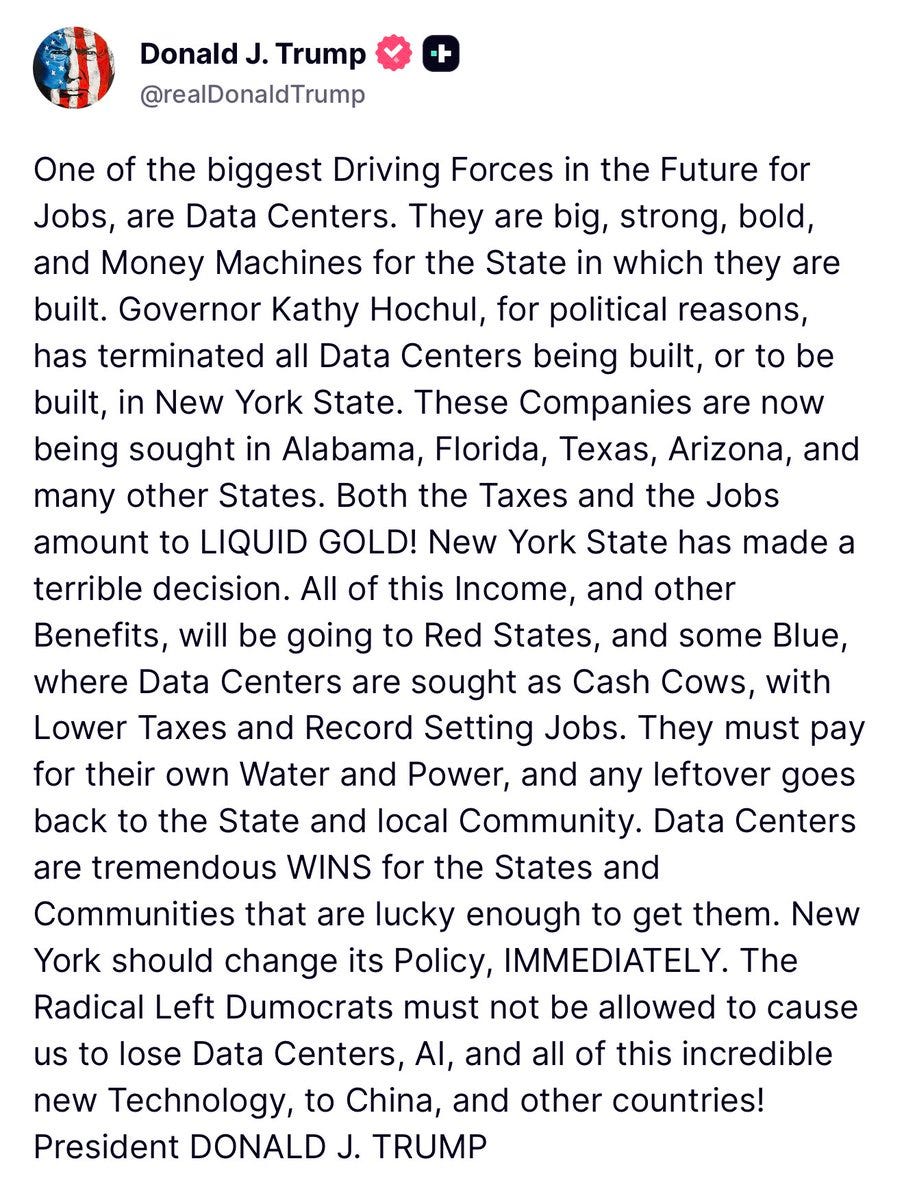
Furthermore, Trump posted on July 15 calling data center jobs and tax revenue “LIQUID GOLD” and criticizing New York for blocking projects. States are now actively competing for these builds offering cheaper land and faster permitting. Federal energy approvals and permitting sit outside the Fed’s control entirely, so even if the Fed wanted to cool this spending through higher rates, the political side is working to accelerate it at the same time.
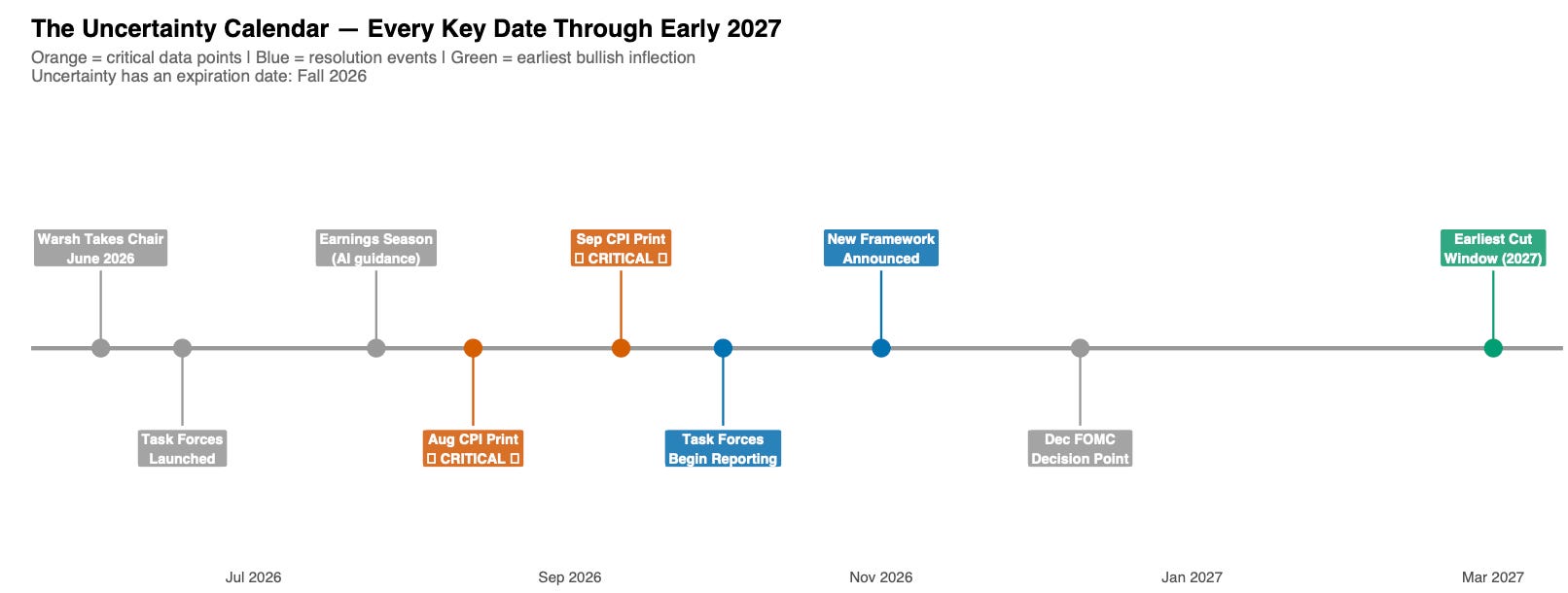
Task forces start work in late July, findings come out through the fall, and most wrap by year end. Two CPI prints land before then, in August and September, and those will show what the June’s number was.
September FOMC comes with fresh economic projections and a new dot plot, making it the first meeting since June where the committee has to put updated numbers on the table.
CPI accelerating above 4% is the highest probability risk, Cook named that level as the point where markets drop 2 to 3%. At 4%, a rate hike will be the base case.
A hyperscaler pulling back on capex guidance would drive semis industry even lower. Microsoft and Meta report today. We’re watching their capex commentary specifically.
Oil staying above $85 keeps headline inflation hot, and WTI has been volatile through July on Iran tensions, up roughly 20% for the month.
The September FOMC meeting, new projections and dot plot mean the committee has to show its hand rather than hold and wait. If inflation hasn’t cooperated by then, hike risk goes from a background concern to the main conversation.
Credit spreads widening in high yield bonds tend to show stress before GDP data does.
Taiwan escalation carries low odds but would physically disrupt the supply chain the entire buildout runs through.
The FOMC decision lands at 2:00 PM ET and we expect a hold. Warsh’s press conference is at 2:30 PM and we’ll be listening in order to find any suggestions about September.
We’ve been through most transcripts from this month. The Fed isn’t hostile to the AI buildout, but they’re cautious about inflation while it also rebuilds its own framework. The political side is pushing the opposite direction on rates, but if we trust the core assumption of Fed (which is independence from the President), Trump’s comments aren’t changing their decision.
Comments
Nothing yet. Say the first thing.
Sign in to join the conversation.