
There are two Devorahs in Torah.
The first is Devorah, a nursemaid to Rivkah. Her death is described with rare tenderness: “And Devorah, Rivkah’s nurse, died, and she was buried below Bet El, under the oak; and its name was called Alon-bachut”—the oak of weeping(Genesis 35:8). She may seem like a quiet soul, a background figure—but in Torah, if your name is mentioned, it means your soul is monumental. Names are never incidental. Devorah the nursemaid is named because she is here to teach us something eternal.
The second is Devorah, the prophetess, warrior, and judge. She sat beneath her date palm—“Tomer Devorah”—in the hill country of Ephraim, holding the people accountable and commanding generals.
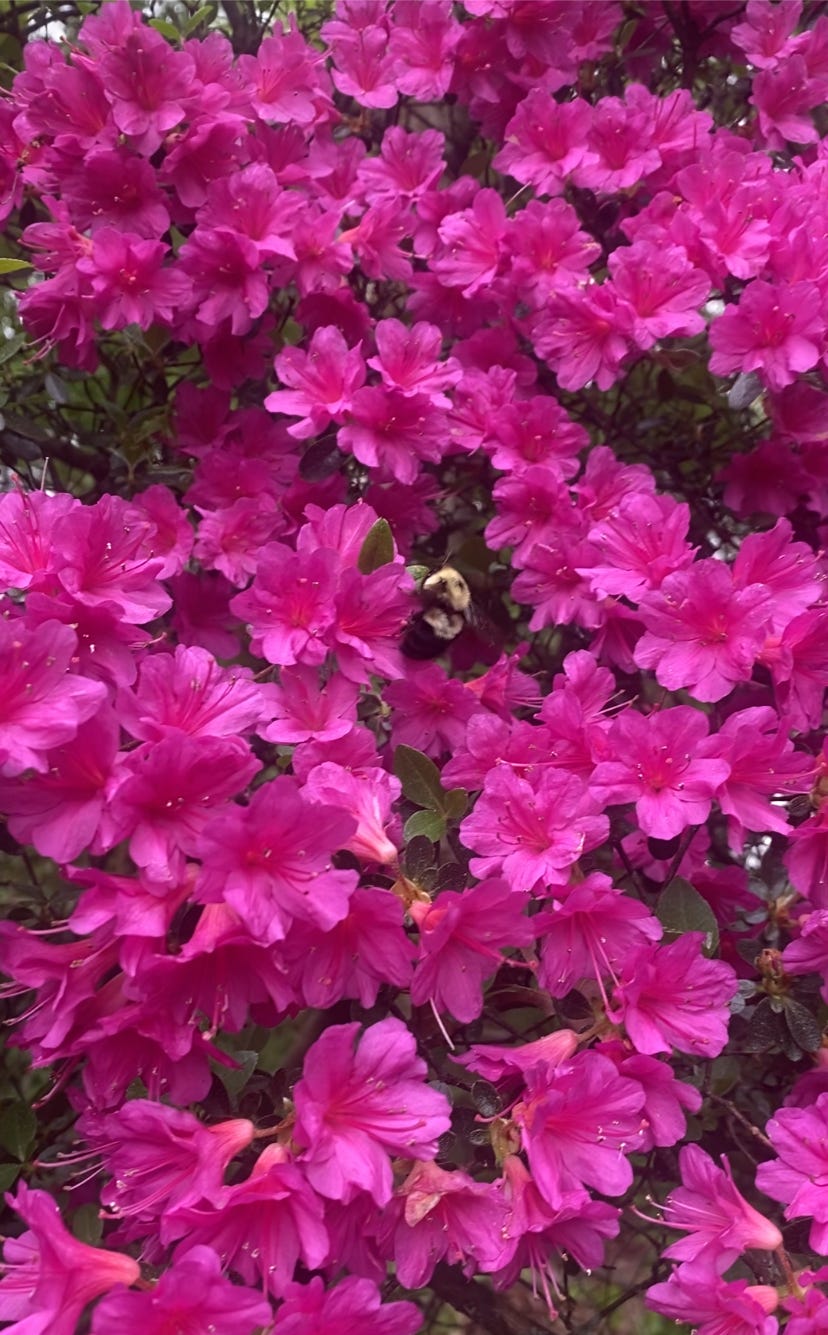
Devorah means bee, and bees are known to be creatures of order, discipline, collective loyalty, and divine productivity. Bees are tenacious, communal, and tirelessly hardworking. From the labor of their wings comes golden honey: sacred, and sweet. They are more than insects; they are magic.
Two Devorahs: the milkmaid and the palm tree. The nurturer and the judge. The feeder and the seer. Two faces of the feminine divine, flowing together in harmony. Together, the two Devorahs form the milk and honey promised in the Torah’s vision of a redeemed land: Eretz zavat chalav u’dvash, a land flowing with milk and honey.
Devorah, embodied in the sacred bounty of milk and honey, channels the divine feminine expression of the Sefirah of Tiferet—the radiant emanation of Truth, Beauty, and Harmony.
“Tomer Devorah,” Devorah’s Palm, written in the 16th century in the mystical city of Safed, is a foundational text of Kabbalah. In it, the Ramak: Rabbi Moshe Cordovero, outlines how a human being can mirror the divine by embodying the traits through which God governs the world. The 13 Attributes, based on the verse in Micah 7:18–20, become not just descriptions of God, but imperatives for human refinement. As the Ramak writes: “It is proper for man to emulate his Creator, resembling Him in both likeness and image according to the secret of the Supernal Form.”
Ramak teaches that to walk in the path of the Divine is to embody the 13 Attributes of Mercy, the secret of divine Rachamim (compassion). These attributes pour through the Sefirah of Tiferet, the heart-center of the Tree of Life, where chesed and gevurah (loving-kindness and restraint) are harmonized. Tiferet is not mere symmetry. It is the ability to see truth with compassion, to offer judgment softened by love. It is beauty rooted in mercy.
Tiferet is also the sefirah associated with the patriarch Jacob—Yaakov Avinu, the father of the twelve tribes—who, after wrestling with an angel, is renamed Yisrael. Yaakov represents balance, integrity, and spiritual refinement. He is the bridge between the visionary Abraham and the disciplined Isaac. In him, opposites join into wholeness. So when we say that Devorah represents Tiferet, we are also saying she embodies the soul of Israel itself—a land and people rooted in harmony, in truth, in sacred proportion. She is milk and honey, yes—but she is also Tiferet Yisrael: the beauty and balance of a nation called to reveal divine mercy in a fractured world.
Devorah—the Bee—teaches us not only through her name, but through her sacred offering: honey. Bees bestow a golden gift, drawn from wildflowers and labor, a sweetness born of devotion and collective purpose. Honey is no ordinary sweetness. It is sacred food, divine nourishment. On Rosh Hashanah, we dip apples into honey not for flavor alone, but to taste the promise of renewal, of mercy, of a world made whole. Honey is a reminder that even through the toil and sting, something luminous and good can emerge.
There’s something mystical—and paradoxical—about honey. Although bees are not kosher animals, their honey is. According to halacha, the product of a non-kosher animal is typically also non-kosher—yet honey is the exception. The Talmud (Bechorot 7b) explains this unusual allowance by noting that honey is not considered a secretion from the bee’s body, but rather a transformation of nectar. It retains the purity of its floral origin. There's a message here: that holiness can emerge from unexpected sources. Purity can be preserved even through strange vessels. Honey reminds us not to judge the source, but to witness the fruit.
And yet, not all that glitters is honey. Royal jelly—secreted by bees to nurture a future queen—is not kosher. It is more internal, more secreted, more of the bee itself. Perhaps there's something to contemplate here: honey is the offering given in service to the collective; royal jelly is reserved for power. Honey is for everyone. Its sweetness flows from community, from toil, from harmony. Royal jelly may be potent—but it is not for our table.
The bee lives in Tiferet. Order and compassion. Productivity and sweetness. Every cell of the hive is a hexagon—geometry rooted in harmony. Bees don’t work alone; they build together. Each bee gives to the whole. Each sting is measured, purposeful. Each drop of honey is a world.
In Perek Shirah, the mystical text that gathers the prayers animals says, it is reported that the bee sings: “Give thanks to the Lord with the lyre; sing praises to Him with a harp of ten strings” (Psalm 33:2). Ten strings. Ten sefirot. The harmony of the cosmos.
The message is clear: if we want to live in a world that survives, we must return to harmony. Devorah arose in a time of collapse. She judged with clarity and mothered a people with courage. She is the answer to imbalance.
Following the week of Tiferet, we must embody the inner light of Devorah the Prophetess—a woman who radiated such clarity, conviction, and divine authority that kings and warriors came to her for wisdom. She stood tall beneath her palm, a channel for truth, because she had cultivated the strength to hold it.
To live in harmony, our divine masculine must become a powerful vessel: boundaried, compassionate, and unshakably strong. When we become such vessels, beauty flows through us. Truth speaks through us: healing honey that has the power to heal the world around us.
And we must tend to the bees. Honor their role in creation. Protect their hives. Eat local honey with reverence, not just sweetness. Recognize that this golden food ,sacred enough to touch our Rosh Hashanah table, connects us directly to the Divine. It is a gift of the land, a whisper of redemption.
Devorah was divine masculine embodied:
decisive, structured, visionary—and yet she remained honey: nurturing, generous, overflowing with love. She did not sacrifice sweetness for strength. She held both. She was both.
This is the essence of Tiferet: the sacred harmony between opposites. To live in Tiferet is to become a vessel strong enough to hold paradox—masculine and feminine, judgment and mercy, structure and flow. It is the balance within ourselves and in relationship with others that generates the harmony the world is so desperate for. This is not optional; it is our spiritual task. Moshiach will not come through domination or disconnection, but through integration. When we cultivate Tiferet within—when we live as both palm tree and honey—we become the channel through which redemption flows.
The Messianic era is an age of balance, integration, and radiant clarity. It is waiting within us.
May we become its vessels. May we welcome it soon..
Comments
Nothing yet. Say the first thing.
Sign in to join the conversation.