
Dear Astrid,
Beginnings are easy, but how do I go on? Ho do I address you and your past when I am under the impression that you know all about it and it is me who is in the dark? You know what I want to find out, but cannot.
What would you want to know? Would you wish to know me?
You were born in July 1899. Starting life during the last year of the century seems like deliberate lingering on what is being left behind while standing in the doorway, seeing the 20th century woosh in. Were you a child who gathered the traditions of the ancestry and held on? Or were you an inventor of the new?
I stumbled into this world in 1982. It’s not yet a beginning, but an ending. An end to the century that you wittnessed in its full-fathom wild. I guess it matters how we are positioned in relation to time.
I feel like in 2025 I am an old soul in a blinding era of acceleration.
You were born into a family of Swedes and Finns. Some of your siblings were born in Sweden and some in different parts of Finland. The first Jönsson children out of ten were born in Pohja and Pirkkala. The family’s home alternated suggesting movement between locations and the two neighbor countries. Where to call home? Under some of the children’s information the church record prints the word “ liikkuvaisia” [moving or moveable].
Your father, Swedish Johan Jönsson was from Malmöhus, and your mother Finnish Emma Jönsson (e Lundén) from Piikkiö, near Turku. They were born in the early 1860s. The family welcomed ten children between 1884 and 1907. You were the ninth child to be born in 1899. Two of your siblings died before they were five, another two have no recorded date of death and Martha emigrated to the USA, dying there as an old woman. Another sister, Hedvig, moved to England as an adult, much after giving birth to my grandfather and her other son later in life.
In 1905 all of you children translated and officially changed your last name to Joutseno. You were six years old. Johan and Emma remained Jönsson, but clearly they wished their children to be part of the building of a Finnish identity this way. Turku had become your home.
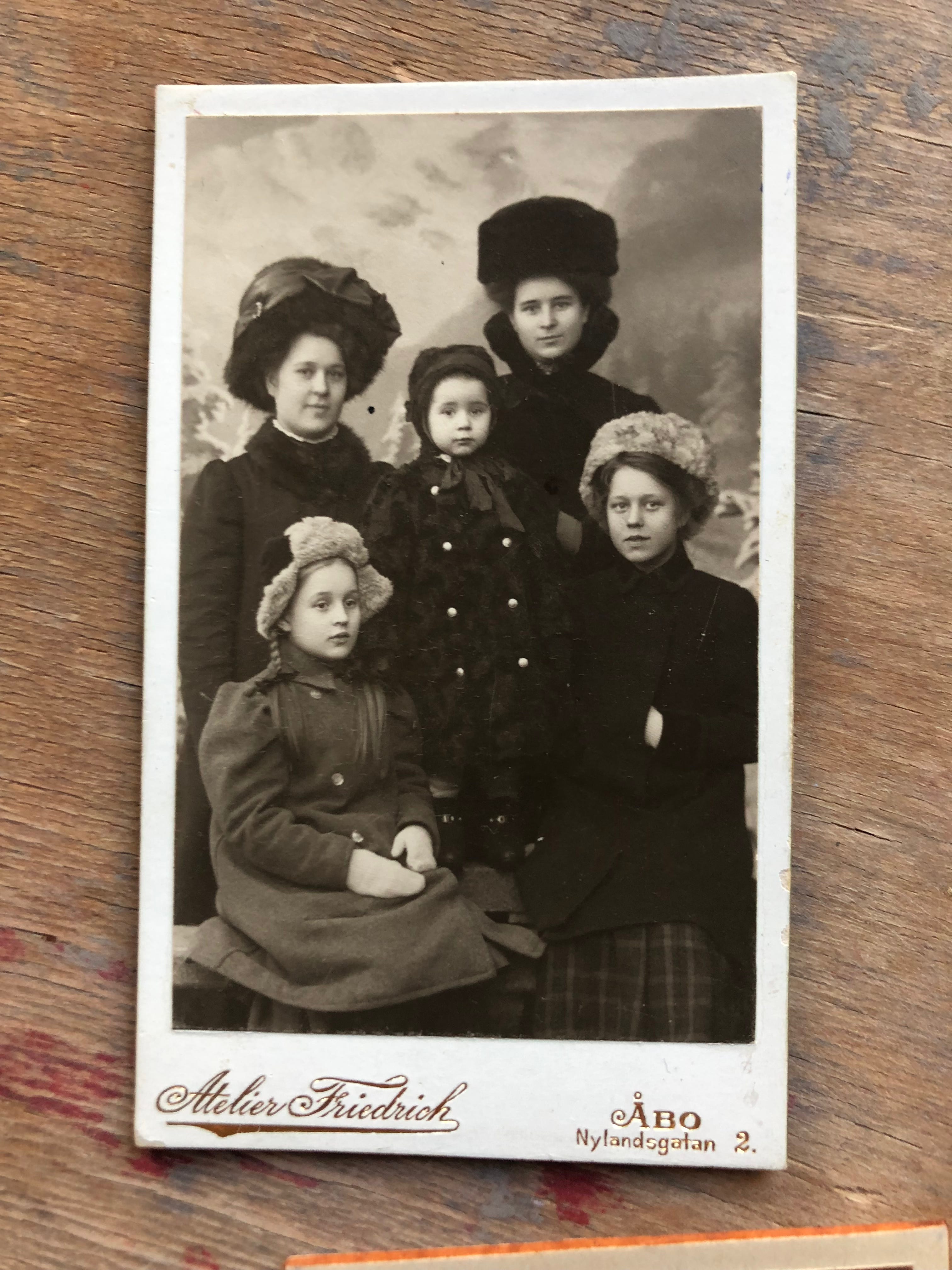
In 1899 Kerttu’s parents had Leila Irene, their first child and Kerttu’s big sister. By this time father Konstantin had probably advanced from being the Turku market hall’s guard to his business ventures as a wholesale merchant and fruit importer and seller in the Turku market hall. According to records he used to play his violin while cleaning went on in the hall.1
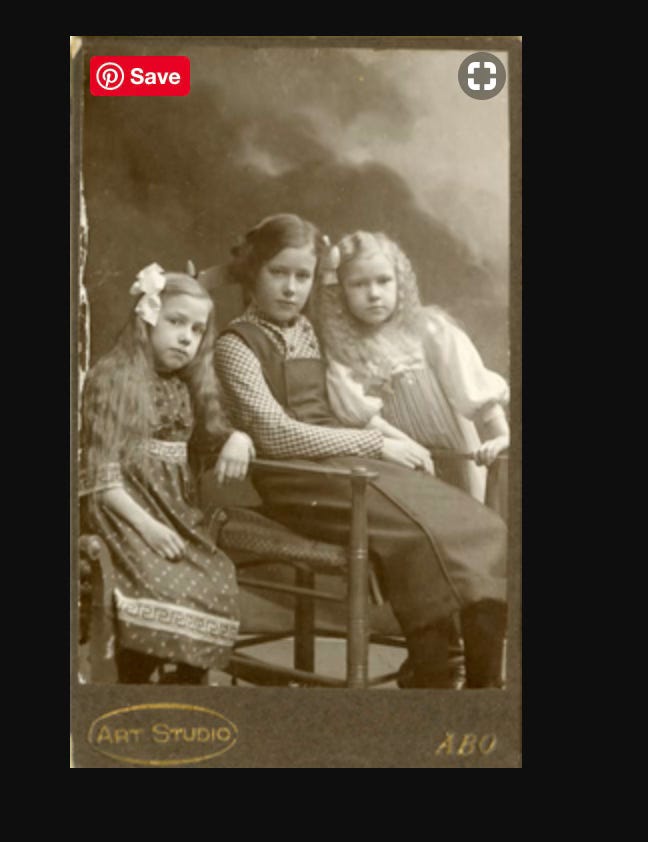
Kerttu’s father seemed to have been a Turku character, playing violin, sports, buying property and later crashing with money problems of some kind and divorcing in the early 1920s from Kerttu’s mother, Irene.
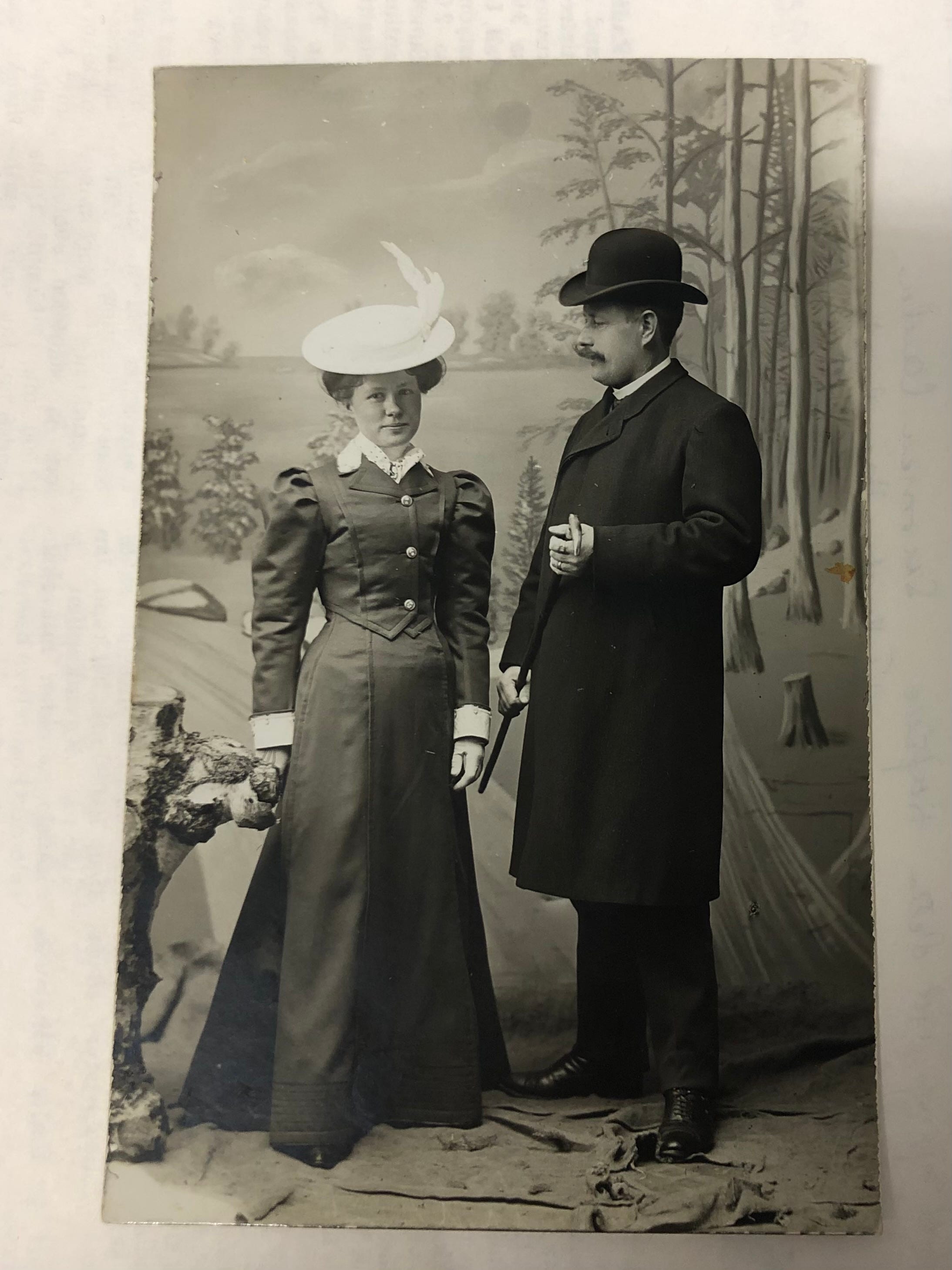
Kerttu was born in 1905. When did you first meet her? Did your parents know each other? Or did your paths cross only once you had both chosen music?
In your fourteenth year, in 1913 you lost your father. He drowned in the Aura-joki, the river running through Turku center. That is what I was told. This story without detail nevertheless conveyed a kind of disappointment. Somehow Johan had let everyone down. Was he an alcoholic? Was it and accidental drowning or a suicide?
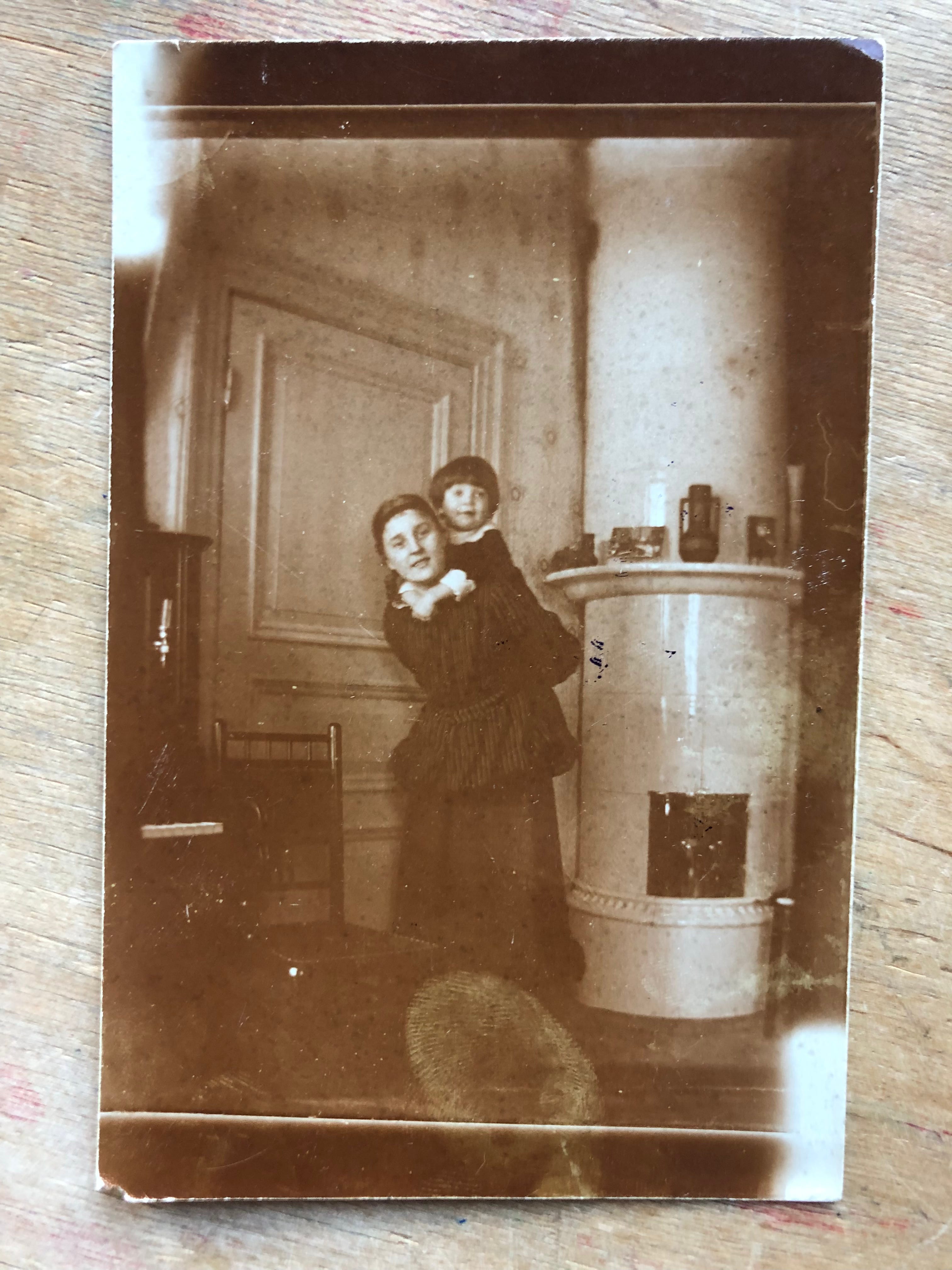
At sixteen you became an aunt to a small child born in Helsinki, in secret out of wedlock. Aihi, my grandfather was later saved from infant death by your mother Emma, who fostered my grandfather from then on. Aihi’s mother never wanted to parent him it seemed. And the father was nowhere to be found.
You still lived at home, Astrid. You carried Aihi on your back. You cared for him often, didn’t you? Until you went your way with your piano school and then Kerttu and the world, the education and art that was music all over Europe and even in the USA. You travelled looking for your melody and your pleasure. This all pissed off my grandfather, the young boy. I will get to him later. Let him be that little boy for a while.
In April 2025 I own a collection of printed papers. They seem much more valuable than just printout. A path connecting to my family. My printer keeps producing the fragments I find so as to keep forever. To never be lost and unknown again. Something to hold onto.
Your back and the piano that taught you everything.
Was it black like mine?
It certainly looks dark in the black and white photograph.
I am not interested in numerology nor have I been enamored with mathematics in my life, but somehow it seems poetic to note these years as numbers. The beginnings and endings. Four generations, and the fifth now growing – the generation that starts from what I can gather, what I present or leave out.
Why does it matter if we have floated instead of being rooted? If our story has been bitter and blasted with holes instead of threaded through?
It matters in my body. It matters in how I walk and talk and in how I position these sentences. They can begin from the root and connect to the next. Or they can exist mid-air just so.
In mid-air nobody needs to mention the dark matter. The suicides, the disapperances, the harm inflicted and the suffering that gathers in the folds of bodies and the invisibly small crevices in cells. I am collecting evidence so as to allow myself to go there. It’s not news to you Astrid, I know.
“Kauppahallissa on jopa juostu kilpaa” by Roope Lipasti https://turunaika.fi/jutut/kauppahallissa-on-jopa-juostu-kilpaa/
No posts
Comments
Nothing yet. Say the first thing.
Sign in to join the conversation.