
Happy Monday! Thanks for opening the sixth edition of the Stan newsletter. A weekly newsletter exploring fans and their bidirectional relationships with the artists that they love. As always suggestions and feedback are always appreciated. You can shoot me an email at dkuhlor@gmail.com.
Besides artists, streaming services have the largest short term upside if they double down in Ghana and Nigeria. As subscription growth continues to reach its peak in the Nordics, United States, and many parts of Europe the race to expand further has become even more competitive. Spotify was so desperate to launch in India, they decided it was worth the inevitable legal battle that immediately ensued with Warner. The streaming service has primarily focused the bulk of its African efforts on North Africa with a department titled “MENA” specifically focused on the Middle East and North Africa. Apple Music on the other hand is available in Ghana and Nigeria at a time where Spotify, Tidal, and Amazon Music are not. With such low switching costs for streaming services these companies have a great opportunity to benefit from the lower customer acquisition cost and potentially even longer customer lifetime value as consumers in Ghana and Nigeria currently suffer from a limited range of options.
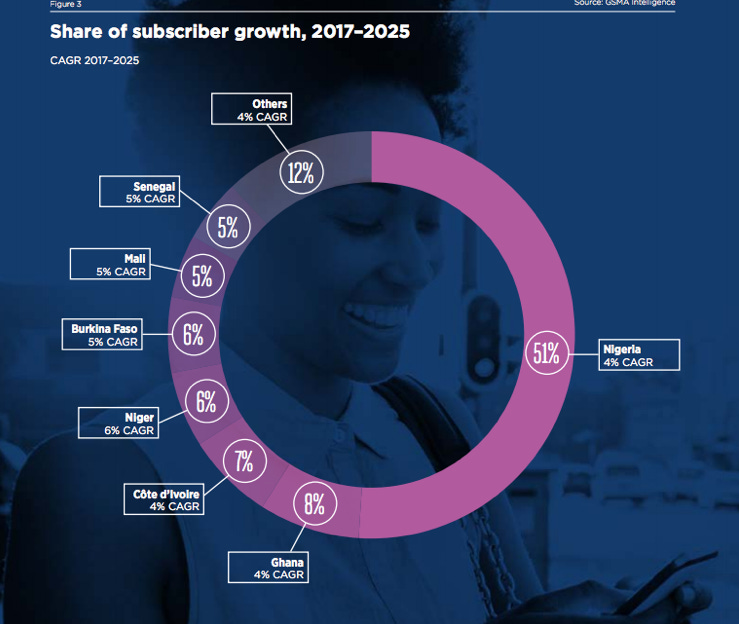
The challenge for streaming services in Africa has largely been attributed to the large take rate telco’s have traditionally commanded in response for allowing streaming services to transact on their platform. With more than 95% of consumers in Africa accessing the internet by phone their dominance presents a large factor in a streaming companies ability to grow. This dynamic has led to emerging streaming services prioritizing having favorable deals with telco’s as a core part of their go to market strategy..Chinese backed streaming service, Boomplay, announced a $20M Series A earlier this year. The streaming service boasts 36M users and has grown to become the fastest growing streaming and music download app in Africa. Further research into Boomplay reveals that the company was founded by Transsnet. Transsnet is a joint venture between Chinese phone maker Transsion and consumer apps conglomerate Netease. As more established streaming services enter the market they should consider acquiring an already established streaming service in the area to gain a large amount of market share quickly or brokering a deal that includes the telco’s from day one. Mobile adoption is still far from hitting his peak in West Africa and will grow exponentially in the next ten years.By 2025 around 72M new mobile subscribers will be added in West Africa, taking subscriber penetration to 54%.[GSM Association, The Mobile Economy of West Africa]. This presents a significant opportunity for more established streaming services as they seek to grow subscribers past markets that have begun to taper off.
Tidal can easily navigate the challenges that any streaming service would encounter when entering Ghana and Nigeria because of the companies owners. Combining the Tidal brand (which in a lot of ways is Jay-Z’s brand) with Sprint’s (they bought 1/3 of Tidal in 2017) negotiating power against telco’s it gives them a strong advantage to try and penetrate the market.
Tidal’s differentiation strategy has largely been around exclusive content and early access to concerts and festivals which can be mediocre at best when trying to convince consumers to switch over. However, through a series of strategic acquisitions Tidal can easily build up the brand and content infrastructure it needs to thrive in Ghana and Nigeria. Additionally, by leveraging its influence it can play an integral role in helping artists deepen fan engagement by helping them facilitate their own concerts and experiences in these countries, or through a festival bringing them there for the first time. While only in in its third year the purchase of a prominent festival such as Afrochella can help take the festival to a new level, increase Tidal’s brand (and inevitably subscribers) among West Africa, and positions Tidal as the leader in helping bring U.S artists to the continent without them or their teams having to handle the upfront costs of an inaugural performance. It also allows Tidal to continue to reposition itself to consumers espescially after dealing with negative public sentiment due to their grandiose launch.
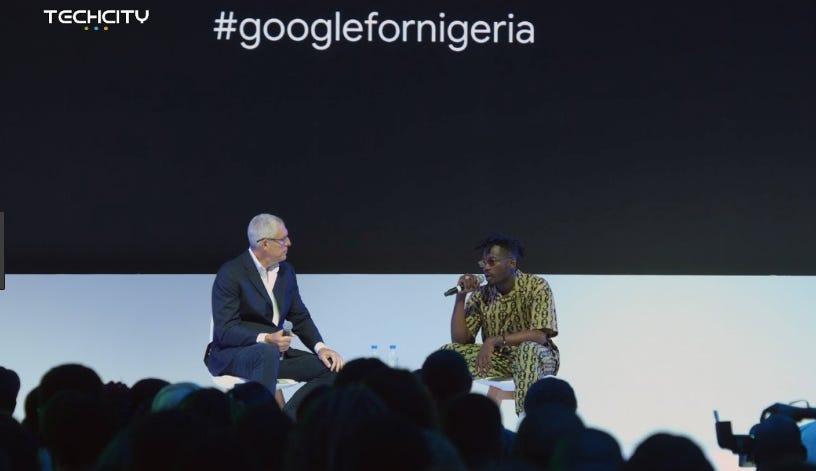
YouTube has shown that they are long West Africa with YouTube’s Global Head of Music, Lyor Cohen and Nigerian artist, Mr. Eazi, announcing an initiative earlier this week at the Google for Nigeria conference. The initiative will provide direct support for 10 emerging artists from Nigeria with Lyor Cohen stating “There is so much talent exploding out of Nigeria and the African continent right now. Africa is setting the tempo all around the globe.”
There is a plethora of opportunities in Ghana and Nigeria. As both countries continue to see an increase in tourism, smartphone ownership, and cultural influence it is imperative that different stakeholders in the music industry define and prioritize a strategy to tackle West Africa and ultimately the rest of the continent moving forward.


Already by Beyonce, Shatta Wale, and Major Lazer
Happy Monday!
D
No posts
Comments
Nothing yet. Say the first thing.
Sign in to join the conversation.