
Welcome to a special edition of ASPI’s Fault Lines.
While ASPI’s Defence Strategy Program continue their fortnightly monitoring of the moves and countermoves shaping the regional order and Australia’s security, there’s lately been one big move close to home that we think is worth special attention.
This special edition collects the last week of ASPI commentary and analysis on the 2026 National Defence Strategy (NDS) and Integrated Investment Program (IIP), which were released on 16 April 2026.
Follow the Australian Strategic Policy Institute on X, on LinkedIn, and on Bluesky.
Stop the World: ASPI unpacks the 2026 National Defence Strategy
Self-reliant but not alone
ASPI’s Head and Deputy Head of Defence Strategy, Mike Hughes and Courtney Stewart, joined David Wroe on Stop the World to unpack Australia’s new National Defence Strategy and Integrated Investment Program.
They examined whether the strategy is adequately resourced, even with a funding increase, and explored what operational self-reliance should look like without slipping into unrealistic notions of full self-sufficiency.
The conversation also covered the evolving strategic environment, the US alliance, AUKUS and how Australia should think about defending its interests beyond its immediate region.
Mike and Courtney assessed key capability priorities, including drones, long-range strike and integrated air and missile defence, and discussed how to draw the right lessons from conflicts such as Ukraine and Iran.
These are among the biggest defence questions facing Australia today and this episode offers a clear, expert guide through them. Listen here.

ASPI views in The Strategist
And you may ask yourself: ‘How do I work this?’
You won’t find the word ‘unreliable’ in the new NDS, but trust us, it’s there. The United States, write Mike Hughes and Justin Bassi, is ‘no longer the benign hegemon to which we’ve been accustomed.’ The question for Australian policymakers is what to do about it. The answer the NDS chooses is that the US, despite everything, is indispensable—yet Australia needs to manage its risk by pursuing greater self-reliance within the alliance. This, they write, is a ‘pragmatic recognition that a strategy that shifts away from the US (and Europe) and prioritises only our immediate region will not keep us safe or deter adversaries.’ The divergent values and mounting strategic incoherence of the current US government don’t detract from the cold, hard logic behind the alliance. Australia has accrued far too many benefits from it—intelligence, cutting-edge technologies, industrial depth and extended nuclear deterrence—to make giving it up an attractive proposition.
Our policy challenge is not whether to work with the US but how. A vital component of the democratic relationship is an ability to criticise US actions antithetical to our principles without upending the alliance. It is a false equivalency to compare the US with China and Russia, which are irretrievably authoritarian and hostile to free and open societies and liberal democracy.
For Richard Gray, self-reliance is neither hedging nor total self-sufficiency: it’s one of the hardy perennials in Canberra’s strategic thought. Australian dependence on major extra-regional security partners is about as traditional as Australian anxiety about whether they’ll show up on the day. Self-reliance, which the NDS defines as ‘an ability to employ and sustain credible military power to defend Australia in a crisis or conflict, including when support from allies or partners may be limited’, isn’t simply a matter of becoming able to do more independently of the US. It’s a matter of making Australia a more valuable security partner to the US for precisely that reason.
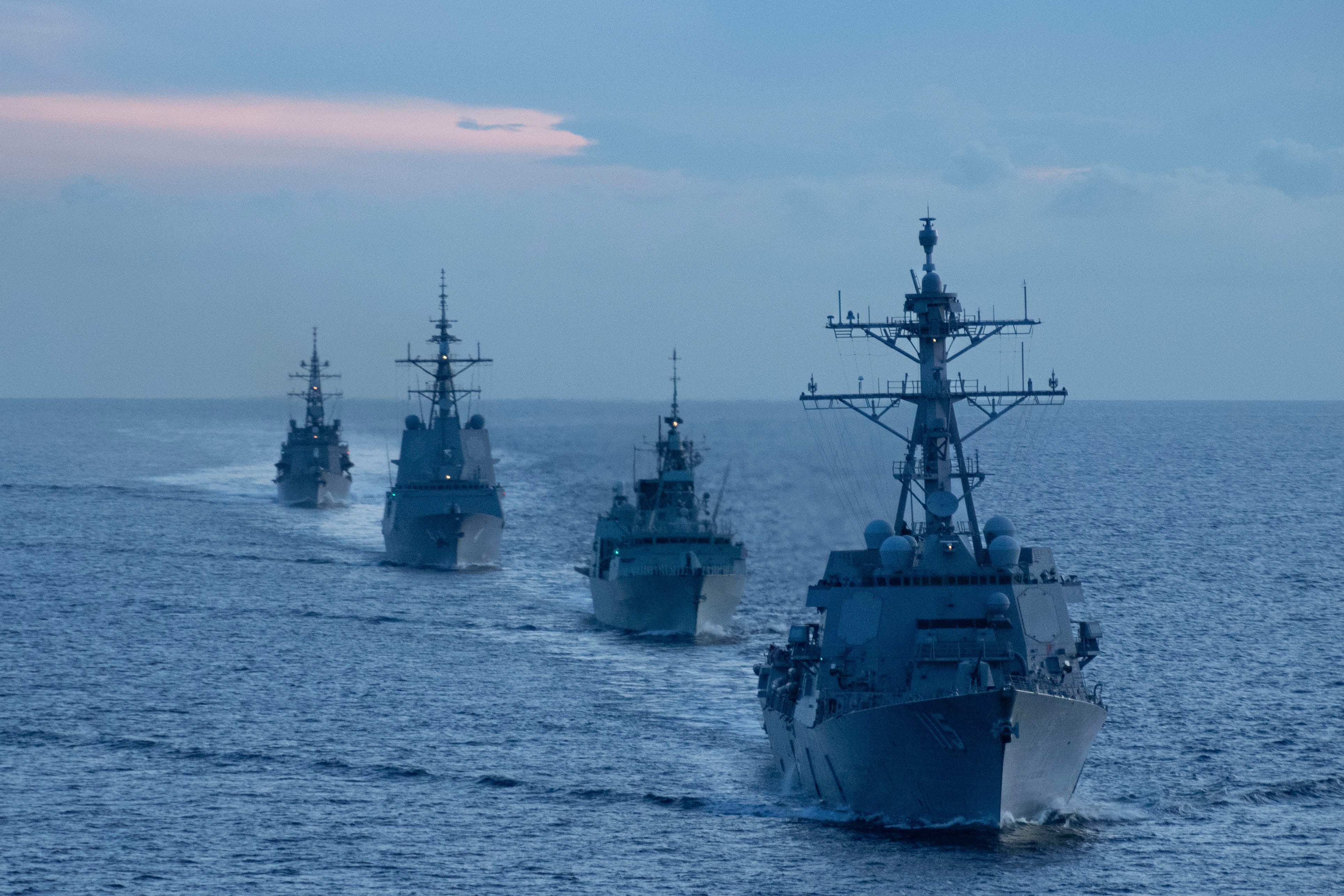
Mind you, without judicious and adequately funded capability investment, Malcolm Davis reminds us, self-reliance is ‘wishful thinking.’ The new Integrated Investment Program has prioritised uncrewed systems, with A$12-15 billion planned over the next decade for drones in all domains. Only about a quarter or less of that is earmarked for smaller, low-cost drones; the focus of investment remains wedded to high-end uncrewed systems like the MQ-28A Ghost Bat. Long-range strike and integrated air and missile defence (IAMD) are two other winners.
In short, the 2026 IIP indicates that some very good decisions have been made. But given the rapid deterioration of Australia’s strategic outlook and the growing risk of war, time is not our friend. Capability development proposed in this year’s IIP must occur quickly – well before the decade is out. And more money than planned may be needed soon to ensure that the capability is delivered in time.
Money itself is increasingly an alliance-management problem on top of a budgetary problem. Linus Cohen looks at the technicalities of the NDS’ move toward bringing Australia’s reporting of defence spending in line with the metric used by NATO. It’s by no means an unreasonable move on the part of the Albanese Government—‘it’s only fair,’ he writes, ‘that if America’s NATO allies are being held to an arbitrary standard, its non-NATO allies should be held to the same arbitrary standard.’ But transparency is lacking.
Transparent or not, the process at work behind the NDS and IIP, writes Colin Karotam, is strategy-making about as rigorous and regular as it’s ever been. There’s a certain art to timing documents like the NDS. Going a decade or half-decade without fresh strategic guidance, given the pace of change in world affairs we’ve seen in just the last 24 months, isn’t a winning proposition. But strategy can’t move too fast, either: defence industry and capability development need a certain level of stability. The current two-year cycle, he writes, ‘appears to have hit a sweet spot.’
And what has that strategy-making process learned from the last 24 months? ‘While the 2024 strategy focused on maintaining a rules-based order,’ writes Courtney Stewart, ‘the 2026 NDS prioritises active contribution to a favourable regional balance of power.’ What that means in practice is that the NDS now forms a companion piece to the US National Defense Strategy and National Security Strategy from a few months back. The basic strategic logic at work in it is American. What victory looks like for the NDS, she writes, ‘is clear: contribute to a US-led counter-balancing coalition, build capability, and deepen partnerships to support Australian and regional deterrence, defence and security.’
In the media
ASPI in recent coverage of the NDS/IIP
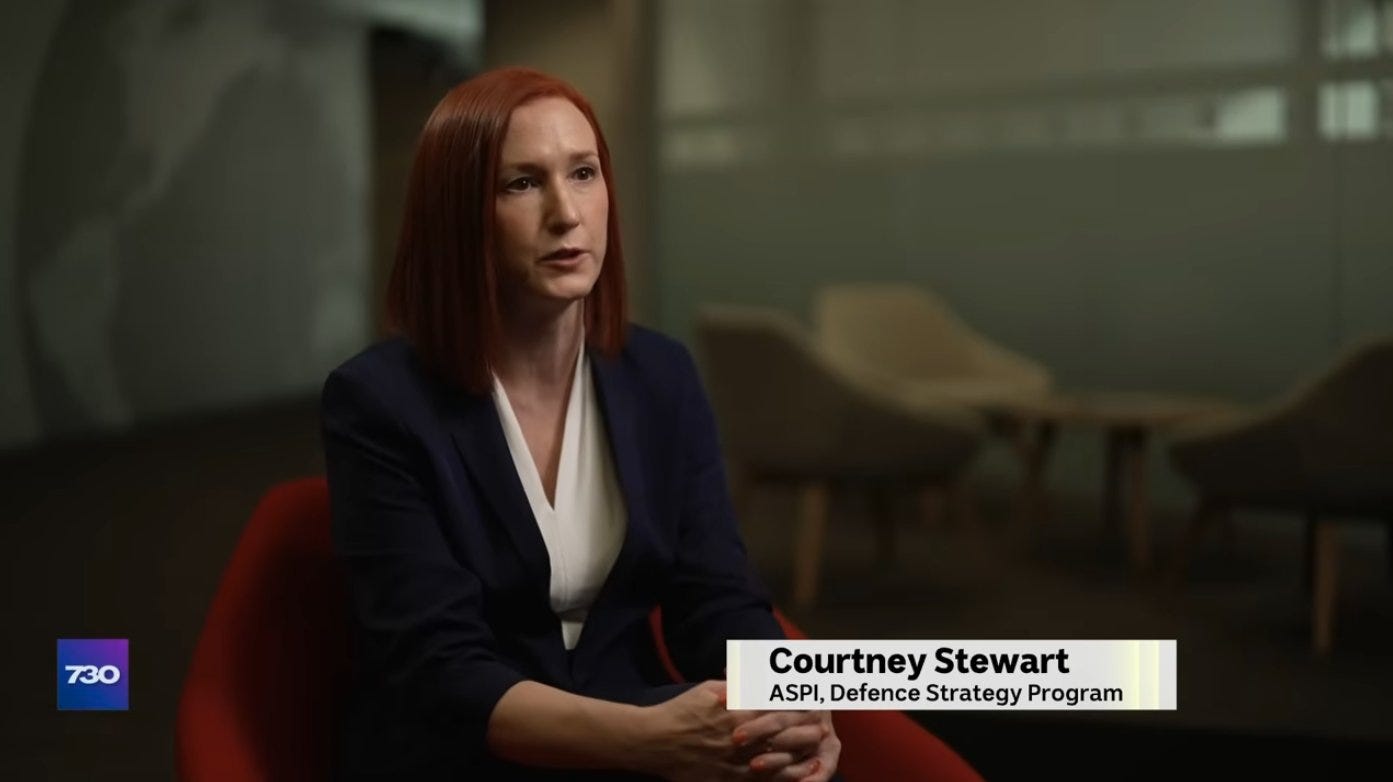
ASPI Deputy Director of Defence Strategy Courtney Stewart joined the ABC’s 7.30 program to discuss the 2026 National Defence Strategy, describing it as ‘an evolution, not a revolution’ that reflects growing strategic uncertainty. She also highlighted challenges in rapidly delivering capability and the need for greater public clarity on threats and defence spending.
ASPI’s Director of Defence Strategy Mike Hughes joined Sky News to assess the 2026 National Defence Strategy, highlighting the government’s progress in setting capability priorities. He also noted increased investment in drones, long-range strike and integrated air and missile defence, while questioning whether overall spending will meet Australia’s strategic needs and stressed the importance of drawing the right lessons from recent conflicts.
In the Australian Financial Review, ASPI’s Director of Defence Strategy Mike Hughes examined the government’s use of ‘alternative financing’ to fund some defence capabilities, noting it could unlock new funding if implemented effectively. He also argued that planned increases in defence spending remain modest relative to Australia’s strategic environment.
Following the release of the 2026 National Defence Strategy, ASPI’s Mike Hughes joined ABC Radio National Breakfast to discuss the need for increased defence investment and how Australia can balance a strong US alliance with greater self-reliance.
‘We need to get away from that post-Cold War dividend, where essentially the Australian taxpayer derived their security off the back of the American taxpayer. We know that is no longer possible. It’s not a feature of the modern world.’
In The Age, ASPI Executive Director Justin Bassi praised Australia’s Deputy Prime Minister Richard Marles for rejecting the ‘cynical claim that rules are dead and we need to rely on interests over values’ in his speech launching the 2026 National Defence Strategy.

That’s all for this special edition. For more timely analysis and commentary, check out The Strategist and ASPI’s Stop the World podcast—or elsewhere on Substack:


Thanks for reading! This post is public, so feel free to share it.
Comments
Nothing yet. Say the first thing.
Sign in to join the conversation.