

Welcome to the latest edition of ASPI’s Fault Lines.
Each fortnight, ASPI’s Defence Strategy Program monitors the moves and countermoves shaping the regional order and Australia’s security.
This edition covers the period 10 July 2026 - 23 July 2026.
Follow the Australian Strategic Policy Institute on X, on LinkedIn, and on Bluesky.
Helicopter yen
The Takaichi government has issued high-level guidance for Japan’s next financial year, with ‘defence industry’ in bold text and a rather expansionary fiscal policy to underline it. Approved by the Cabinet on 21 July, the Honebuto—to use its full name, the Basic Policy on Economic and Fiscal Management and Reform—functions as an annual statement of the government’s overall policy priorities; it’s not a budget, but you can see one from there. It tells the ministries what they should think about when they develop their budget requests for the coming year. On defence, Japan’s prime minister Sanae Takaichi clearly wants them thinking big.
The 2026 Honebuto outlines a ‘Strong and Prosperous Japan Investment Framework’ with 17 investment priorities, including defence industry alongside aerospace, shipbuilding, national resilience, AI and a variety of high-tech manufacturing sectors. For agencies’ new policy proposals relevant to these sectors, the government is removing the requirement that budget requests be capped based on the previous year’s budget. Not only is there no cost ceiling, but new policies will also be able to receive multi-year funding commitments at the budget-formulation stage. The general idea of Takaichi’s Honebuto, and a significant break with Japanese fiscal practice, is to budget toward a stable long-term reduction of the debt-to-GDP ratio, rather than trying to avoid a deficit every year. Underlying that is a vision in which the government manages the 17 ‘strategic fields’ as one big investment portfolio road-mapped out to 2040.
That’s music to the ears of defence industry—which has never met a program budget it didn’t want bigger and guaranteed for the next decade—even before you find the (as-yet tentative) idea floated for a kind of state-owned enterprise to promote Japan’s defence exports overseas. A decision on that seems to be pending the Takaichi government’s revision of Japan’s key strategic documents, including the National Security Strategy, which the Honebuto also promises to accelerate. As defence industry policy goes, the ambition on display is hard to match in the region or worldwide—and it’ll matter for both if Japan pulls it off. For fiscal hawks, both in the Diet and Japan’s central bank, the 2026 Honebuto is a massive gamble on today’s deficit spending producing tomorrow’s long-term growth. Takaichi’s challenge between now and next March is to convince them it’s a gamble they want to make.
Seoul origin
Lee Jae-myung’s 7 July speech at the NATO Summit Defense Industry Forum in Ankara—the one with his proposal to expand defence industry cooperation between South Korea and NATO members, moving beyond arms sales to encompass joint R&D, manufacturing and operation—seems to have ruffled some feathers in Moscow. On 16 July, deputy foreign minister Andrei Rudenko met with South Korea’s ambassador Lee Seok-bae and conveyed the view that it is ‘unacceptable’ for Seoul to become a ‘de facto accomplice in the qualitative and quantitative rearmament of NATO.’
Since 2022, Russian officials have repeatedly drawn a red line (which South Korea has so far respected) at providing lethal equipment to Ukraine; the usual practice is to threaten the end of the bilateral relationship, sometimes with a light dusting of ‘retaliatory measures, including asymmetric ones.’ What’s new here is the scope: the threat isn’t narrowly centred on Seoul’s aid to Ukraine, but on its broader alignment with NATO.
That alignment is as much a strategic proposition to NATO as it is an economic one to South Korea’s domestic defence industry, which has done well out of the initial wave of European rearmament since Russia’s full-scale invasion of Ukraine in 2022. But now—with Europe simultaneously seeking to unwind its reliance on US supply chains and planning for a tense post-Ukraine standoff with Moscow—South Korea seems to recognise that it needs to ‘Europeanise’ its value proposition (building the factories over there, among other things) if it wants to capitalise on the gains it’s made thus far. That will probably mean more than industrial ties. Europe will want a partner willing to line up politically with a harder stance on Russia. Which is easier said than done when Seoul has a delicate relationship to manage with its nuclear-armed neighbour to the north; Russia’s deepening partnership with North Korea gives it both the tools and the incentive to make it all the more delicate.
Surf and turf
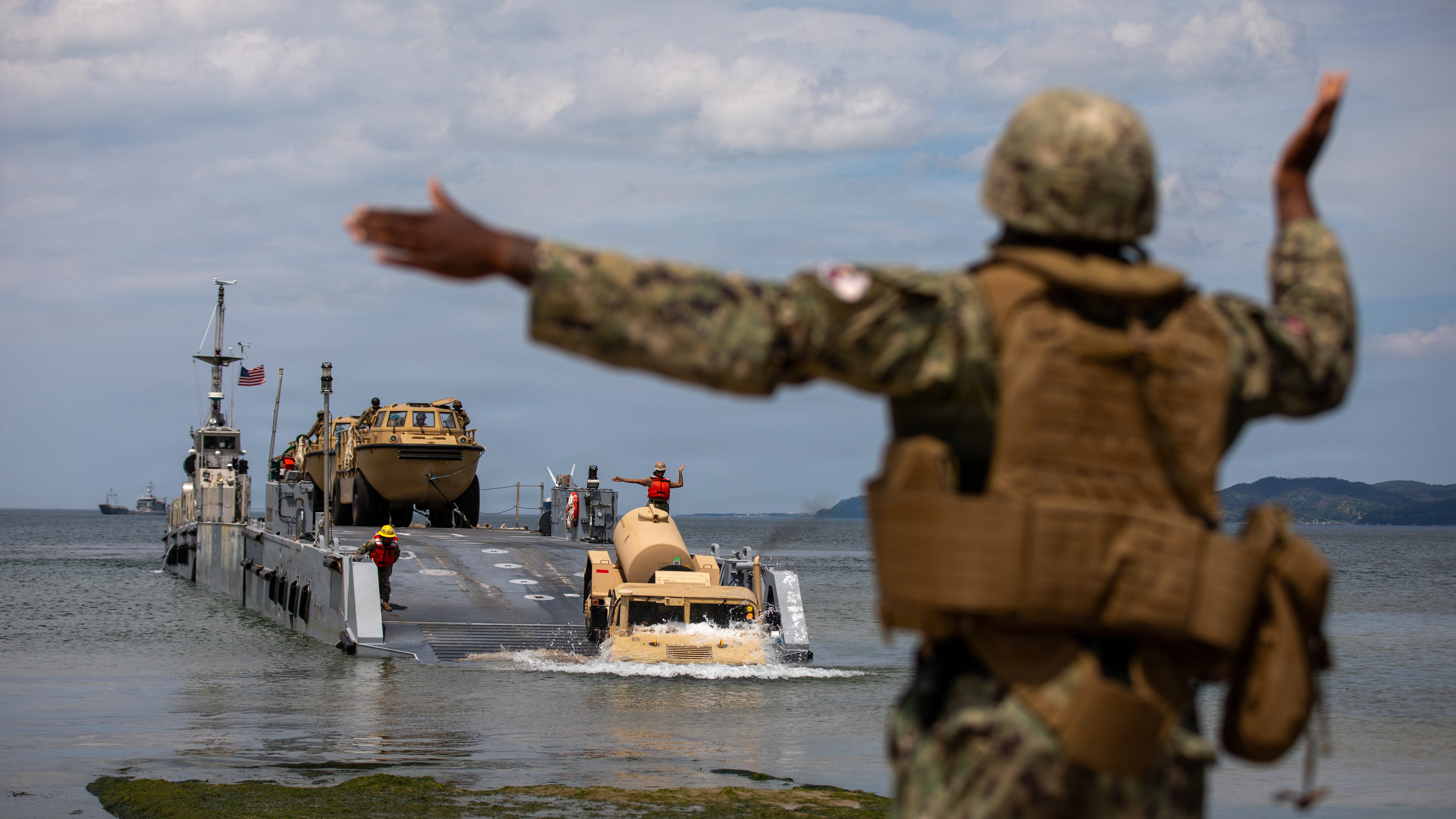
US and South Korean forces conducted their biennial Combined Joint Sustainment Training (CJST) activity over 13-16 July—the largest on record, with over 4,400 troops participating, and the first since 2017 to involve over-the-shore training. This means that it’s not just a test of how good the two countries are at getting military equipment off the boat and into the fight; it’s a test of how well they can do that without a port. Useful to know if you want to be ready for a conflict where North Korean ballistic missiles might put existing port facilities out of action early on.
This was also the first test in a combined operation of the South Korean Navy’s brand-new Joint Logistics Over-the-Shore System—a whole family of floating bridges, logistics vessels and other deployable equipment operated by a dedicated support battalion created in January 2025. While the US and South Korea have trained over-the-shore logistics since at least 2011, it’s only in the last year or so that South Korea has fielded the capability to run the whole ship-to-shore part by itself. That’s consistent with the current long-term thrust of alliance policy under presidents Trump and Lee Jae-myung: recalibrating the balance of front-end military responsibilities more in Seoul’s direction.
News from abroad
Indonesia’s Navy announced on 13 July that a task group led by the frigate KRI I Gusti Ngurah Rai—including embarked helicopter elements, divers and naval special forces—had set out for Vladivostok to participate in ORRUDA 2026, the second of the combined Russia-Indonesia ORRUDA series of naval exercises. The plan through to August is for both navies to drill modern naval combat tactics, with an emphasis on potential threats from sea drones and uncrewed surface vessels.
Prior to 2024, Indonesia’s and Russia’s navies encountered each other mainly in a multilateral context—such as the KOMODO exercises from 2014 onward, or the inaugural (and thus far one-off) Russia-ASEAN naval exercises in 2021, which Indonesia co-hosted. But bilateral ties have deepened in the last two years, and the Russian Pacific Fleet has started showing up at Indonesian ports more often.
After the Russia-China JOINT SEA 2026 naval exercises finished at Qingdao on 13 July, select ships from both participating task groups set out into the Yellow Sea together on a joint patrol. No details of the patrol’s planned route have been made publicly available, though China’s defence ministry stated that it would take place in ‘relevant areas of the Pacific Ocean’.
This is the sixth joint patrol of its kind, the first having been conducted in 2021, the rest on a roughly annual basis. If last year’s is any indication, this one might get past Japan and well into the central Pacific. The patrol comes during a period of relative expansion and intensification of Chinese and Russian naval activity near Japan and beyond the first island chain.
The changing of the Guard
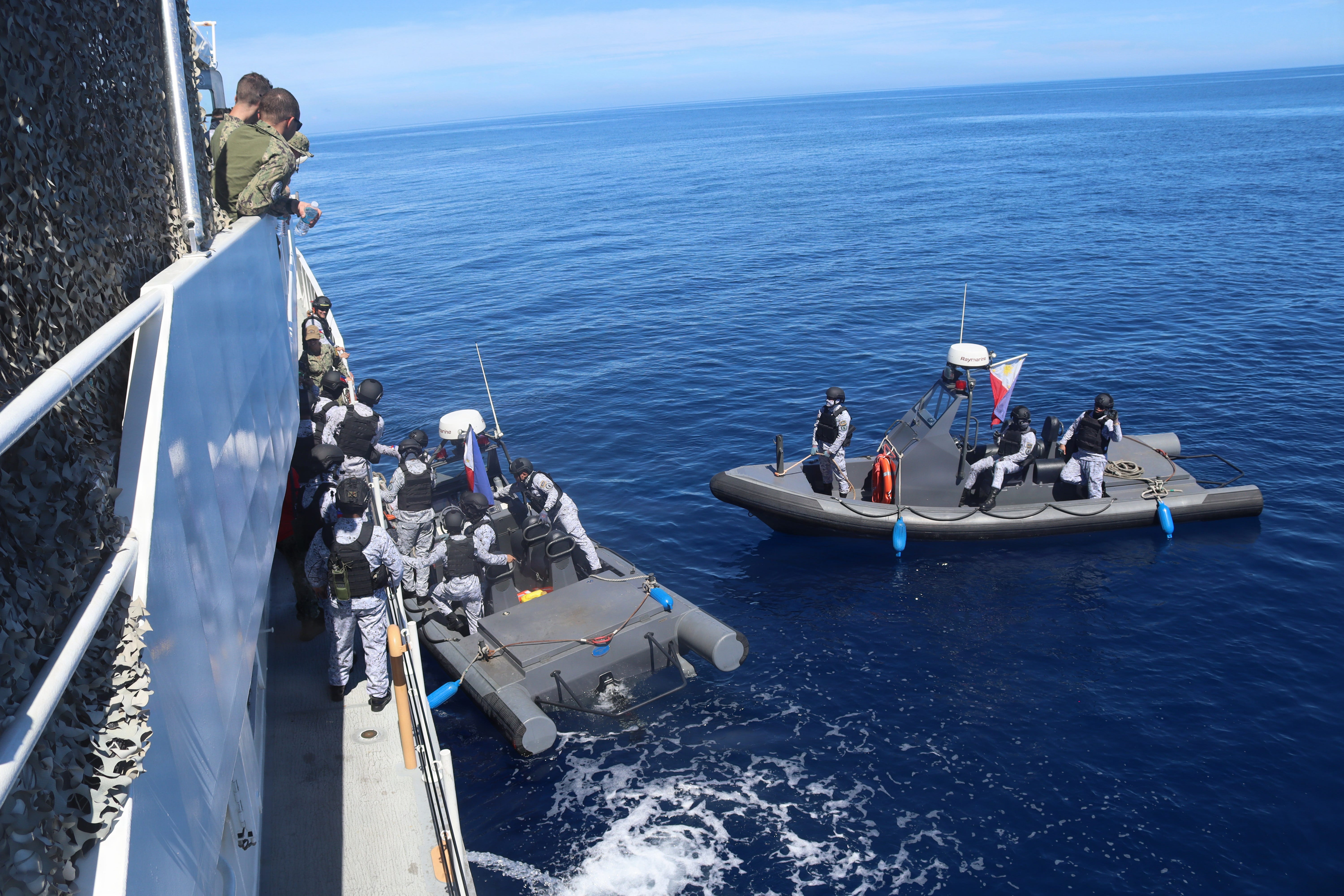
On 15 July, the US Coast Guard announced that its Expeditionary Cutter Squadron (ECS) will transition from the Persian Gulf to the Western Pacific. In fact, they’re already there. The boats have been hanging around their new command at Singapore since the end of March, and spent much of June in maritime cooperative activities with their Philippine counterparts in the South China Sea. This latest announcement is the Coast Guard making things official. They’ve authorised the squadron to support US Pacific Command (PACOM) through to 30 September. Past that, no details have been made public.
The ECS, formerly Patrol Forces Southwest Asia, has played a supporting role to US forces in the Gulf—coastal patrols, securing offshore oil terminals, counter-smuggling operations, you get the idea—since Operation Iraqi Freedom all the way back in March 2003. It’s still the only dedicated cutter squadron the US Coast Guard operate outside North America.
Putting it in Singapore, with rotations out to Subic Bay in the Philippines, doesn’t markedly shift the overall balance of tonnage in the South China Sea. While better-armed, the USCG’s Sentinel-class cutters are small, high-tech ships about on par with Australia’s Evolved Cape-class patrol boats, easily outmatched by the converted warships routinely fielded in the area by the China Coast Guard. But it does give US and Philippines commanders more options for putting American flags—on non-military, law-enforcement vessels—out in support of Manila’s maritime claims. That’s a domain in which Manila has been strategically ‘civilianising’ its response, preferring coast guard vessels to warships, to manage escalatory pressure in confrontations with China. The relocation also gives PACOM more options for having US surface combatants show up for allies and partners—as, for example, at this year’s CARAT anti-submarine warfare exercises (6-15 July) with Thailand, where two ECS cutters filled in for the US Navy’s usual presence—while freeing up higher-end military platforms.
In light of the steady tempo of US-Philippines maritime cooperative activities this year—the sixth of which saw the first-ever USCG participation at the end of May—it’s likely we’ll see much more of the US Coast Guard near disputed features in the Philippines’ EEZ in coming months.
Save the date
On 20 July, a China Coast Guard cutter at Second Thomas Shoal confronted the Armed Forces of the Philippines (AFP) outpost on the beached World War II-era landing ship BRP Sierra Madre—the sole inhabited feature at the shoal. The AFP claims that a Philippine serviceman was injured when struck in the head by one of the CCG officers using a wooden baton. China’s foreign ministry tells a rather different story. President Marcos summoned China’s ambassador over the incident on 21 July, though details of the meeting haven’t been publicised.
Bitter as the fight over disputed South China Sea features can be, it’s rarely a face-to-face fight; aggressive boat manoeuvres, flag-planting, megaphones and social-media blitzes are more the style. The videos released by both sides of the 20 July incident leave no mystery as to why. It’s a loud, messy, chaotic interaction between small-boat crews on the water; just the sort of thing that’s one minor slip or flare of temper away from getting seriously out of control. The last comparable incident took place on 17 June 2024, in which eight AFP personnel were injured, including one who lost his right thumb, during a CCG attempt to board and impound an inflatable boat resupplying the outpost at Second Thomas Shoal. That incident quickly led to a ‘provisional understanding’ over resupply missions to the Sierra Madre outpost being brokered between Manila and Beijing—tenuous, ambiguous, but so far just enough to let the AFP retain their foothold on the shoal while keeping a lid on escalation. Its ability to do the latter is now looking more questionable than it did a week before.
A week before, as it happens, a 12 July joint statement from the Philippines, Japan, Australia, the US, and various allies and partners thereof commemorated the tenth anniversary of the 2016 Arbitral Tribunal ruling under the UN Convention on the Law of the Sea. That ruling found China’s claim to ‘historic rights’ to most of the South China Sea to lack foundation in international law. The joint statement attracted a sharp counter-statement out of Beijing, with further diplomatic pressure directed at Europe and Japan. All this casts a shadow over the present week of intense diplomatic activity surrounding the ASEAN Foreign Ministers’ Meeting in Manila, which China’s foreign minister Wang Yi and his US counterpart Marco Rubio are both attending as dialogue partners. One item on Rubio’s agenda is a gala dinner commemorating the 50th anniversary of the ASEAN Treaty of Amity and Cooperation in Southeast Asia—a document much in the spirit of the UN Charter, promoting the renunciation of the threat or use of force in international affairs. Anniversaries like that now have a way of seeming ominous.
News from the neighbourhood
On 12 July in Bangkok, an informal delegation of ASEAN foreign ministers held a face-to-face meeting with their Myanmar counterpart, junta appointee Tin Maung Swe. This was the first such engagement since the February 2021 coup, and a small but significant step toward a reopening of relations between ASEAN and the now tenuously civilianised military junta.
It’s a step ASEAN have every reason to make carefully. Dialogue risks legitimising the junta, but five years without it haven’t broken the deadlock: the junta’s persistent failure to progress implementation of the Five-Point Consensus peace framework for the Myanmar civil war is an issue that remains unresolved. The junta has asked ASEAN to review that framework, arguing that it no longer reflects the political realities inside Myanmar; ASEAN’s representatives have continued to insist on it.
On 21 July, ASEAN foreign ministers agreed to develop new benchmarks for assessing Myanmar’s progress toward peace, and to open discussions regarding a longer-term special envoy.
On 15 July, Jinan University (JNU) removed from its website a report claiming that the Philippines’ Batanes province, comprising the archipelago’s northernmost islands, is a ‘natural geographical extension’ of Taiwan and constitutes Chinese territory on that basis. This claim arose from an academic symposium hosted by JNU at its Guangzhou campus on 30 June and received coverage in Chinese media in the week thereafter. The Philippines’ defence minister and the governor of Batanes have both dismissed the claim.
The Batanes claim hasn’t been officially endorsed by the Chinese government; it’s been articulated, if by anyone, by a group of international law and area-studies academics, and maybe a few Global Times op-ed writers. It’s possible that the removal of the symposium report is Beijing officialdom distancing itself further: after all, JNU isn’t your average provincial university. As an institution historically oriented toward foreign students, including those of Chinese heritage, it is directly supervised by the United Front Work Department of the CCP Central Committee—that is, the Party’s premier foreign influence organ.
In that light, not to mention that of the China Coast Guard’s simultaneous push to normalise law-enforcement patrols in the nearby waters east of Taiwan, the Philippines’ defence minister’s earlier view of the claim as ‘a signal of preconceived intention’ from Beijing doesn’t seem altogether far-fetched.
Multiple choice
Last week, Papua New Guinea closed Taiwan’s Economic Office in Port Moresby. A statement from foreign minister Justin Tkatchenko held that Taiwanese representation ‘will no longer be recognised or required’.
Which is a curious thing to say about your fifth-largest trading partner. Roughly a third of all the liquefied natural gas sailing out of Port Moresby, which is itself more than 40 per cent of PNG’s exports as a whole, winds up in Taiwan. While it’s unlikely that existing gas contracts will be cancelled on the spot just because Taiwan no longer has an office in town, their future is uncertain. The foreign ministry in Taipei has promised to ‘review’ gas purchases from PNG—and while these are a notable portion (about 8 per cent) of Taiwan’s overall LNG imports, they’re far from unsubstitutable. Economically, Taiwan no longer buying PNG’s gas is probably more costly for the latter than the former. Which would understandably make PNG’s apparent willingness to absorb that cost a troubling sign to read from Taipei. Not least because of the narrative frame in which Port Moresby cast the decision: not only as part and parcel of an ‘unwavering commitment to honouring, respecting, and upholding Papua New Guinea’s foundational One-China policy’, but as a statement of intent on the part of the PNG government to take its relationship with China to ‘unprecedented levels.’
This follows a similar move made by Nauru in May of this year, where a government directive required all public servants to adhere to a strict interpretation of the One-China Principle that functionally prohibited interaction with Taiwan. That both are close Australian partners—indeed, a treaty ally in PNG’s case—makes this less a setback for Canberra’s foreign policy than a healthy reminder that the ‘permanent contest’ for influence in the Pacific is one in which alignment is rarely one-dimensional. If indeed the TEO’s closure is more about throwing Beijing a bone to provide cover for deepening security ties with Australia, which it well could be, you might call it ‘stabilisation’ as much as you might call it a concession. But even if PNG’s talk of ‘unprecedented levels’ of partnership with China is mostly presentational, the line between stabilisation and Beijing’s pressure delivering results looks very faint when viewed from Taipei.
News from the family
Vanuatu and Papua New Guinea have signed a policing agreement aimed at combatting transnational crime and increasing interoperability. Although Vanuatu is not yet a major node in the Pacific drug highway, recent large-scale drug seizures suggest this may be about to change. Policing has become a focal point of strategic competition throughout the region, as China and Australia have both sought to become the policing partner of choice.
That’s all for this fortnight. For more timely analysis and commentary, check out The Strategist and ASPI’s Stop the World podcast—or elsewhere on Substack:


Thanks for reading! This post is public, so feel free to share it.
No posts
Comments
Nothing yet. Say the first thing.
Sign in to join the conversation.