
From The Editor
Morning all! This is the second of our weekly newsletters as we settle into the routines of our revamped Substack.
As ever, it’s been a busy week on the frontline of history books, featuring and promoting more titles for our authors and publishers, arranging and conducting interviews for the site and the podcast. Do get in touch here or via the website or social media if you have releases we could lend a hand in pushing!
As we bring together the strands of the August magazine, in an effort to get it all done, I’ve taken refuge a couple of days a week at my cousin’s office just off Brick Lane. Picture a ‘co-working space’, great views towards the city, playfully kitsch and funky furniture with ‘breakout’ areas for meetings and all occupants in jeans and t-shirts – despite that, the awkwardness of asking a ‘colleague’ with carton of milk in hand to leave it out of the fridge at the free coffee station still survives the surface-level informality… this trendy, post-Covid floating corporate world we find ourselves in, eh!?
But it wasn’t always this chic in the East End. The building itself was first a carpet factory in the 60s. Before that, 138 years ago next month in fact, the body of one of the Ripper’s victims, Annie Chapman, was discovered the next block of tenements along, when the area was considered one of the worst rookeries in Europe, let alone the capital.
This strange gentrification process, from Huguenot, Jewish and Irish settlers to startup founders and tour groups, that historical dissonance, added to the dislocation of arriving back in the metropolis after endless months spent away, is occupying my thoughts. It is a reminder of the various pasts one passes each day in the City of London and the suburbs.
Keep those subscriptions coming in and we hope you enjoy the offerings we have for you below!
This Week at Aspects of History
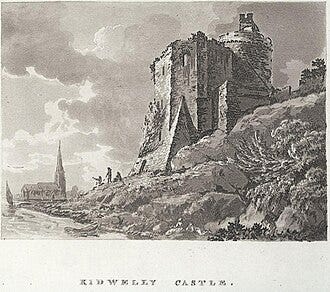
Sir Gruffydd Donne: Knight of Kidwelly
John Pitts traces one man’s journey from the shadow of his grandfather’s support for Owain Glyndwr to a career fighting for Henry V and Henry VI, and explores a Welsh family whose fortunes hinged on some of the defining conflicts of medieval Britain.
The Donnes of Kidwelly represented generations of Welsh warriors and nobility whose lives ran in parallel with major events in the history of both Wales and England, not from the sidelines, but often playing significant parts. My book tells the story of how the life of Gruffydd Donne, unfairly tainted by the treasonous support for Owain Glyndwr’s rebellion by his grandfather, led to a successful military career as a knight of the realm, serving both Henry V and Henry VI. From a distant ancestor who stole the treasure of a king, what Gruffydd established lived on through his sons, one of whom eventually achieved greater fame and established a family line that can be traced to our present Royal family. The three great estates around Kidwelly are still identifiable today; all are functioning farms which bear, to some degree, remains of the 15th-century manor houses.
Eadric Streona: Archvillain of English History
Adam Staten lays out one of Anglo-Saxon England’s most notorious figures, Eadric Streona’s murderous ambition and repeated betrayals which triggered Danish conquest and the upheavals that resulted in 1066.
‘The worst traitor there ever was.’
Writing in the 12th Century, this is how the chronicler Henry of Huntingdon describes Eadric Streona. John of Worcester described him as ‘crafty and treacherous’. William of Malmesbury called him ‘the dregs of mankind and a disgrace to his countrymen, a criminal debauchee and a cunning rascal’. His name, ‘Streona’, is a nickname meaning ‘the grasper’ or ‘the acquisitor’ and tells us much about this man’s character and motivations. But who was he?

Harold: Warrior King - Tom Licence Interviewed
The medieval historian discusses fronting up to long-held myths surrounding the last Anglo-Saxon king with Paul Bernardi, explains his approaches to the primary sources that recount 1066, and considers the man behind the defeat at Hastings – all in his new book Harold: Warrior King, published by Yale University Press.
One of the most compelling sections of the book comes towards the end in respect of your rethink of Harold’s movements in September and October 1066. I’m interested to know how you came to your assertion that the ‘forced march’ might be a thing of myth and that Harold may have actually transported most of his troops on ships. Did you go looking for that or did you happen upon it by chance?
When I came to the campaigns of 1066, I thought – right – I must go back to the sources, collect every detail, weigh their accounts and reconstruct Harold’s movements, month by month, day by day. I read the Latin and Old English, guarding against assumptions, and one thing I soon spotted was that the translators of a key text (William of Poitiers) had inserted the idea of the forced march into their translation, when it wasn’t in the Latin. Twice. I then went looking for references to any marching – surely they must be somewhere? No, not at all. There were no references to marching/ riding down from Yorkshire. But there were multiple references to Harold having and using a fleet.
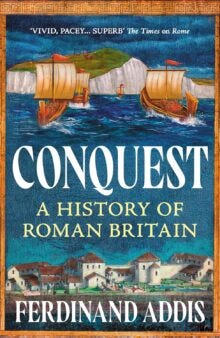
Conquest: A History of Roman Britain, by Ferdinand Addis
A reappraisal of a much-researched topic reveals how diplomacy, trade and cultural exchange were and still are as fundamental to Rome’s conquest of these islands, our landscape and British identity today as military force, posits Zeb Baker-Smith
There is a lot that has been said, written and mulled over when it comes to Roman Britain, and, consequently, a reader glimpsing Ferdinand Addis’ Conquest (published by Head of Zeus) on the shelves might be forgiven for thinking it another interpretation of those well-trodden stories and a landmass that has been dug up more than any other imperial province. Except that reader would be wrong. There is ambition from the contents pages – a challenging story retold through physical features, scenery, landscape, as much about what came before and after Rome as it is about headliners like Caesar, Claudius and Boudicca and those familiar dates of landings and invasion.
From the Archive

Historical Heroes: Ninette de Valois
Novelist Lucy Ashe argues that British ballet has this Irish-born diva to be thankful for since she established dance in the interwar period and gave choreography in the country its distinctive flavour.
Dame Ninette de Valois was an ever-present figure throughout my years training at the Royal Ballet School, her name repeated in ballet studios, her influence permeating every rehearsal room. I saw her only once, at a celebration of her 100th birthday at the Royal Ballet School in 1998 when I was a junior associate of the school. And yet her legacy as founder of the Royal Ballet has been of great significance to me, both during my time as a dancer and more recently when researching and writing my two ballet-themed historical novels: Clara & Olivia and The Sleeping Beauties. Ninette de Valois, or Madam as she was known by her dancers, transformed British ballet from its humble reputation as divertissements in music halls to a great art form, alongside music, opera, drama, and the visual arts.
On the Podcast

The Path of Light: Walking to Auschwitz with Anthony Seldon
Our episode this week sees Zeb Baker-Smith, Editor of Aspects of History, discusses The Path of Light with Anthony Seldon, his remarkable account of a journey on foot from Kilometre Zero on the Swiss border to Auschwitz. The power of pilgrimage, the enduring legacy of war, and the significance and delicate nature of truth, memory and reconciliation in an age of renewed global instability – each of these proved to be the inescapable findings of a 1,300km walk across the landscapes of Central Europe, so scarred by conflict over the centuries.
Coming up on Saturday…
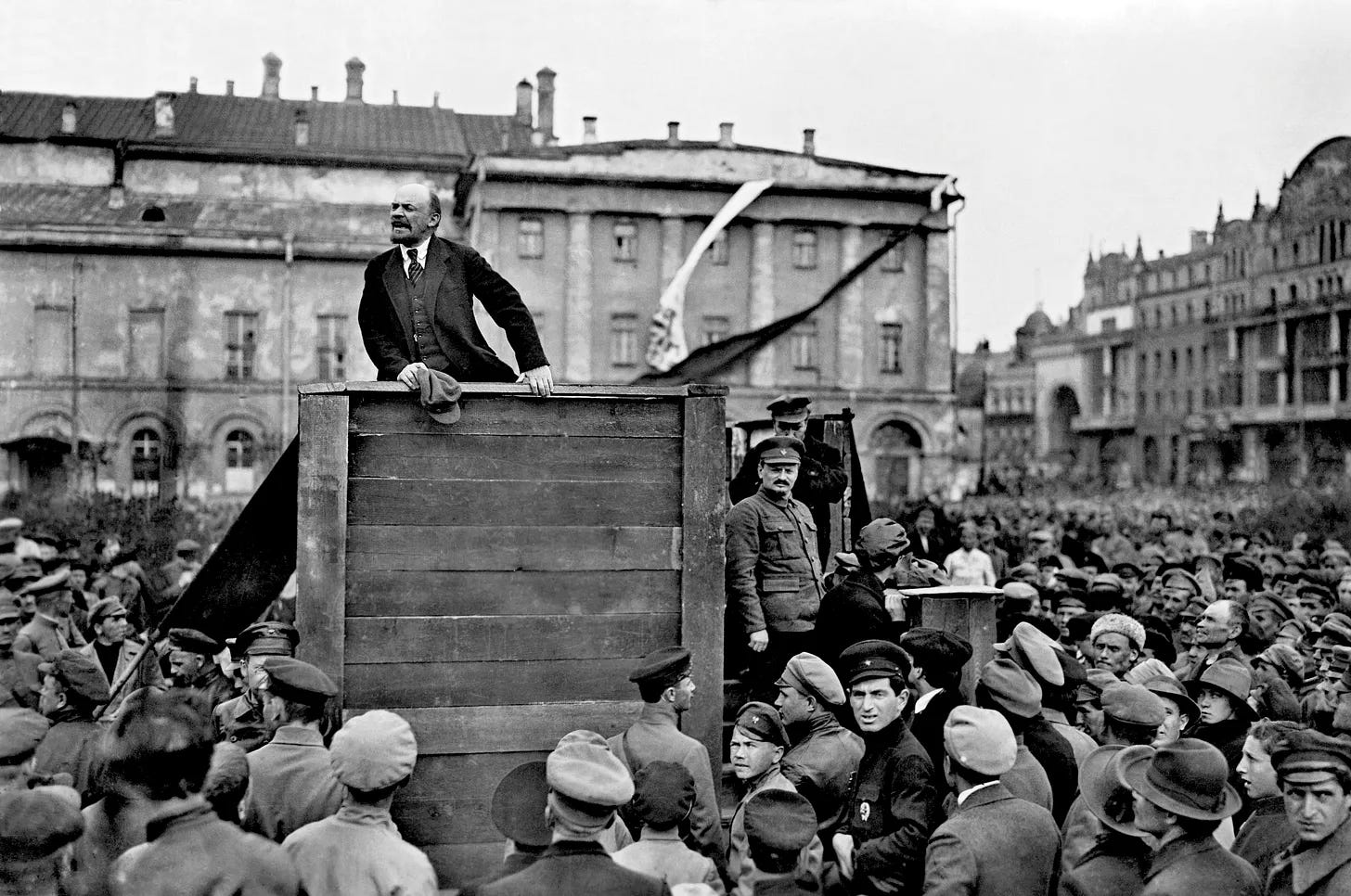
Rethinking Communism’s History, by Paul Mason
In his forthcoming book, Reds: A Global History of Communism (published by Head of Zeus), the award-winning journalist maintains that Karl Marx was never the original architect of the communist tradition, which traces deeper roots from French revolutionary thought and the utopian ideals of Babeuf and Blanqui.
There is, in the origin story of communism, something akin to what happens the first lines of the Book of Genesis. Left-wing politics in the 1830s are like the biblical “formless void”, with the early workers’ movement mesmerised by pointless speculative Utopias. Then Marx turns up in Paris in 1843, armed with the dialectical logic he has learned at Berlin University, and says, “Let there be light!”
An intellectual system is formed, based on the principles of social science. It conquers the European labour movement in the back half of the century, is ported over into the extreme social conditions of Russia by Lenin, gets rocket boosters from the slaughter of the Great War, and by 1949 bestrides Russia, China and half of Europe.
This exclusive article from our upcoming August magazine will only be available to paid subscribers.
Catch up with you all on Saturday!
Zeb Baker-Smith, Editor of Aspects of History.
Comments
Nothing yet. Say the first thing.
Sign in to join the conversation.