

Amid heatwaves and a move back to London to lead a nomadic existence on sofas and the odd spare bed, the last couple of months have been busy ones. After ten months living in and traipsing across Malawi, the shift and readjustment has proved refreshing and bewildering in equal measure. It all sounds a bit ‘Gap Yah’, but perspective-changing is another apt adjective.
When flicking through new releases, one of the best bits about this role is the ability to track down a book and commission an author’s contribution from someone observing history with a different perspective. Jonathan Fennell’s article (coming to paid subscribers this Saturday!) on Collapse, the first of a mooted trilogy focused on a global history of the Second World War, is an example of the opportunity to strike off in an alternative (yet still convincing) direction away from the well-known narratives. His use of ordinary people’s correspondence highlights the very human cost of war to unheard and unfamiliar voices across still-disregarded continents that also witness conflict throughout the 1930s.
Not that this is microhistory in the strictest terms, but the death in June of one of the subdiscipline’s founders, Carlo Ginzburg, historian and author of The Cheese and the Worms, also underlined the importance of altering the historical lens, to ask major questions of smaller figures and communities who might be considered to be on the periphery. That should always be a priority.
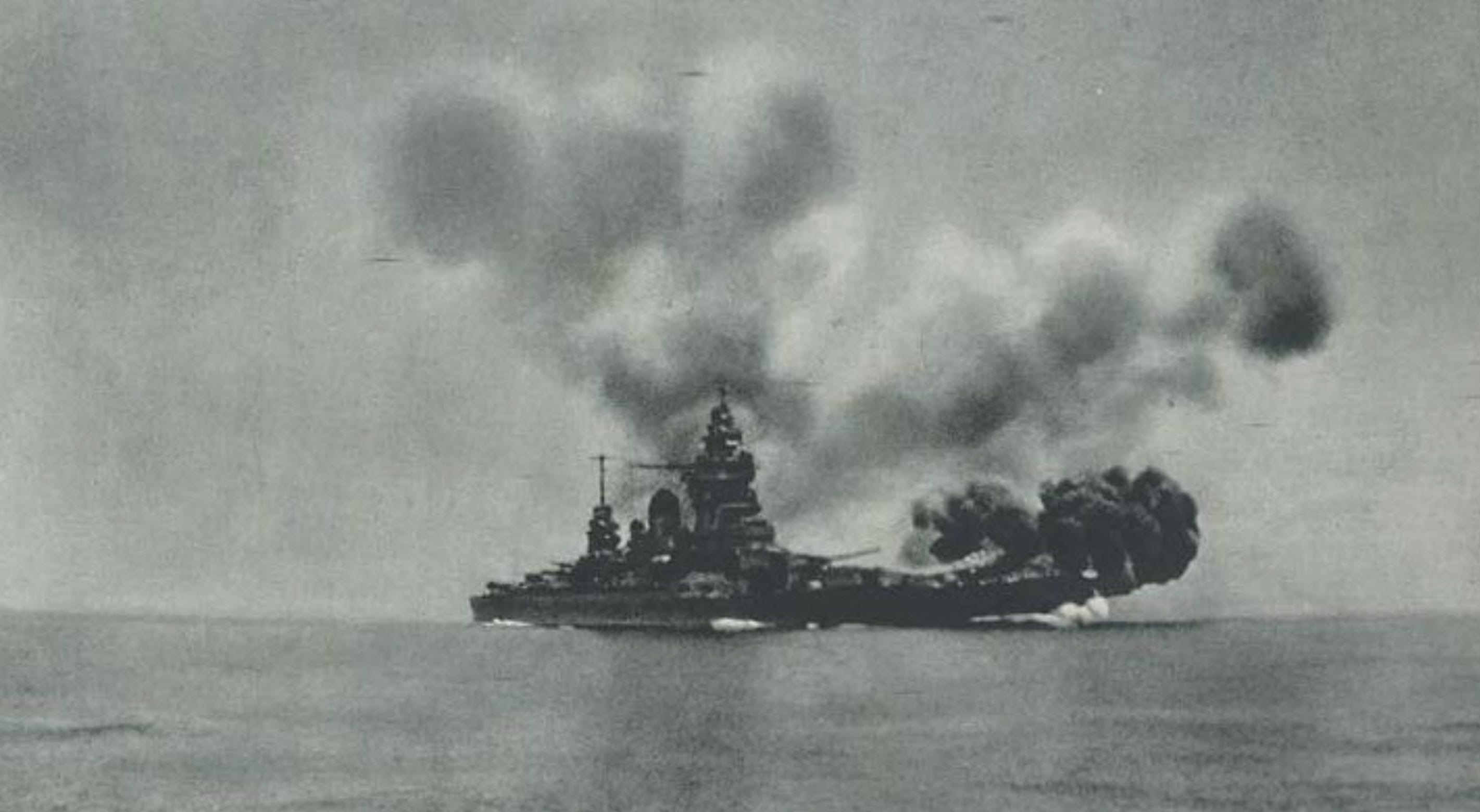
With Britain facing the prospect of standing alone against Nazi Germany in the summer of 1940, Winston Churchill ordered one of the most controversial actions of the entire war: the attack on the French fleet at Mers el-Kébir as told by Edward Abel Smith.
In the early hours of 3rd July 1940, a powerful British fleet cut steadily through the Mediterranean towards the Algerian coast. Led by HMS Hood, one of the largest and most formidable warships afloat, Force H moved with quiet determination through the warm darkness, its bows slicing cleanly through the calm water beneath a sky not yet touched by dawn.
On deck, the mood was tense but controlled. Sailors moved quietly, checking ammunition, adjusting equipment, speaking in hushed tones. The great guns were already trained and ready. There was no uncertainty about what lay ahead. They were heading into battle.
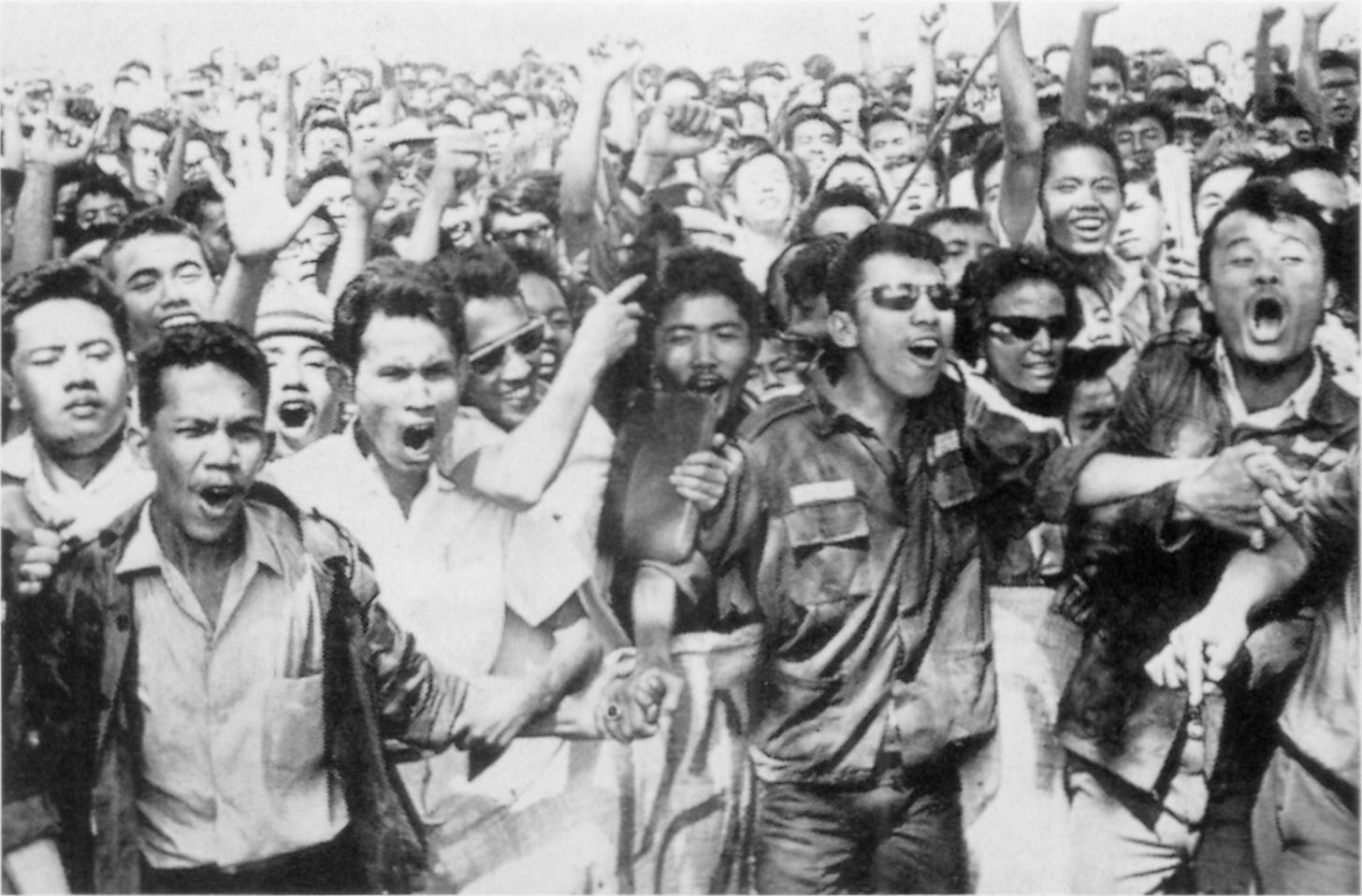
Sixty years on from Indonesia’s anti-Communist purge, Rory Cormac discusses a British propaganda campaign demonstrates how fabricated voices, forged documents and psychological warfare helped grease the wheels of regime change against Sukarno.
“Subandrio! Subandrio! Subandrio! Can you hear us Subandrio? Of course you can! For you can never close your ears to our voices. The voices you tried to smother in the Well. The voices of us the dead. Those voices will always ring in your ears, calling you a traitor and murderer… for it was you who planned our torture and mutilation… Worms may feed upon our rotting flesh, but our voices have becomed [sic] the voices of the Nation’s conscience…”
The eery, disembodied, voice, continued, echoing into the night.

Protestantism’s early movements across the globe reveal a tangled world of rivalry with Catholicism, complicity with empire and slavery, and failures that exposed the limits of Europe’s religious imagination – all discussed with Alec Ryrie on the Aspects of History podcast.
That word, mission, might make you think of Robert De Niro or Jeremy Irons, perhaps a young Liam Neeson, in Jesuit robes clambering up the Iguazu Falls in deepest South America, but, forgotten and less-documented as their efforts may be, there was a Protestant expansion too, a clear, not-so-Papist will to propagate the Gospel to the world, that challenges those preconceptions.
That was the starting point for Professor Alec Ryrie, whose latest book, The World’s Reformation, published by Yale University Press, examines these attempts to globalise Protestantism across several continents and over three centuries: “It seemed to me that there was an untold story there of this first phase of Protestantism spreading itself around the world – or trying to.
“At first I thought I’d be writing a short article about something that didn’t happen. The more I dug into it, the more those handful of exceptions grew and grew. I had to look this thing in the eye and say, ‘Hang on a second, we’ve got this wrong!’ If nobody’s told this story, then I’d probably better do it myself.”
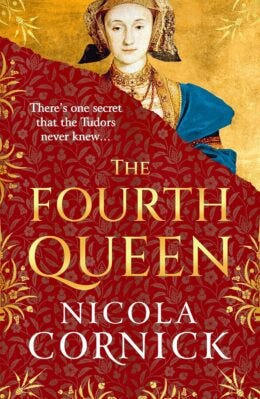
A novel full of political intrigue, complex relationships and a romance that spans the centuries is effortlessly compelling and atmospheric, notes Ella Beales
The Fourth Queen is Nicola Cornick’s latest Tudor historical fiction, set in the aftermath of the 1539 dissolution of the monasteries under King Henry VIII. Whilst Cornick is perhaps best known for her time-slip novels, The Fourth Queen takes a slightly different approach by exploring reincarnation through a dual timeline following Marris and her modern-day counterpart, Jenna. The result is a fresh perspective on Tudor history, and an imaginative and emotional story that explores memory, identity, the enduring bonds of sisterhood and the power of the past.
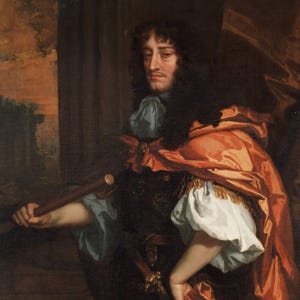
A dashing cavalier or a Prince Robber? Mark Turnbull’s 2025 biography examines the life of a key figure in the tumult of the 17th century.
Though this is an article about Rupert as an historical hero, I should, ironically, start by pointing out that he is also considered to be a historical villain! In his heyday enemy propaganda named him ‘Prince Robber’ or ‘The Diabolical Cavalier’. There were at least eight other pseudonyms. Yet, I would hazard a guess that this very practical man would not have been particularly concerned about how he was remembered. The fact he remains such a polarising figure, that he still endures in historical study, and moreover is a recognisable and popular subject, has much to do with his character, tragedies, and creativity.

Joining Zeb Baker-Smith this week on the pod, author Brendan Cooper presents his new book, Ball of the Century, a remarkable exploration of Shane Warne’s iconic first Ashes delivery at Old Trafford on 4th June 1993.
He traces the story of the Australian leg spinner’s rise, the psychological hold he exerted over English cricket, and the wider cultural landscape of Britain and the Ashes during the 1990s. We discuss how sporting mythology, memory and the enduring power of Ashes folklore combined to transcend the boundaries of sport and transform Warne into a cultural icon.
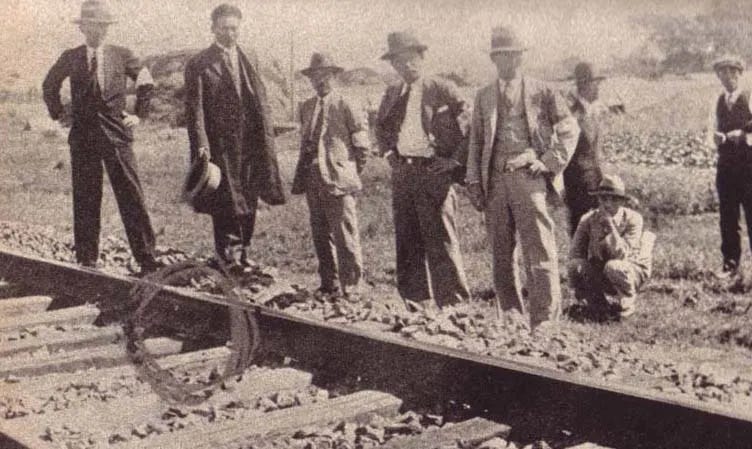
Long before Hitler invaded Poland, the international order was coming apart. From Manchuria to Ethiopia, from Shanghai to Madrid, the historian argues that the 1930s were not a prelude to global war, but its opening act
In January 1932, Gu Jiegang boarded a train from Beijing to Hangzhou. A 38-year-old professor of history at Yenching University, he was travelling south to visit his father and stepmother. It should have been a routine family journey. Yet as the train passed through Tianjin, Nanjing and Shanghai, Gu noticed that the carriages were unusually crowded. People were fleeing the worsening crisis in the north.
Only a few months earlier, on 18th September 1931, a bomb had exploded on a railway line near Mukden in Manchuria. The blast had been planted by Japanese officers of the Kwantung Army, who blamed Chinese dissidents and used the incident to justify military occupation. Gu could not yet know it, but the spark that would ignite a global war had already been struck in China.
This exclusive feature will only be available to paid subscribers.
Enjoy all…
Zeb Baker-Smith, Editor of Aspects of History.
Comments
Nothing yet. Say the first thing.
Sign in to join the conversation.