

Welcome back, aspiring and current Chiefs of Staff! 👋
If you're reading this as a forward or from LinkedIn, subscribe to Ask a Chief of Staff to get these insights directly in your inbox. Join 13,500+ Chiefs of Staff who trust us for actionable insights.
🗣️ You talk 4x faster than you type. Use that.
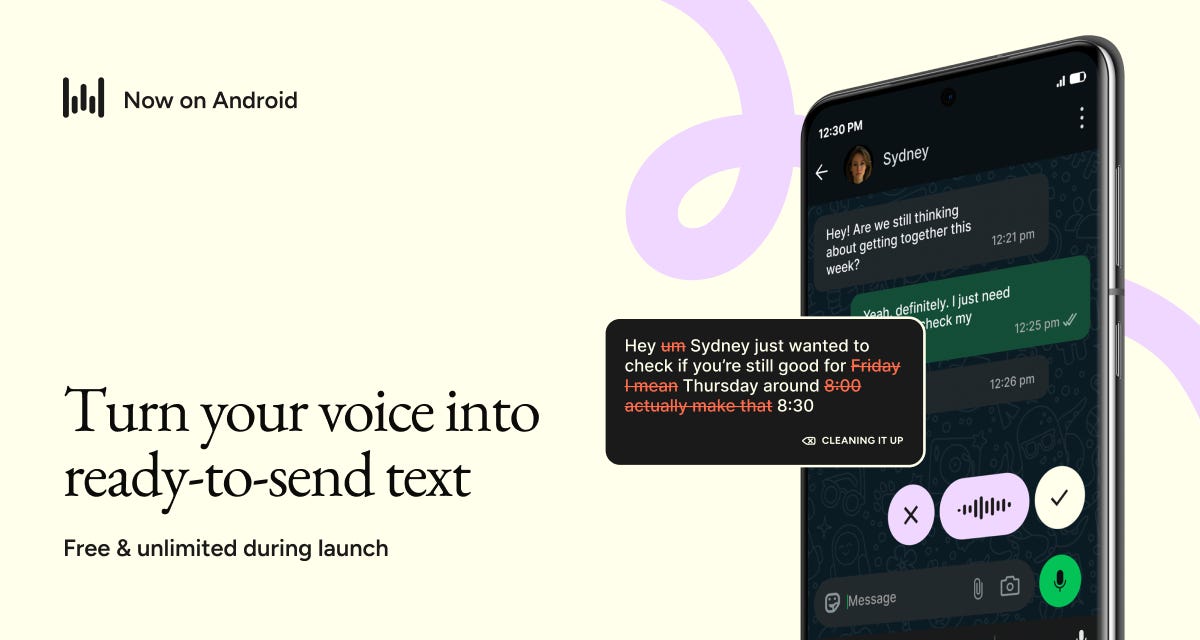
Your job is communication - Slack threads, exec updates, meeting follow-ups, investor notes. All day, every day. Wispr Flow turns your voice into polished, send-ready text across every app. No cleanup. No editing. Just talk and send.
📝 89% of messages sent with zero edits. Flow removes filler words, fixes grammar, and formats everything as you speak.
💻 Works everywhere you type. Slack, Gmail, Google Docs, Notion, ChatGPT - system-wide with zero setup.
🌐 Now on Android. Plus Mac, Windows, and iPhone. Free to start.
Reid Hoffman, LinkedIn co-founder, shifted 75% of his input from keyboard to voice using Flow. Over 100,000 people use it daily 🗣 > ⌨
*If you’re interested in sponsoring a future issue of Ask a Chief of Staff, hit reply!
🕑 What’s the Secret to Managing Distributed Teams Across Extreme Time Zones?
This issue is guest authored by Giselle Doolan, a 3x Chief of Staff currently supporting the Chief AI and Data Officer at Expedia Group. She has worked in technology for 17+ years, with previous roles at companies including Google, Vivint Smart Home, Ancestry.com, and The New York Times. She is based in the Seattle area, and is also a mentor with Ask A Chief of Staff, and active in the Women in Data Science community.
As organizations grow more global and teams embrace distributed models, the reality of working across vastly different time zones (far beyond the familiar PST-EST dance) has become a core challenge.
Chiefs of Staff are increasingly on the front lines of bridging these geographical gaps. This isn’t just about scheduling tricky meeting times; it’s about navigating operational complexity, fostering inclusive team environments, understanding cultural nuances, and building sustainable work patterns.
🌍 It means being the architect of connection in an increasingly fragmented world.
What one person finds exhausting, another might find incredibly motivating. The traditional idea of “work-life balance” has evolved into “work-life integration” for these global positions, focusing less on strict separation and more on finding a rhythm that genuinely suits your personal life and goals.
Here’s what to consider when evaluating such roles, along with practical strategies to navigate them effectively if you choose to take one on.
🪞 Before You Commit: Key Considerations for Global Roles
So, you’re considering a global Chief of Staff role. Before making a decision, take time for honest self-reflection.
Think about how the answers to the following questions align with your current life, family commitments, and other personal obligations. This introspection is vital to determine if this type of role truly fits you.
💼 Questions to ask during the interview process:
❓ Core Overlap: Are there established core working hours that ensure sufficient overlap across critical regions? Which offices, if any, are considered priority for overlap (e.g., HQ in NYC)?
❓ Availability Expectations: When are you generally expected to be online and available? If in-office presence is required, is there flexibility around arrival/departure times to accommodate early/late calls?
❓ In-Person Collaboration: What are the expected travel requirements for this role? Does the company provide opportunities to get together in-person?
If an “always-on” culture is not a good fit for you, be wary if:
There’s no clear system for asynchronous communication. Are they already comfortable and regularly using collaboration tools like Google Docs, Miro Boards, or scheduled Slack messages? If not, it suggests a reliance on constant, real-time demand.
The role involves very tight deadlines or frequent, last-minute requests that demand immediate, cross-timezone collaboration. Predictable work rhythms and ample lead times are essential for asynchronous systems to function well.
Working teams are spread across too many time zones for daily operations (e.g., London and Shenzhen daily). While leaders may work across many time zones, sustainable team structures often involve some regional grouping or co-location.
💬 Mastering Communication: Synchronous and Asynchronous
If you step into a Chief of Staff role at a globally distributed company, the operational complexity extends beyond just scheduling.
It fundamentally reshapes how we communicate and collaborate. Here are some tactics that can help you and your organization succeed.
🤝 Building a Communication Framework:
📋 Establish Team Agreements
Decide as a team how you’ll communicate. This includes defining what makes a meeting necessary, who truly needs to attend, and expected response times. Clearly define when an email or Slack message is more appropriate, and clarify whether acknowledging receipt of non-response-required communication is expected.
🔄 Embrace Asynchronous Tools
For complex projects, brainstorming, or major decisions, live meetings remain crucial. Schedule them at a time that works for most participants, but always record them for those who can’t attend. Follow up with detailed notes (AI note-takers can be extremely helpful), collaborative tools, and dedicated project channels. Aim to limit in-person reviews to only what’s absolutely essential.
📅 Strategic Scheduling
Prioritize meetings based on the time zone of the most crucial contributor or presenter, followed by key stakeholders. If a senior leader’s schedule is a factor, their availability often takes precedence. Develop standard work plans with generous lead times to account for cross-timezone delays.
🏗️ Strategic Structures: Designing for Global Success
Effective global operations rely on smart team design and communication approaches. As Chief of Staff, you often have opportunities to shape how your organization is designed and how work gets done.
Here are some common structures used effectively by global teams:
🌅 Follow-the-Sun Models
“Follow the Sun” is a way of working that uses time zones to its advantage. Tasks are handed off sequentially from one time zone to the next. For example, a development team in London finishes their coding for the day and hands it to a QA team in New York. By the time the London team returns, they have feedback to act on.
✅ Pros: Maximizes productive hours and speeds up work.
❌ Cons: Requires excellent documentation and predictable routines, as teams are not always online simultaneously. It also needs a strong team culture that embraces asynchronous work.
🌐 Regional Pods vs. Centralized Teams
While fully centralized teams might appear efficient, they can limit your access to diverse talent and make collaboration across offices challenging due to minimal interaction. I strongly advocate for regional pods (e.g., working groups where all team members are within a 6-hour time window).
✅ Pros: Ensures enough daily overlap for teamwork, allows for some “Follow the Sun” flexibility, and expands the talent pool.
❌ Cons: As a Chief of Staff, a significant part of your role is to bridge these regional divides, easing the burden on others. You act as the central coordinator, which comes with considerable responsibility and requires strong engagement and flexibility.
⚖️ Sustainable Integration: Boundaries and Impact
Many Chiefs of Staff mistakenly believe they need to be on every call, answer every message immediately, and be constantly responsive. This natural drive for high performance can also be our biggest challenge.
Learning to say “no” and setting boundaries is as important as saying “yes,” especially when managing multiple time zones and maintaining focus.
There are effective ways to stay connected and influential even in global environments.
🚫 Avoiding the “Always-On” Trap
✅ Keep Your Calendar and Communication Tools Updated
Use “working hours” settings on your calendar to clearly show when you are available for meetings. Block off commute times, focused work periods, lunch, or appointments. Use Slack/chat statuses to signal your availability to others.
✅ Establish Response Expectations
For common, non-urgent requests (e.g., headcount or budget questions), communicate a clear response time (e.g., “Please send me a message, and I’ll reply within 72 hours”). This allows you to group requests and address them efficiently during your focused work blocks.
✅ Improve Your Asynchronous Communication Skills
Can you write clear, concise emails that convey information without needing a long discussion? The better you are at this, the simpler your global work will become. Tools like GenAI can be very helpful for refining drafts for clarity and conciseness. Another tip is to write clear subject lines that make emails easy to scan, such as [FYI], [RESPONSE REQUESTED], or [ACTION NEEDED].
🎯 Maintaining Strategic Influence When Live Overlap is Limited
✅ Prioritize 1:1s
Schedule regular (at least quarterly) one-on-one meetings with major stakeholders.
✅ Stay Informed Asynchronously
Read shared documentation, watch recordings of other department updates, and engage thoughtfully by asking questions.
✅ Engage In Person Strategically
When visiting an office, make extra time for local meetings, including “wild card” connections (new people you’d like to meet but don’t usually interact with).
✅ Build Sustainable Operational Systems
Create clear “Rhythms of Business“ (e.g., quarterly business reviews on fixed days, regular forums for information sharing, and a yearly calendar of events). Provide important information via communication channels like Slack/email to reduce unnecessary meetings. The goal isn’t perfection, but a predictable system that reduces avoidable disruptions and burnout.
🤔 When to Push Back vs. Adapt and Accommodate
Setting boundaries is important, but flexibility is also key.
Knowing when to stand firm and when to adjust is a very personal decision, unique to every Chief of Staff and every role.
There’s no single right answer, but here are some considerations to guide your thinking:
💡 The Business Imperative
Is your adaptation (or pushback) truly what’s best for the entire company in the long term, not just your boss, your team, or even yourself? Prioritize the larger organizational goals over short-term conveniences.
💡 Your Personal Ambitions
Evaluate how current expectations align with your career goals. Will the way you’re working today help you get there, or is it a distraction? Does this particular task or action contribute to your growth and desired career path?
💡 Defining Success
How is “high performance” or “success” measured in your role and within the organization? What does it mean to you, personally? Your ability to impact outcomes effectively should strongly influence whether you adapt or challenge existing norms. If the current setup isn’t leading to desired results, it’s a strong signal for change.
💭 The Bottom Line
I am not saying I have this perfected, nor should this advice be seen as some sort of golden guide. There are always last-minute scrambles, risks that arise, and unexpected needs that come up.
The goal is not a perfect system that always works, but a sustainable one that strives to reduce avoidable disruptions, thereby creating space to effectively address the unavoidable ones.
Ultimately, managing across time zones as a Chief of Staff is a personal journey. It requires a constant balance between the needs of the business, your team, and your own well-being. By being intentional about your structures, communication, and boundaries, you can not only survive but truly thrive in the global arena, enabling your organization to do the same.
Thanks for reading! This post is public so feel free to share it.
👩🏻💻 Level Up Your Chief of Staff Skills
Ready to accelerate your growth in 2️⃣ 0️⃣ 2️⃣ 6️⃣ ? Paid Substack members get exclusive access to a growing library of 2️⃣ 0️⃣ ➕ workshops from industry experts—covering everything from strategic planning, to navigating your next career move, to keeping cool under pressure 🧘♂️
New workshops added monthly! Recent additions include:
$1️⃣ 0️⃣/month or $1️⃣ 0️⃣ 0️⃣/year. Cancel anytime.
🎥 Upcoming Events and Workshops:
💻 Virtual Events
March 17th: Strategic Thinking: Foundations of Strategy
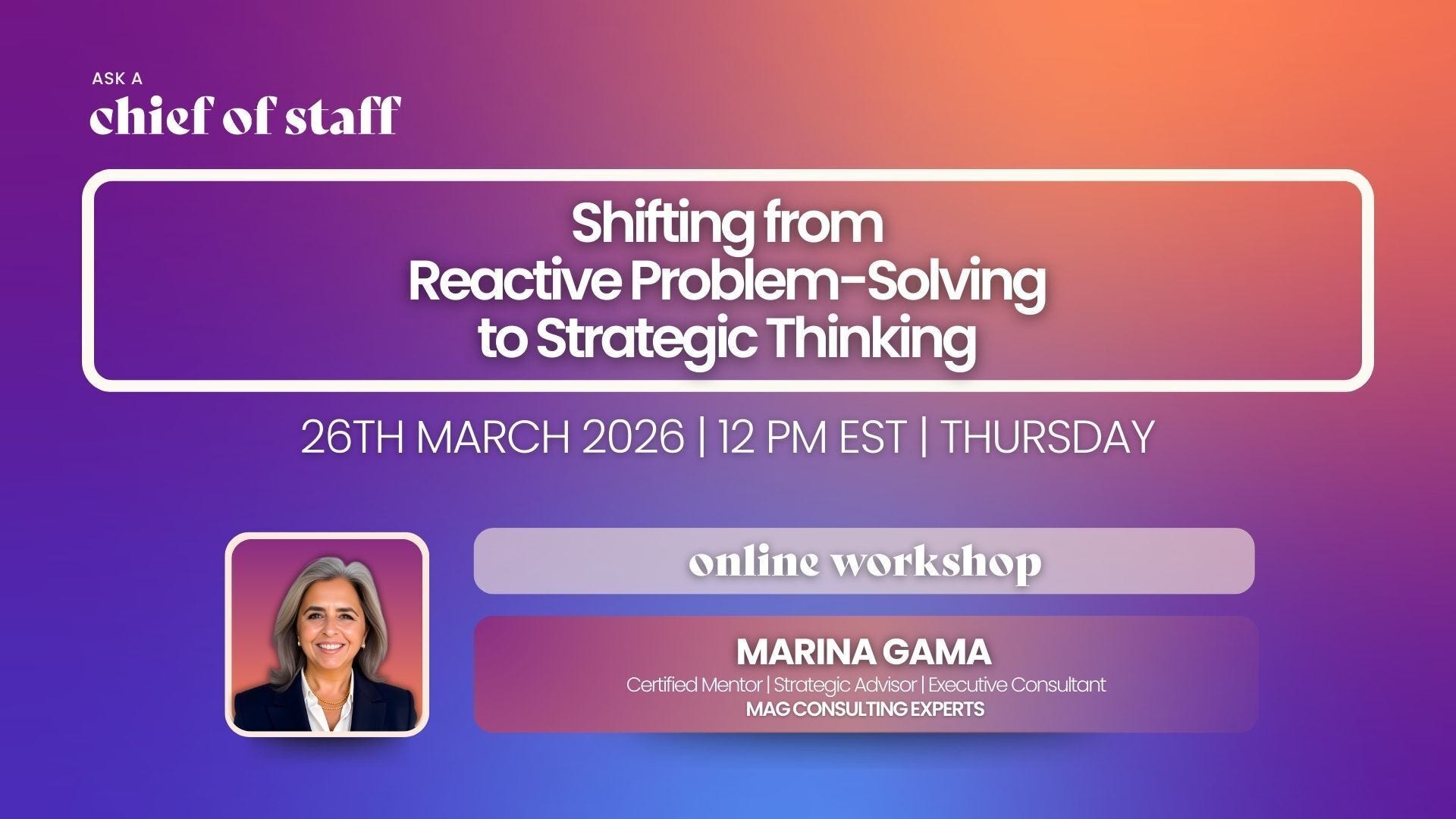
March 26th: Shifting from Reactive Problem-Solving to Strategic Thinking
👋🏼 In-Person Events
March 25th: NYC Co-Working Day at Industrious
🔑 Members-Only Events
March 12th: How to Position Yourself for a Chief of Staff Role
March 18th: Strategy in Practice: Drop-In Office Hours with Aarti Bhatnagar
As a reminder, events and workshops are free or heavily discounted for all Ask a Chief of Staff community members.
Visit our website and click the “Join our community” button to start your journey!
This Substack is reader-supported. To receive new posts and support my work, consider becoming a free or paid subscriber.
Comments
Nothing yet. Say the first thing.
Sign in to join the conversation.