
During my first few years here in California, I did some freelance reporting for local news organizations. A few days ago, in a feverish fit of self-promotional zest I wrote to all the people I’d met through that work, to tell them about my latest writerly venture, “I Live Here Now.” One of those emails was to Peter, a retired pediatric surgeon I’d spoken to in 2024 for a news article about a local 1art gallery he’s involved with.
Peter wrote back wishing me luck with my writing career, and shared something about his own past that gave me pause: “I am also an immigrant.”
He was born in Budapest in 1949 and escaped Communist Hungary with his parents when he was around seven years old, during the Hungarian Revolution of 1956. He came to the United States two years later and has lived here since.
I took a deep breath and wrote back asking if he had any memories of the move and whether he’d be open to talking to me about them. A few days later, I was seated in the gorgeous balcony of his home in the Stanford area, surrounded by plants and artwork, listening to the story of his life, letting personal history collide with world history in the corridors of my mind.
“I remember a lot about leaving,” Peter said, and thus began one of the most memorable interviews I’ve done for this blog2 so far.
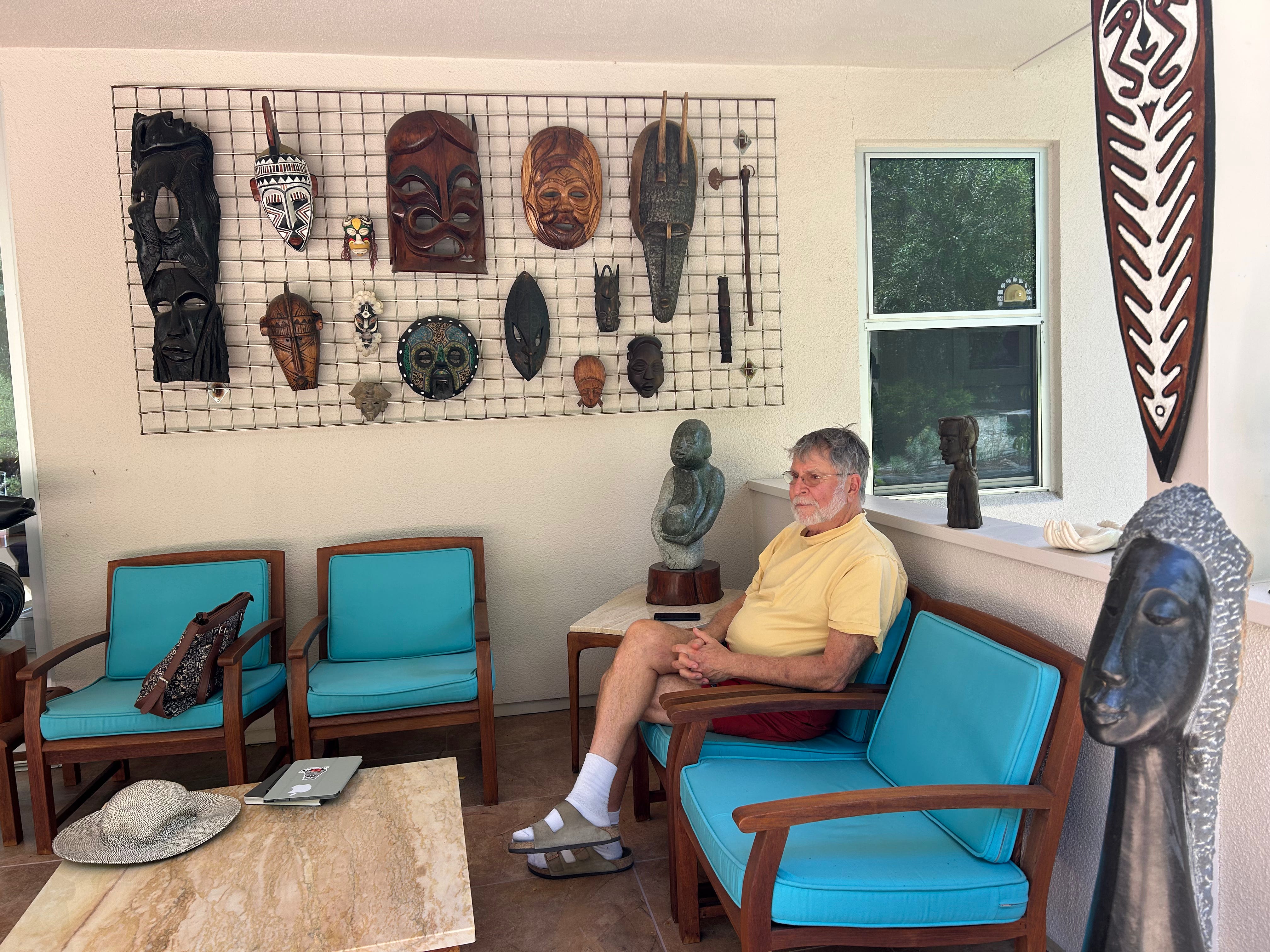
Peter began his story by giving me a sense of the milieu he grew up in.
The second world war cast a long shadow on Hungary. During the war, Hungary was on the side of Germany, an alliance that turned bitter and bloody towards the end, when Hungary tried to leave the Axis powers.
“By 1945, of the million Jews that had lived there a year before, 100,000 remained. Among them were my parents... my parents survived the war.”3
The German occupation of Hungary was ended by the Soviets, who in turn went on to oppress Hungary. The 1956 revolution was a countrywide attempt to overthrow the Soviets. During this uprising, a massive number of Hungarians fled the country, including Peter and his family.
“Hungary was a sad place in 1956,” Peter said. “The economic circumstances of Hungary were miserable under the communists.”
Even so, “my parents tried to make as normal a life as they could.”
His father ran a tailoring business from their home, a single-bedroom apartment that he still remembers clearly, down to the bathtub in the kitchen, the parlor space and the area his father did his work in. “He did the tailoring on a big table in the bedroom where we all slept.”
Initially, the revolution seemed like a success. “I remember the day the revolution broke out… I was getting Hebrew lessons. We were coming home, and there was lots of noise and cheering and shouting. We didn’t live too far from the main streets of downtown Budapest. The following morning, I woke up to a cracking sound. I ran to the window to hear what was going on. My father grabbed me by the scruff of my neck and threw me back into the room. There was shooting going on outside.”
A month or two later, the brutal retaliation to the uprising began. “I remember the apartment building shaking. I ran to the window overlooking the street below. You could see the tanks rolling in.”
After much discussion within the family for over a month, it was decided that they would go to Austria, which had been liberated from Soviet occupation in 1955. “When the border between Austria and Hungary opened, a lot of people started escaping…”
Peter stared straight ahead into the open space of his sunny porch while narrating what happened next. We didn’t make eye contact again until much later in the interview, when I asked him follow up questions.
“We took a train to the city near the border between Austria and Hungary, hired guides, and snuck across the border with these guides. We were stopped by some border guards… they had this huge German shepherd. All of a sudden the guides just disappeared.”
I stopped taking notes, sat ramrod straight, and listened intently as Peter spoke, his tone unwavering despite the tears he fought.
“My father had been through the war, so he knew what to do… he goes up to the border guards and says he’s ‘I’m looking for Váci utca,’ which is the main shopping street of Budapest. The guide says, ‘You’re in the wrong place for that.’ My father pulls back his sleeve and there’s a nice gold watch there. He says, ‘My compass says I’m not in the wrong place. You better take this so you won’t get lost.’ The guys took the watch and they said, ‘Okay, well, maybe you’re right. Go ahead.’ Anyway, we made it across the lake that evening, into Austria.”
Part of the family had moved there a few weeks prior. Together, decisions about where to go next were taken; some went ahead to Buenos Aires in Argentina.
“My father says, ‘We’re going to America.’”
His father went to work in Vienna, to make arrangements for a lawyer, who helped them with immigration related things like getting a sponsor in the United States.
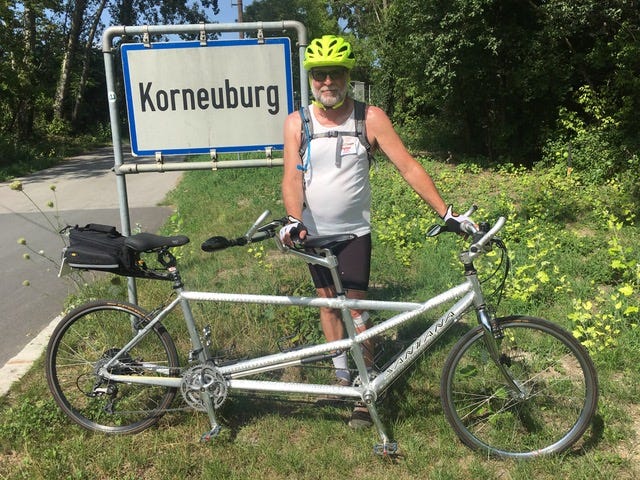
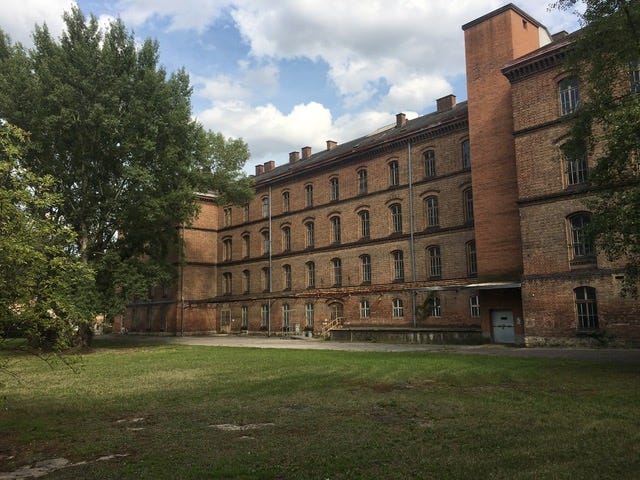
In the meantime, Peter moved to a refugee camp in a small town called Korneuburg, on the bank of the Danube. While at camp, for around a year and a half, his mother made sure he studied math, making sure he sharpened skills that would hold him in good stead later in life.
“She got hold of the syllabus from Hungary, for school, especially for math — she had grilled me in math while we were at the camp.” He also learned German.
Later on, after coming to America, his language base changed. “As I learned English, I forgot my German, but not my Hungarian. We continued to talk Hungarian at home.”
They left Austria in 1958. “We took the boat — SS Berlin — from Bremerhaven, Germany, to New York Harbor, past the Statue of Liberty.”
While writing this part of his story, it occurred to me that I missed asking him an important question: how exactly did the family travel between Austria and Germany? He clarified in an email that they made the 500-mile journey by train, over 16 long hours.
In New York, he remembers being deposited in the Bowery Hotel.
“We were there for two weeks before my parents found a nice apartment in the South Bronx in New York City. We got off the boat on a Saturday. My father went to work on Monday.”
His father worked for Vera Maxwell, the eponymous founder of a popular fashion label of that time, well known for designing the gowns of celebrities, including Mamie Eisenhower, the First Lady at the time. He later went on to become the brand’s production manager.
In the Bronx, they lived in an ethnically mixed neighborhood with other immigrant families, from Puerto Rico, Poland, Ireland and Italy. “The Puerto Ricans didn’t like us Jewish kids. We were smart, and they weren’t. I’ve earned my biases legitimately,” he laughed.
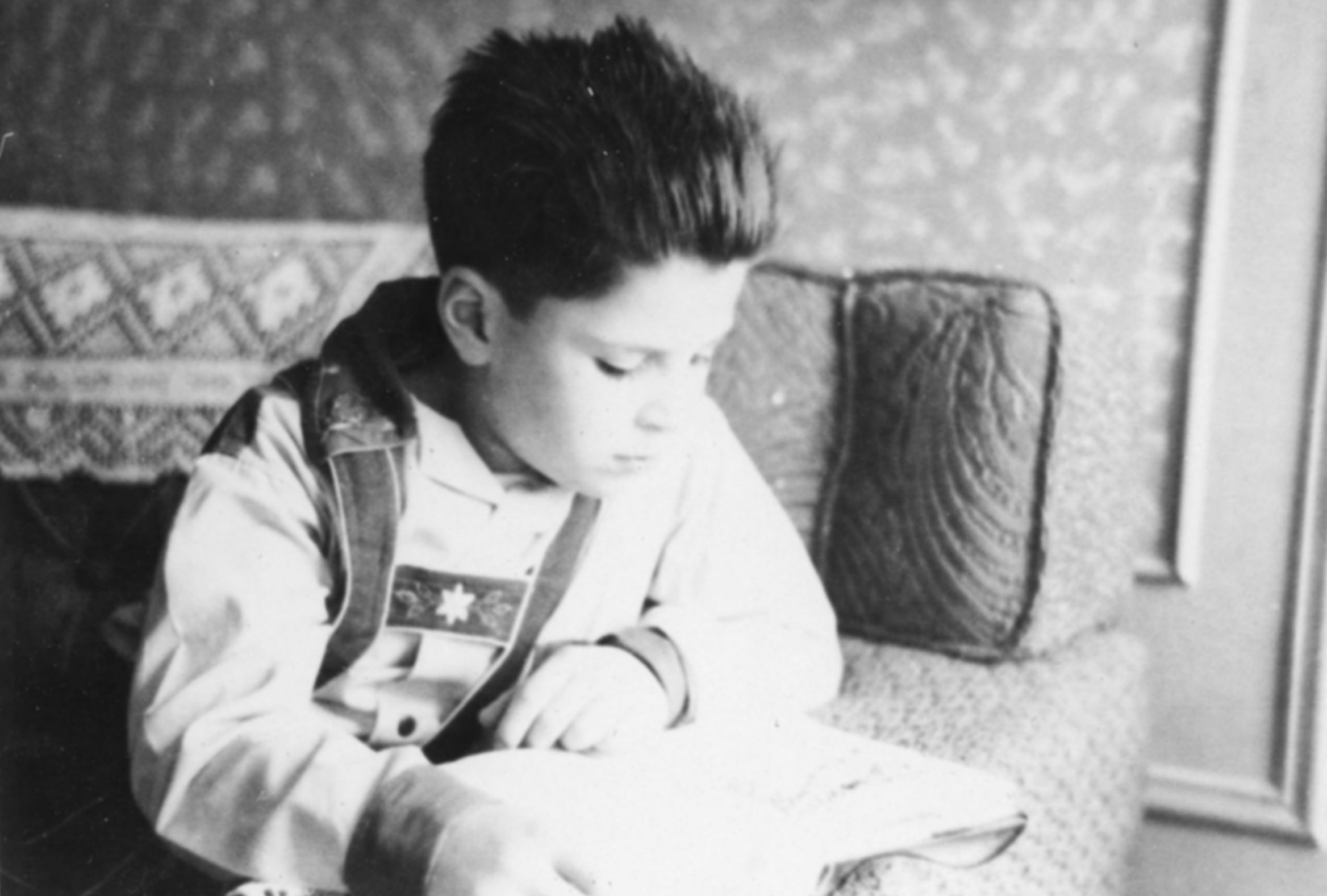
Peter, who was in the second grade in Budapest and had completed third grade while at camp in Austria, was now ready to go to the fourth grade in New York City.
“They wanted to put me back into third grade, but my mother wouldn’t let them. I don’t know how she conveyed that, but she convinced them to give me some math problems. They were easy. I went right into fourth grade,” he said. “I didn’t speak a word of English when we came here… within a couple of months, I knew how to ask for where the bathroom was. There was no second language. I just had to learn how to speak English and how to figure out how to make my way in this world. It wasn’t easy.”
He then spoke about his mother, a “very beautiful woman.”
“Mom never quite got over having to leave Hungary. She never quite reconciled her refugee-ness with her previous status.”
She’d grown up in a well-to-do business family in Hungary. “Her status never quite recovered. She never quite reconciled herself to being an American, although she was very patriotic, interestingly enough.”
Later on, when I asked him if he faced similar demons too, I was moved by his frank response. “The refugee-ness never leaves you. I still look for sales at Safeway. I go through the digital deals… I have more than enough resources for the rest of my days, but I worry about it — about what happens if they’re taken away… I don’t necessarily trust things to stay good, despite the fact that they’re wonderful. I’ve seen how quickly things can change for the worse. So I’m a little skeptical.”
“I think the most significant feeling that you have as an immigrant is the vulnerability of strangeness. And you never forget that, even now. I think part of my skepticism is a consequence of that — lack of trust, lack of full trust.”
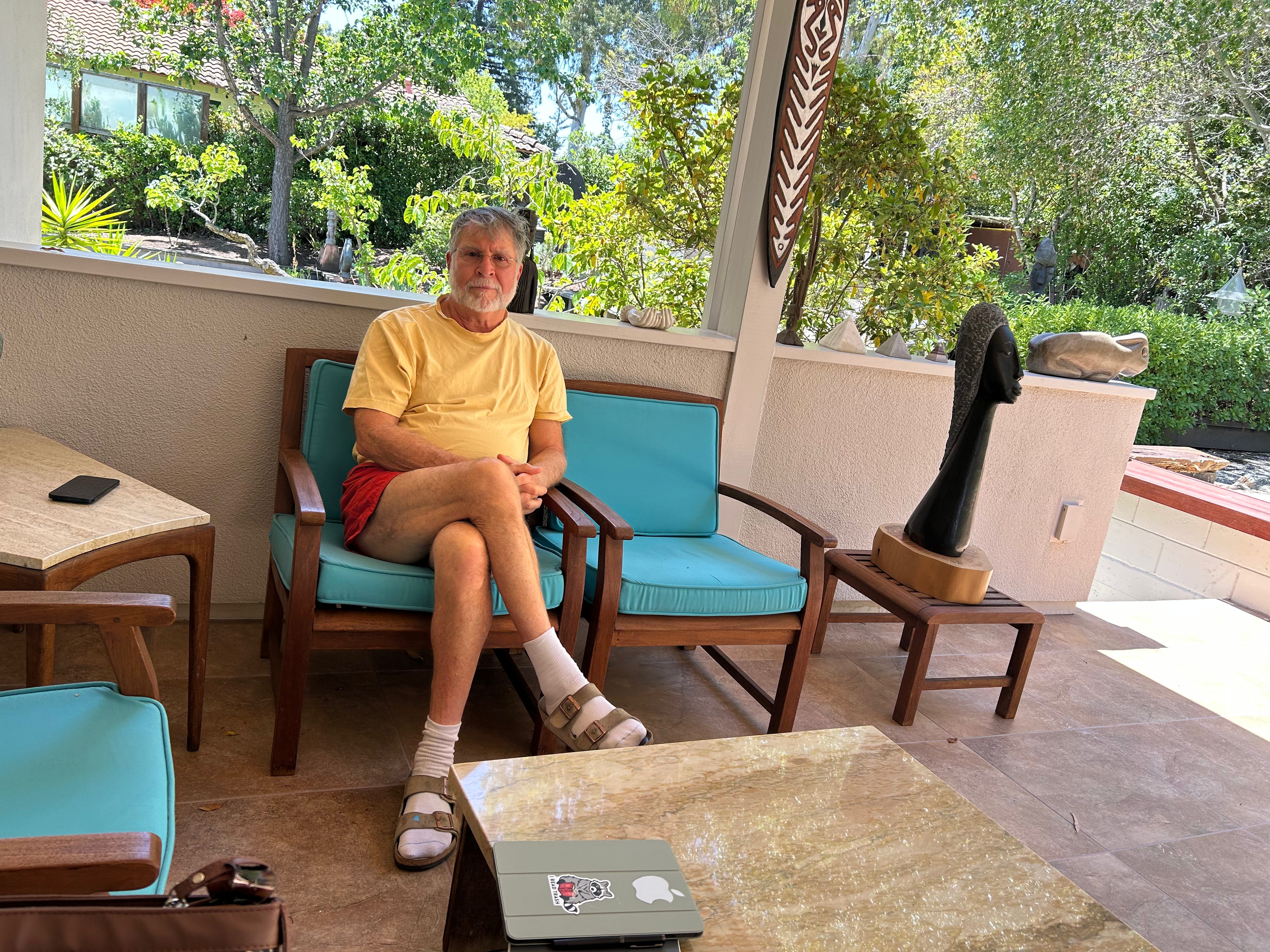
In the US, Peter went on to flourish in academics and athletics; by the time he finished college, he was captain of the swim team.
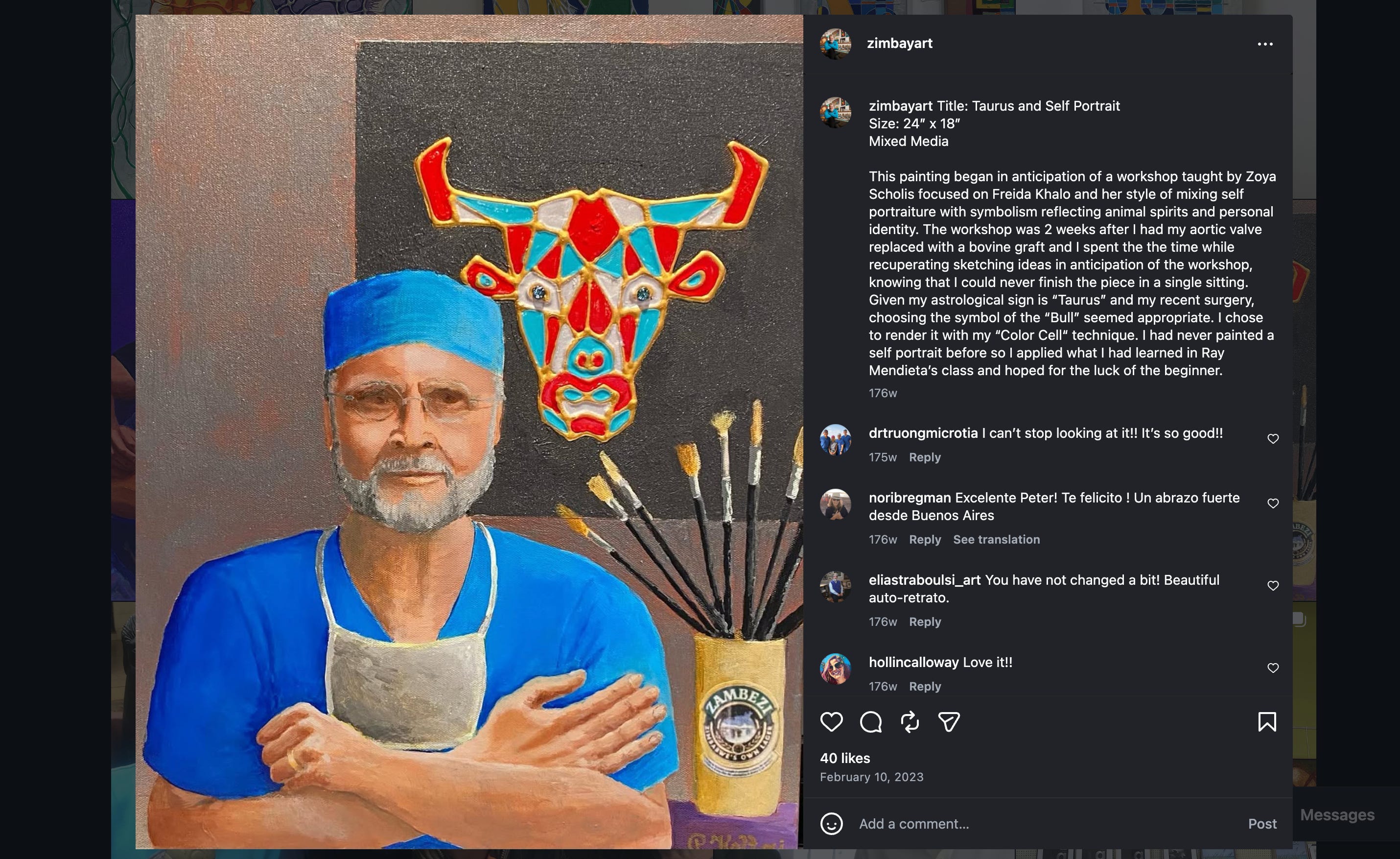
“I was always a bright kid,” he said. “I also had a gift for drawing from the time I was a little boy. It scared the heck out of my mother… during the Holocaust, they killed the artists first and the doctors last…”
But mostly, his mother pushed him towards a career in medicine, given his intellectual bandwidth for it. “I was brought up very strict.”
It was an ambition he shared, though. “I saw that doctors were respected in the community. That was a big deal for me. That there was meaning to their existence, not just individually but community-wise as well. That was very attractive to me.”
Peter went on to build a successful career4 as a doctor and teacher. He became a pediatric surgeon, specializing in the ear-nose-throat area (otolaryngology). “ENT surgery was like jewelry. It was really refined, tiny stuff. It was really pretty, and I loved doing it.”
He found a way to keep his passion for art alive. “Throughout my medical career, I did all of my own medical illustrating.” He also kept his love for 5art alive outside of medicine.
Towards the end of the hour, I asked him a few follow-up questions, which he patiently answered.
Despite everything he told me, I asked him about his feelings towards Hungary, the motherland he left under terrible circumstances.
“Hungary was not kind to my family. I still bear a grudge and resentment about that. I’ve spent a lot of time reading the history… and I know the cruelties, the indignities, the humiliations that have been visited upon us — as a people and as a family. The knowledge of anti-Semitism was in my bones.”
Over the years, his relationship with Hungary changed, because he went back there as a young professional. “I first went back to Hungary in 1981, to the World Congress of Otolaryngology when I was a young academician, a newly minted assistant professor, presenting my research at the first big international meeting that I’ve attended. And it was in Budapest.”
Subsequently, as he became a leader in his field, he went back there several times. “I kind of became like their lost son. I was invited back numerous times to come talk, to teach, to operate, to show my techniques. So I had this interesting, very emotional, professional relationship with Hungary for many, many years. But those are personal ties that I had with friends, which is altogether a whole different issue from the nationalistic kind of pride you take and patriotic feelings you have toward a place like Hungary6.”
How patriotic do you feel towards America?
“Very patriotic. I think America is an amazing place and it’s had an amazing history. It repeatedly goes off the rails and then comes back on them after self-correcting… the American people are good people; we’re proud people, capable people…”
What Hungarian values do you think you still have because you were from there originally?
“None.”
None?
“None. The values that I have are based on my Judaism — my Jewish background of reverence for education, reverence for your family, a willingness to do hard work. Those are values that come from a different culture.”
So these values come from religion?
“Culture. They come from culture. There is a big difference.”
Have you healed from the experience of migration and displacement?
“I don’t think one needs to heal from that. One needs to integrate the experience… I don’t feel I was damaged by that. I feel that I was strengthened by those experiences. The strong, capable person that I am is as a consequence of those experiences… knowing that you can get your butt kicked repeatedly and still get up and move on.”
The art gallery is called Gallery House. It’s in Menlo Park. Read my article, the one I met Peter through, in a newspaper called The Almanac, here.
Behind the words “my parents survived the war,” lies so much more and I just want to take a moment here to acknowledge the privileges that being a writer/biographer affords. I’m grateful to Peter for trusting me with his memories. From what he told me, I understand that his parents witnessed some of the worst chapters of the war. For instance, his father had been through a slave labor battalion in Ukraine, and his mother had somehow managed to walk away from the train depot that was deporting people to Auschwitz.
especially given the recent politics of former Hungarian prime minister Viktor Orbán, as Peter pointed out.
No posts
Comments
Nothing yet. Say the first thing.
Sign in to join the conversation.