
Chia was 9 years old when she came to the US from Taipei, Taiwan.
The family landed in California, but didn’t settle there. Chia came back to live in this state much later, in the early 2000s, with a wealth of experience as an immigrant.
A few weeks ago, I spoke to her over a pot of turmeric tea. I took notes as she excavated her memories of migration.
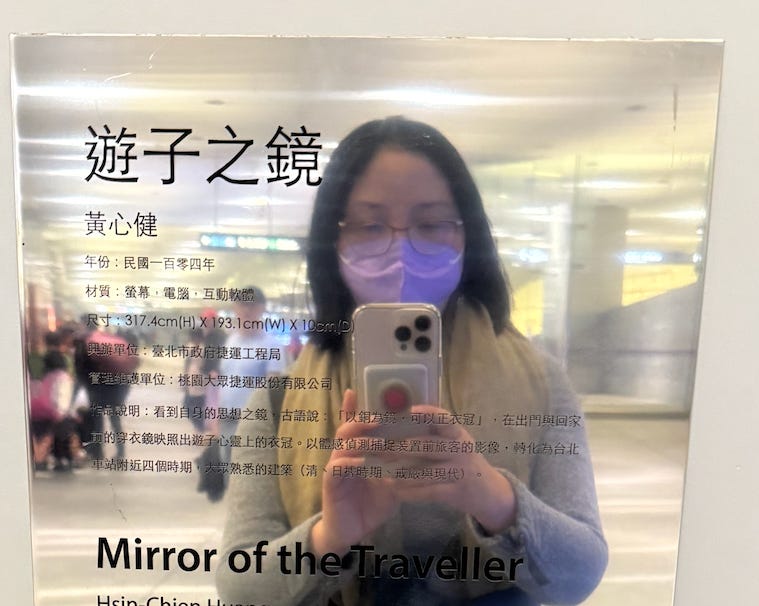
One of her early memories after landing in the US were of being crammed into a hotel room in Anaheim, California, with a few other families that were also relocating at the same time as hers. “My parents decided to take us to Disneyland. That was like a mythical place for kids in Taiwan.”
Her dad’s career as a nuclear engineer brought the family to America. “At that point in time, Taiwan was still not looking as good as the US in terms of opportunities, so he was like ‘we’re going to move and give the kids more opportunities,’” she said, and, giving me a taste of the dry humor that would pepper our conversation, added, “I’m sure you’ve heard that story before.”
In terms of the perceived permanence of the move, the family, including Chia, knew it was for good. “I knew it was going to be forever… I knew we weren’t going to come back.”
She was a child but was old enough to understand what it meant. “I actually didn’t want to move,” Chia said, momentarily representing her 8-year-old self. “I was 8 when I got on the plane and when we landed I was 9.” An unforgettable birthday, indeed.
She was close to her grandparents and extended family and declared to her parents that she was happy to stay back with them in their house in the countryside in Taoyuan, surrounded by rice paddies. “On some level I was like ‘I don’t want to go to a new culture, I’m happy in this one.’”
Faced with the reality of being taken away from home and all things familiar, and with the overwhelming prospect of a new culture, a new language, a new everything, “I was sort of like, ‘well, I don’t know if Disneyland makes up for that loss.’”
The official language in Taiwan at the time was Mandarin. “In schools we were punished for speaking Taiwanese… you got hit if you did.” She didn’t know any English when she landed here. “I remember thinking ‘I think D and E come after A, B and C’ — that was the extent of my knowledge of the alphabet.”
But the language barrier, she told me, was not as daunting as the cultural one. “Language was really the least of it,” she said. “It was just a really hard adjustment though on a lot of different levels.” Without cultural context, even a simple TV show for kids, like Sesame Street, can be “real weird.”
Popular culture aside, things might’ve been different had she lived in large, cosmopolitan cities with diverse immigrant populations, but she spent the next few years in “middle of nowhere” sort of towns, starting with Richland, near Hanford, in “the desert side” of Washington state, where she lived till she was 12.
“There weren’t a lot of Asians in the town. It was a very small town. Nuclear power plants are not put into very populous places. I lived in a lot of little tiny towns.” Over the next few years, she lived in Upstate New York, in a town called Baldwinsville, near Syracuse and subsequently Binghamton (which was the best of the lot). Later on, she moved to Williams, a small town in Western Massachusetts.
While she journeyed through small town America, somewhere along the way, her name, Chia-Yu, went through its own journey.
It’s not uncommon for Asian immigrants to give their children American names to ease the process of assimilation. On the suggestion of her dad’s Hispanic coworker, she came very close to being named “Yolanda,” for the Y in the second part of her name. “It was hilarious because that’s not even an American name. It’s very Hispanic. It wouldn’t have made me fit in!”
She remembers being in the principal’s office, at her elementary school in Richland, for a discussion around her name. “I did get saved in some ways by the principal; he convinced my father that this was a bad idea. I think he said something like, ‘you know it’s hard enough for kids to adjust to a new culture, maybe you don’t need to give them a whole new name, just let them keep their name…’ It was actually very progressive of him to do that, in 1983. So thank you to that principal. I don’t remember who he is, but thank you.”
So she stayed Chia-Yu, “which is hard for non-native Chinese speakers to say,” especially the second part, which sounds less like ‘you’ and more like ‘ee’ when uttered with rounded lips. I tried learning how to pronounce it while writing this part of the story and I finally got it when a website suggested I shape my lips to say ‘shhh’ and then try to make the ‘ee’ sound without moving my lips.
“It’s easier for people to do the first part but they can’t really get that second part,” Chia said.
In fact, the pronunciation that she goes by for Chia is ‘chai,’ as in tea.
This happened because during her time in Upstate New York, she had a teacher who wouldn’t say her full name, Chia-Yu, and also kept mispronouncing it as ‘chai.’
It drove Chia, around 12 at the time, “nuts.”
“I was really frustrated and angry that she’d shortened my name without my permission.”
Addressing her with just the first part of her name did more than ‘shorten’ it — it was a gross dissolution of her identity because that part is shared by many girls in Taiwan, including a few at home. “She’d equated me to everybody else in my family… I was flattened out to my cousin Chia-Ling and my sister Chia-Wei. This went on for weeks. I would correct her, but she just never got it.”
I tried hard to think of an Indian analogy for this issue and the closest one I could think of was this: one simply can’t abbreviate Harpreet Kaur or Balwindar Kaur to simply Kaur.
It was the middle of the academic year and Chia thought she’d fix the problem at the start of the next one, but it was too late. “By then it had already stuck with the kids and I think somehow it had percolated up to the next teacher and I just went — alright, fine, I’m just going to stop fighting this thing! There was no one else with that name anywhere in like a hundred miles, so fine.”
That’s how Chia-Yu ‘became’ Chia, pronounced ‘chai.’
She had bigger things to deal with, like the cultural differences that made a deep dent because she came at a delicate age, the fulcrum of childhood and teenage.
“I was living in a culture that was all about the rules — you can’t stick out,” she said about Taiwan, where “obedient” was the only way for a child to be, which stood in contrast to all the acceptable versions of rebellion she saw here — from acting up to acting out. “That was not a thing in Asia. You can’t be special or alternative or different. We all have to be the same. I don’t know if you experienced that in India… you just can’t stick out, right?”
I did understand the whole homogenization and discipline thing. I was 13 when I first visited my cousins in the US and was shocked to discover that they didn’t have to wear uniforms to school. I’ve also been slapped across the face one time and whacked with a cane another time, for something as silly as giggling in class.
When Chia started going to school here and encountered American individualism, she was able to see Taiwan’s collectivist, Confucian, outlook with fresh eyes. “It’s practical to the point of being brutal,” she said. “It’s like - ‘we need you to not have any of your own desires so that we can have this stable culture that we need you to fit into, so that we can have this very stable family unit and everything is like a machine and it kind of works.’ That’s the kind of brutality that I’m talking about.”
I asked her if it was liberating to break free from that regimented system after coming here.
“No, I didn’t understand it. It was very confusing… it was like a complete change in one’s context. That was like a huge adjustment,” she said. “I wanted to be like everybody else but the other part of it was I couldn’t be like everybody else because I was the only Asian kid in a lot of these places.” She began rejecting her Asian-ness in a bid to fit in. It was like being in a “third culture,” which sat in the penumbra of both, the one she came from and the one she came into.
She said she was a “weird girl” in school, who struggled to socialize. Being raised by strict immigrant parents with a lot of conservative rules, including an over-emphasis on academics and an under-emphasis on fashion, added to her adolescent troubles; she recalls the experience as being “painful.”
“I couldn’t figure out how to be what my parents wanted me to be, what I thought I wanted to be, and what the world around me wanted me to be. I could not synthesize them into something coherent.” Growing up, she found her refuge in books instead.
Well-meaning friends “mainstreamed” her through a wardrobe revamp later on, and grooming for the workplace was its own learning curve. On the other end of her adjustment spectrum were all kinds of biases that she had to deal with — “I had never been told I was too bossy until I got to the US,” she said. “That whole myth of a subservient Asian woman exists really strongly here in the US.”
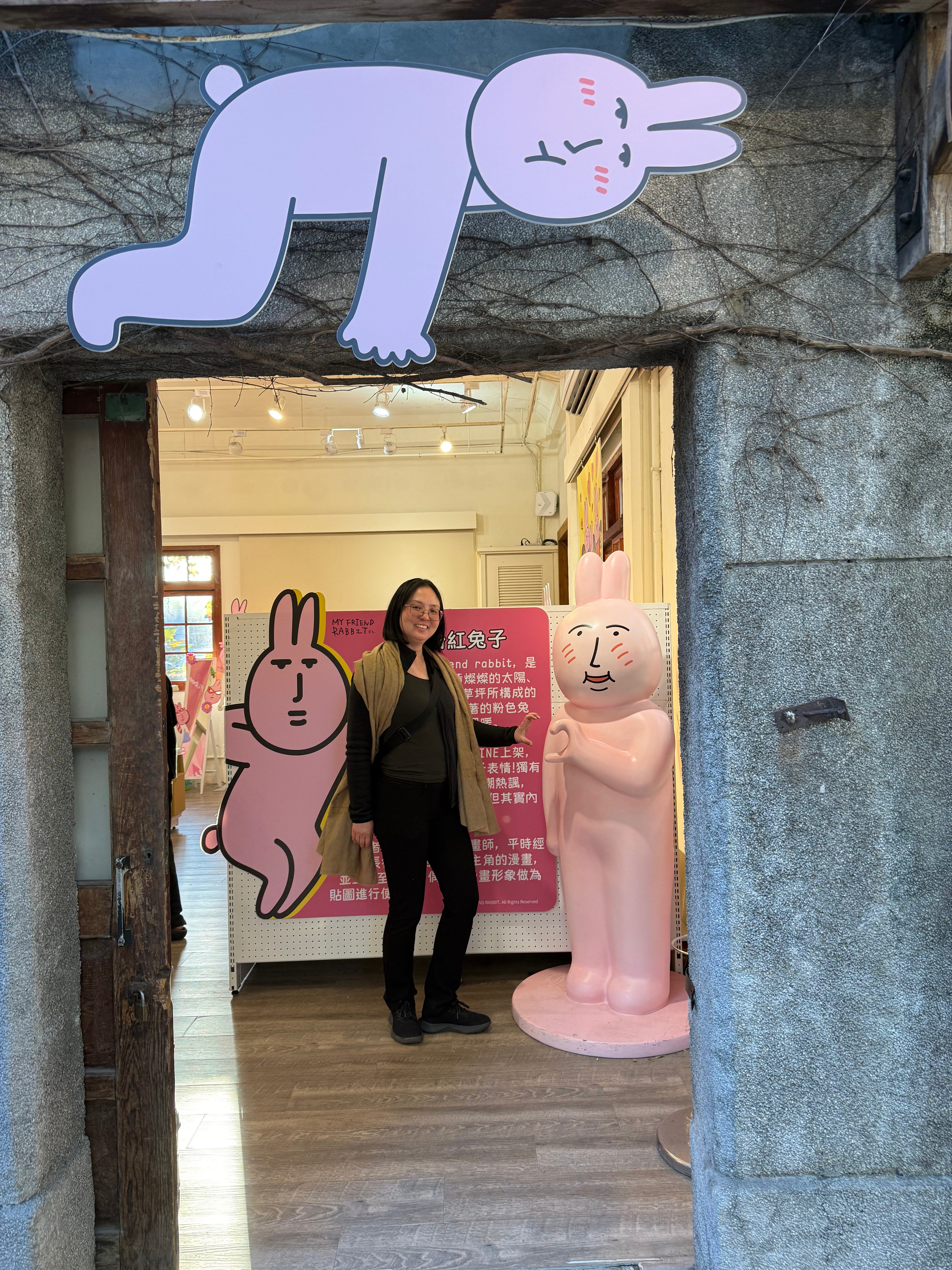
When she took her first trip back to Taiwan, she was around 15 years old. She went back for summer school, a common practice among Taiwanese families.
When she first moved to the US, she lagged behind in English initially, but her Maths was far superior. Now at summer school, it was the opposite. Also, the optics had changed. The school uniforms and the uniformly short hair everyone wore was new to her. “I had really long hair and they were not allowed to have long hair… I didn’t want to cut it to fit in.”
She also got a sense of the way she’d started thinking differently.
“I remember being in a class, and the teacher asked a question that had a little bit of philosophy to it. And I remember raising my hand and saying this big, long piece of what I thought about it. I just had this idea that ‘it doesn’t have to be like that.’ And he just looked at me and said, ‘okay, you’re actually thinking.’”
And you attribute that to the fact that you had lived here in the US?
“Yeah. Because it was a freer kind of thinking.”
How was it meeting your grandparents on this trip?
“It was distant,” she said, “It was actually hard because my world had gotten different and bigger and it was not something I could express to them, it was outside of their understanding…”
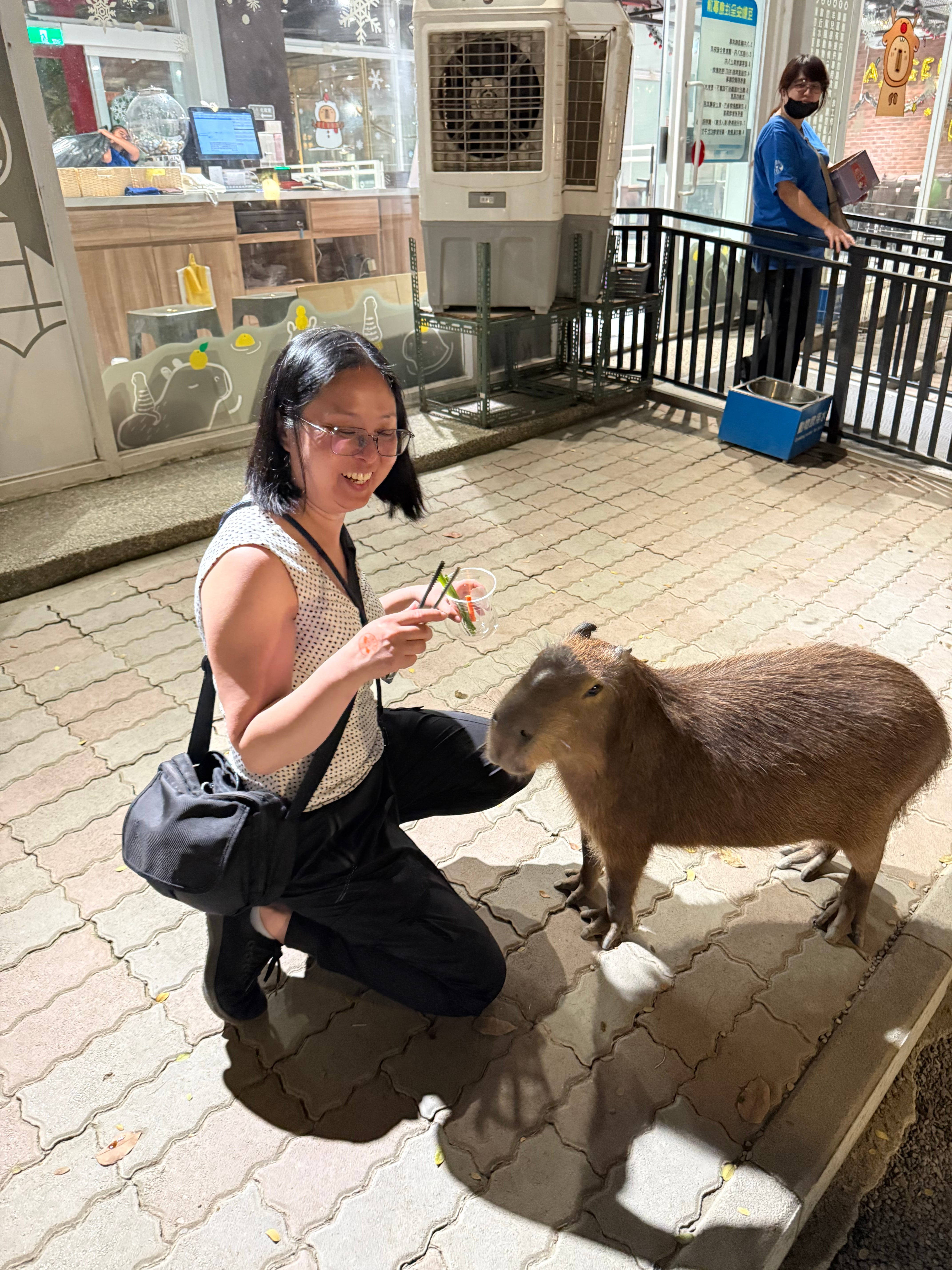
After spending her teens in small town America, at around 21, she went back to Taiwan again, to work there for six months.
“It was a really good experience,” she said. Just walking down a street and not attracting looks from people around was refreshing. “Within a week or two of being back in Taiwan, I could feel like a tension had gone out of my shoulders. I was like, ‘oh it doesn’t feel like I have a bullseye painted on my back.’” She felt “the tension of being visibly different” melt away. “Until I opened my mouth no one could tell that I wasn’t from there.”
After all these decades of living in America, she still feels the bullseye. Except when she’s inside the Bay Area bubble, of course. She feels it in, say, a place like Sacramento, roughly 120 miles from this tech hub.
“You walk down the street there’s a feeling in the air. It’s very subtle. People just kind of look at you because you don’t look like everyone else and it’s not necessarily even mean-spirited. It’s not like anyone has anything out for you. It’s just that you’re standing out and that you clock it subconsciously.”
We then spoke about national identity and national pride.
“I’ve accepted that I’m American. I think I hold that lightly. Am I proud of being an American? I’m not sure. I think on some level for me it’s still a construct. It doesn’t stick as hard as some of the other identities that I hold. Sure, I’m shaped by the culture that I live in. For the most part, I am American. I am of this culture but I am also not of this culture… There’s a part of me that wishes I could just move back. There’s still that part of me that’s 8, that’s like, ‘I didn’t want to leave.’ That’s still in me.”
Professionally, Chia first built a career as a scientist and later moved to tech. Even so, I asked her: do you feel you would have been better off had you not been forced to leave Taiwan at all? She admitted it’s a question she has struggled with for years before I asked and still doesn’t have a clear answer.
“I would probably be a less interesting person. I might be happier. I wouldn’t have developed all of the intellectual ideas that I have. I would have been a lot more limited in a lot of ways. I wouldn’t have any of the perspective I have… If I could flip a switch and go back would I do it? That’s really hard to say. I think the answer that I have is, well, it’s a good thing that switch doesn’t exist.”
I ended our conversation by asking her about the Taiwanese values she holds dear.
“When people go to Taiwan they say the place has a lot of warmth. There’s a thing called Ren Qing Wei, which means human warmth, kindness. That warmth is there in that culture and I feel like I carry that with me.”
No posts
Comments
Nothing yet. Say the first thing.
Sign in to join the conversation.