
When I ask people to tell me when they moved to the US, they usually give me a lot more than just the year.
“I came on 30th May 2002, three days before my 30th birthday.”
Last week, Friederica sat on my couch with a glass of wine, answering my questions about her move from Berlin to San Francisco.
“I never thought of coming. I grew up in East Germany.”
She grew up in Döbeln, a town in Saxony. “I just wanted to get out of there and be in a bigger city.”
At 18, she moved to Berlin to study at the university there. But just before that, history happened.
“The wall fell when I was 17.”
For me, who read about this event in a history textbook, it’s The Berlin Wall. For Friederica, who lived through the event, it’s the wall.
“That was a big deal. I thought that would never happen, but that happened.”
She spent her 20s in Berlin, studying to become a teacher. But the studying part, she admitted, was something that happened “on the side.” The main part was partying, meeting people, having fun — “Berlin was like a subculture… I saw Berlin reunite.”
She describes that decade as “exciting” and “exhilarating.”
“All of a sudden we were able to travel. I was traveling mostly in Europe. I always loved to travel… I wanted to explore. I wanted to experience the world.”
That zest for exploration brought her to the US.
“I won the green card in the lottery. The opportunity just opened itself. I just slipped into it. I was not looking for it.”
So it wasn’t the American Dream that brought you here?
“The ‘land of opportunities’ thing was never on my horizon. Okay, in Germany we would always say - ‘in the US you can be a dishwasher and from there go on to become a millionaire…’ yes, so we knew that was possible in the US.”
But that was not what lured her.
“I didn’t know much about the US… no connection whatsoever. Except for movies and TV shows.”
She remembers watching American TV shows like 1‘Der Denver Clan’ -that was the German title for ‘Dynasty’- and ‘The Fall Guy’. These shows were popular on American TV in the early 1980s.
“I watched it secretly on West German TV… but I couldn’t say this at school. I would have been expelled… my school was very socialist.”
The antennae at her house were strategically positioned to catch forbidden signals.
“A lot of people watched but it was not spoken about. Not talking about it was ingrained in you. Talking about it could be a huge disadvantage for the family. Life in East Germany was politically challenging, but I knew it was all a lie because I watched West German TV. And my parents were also very open minded.”
She went to the 2Monday Demonstrations at Leipzig in 1989 with her dad. “We went on the streets, to open the wall… the secret service was there, they wanted to shoot people… they didn’t. We’d go on Mondays and the next day in school you were not allowed to say anything about it.”
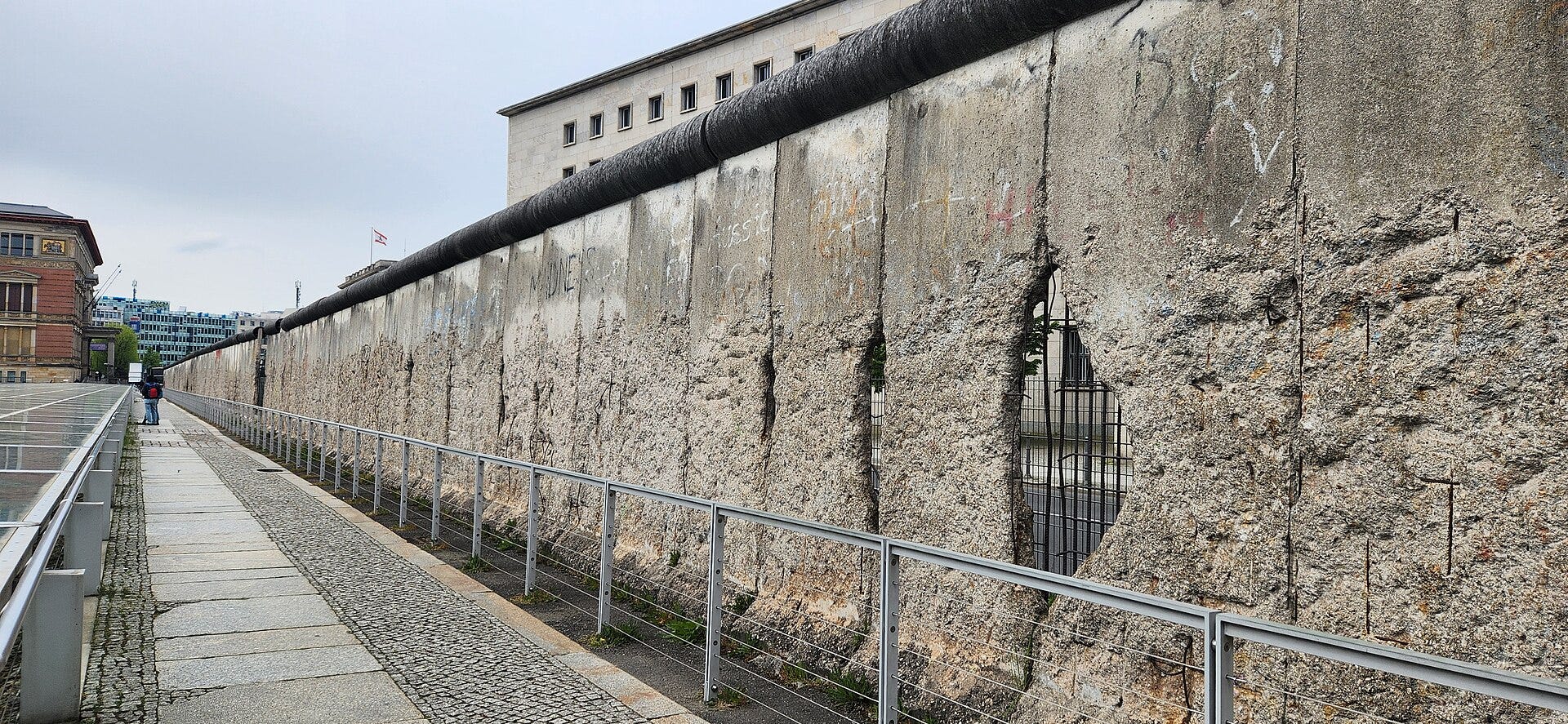
“When the wall fell, all of a sudden - wow! You could travel, there were all kinds of possibilities, your life was completely different, it was like the door to the world opened.”
She hastens to clarify: “That’s how I felt it. I’m not speaking for my whole generation. I’m speaking for me.”
The strong sentiment of individualism is not lost on me and I wondered then, as I do now as I write this, if it’s even fair to parse her American alter ego from her German identity. I asked her about it later in the conversation and am enriched by that discussion. She feels patriotic about neither country, yet is a citizen of both. And one of the things she loves most about the US is its diversity.
She picked the city of San Francisco by chance. The story has everything to do with her decision to respond to a pin-up notice on the softboard of her university one day, an action that got her in touch with a German lady who was already in San Francisco, seeking help.
That’s how Friederica ended up buying a one-way ticket to San Francisco. “I came here with a large backpack and 200 dollars.”
Did you realize at the time what a big move this was?
“No, I came here very innocently.” Looking back, though, she pauses to marvel at the size of this life-changing decision.
Did you think it was temporary?
“I thought - let’s see how far I can go, let’s see what happens. I was completely open. I had no plan whatsoever.”
That was 24 years ago. She has lived here since.
Initially, she walked that lady’s dog at Golden Gate Park in SF. “That’s where I met my first friends.”
Barring the occasional pang to see her family, she longed for absolutely nothing from Germany.
“I missed nothing,” she said, with absolute clarity. “I loved San Francisco, it was exciting to be there…”
After a few months, she moved out of the lady’s house and found a job at Starbucks. “I could barely speak English. I don’t know how I landed this job. I had an interview with this woman, Amy. In my broken English I basically said - ‘listen, I really need a job, I promise I’ll do everything you want, I’m a good worker, just give me the job.’ I don’t know why but she gave me the job.”
The job came with health insurance, a chance to meet new people and to improve her English through conversations with customers. After moving here, she picked up English very fast.
“I always wanted to learn a second language.”
Given the circumstances under which she was taught Russian as a youngster in East Germany, it didn’t really count, I understood.
We spoke about her experience learning English in her 30s, a task that immigrants like myself who moved here from former British colonies are spared. I enjoyed our little ‘language detour’: She told me that in German, the words for I love you — ich liebe dich — are used exclusively in a romantic context. But in English, we can “love” pretty much anything - our kids, cats, books, pizza, cars, life, God.
I recently heard an interview in which podcaster 3David Perell told an author (I think it was Ocean Vuong) that the true meaning of being passionate about something is the willingness to suffer for it. The German word for passion is ‘leidenschaft’. And sure enough, leiden is German for ‘to suffer’. Friederica was passionate about learning English, I concluded.
After moving here, she read a lot of English books. “I couldn’t believe it when I read my first book in English - that was a huge accomplishment.” She remembers it was a book about 4Frida Kahlo, a Mexican painter - I discovered this painter soon after moving here too, coincidentally.
This whole interview was conducted in English with absolutely no halts for repetition or clarification. “But I never worked on changing my accent. Everybody loves my accent, so I never felt I had to change it.”
After discussing some more nuances and cadences of German and English, we found our way back to her immigration story. In due course, she found a place to rent with roommates - two guys, one from India, one from Latin America.
“People told me later ‘how could you move in with two guys?’ I’m like, ‘I’m German, I didn’t even think about that.’”
I asked her how fearlessness in this context was a cultural thing and she went on to tell me about the complete absence of hoo-haa around nudity in Germany, where it’s common for men and women to sit in sauna rooms together, completely nude. I thought back to my recent experience in a Japanese onsen; so transformed was I after that ‘bath,’ that I wrote about it in an 5essay soon after my trip to Tokyo. In Japan, though, they have separate spaces for men and women.
After discussing this for a few minutes, negotiating its inclusion in this piece, we segued back into her professional journey here in the US.
“I never worked in Germany. My ‘work life’ started in the US. I started to think about what I actually want to do in life, what my goals are, what I like to do — the US did that to me. It is part of society here to figure out what you want to do. I never had this thought process in Germany.”
We spoke about American values and how she has adopted them over time.
The strongest example is the hustling mindset: “Career. Planning for retirement. What do I want to do? The ‘I’. It’s about you here. You need to have a job here, if you lose your job, you work 5 other jobs.”
This stands in sharp contrast to the welfare system and work-life balance in Germany.
The more we spoke about this, the more I felt that America taught her ambition.
“America taught me that I have options, I have choices, I can pursue things I like to do if I work hard enough.”
Though you didn’t come here for the American Dream, in a way, the dream found you, didn’t it?
“In a way, yes, because I was able to start from zero. I started at Starbucks at six dollars and fifty cents an hour,” she said. “After 7-8 months I got promoted to supervisor and a year later, I became assistant manager.”
After four years at Starbucks, she moved to a big tech company, one of the sexiest brands in business today — first at their retail store and later on the corporate side, where she currently works.
Friederica now has her own house in the Bay Area. She lives by herself and has a solid group of friends, from different countries and cultures.
There’s no doubt in my mind that she has arrived.
“I worked very hard, I was resilient.”
During her time at the retail store, she rose to the position of mentor.
“I was traveling and training people all over the US…. one time, through this mentorship program, they sent me to train people at a new store at Frankfurt in Germany. That was amazing.”
No posts
Comments
Nothing yet. Say the first thing.
Sign in to join the conversation.