
One of the most underrated parts of publication is seeing the art paired with your story. It was so exciting to get the preview link from Aaron and have that first look (shoutout to Erin Dorney and her beautiful collages!), and there’s something that feels so, I don’t know, legitimate about seeing artwork created specifically for something you wrote. It’s like getting to see a story through another set of eyes, just beautiful and humbling.
When we started brainstorming ideas for our summer break, it seemed like such an excellent chance to highlight the talented artists who make up the other half of publication and ask some questions about what goes in to illustrating a Short Story, Long piece. Hope you all enjoy this little peek behind the curtain with some of the artists who make SSL so visually striking, and do such a bang up job of complementing some really lovely and weird stories.
—Jessica Dawn
Assistant Editor, Short Story, Long
We love asking the writers about where their story ideas come from, and you have such a different task in drawing from a story that’s been written and shared with you but I’d love to know how you begin when you’re presented with a story!
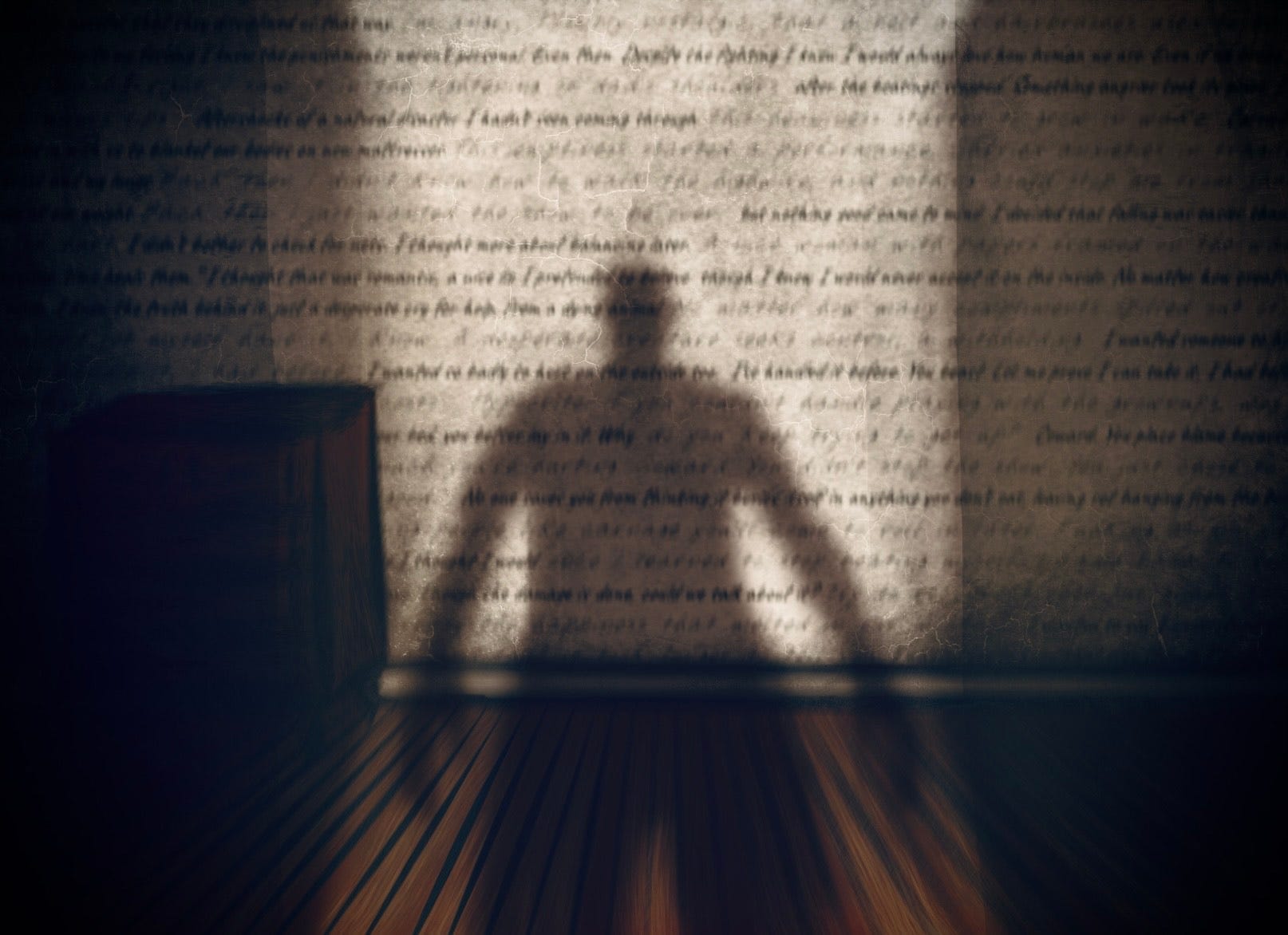
Everin Casey (art for “The Writing on the Walls” by Natalie Wolf): My favorite part of reading has always been being able to visualize the world laid out in words before me. It just so happens that I have the ability to recreate what I see in my head to share with others! I start with that first gut-punch mental image, sketch it out, then I reevaluate the details of the writing. For example: if the author spent time describing a person I want to draw I will try to line up that description to my depiction, same with the environment, lighting, or any other details. Then I go in and reevaluate the tone of the writing to see if that can fill in any details I didn’t find the first read such as what they were wearing, or the way they hold themselves. I ask questions like: are they shy? Are they scared? I want to make the reader see what they feel so it’s important to try to capture the emotion. That’s if I’m drawing from a scene. Sometimes I like to draw more basic iconography from the story rather than “scenes” of events. I do this when the story is larger than the scenes and/or the meaning feels more abstract to me. It’s a bit nerve wracking because I never know if what I interpreted will line up with the author’s intent or the “vibe” of the story itself but I think those discrepancies are part of the innate individuality of artistic process be it in words or images.
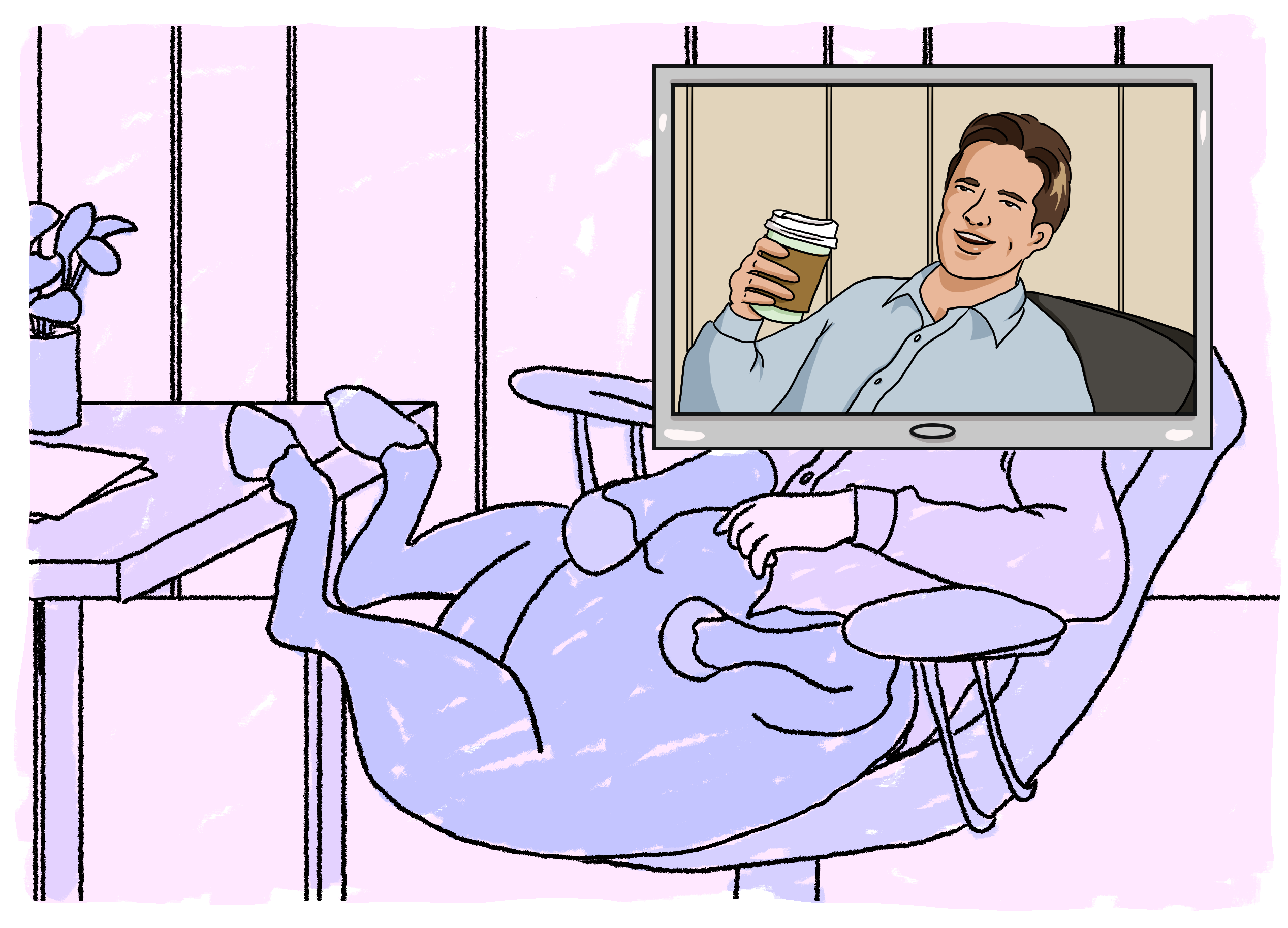
Matthew Austin (art for “Geminids” by Andrea Cavedo & “War Games” by Jonas Myers): Short stories by their nature have a limited scope in terms of characters, setting, and things that the characters interact with. After finishing a story, I start to think, “what is the crux of this story? What person, place, or thing did the author keep coming back to?” Usually that’s where the conceptual heart of the story lies.
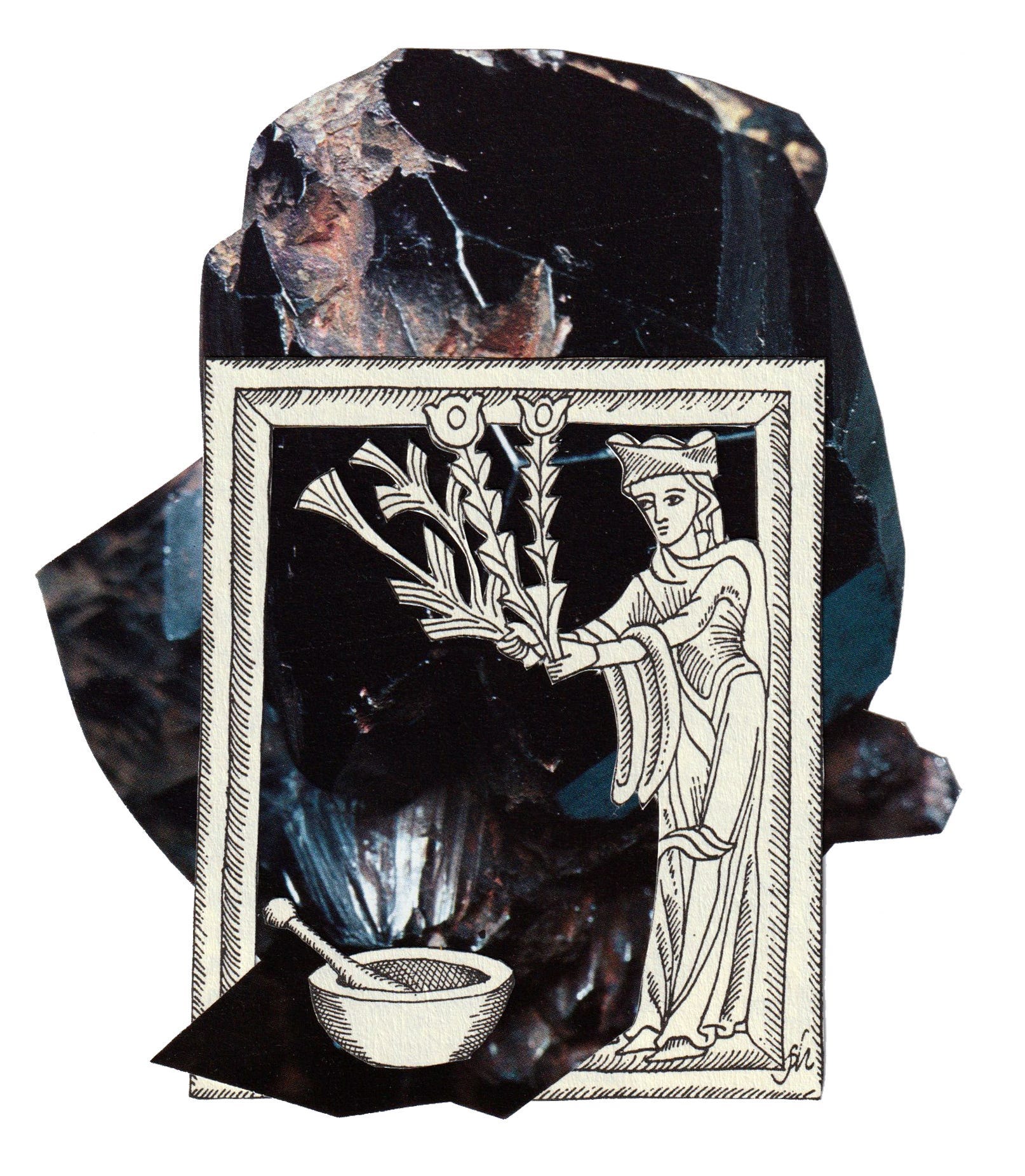
Erin Dorney (art for “The Ecstasy of Marv” by Ross McMeekin & “Whippomorpha” by Jessica Dawn): I have a pretty straightforward approach to this type of commission. I read the story once. Then, I print the story out (on real paper!) and read it again with a marker. I am looking for images and highlighting words–things that pop up over and over again, things that strike me, objects/feelings I perceive could have good tension, visually. At the end, I separate the highlighted words out from the story by writing them as a list in my notebook. I carry that around for a bit, thinking about it. Then I dive into my massive collection of collage books and bins, and start cutting out images and ripping scraps of paper. Sometimes, I have to do a wider search for images — for “Perhaps Even Celebrity Chef Gordon Ramsay Cannot Save My Marriage” by Brandon Forinash, I realized I didn’t have a lot of food books. For that story, I visited the Saranac Lake Free Library and pulled some books from their Collage Collective boxes. There were some great kids cooking books and some of those images made it into the final collages. In general, I do a ton of arranging before I glue anything down at the very last minute. Often, the collages are sitting on my desk unglued for a week or so before I glue, scan, and submit.
Aubrey Hirsch (art for “Cloisters” by Danny Goodman & “Man Next Door” by Jennifer Savran Kelly): I always come to the stories as a reader first, just enjoying being pulled into the world the author has created. When I finish that first read, I make a list of significant objects, images that stayed with me, and moments where the story felt especially emotionally resonant. Usually there are 2-3 things on that list that I’m excited to turn into art!
Nikita Andester (art for “Home is a Relative Term” by Christopher Gonzalez & “National Dish” by Thomas Mixon): My first step is always reading the story for pleasure first. I set myself up without distractions and take it in. Afterwards, I let it marinate for awhile — up to a day — and think: which moments struck me? Which ones could I picture the most vividly? When I’m ready, I re-read the story, taking notes on possible moments to illustrate, then winnow that list down based on my own vision and the relative spacing between each image, so the readers get a balanced experience of the art.
Pancho Muñoz (art for “Dipshits” by Kirsti MacKenzie): I usually read the story and take a few notes. Particularly when a clear image comes to mind as I read. I think I have a bit of a tendency to think about the art I make for these as “scenes.” Which comes with it’s own set of pros and cons. But it makes it easier for me. I try to think about pivotal moments in the story and what those could look like. Especially for the main illustration.
Zoë Petersen (art for “A Love Story Told in Nine Lives” by Anna Vangala Jones): Usually at Short Story, Long Aaron will send over 3 or 4 stories he thinks will be a good fit with my work. I’ll read through them and pick the one that most resonates with me, then I begin the illustration process without communication with the author. I work as a distant collaborator. But, one time I did have the joy of working side by side with the author of one of my projects. I illustrated “Cat Valhalla” by Todd Petersen, my dad. For this project, the work flow was different. We had many conversations about what moments could benefit from artwork and what moments should be left to the writing. It’s important to let the words be in the driver’s seat guiding the readers’ imagination. You don’t always want to reveal the monster. I got to check in with my dad along the way to see if my work was aligned with his vision, and I got to see his surprise or excitement in person when I got it right. This rare workflow was a delight.
We talk a lot about a story surprising the writer being an important element in writing. Did you encounter anything like surprise in your process?
Matthew: I prefer self-imposed constraints when making illustrations for short stories, not just because of the quick turnaround, but because that’s usually when something unexpected happens when I’m sketching out ideas. Reducing forms to their simplest shapes helps tease out deeper meanings.
Erin: Definitely — sometimes I have an idea of the style of the collages I plan to create as I go along, but then a word or image will pop up that’s totally out of line with my imagined plan. And sometimes, that small surprise ends up being one of the big elements of a collage or two. For the story “The Ecstasy of Marv” by Ross McMeekin, I initially thought the art direction would be images of wine, the shape of wine glasses and bottles, fluid/loose... But more than the literal images in the story, I was drawn toward the sacred, supernatural elements, and I think that shows in the final work.
Aubrey: Yes! My drawings always surprise me! Because drawings come through the body, what ends up on the paper is never exactly what I had pictured in my mind. But I’ve learned to embrace that part of the draft and lean into the things that surprise me!
Nikita: As a writer, my characters often shock me – sometimes I’ll laugh out loud when I realize what’s about to happen next in a story! But with visual art, a lot more pre-planning goes into the initial sketches. By the time I sit down to paint the thing, I usually have a pretty firm idea of where I’m headed.
Pancho: I think that I am equally surprised when I manage to “stick the landing” and create an illustration that *feels* close to what I envisioned in my mind, but I am also just as surprised when something different comes out. The color aspect of my illustrations for SSL is usually something that I leave a bit more wiggle room for though. Digital workflows allow me to tweak this aspect more than others and I try to take advantage of that.
Zoë: I love the challenge of working within the world of the story that has been created by the author. It’s my job to consider how I can stay aligned with the voice and mood already present while adding my own perspective. The best illustration is in conversation with its written companion. Rather than restating exactly what is written on the page with a picture, there should be some contrast. When I get started with a project, I read the story looking for moments I can be a collaborating author with my pictures. Can I add something new to what is being said?
Do you have a favorite illustration / collage / element of your pieces?
Everin: My favorite illustration I’ve done so far was for “The Writing on the Walls” by Natalie Wolf. It’s the image where it’s the shadow in the doorway over the scrawled upon wall. It was so fun to make, and the words I wrote on the wall of the image are directly from the story, just spliced up and out of order so that no one could possibly spend time reading them but so that they feel familiar if you choose to look so closely. I wanted to make sure no one spent the time inspecting those words rather than reading the story so I tried to make them hard to read. But it was really fun to do! And I’m a big fan of drawing with moody lighting and high contrast. This story was spooky and that’s a really fun genre to illustrate.
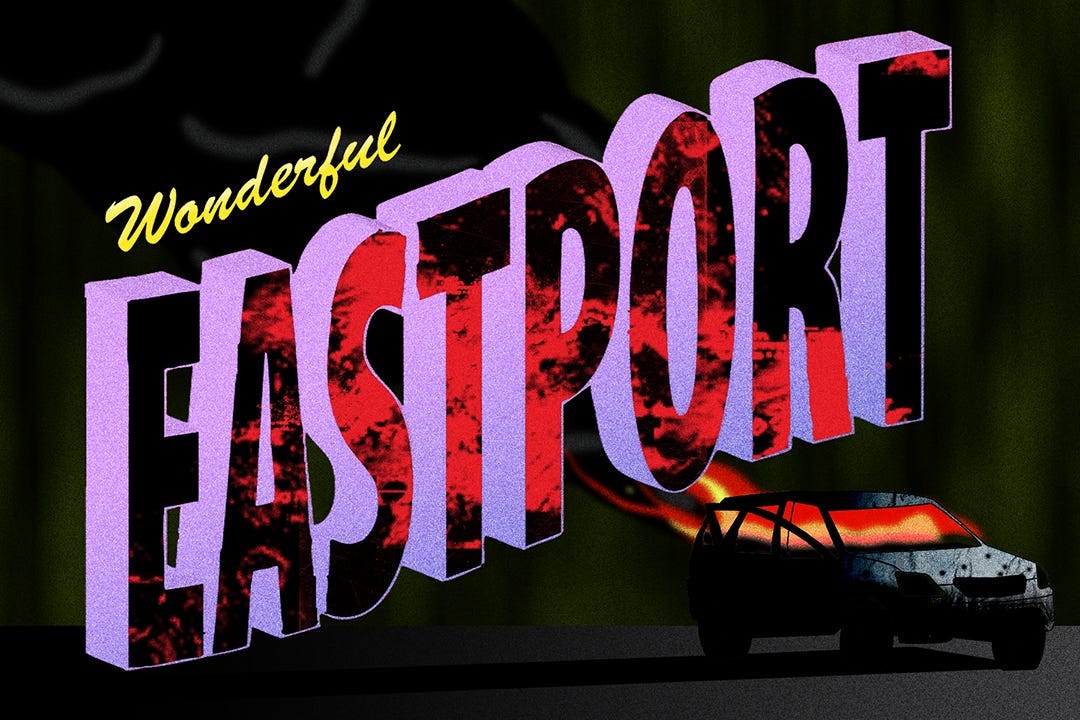
Matthew: The postcard-style designs for “War Games” felt like they went beyond illustrating the story and were a conceptual response to the narrative. I thought it would be ironic to present the violent scenarios as fodder for mid-century postcards welcoming outsiders to a nightmare world.
Erin: I really like the collages I worked on for “Whippomorpha” by Jessica Dawn. I love the blues, the ripped paper, and the texture that came through on some of the scans (like the edges of the water in the first piece). The waves with the clocks was a fun one, too, although pretty fragile to compose.
Aubrey: I still think about the corporate centaur I drew for “Infinite Possibilities Outside the Screen.” That was such a fun one.
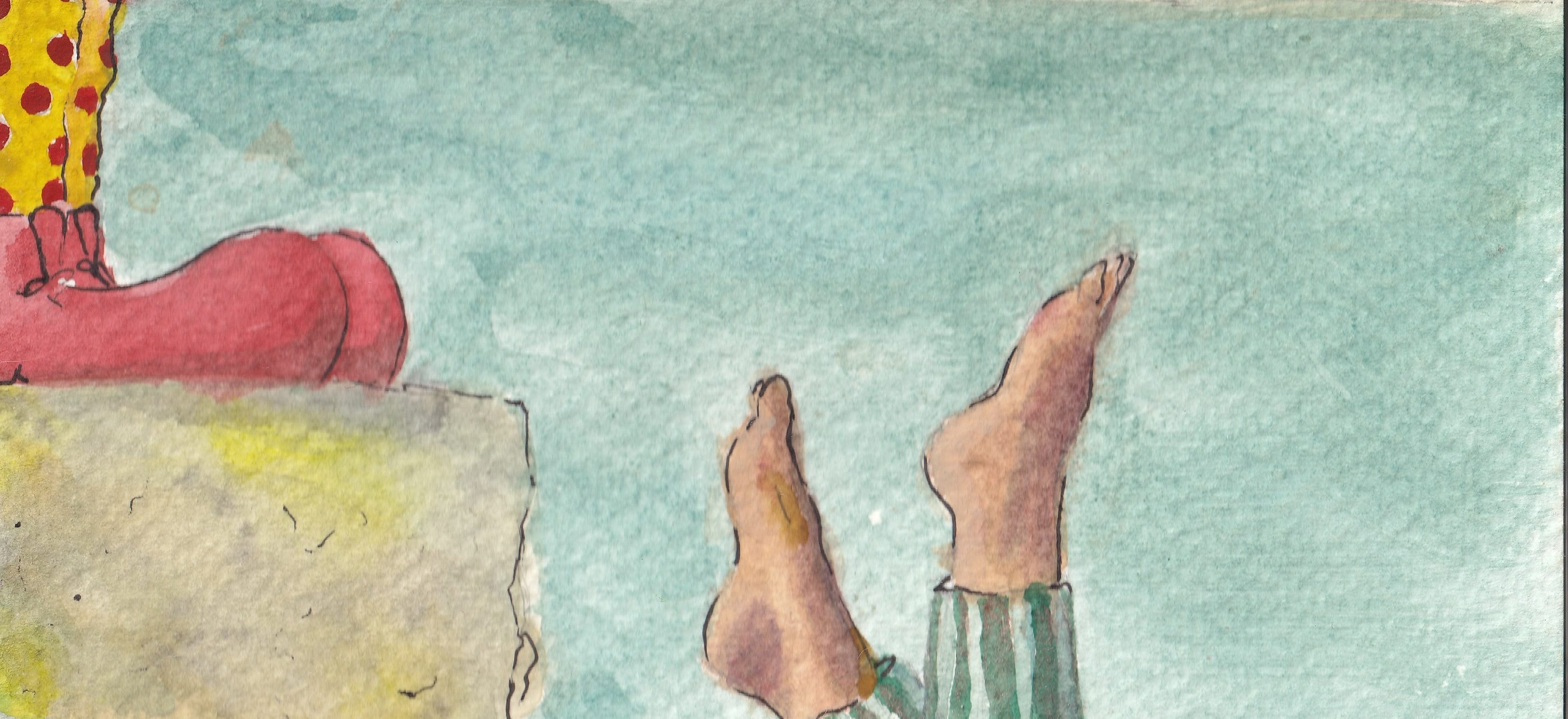
Nikita: I loved the opening image I did for “National Dish.” The story was such a mix of wild and earnest, and the surrealist bent of those clown shoes at the edge of the cliff where someone’s falling to their death was both so fun to paint and represented the darker themes I thought underpinned the story.
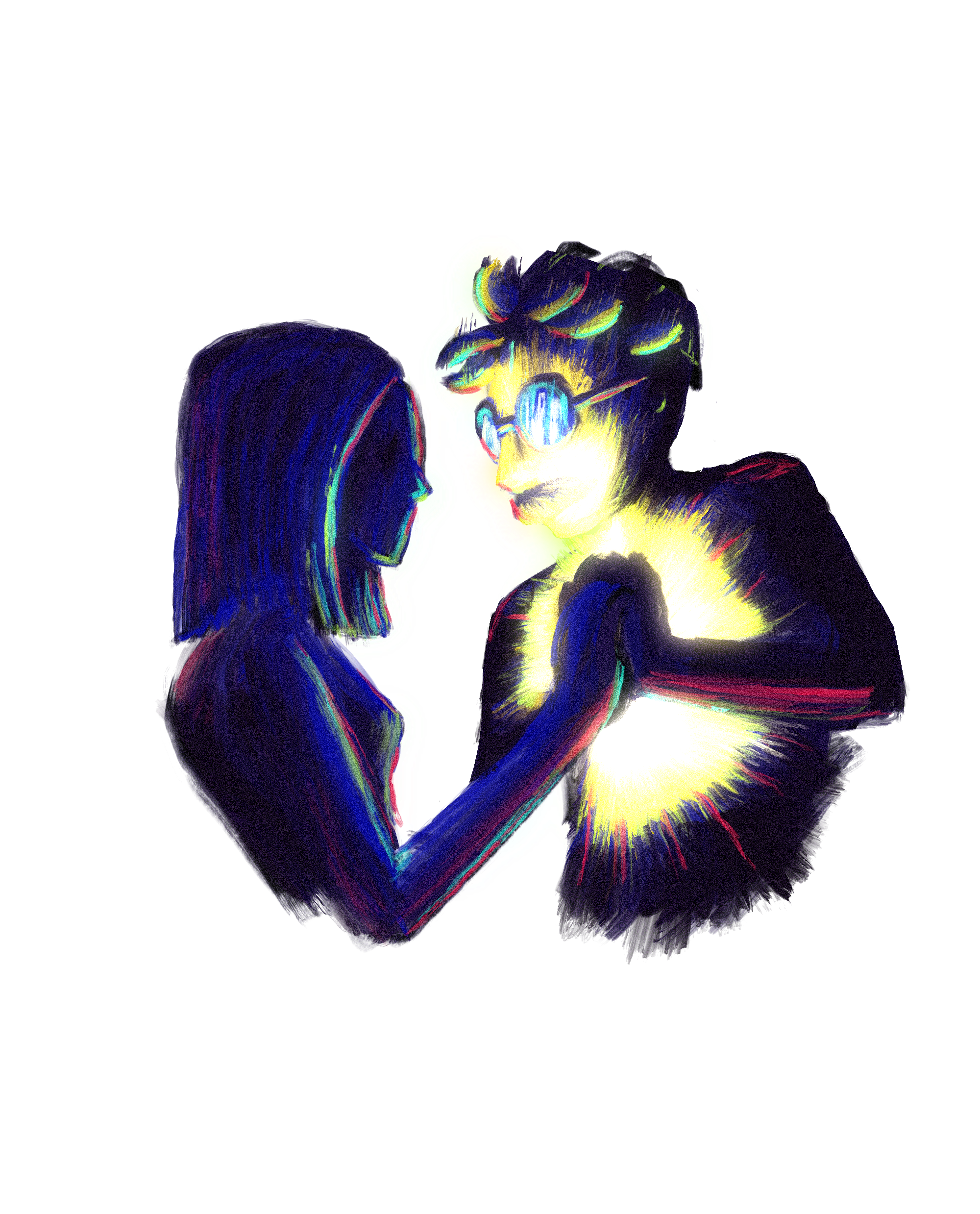
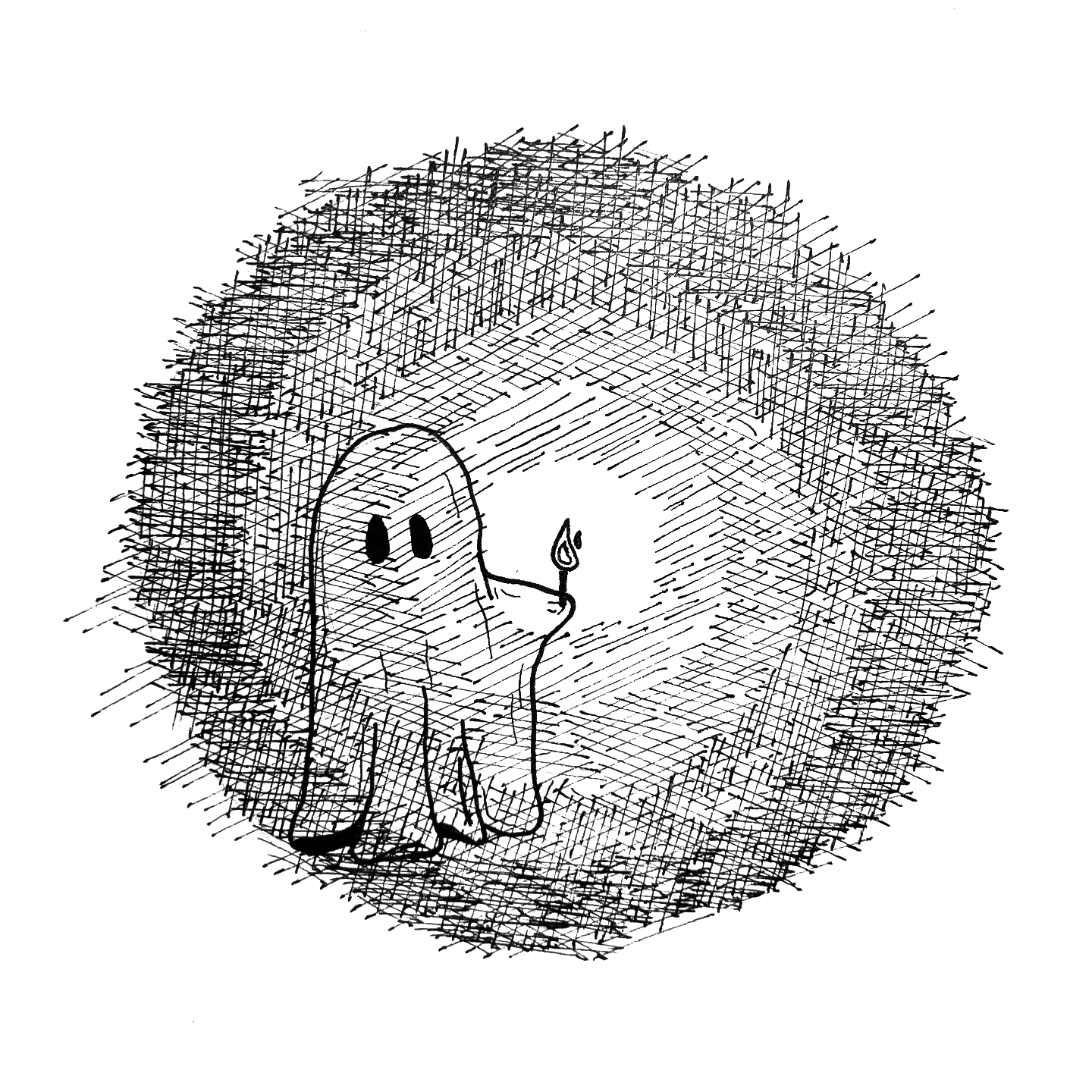
Pancho: I really like the illustration of the ghost embracing his gf in “Dipshits”. I feel like I really channeled some personal emotions I was going through at the time and I think it feels very candid and tender. In Mexico we have a long tradition of contemplating death and the memories and spirit of those who die. I wonder how much of that background seeped into this piece.
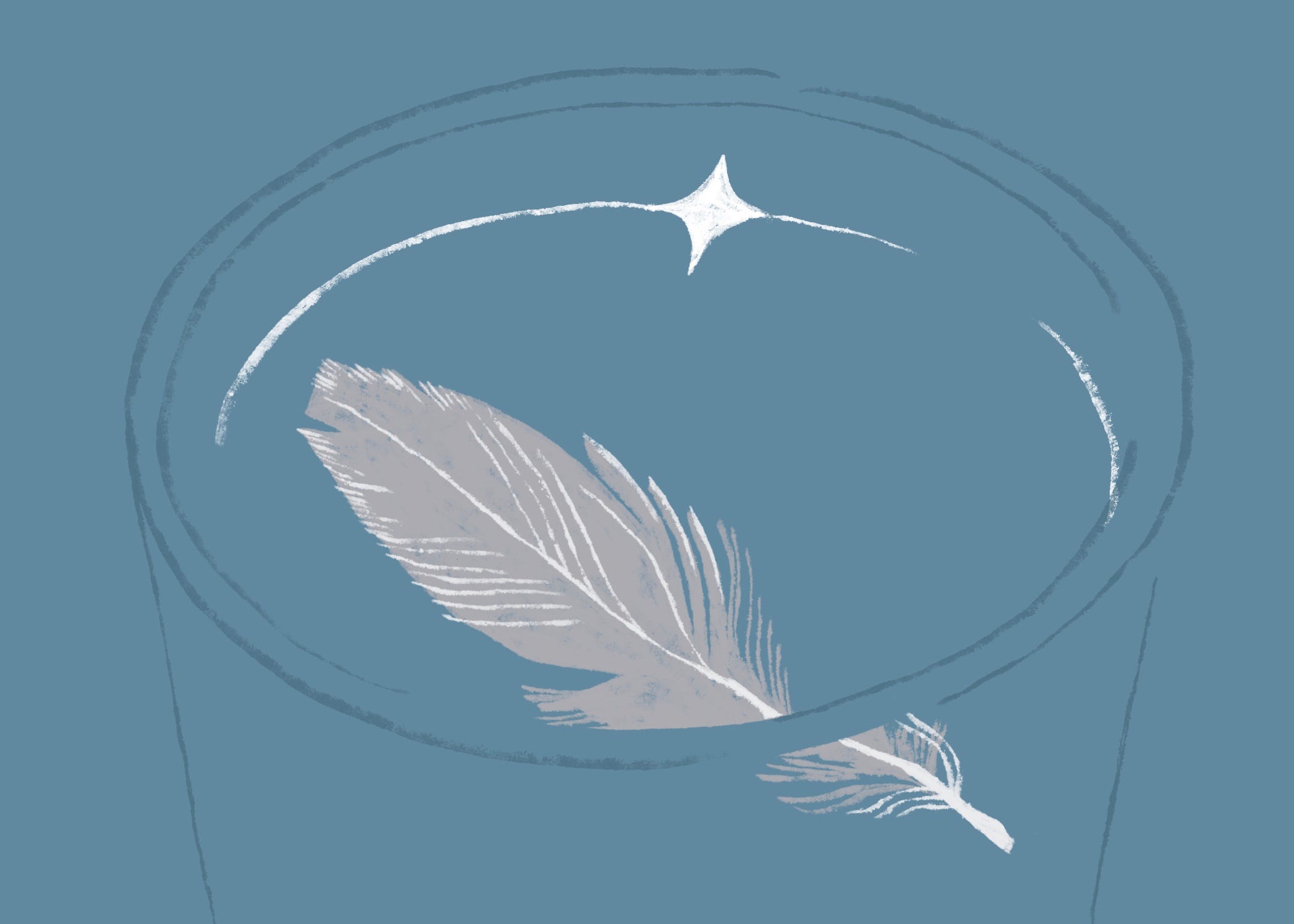
Zoë: For “Girl Meets Bird” by Gemma Kaneko, I drew a feather caught on the surface of a glass of water. There is a meeting of magic and mundane, ordinary life in Kaneko’s writing that is brilliant. I loved the challenge of making artwork to carry on that feeling.
If you could ask the writer of the story you were paired with any question, what would it be?
Everin: Writing is so far away from me. I actually personally dislike the process of writing, save for the occasional poem. The rules of grammar and correct sentence structure evade me and I write exactly like how I speak more often than not. If I could ask a question to any one I’ve illustrated for it would be: how do you not get tangled up in what you want to convey versus what you have to write to actually convey it? It seems to me the idea is so much larger than what the words themselves could ever possibly convey! I suppose that’s the art of it, but I would be interested to know how that process works. Is it like trying to talk about a crazy dream you had? Or is it more like cutting a circle of paper with the scissors in your offhand?
Matthew: So many of the short stories I’ve illustrated are a tiny slice of a much larger world, so I always wonder, when does the writer know when to stop?
Erin: I really need to know more from Ross McMeekin about where that story idea came from. It’s the first short story I’ve read in a while where I just kept gasping and laughing (non derogatory) as things happened.
Nikita: I think I’d ask them both what scenes were most vivid to them — what images were they hoping I’d draw? For “Swans,” did I get those pillows right? And specifically for “National Dish”... how did you personally picture the texture of those clown noses in your mouth?
Pancho: Honestly, and I know this is a big ask, but I would love to ask any of the writers I’ve made illustrations for if they could write something based on my art. Reversing the roles sortof. I think that would be fascinating.
Zoë: I’m curious what moments or interesting phrases the author is holding onto that haven’t found their place in a story yet.
No posts
Comments
Nothing yet. Say the first thing.
Sign in to join the conversation.