
History is seasonal, and winter is coming.
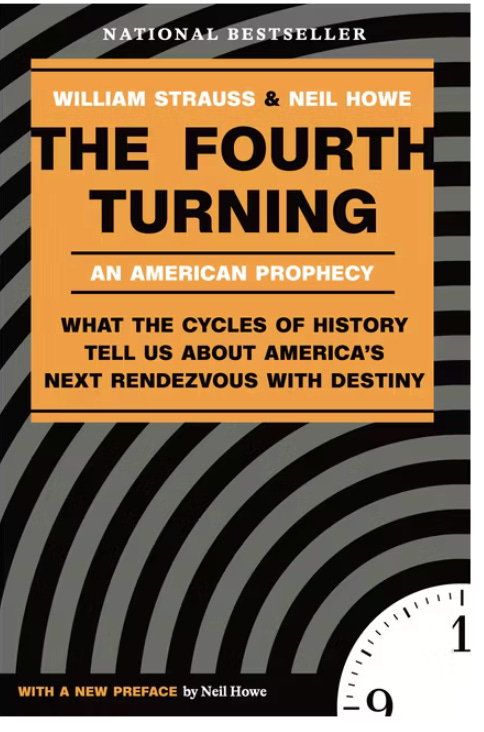
Historians William Strauss and Neil Howe wrote these words in 1997, in the midst of one of the strongest periods of economic growth and prosperity in decades. The sentiment was contrarian, even laughable in the Dot.com Era, as Netscape and Internet Explorer battled for supremacy and investors eagerly jumped on tech stocks.
According to Strauss & Howe’s generational theory of history, laid out in their seminal book The Fourth Turning: What the Cycles of History Tell us About America’s Next Rendezvous with Destiny, the 90s decade was positioned within a Third Turning, an era of “robust individualism, raucous commercialism, social fragmentation, truculent moralism, weakening community, and pervasive civic drift.”
This isn’t a description specific to the 1990s through the mid-aughts of 2000. In fact these same traits could be used to describe the 1760s, the 1850s, or the Jazz Age of the 1920s.
What else do those decades have in common? They were on-ramps to a seismic crisis: respectively, the American Revolution, the Civil War, and the Great Depression and WWII.
Of course, to so many of us—self included—what unfolds before us is brand new. The challenges are unique. The threats are foundational. The wheel hasn’t been invented and Jesus isn’t around to take it for us.
And that’s a world view that makes sense, if you consider time linear. Most Americans grew up believing that time is not only linear, it is also on an upward trajectory to some “better” future. We learned from mistakes. Never again. Things are always getting better. We’re much better off than the generations that came before. We’re healthier than they were. We’re safer. We’re smarter—so much smarter, so much savvier. There are no barriers to knowledge now, apparently, which means that we cannot be tricked into voting against our interests or being hoodwinked by a foreign leader.
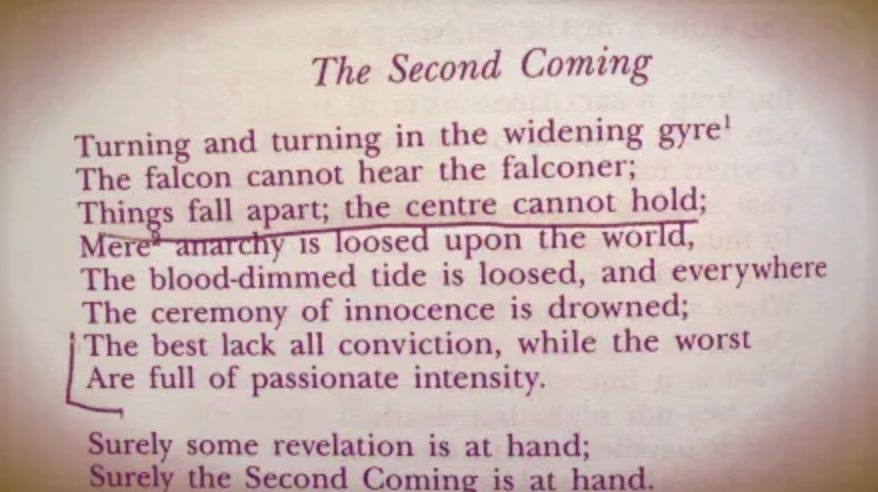
This is why, in midst of an era powered by buoyant optimism and an unshakable belief in the inevitability of increasing freedom and prosperity (common to all big growth periods), this startling comment from Strauss and Howe’s book would have been seen as absurd in 1997:
“Authoritarian government isn’t dead; it’s just hibernating, poised to return in the Fourth Turning, rested and refreshed.”
Reception to The Fourth Turning was mixed when it was published, but Strauss and Howe’s fellow historians, in particular, disliked it. In the New York Times Book Review, historian Michael Lind dismissed the book as bordering on “pseudoscience,” and claimed “most of the authors’ predictions about the American future turn out to be as vague as those of fortune cookies.”
I think it’s instructive to consider how well Lind’s assessment stands the test of time. Judge for yourself. Below is an excerpt from 1997 edition of The Fourth Turning.
Sometime before the year 2025, America will pass through a great gate in history, commensurate with the American Revolution, Civil War, and twin emergencies of the Great Depression and World War II. The risk of catastrophe will be very high. The nation could erupt into insurrection or civil violence, crack up geographically, or succumb to authoritarian rule.”
While they were off by a few years, “vague” as fortune cookies is not the phrase I’d use to describe Strauss and Howe’s prediction of what this moment would look like.
According to Strauss and Howe, the three previous “fourth turnings” or “Crises” in America were: the American Revolution, the Civil War, and the Great Depression and WWII collectively. And the scenery on the road to those crises, including our own current one, remains consistent. The eras demarcated by the 1760s, the 1850s, and the 1910s-1920s, all featured:
coarsening political rhetoric and allusions to violence
xenophobia and anti-immigration concerns
growing nativist and sectional fears
increasing intolerance for perceived social and moral deviance
public concern for “protecting children”
weakening communal ties and growing individualism
recognition of a looming public breakdown met with paralysis and apathy—a lack of action, despite knowledge that action is necessary
Let’s see how this played out in the lead-up to each crisis, using two of the traits mentioned above (I had a draft that touched on all seven but showed a modicum of self-restraint).
1760s
The Stamp Act crisis (1765) and Townshend Acts (1767) led to violent rhetoric against British rule, including calls for the tarring and feathering of tax collectors (which in fact occasionally took place). The Sons of Liberty utilized mob violence to enforce boycotts.
1850s
You think Congress is a disgrace now? At least no one has been nearly beaten to death in the Senate chamber. After delivering an anti-slavery speech on the Senate floor in 1856, Charles Sumner was nearly beaten to death by southern Representative Preston Brooks.
1910s-1920s: 2025’s Sister Era?
Things got really “interesting” (as we say in Minnesota) during this lead-up to the Great Depression and Second World War, and you kind of had it all: violent street battles between anarchists, socialists and right-wing paramilitary groups in major U.S. cities (hmmm); the KKK rebranding itself as a political force, painting Black Americans, Catholics, Jews, and immigrants as threats to so-called traditional American values, while also committing murder, assault, and arson and infiltrating law enforcement and local government.

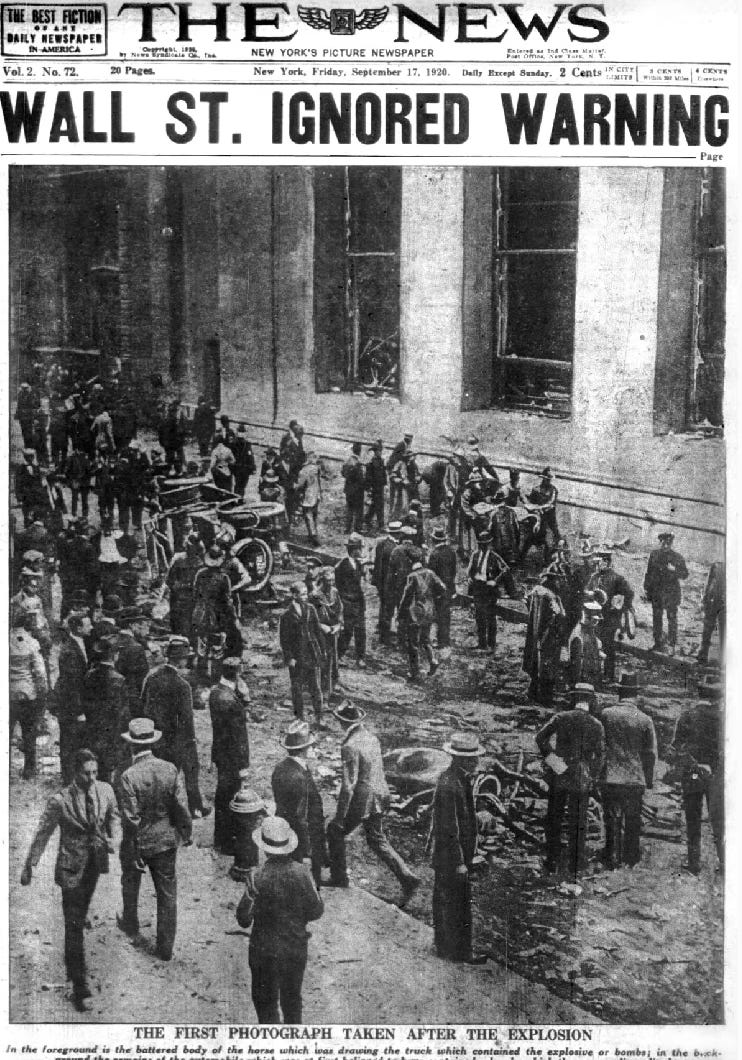
But that’s not all! We had the 1919 Anarchist Bombings, a series of mail bomb attacks on public figures, including Robber Baron John D. Rockefeller and Supreme Court Justice Oliver Wendell Holmes. The 1920 Wall Street Bombing, in which an explosives-filled horse-drawn wagon detonated in front of the JP Morgan building, killing 38 (also blamed on Anarchists).
Naturally, these incidents led to violent retaliatory measures and rhetoric against leftist groups—but the Robber Barons sat up and took notice. We got libraries and endowments as payoff from America’s billionaires (these days Americans support billionaires through tax breaks, government contracts and other kinds of corporate welfare). I find it fascinating that Elon Musk, Jeff Bezos, Peter Thiel, and the rest of today’s Robber Barons don’t see the wisdom of Carnegie’s libraries and Rockefeller’s museums—gifts to a public they’d exploited so that things didn’t get all 1789 up in here.
1760s
Revolution was in the air—the signs of revolutionary sentiment were clear—but colonial leaders hesitated and dithered for years (sound familiar?) before realizing that the break with Britain was inevitable.
1850s
The Dred Scott Decision (1857) declaring Black Americans, free or enslaved, could never be U.S. Citizens and that Congress had no power to regulate slavery, deepened our national divides without providing a solution. Congress, likewise, also failed to act, with both Democrats and Whigs sitting on their hands, creating public frustration with their inaction. Many Americans—especially moderates—felt powerless (broken record vibes).
Interestingly, the Dred Scott ruling actually pushed many anti-slavery moderates into a state of inaction because they believed SCOTUS had just made slavery the law of the land. Makes me think of the doomers I see on social media. It’s over. We’re fucked. I’m moving to Canada.
Here’s what I find most interesting about this parallel example: rather than triggering an immediate Civil War, the Dred Scott decision (Citizens United?) simply further eroded trust in the political system and widened existing sectional divides. This set the stage of Lincoln’s election in 1860, a candidate who openly opposed the Scott decision. But, of course by then, America was too broken for peace.
1920s
The 1929 stock market crash could’ve been seen coming from miles away, but obvious warning signs, like the 1927 banking crisis and a decade of reckless economic speculation, had been ignored. Meanwhile, failure to act decisively on rising fascism abroad set the stage of WWII. History is a mirror.
If you feel deja-vu reading this, that’s because you’ve been here before—or Americans have, anyway. Each of these Third Turning eras leading to a Crisis have been marked by rising tensions, moral panics, increasing radicalization, public pushback, and an awareness of collapse with little immediate action to prevent it.
It’s this last hallmark of the moments leading to a Crisis era—an awareness of collapse with little action to prevent it—that I find both terrifying and reassuring. Our seeming failure to act in the fact of an existential threat to our democracy is not a sign of our uselessness, of our addiction to our own comfort and to distractions, of a lack of intestinal fortitude.
It’s part of the cycle. We are always shocked when it happens, but we are shocked because we ignore the signs.
Strauss and Howe wrote in 1997, “People of all ages sense that something huge will have to sweep across America before the gloom can be lifted—but it’s an awareness we suppress. As a nation, we are in deep denial.”
This idea went largely unnoticed in the late 90s, even though we were already beset by the Republican Culture Wars. Beset by Newt Gingrich, who publicly vowed to do everything in his power to ensure nothing President Bill Clinton tried to do would succeed. By Rush Limbaugh, whose aggrieved, angry rhetoric directly fed the burgeoning Tea Party.
And in the 2000s we continued to suppress an awareness of this speed-run to crisis when we tolerated the cynical lies of the climate change “merchants of doubt,” the racist rhetoric of the Tea Party with their protest signs depicting Barack Obama with a slice of watermelon for a mouth and their lies about his birth certificate; when we pretended Donald Trump was a joke (guilty); when we pretended the invented Trans Panic was just a “wedge issue” on steroids and nothing more than a distraction; and when we failed to realize, until it was too late, that corporate interests had captured the Fourth Estate—and our seats of power, including the Supreme Court of the United States.
I’m aware of the criticism of Strauss and Howe’s work—it’s prophetic, it’s guesswork, it’s vague, it’s not empirical, it’s event-based. I don’t necessarily disagree with some of these characterizations.
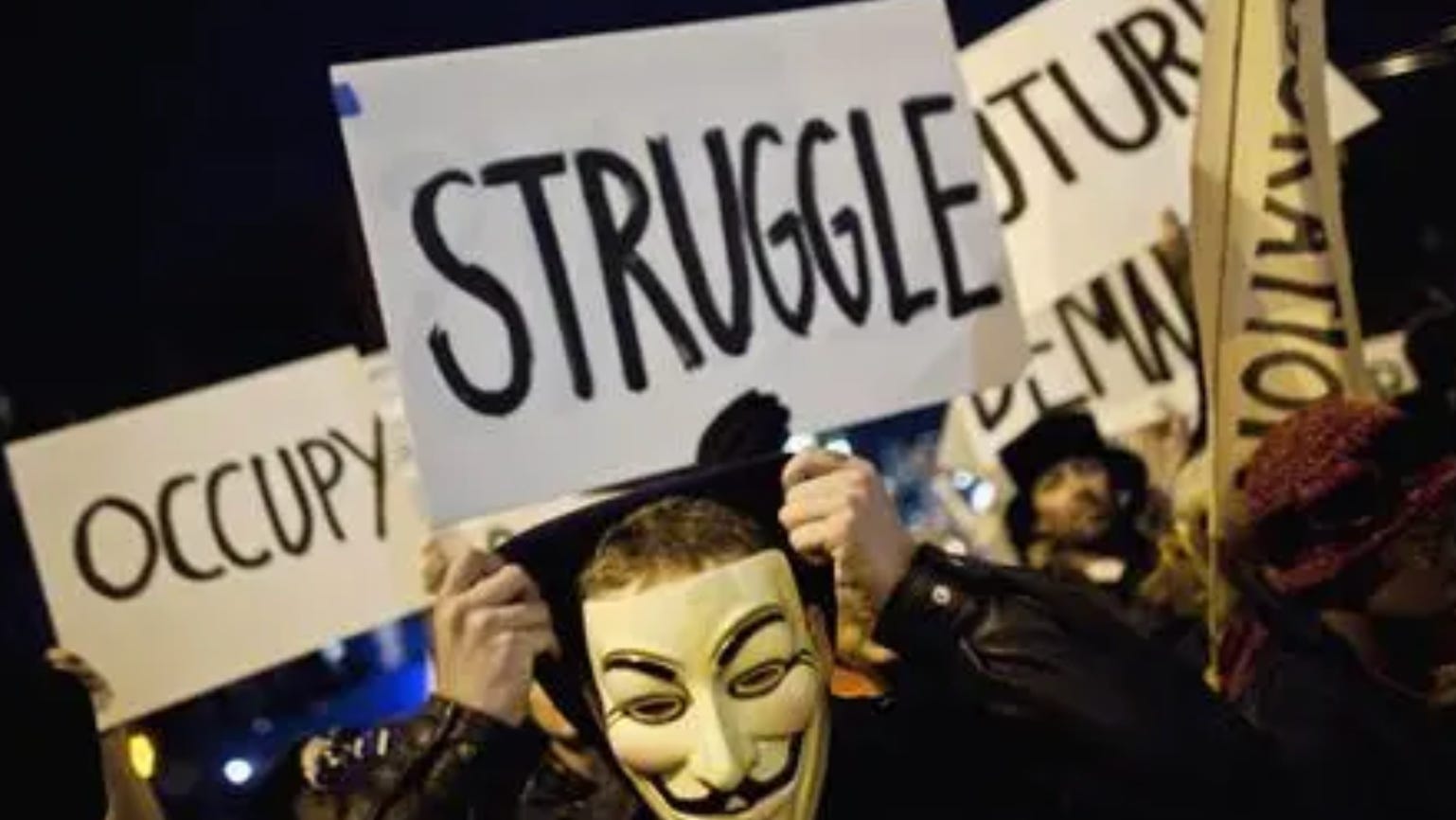
But I would also point out that the criticism of this model has all come from non-crisis eras. Despite the cyclical nature of history, it requires a lot of imagination to visualize how the specific events mentioned above, in the 1760s, the 1850s, the 1920s, would look in our era. Without that imagination and grasp on historical precedence, it’s easy to miss the fact that Citizens United may very well be the Dred Scott case of our own Fourth Turning.
So my point is this: we’ve been here before. This country has endured through the Unravelings of the 1760s, the 1850s, and the 1910s-1920s, when Crisis loomed larger and larger with each passing year. And each time, we failed to appreciate what was about to happen. Each time, we were slow to act, like the great white whale roused from its slumber not by the first superficial harpoon strikes, but by the well-placed awakening shot.
When we finally roused ourselves to fight, freedom has won each time. Four American saeculums, three Crises won by freedom fighters.
The fourth Crisis is here.
We know what to do.
No posts
Comments
Nothing yet. Say the first thing.
Sign in to join the conversation.