
Happy New Year! My plans for 2026 include working slightly less, working out slightly more, and spending less time on my phone (good luck to me). I also plan to go deeper on the Substack front, with more deep-dive designer interviews, underground shop guides, and some plugged-in industry commentary. Today’s wimpy is about a recent fracture running through the menswear landscape. Thanks for being here!
Japanese often borrows from English to make up new words. One of my favourite examples of this is the expression ‘NG’, which stands for ‘Not Good’ and is the linguistic equivalent of the general prohibition sign, used to point out bad behaviour. So instead of ‘No Photography’, you might see ‘Photography NG’.
So it is with ‘Real Clothes’ (リアルクローズ), the catch-all term that Japan invented to describe everyday, wearable clothing, distinct from the outwardly creative, avant-garde garments you might see on the runway. Uniqlo and COS on one side of the spectrum, Comme des Garçons and Craig Green on the other.
In recent seasons, however, Real Clothes and runway clothes have become increasingly blurred. As hype shifted away from streetwear towards quiet luxury over the past decade, labels like The Row and Lemaire moved into the spotlight. When that became mainstream, menswear heads turned their attention to brands like Auralee, Comoli, ssstein and A.Presse, AKA the Four Horsemen of new Japanese minimalism. Also see Ancellm and the aptly named Niceness, not to mention the huge wave of minimal brands that have come out of Scandinavia in the last ten years.
These brands are unimpeachably tasteful, and set themselves apart largely by their fabric development, which is fastidious. In my experience, they mostly look great when you try them on, and are very easy to style (which makes them easy to sell). There’s a rising sentiment, however, that everything is beginning to blend into an amorphous mass of… expensive blandness. BoF called it ‘menswear’s sameness epidemic’. In the worst cases, these clothes become a stand-in for taste and personality, all while using craft as a crutch. NG!
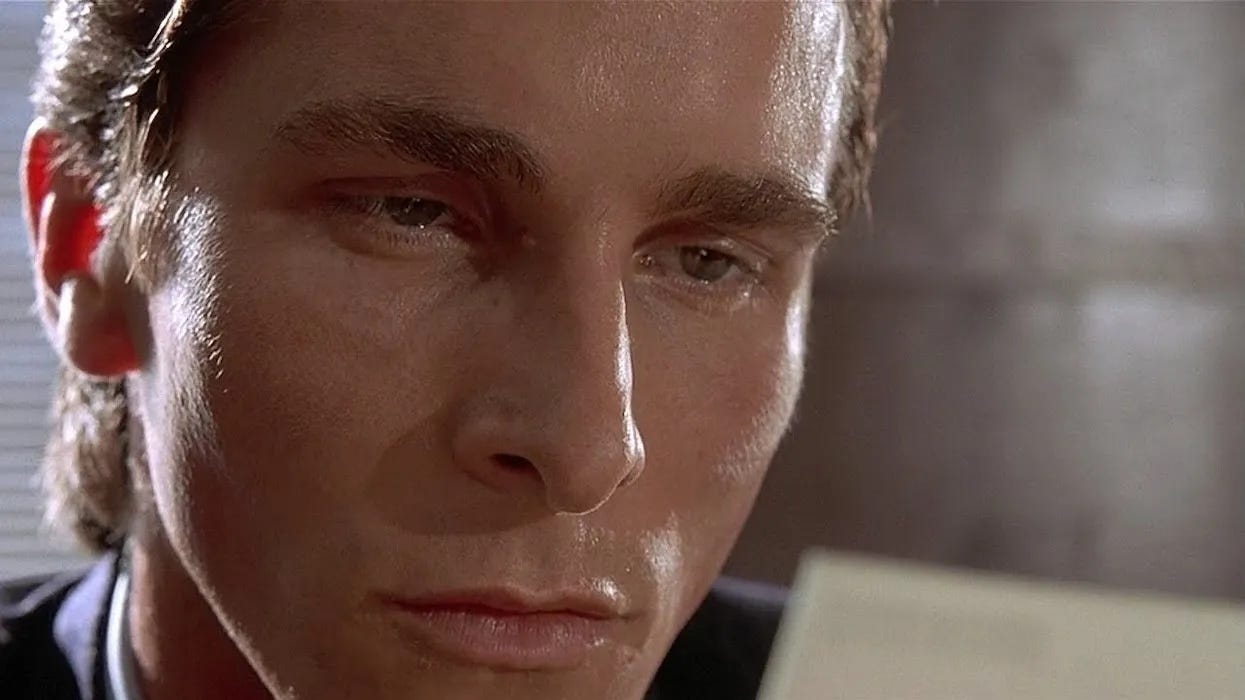
Declaring that out loud? Warfare. Sticking his head above the parapet last month, personal stylist Turner Allen made a reel railing against the “fashion bro obsession” with minimalist brands: “It often feels like the status-signalling is doing the heavy lifting, not necessarily the design or innovation,” he said, adding that these simple brands are “meant to signify superior taste…not individuality, but correctness”. In other words, the American Psycho business card scene but with $800 sweaters.
Some guys were pressed by Allen’s take. A.Pressed. “[These brands] custom develop their own fabrics in small batches often at the yarn/fibre level. Not to mention their attention to patterning, drape, construction or hardware which is levels beyond anything at Uniqlo. Since when is that basic?” read one comment. For others it resonated: “I fully agree that it gives wealthy NPC,” read another.
(Side-note: Chris over at Duchump was one of the first to address the furore in his recent post ‘Basic?’, which digs into the charm of these brands at a personal level.)
Sure, menswear it not at its most visually arresting right now. (Though honestly, there’s plenty of stuff from the aforementioned brands that is far from minimal). But what many people missed with Allen’s take is that it wasn’t targeting the brands themselves, but the icky culture surrounding them.
Can men make discerning clothing decisions for themselves, or do they need a co-sign from a TikTok influencer or Substack shopping writer first? As more guys have become interested in fashion in recent years, they’ve looked for ways to participate in a way that feels correct and acceptable, and ‘real clothes’ brands allow that, no questions asked. The problem arises when untamed fashion bro hype meets brands that intended to sidestep that hype entirely.
Comments
Nothing yet. Say the first thing.
Sign in to join the conversation.