
Merry Christmas! To say thank you for reading Wimpy these past few months, here’s a present from me to you: a gigantic interview with Auralee’s Ryota Iwai. I originally wrote it for the new Fantastic Man China, where it appears in the first issue—but only in Chinese! With the kind permission of my editor, I’m publishing a version of it here in English. It’s a bit magazine-y for Substack, but it’s also one of the more in-depth interviews with Iwai that currently exists (maybe the most?!). Enjoy it! And enjoy the rest of the year, see you on the other side x
Auralee is a blank canvas of a brand. The mens and womenswear label, which was founded by Ryota Iwai, was created with the idea that it would be unbound by nation or theme, and has no overarching message beyond putting beautiful, well-made clothes into the world. Simple. Or is it?
In the decade since it was founded, Auralee has become a favourite among menswear insiders for its gaspingly good fabrics and boldly tasteful colours. The man behind it, however, has remained relatively mysterious.
Ahead of our conversation, I am told by various sources that Iwai is a phlegmatic and awkward interview, often deflecting questions with a shrug or an “I don’t know”. “It’s because he has no interest in himself,” says Kanae Arai, his wife and high school sweetheart with whom he runs the company (she heads up marketing and PR). He cringes at personality quizzes, she says, and can’t understand the desire for introspection. “He’s always been the same,” she smiles, recalling their college days together. “At that age, boys try to act cool and show off to girls, but he was completely different. He’s a little clumsy [she uses the Japanese word ochokochoi], and he’s kind. He’s kind to all kinds of people.”
The Iwai I find when I visit him at his office HQ in Minami-Aoyama at lunchtime during one of Tokyo’s roastingly hot August days is indeed kind, and only a little awkward. He welcomes me with a flurry of bowing and leads me to a small table at the far end of the brand’s vast showroom, which is bright, beige and filled with soft-looking samples that span parakeet green to butter yellow among other shades of reds, blues and beiges, in fabrics like baby alpaca and bluefaced wool.
Rake-like and with messy black hair, Iwai has curious, sparkly eyes that light up when he smiles, which is often. He dresses casually in well-worn vintage T-shirts and rumpled cotton trousers, with a Cartier Baignoire on his left wrist and a thin golden rope chain on his right. Despite being fashion’s minimalist du jour, Iwai says he’s one of the messiest people in his office. “Papers everywhere!” he laughs.
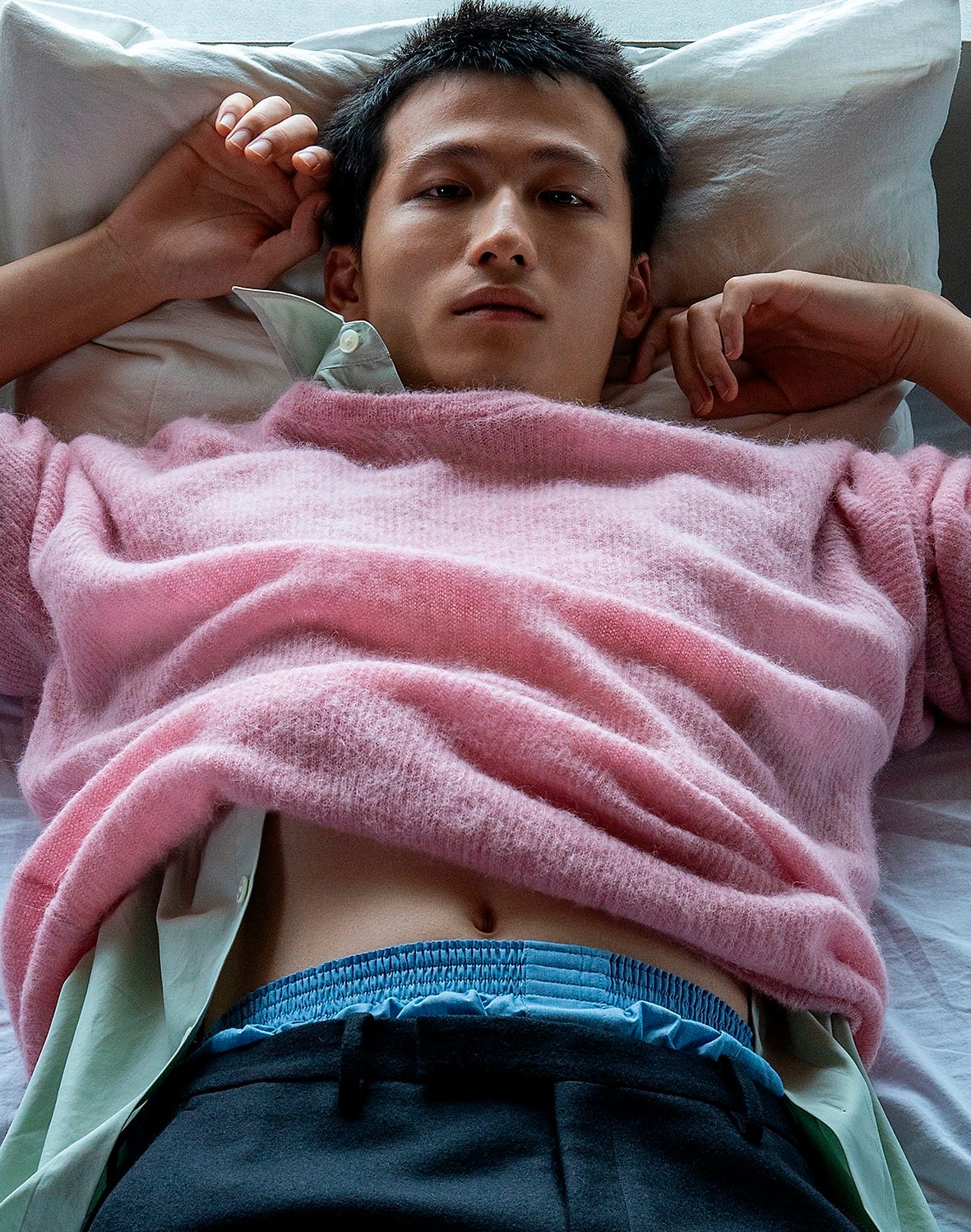
Each season, to inform his collections, Iwai finds sunbeams of inspiration in the mire of daily life: the gathering of friends in a city park; the meditative transition of winter unfolding into spring; the moments after work when one’s time becomes one’s own. He translates this feeling into perennially easy pieces that have won him fans the world over, who enjoy his oversized button-up shirts and softly-soft tailoring for how approachable and effortless it is to wear. At Auralee’s runway show in Paris in June, the brand showed a collection inspired by the lightness of spring that made even leather jackets look breezy. Attended by the great and good of the menswear industry, in the past few seasons it has become one of the schedule’s coolest tickets.
He is popular among his staff, and is known for rolling his sleeves up and being part of the team. “When we’re all packing up the collection in Paris, he’ll be there doing it too,” a longtime staffer tells me. In a recent team picture shared to Instagram stories, the Auralee employees (which total around 20, including those working in the flagship store in Tokyo), gather around the obliterated pink of a watermelon—part of a seasonal tradition of suikawari, or blindfolded watermelon smashing, which the team do together when they return to Tokyo after putting on their runway shows in Paris.
The brand’s name comes from the American folk song ‘Aura Lee’ (later used as the basis for Elvis Presley’s ‘Love Me Tender’), which means ‘Land of Light’. It is a warm and sentimental song that brings to mind exactly the kind of vibe that Auralee channels. “At first, I didn’t know what it meant, but I liked the way it sounded, which somehow stuck in my mind. I later learned the meaning of the words, and it felt right,” says a passage from Iwai on the brand’s website. “I felt like morning light suited my collection.”
Despite this proclivity for the early hours, Iwai is a nightowl, and will often work past 9pm after the rest of the office has gone home. To switch off, he’ll head to the sento (public bath), sometimes up to six days a week. Sweating it all out in the sauna, thoughts about work will float around in his mind. “Then when it gets hot enough I just zone out,” he says. (Iwai achieved his dream of a bathing-themed collection in collaboration with Copenhagen home textile brand Tekla Fabrics last year, which was photographed in hot springs in rural Japan and featured duvet coats and towels.)
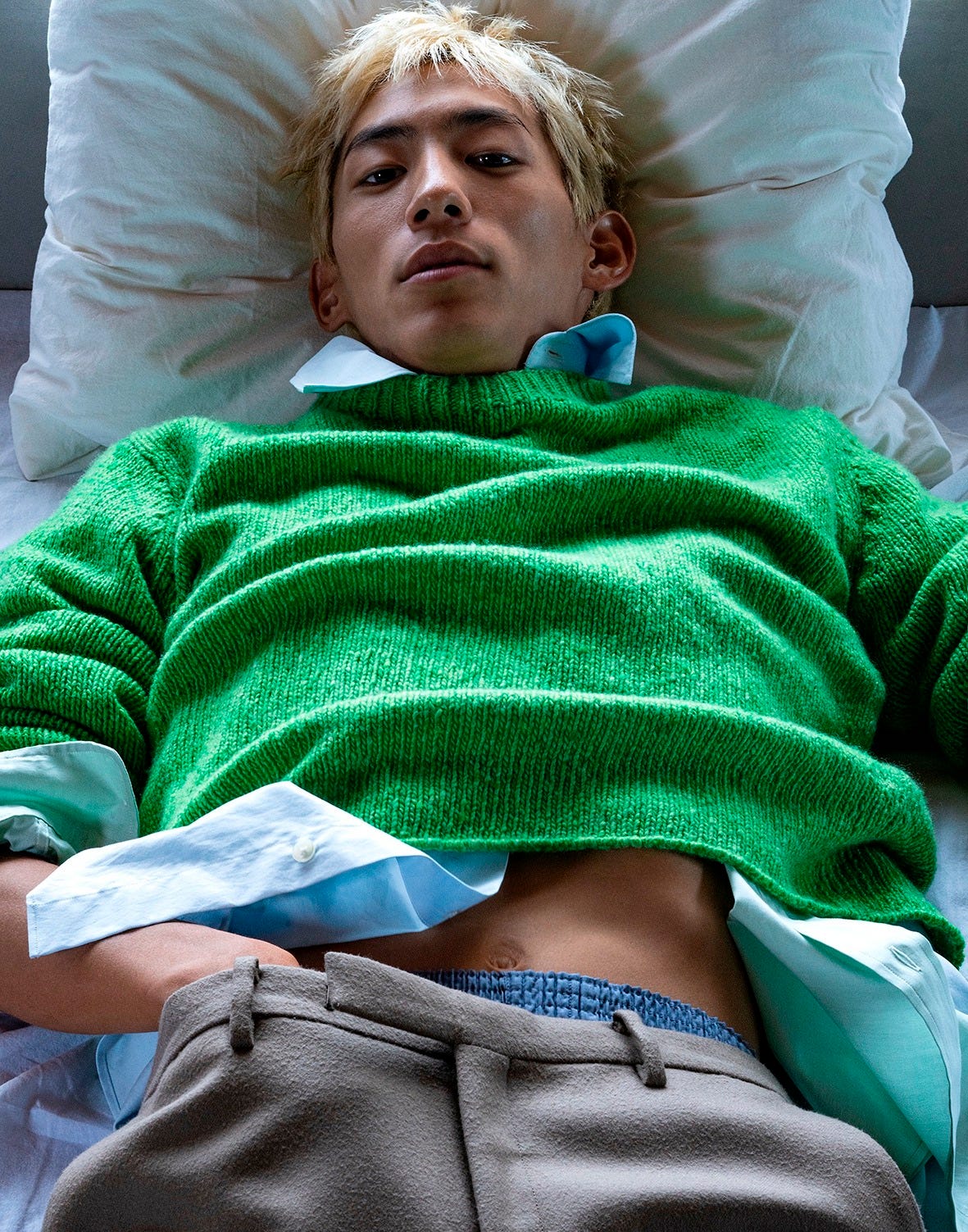
Born in Kobe, a port city on Osaka Bay in the centre of Japan’s main island, Iwai’s reality was bordered by the rising mountains on one side and the sparkling sea on the other. “It was a perfect place, neither rural or urban,” he says. Growing up with an abundance of second-hand clothing stores in walking distance, Iwai nurtured a dream that he would one day work in one, or even open his own. Beginning in his third year of high school, he got a part-time job at one, and stayed there for about four years. “It wasn’t a particularly busy store, so I really felt how difficult it was to sell a single item,” he said. “It wasn’t just the typical vintage stuff, but a variety of second-hand clothing from around Seattle, on the West Coast.”
After working at the vintage store, he went to the nearby city of Osaka to study business administration at Kinki University. As he and Arai began to build a life together, she encouraged Iwai to start his own thing. “At first, I said I just wanted to work in a clothing store, but [Kanae] said that if I love clothes so much, I should try making them myself,” he says.
He moved to Tokyo, attending a night course at Bunka Fashion College and taking part time jobs during the day. In his first year he worked in the editorial department at So-En, Bunka’s in-house fashion magazine, and then landed a job at Norikoike, a now-defunct brand focused on knitwear and fabric production. Slowly, he became more familiar with the process of running a fashion business, and the seed for Auralee grew in his mind all the while before finally becoming a reality in 2015. “I realized that what I could do was create textures, making fabric from the very beginning. What I’m passionate about is creating materials,” he says. Iwai travelled to Mongolia for cashmere and camel hair, and to New Zealand for wool. The result is clothes that are simple to look at, but borderline orgasmic to touch.
He also made a conscious decision to focus on Japan-made product. “When I launched the brand, I wasn’t even thinking about having a store; I saw it as a wholesale business where I’d sell my products to high-quality stores,” he says. “So when I wondered how I could differentiate myself, I thought of clothes hanging on a hanger. I wanted people to look at the sleeves and think, ‘Oh, now there are some nice clothes with a special vibe.’ My desire to use truly high-quality materials was something I had in mind from the beginning.” The brand is also untied to any place or time. “It’s not American, it’s not European, and it’s not Japanese,” he explains. “I had an image of doing something [with Auralee] that didn’t really identify with a specific era or nationality.”
It has worked—the brand says it has increased revenue by 120% every year for the past few years. Fashionable people from Amsterdam to New York wear it; Iwai will sometimes spot passersby in Tokyo or Paris in his designs, and occasionally he is recognised in the street. “I’m happy, but I didn’t expect it to turn out like this, so there’s a lot of pressure,” he says. “I feel that there are more and more expectations every year.”
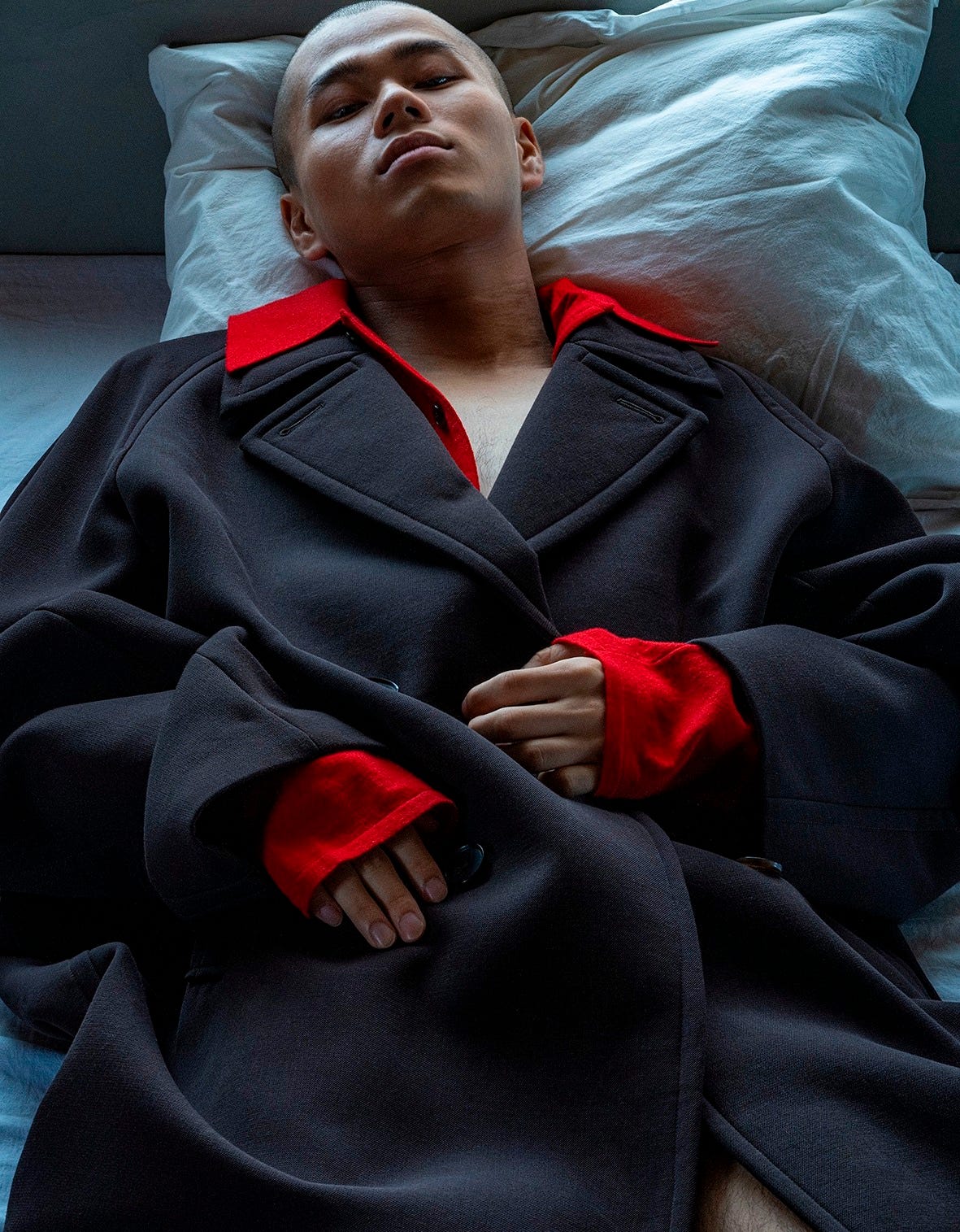
Iwai also sees the responsibility he has to Japan’s factories: “There are fewer and fewer things that can be made in Japan [because of the] aging workforce, so I feel like I have a mission for that, to make the right products.”
I look around again at the spectrum of samples surrounding us. Does he have a favourite colour? “That’s difficult, because I use so many colors…” he says, pausing to think. “But it’s not black or anything like that. I like comfortable colors.” What’s a comfortable color? “The one I tend to use most is that light yellow.” He gestures to a soft cotton jacket on the rack: it’s a warm shade of dawn light.
As our conversation comes to its end, Iwai excuses himself to take another meeting at the opposite end of the room. It’s another busy, back-to-back day—I wonder how he manages to keep such serenity in the clothing, with the increasing demands of being a business leader, not to mention a lodestar that the emerging generation of Japanese designers look up to. No doubt that after he cycles home, he’ll head to the sento to decompress. Steam rises, sweat falls, and all of those thoughts about work fade into the heat. The blank canvas appears once more.
If you enjoyed this story, consider sharing it, or becoming a paid subscriber
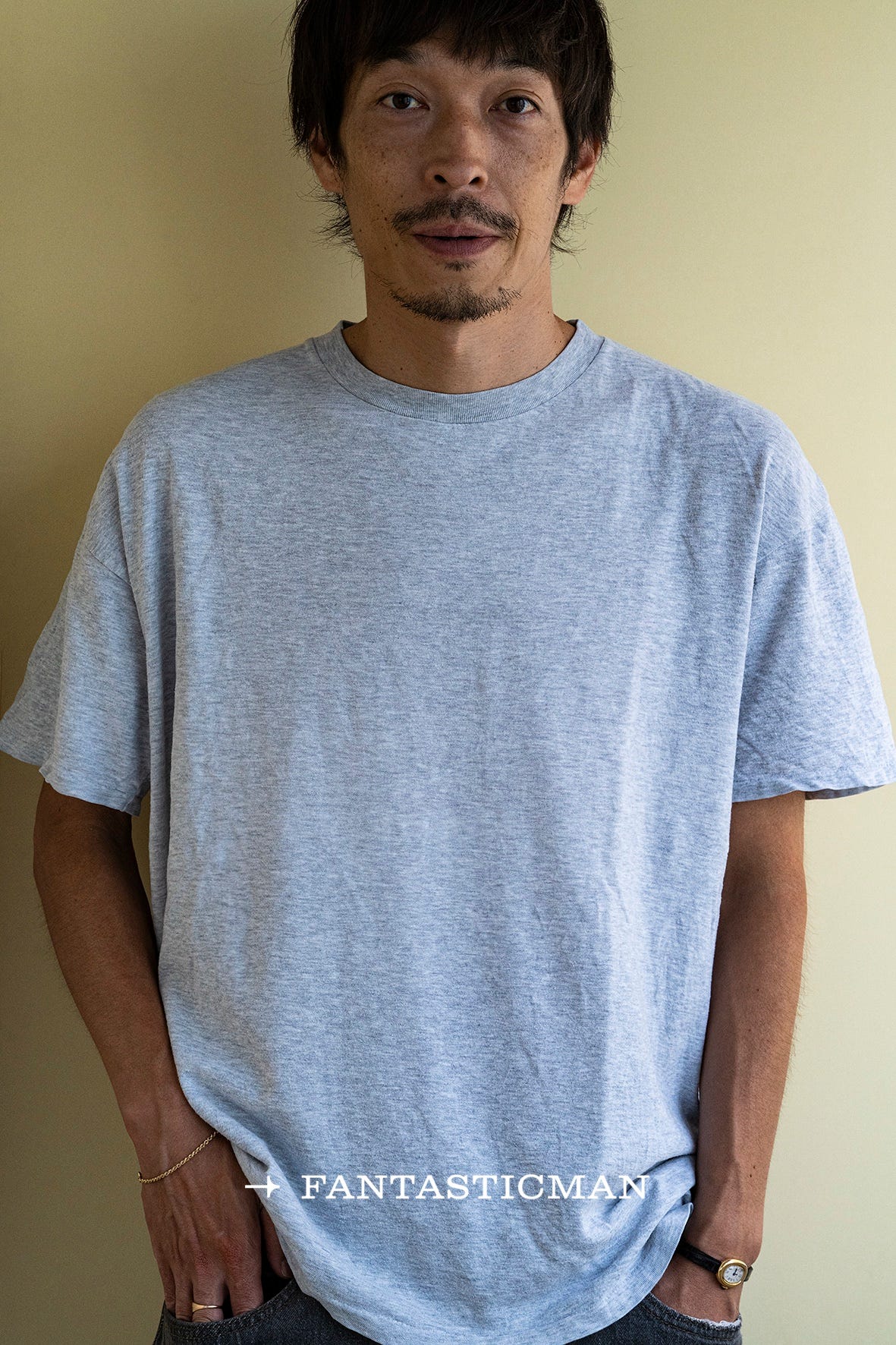
Words: Ashley Ogawa Clarke
Photography: Daisuke Nakashima
Creative & Styling: Jason Rider
Grooming: Narumi Nishihara
Styling Assistant: Saeki Yuzuru
Casting & Production: Good Sport
Local Production: Tae Rang Kim
Executive Producer: Jiacheng Guo
Editor: Meng-Yun Wang
Comments
Nothing yet. Say the first thing.
Sign in to join the conversation.