
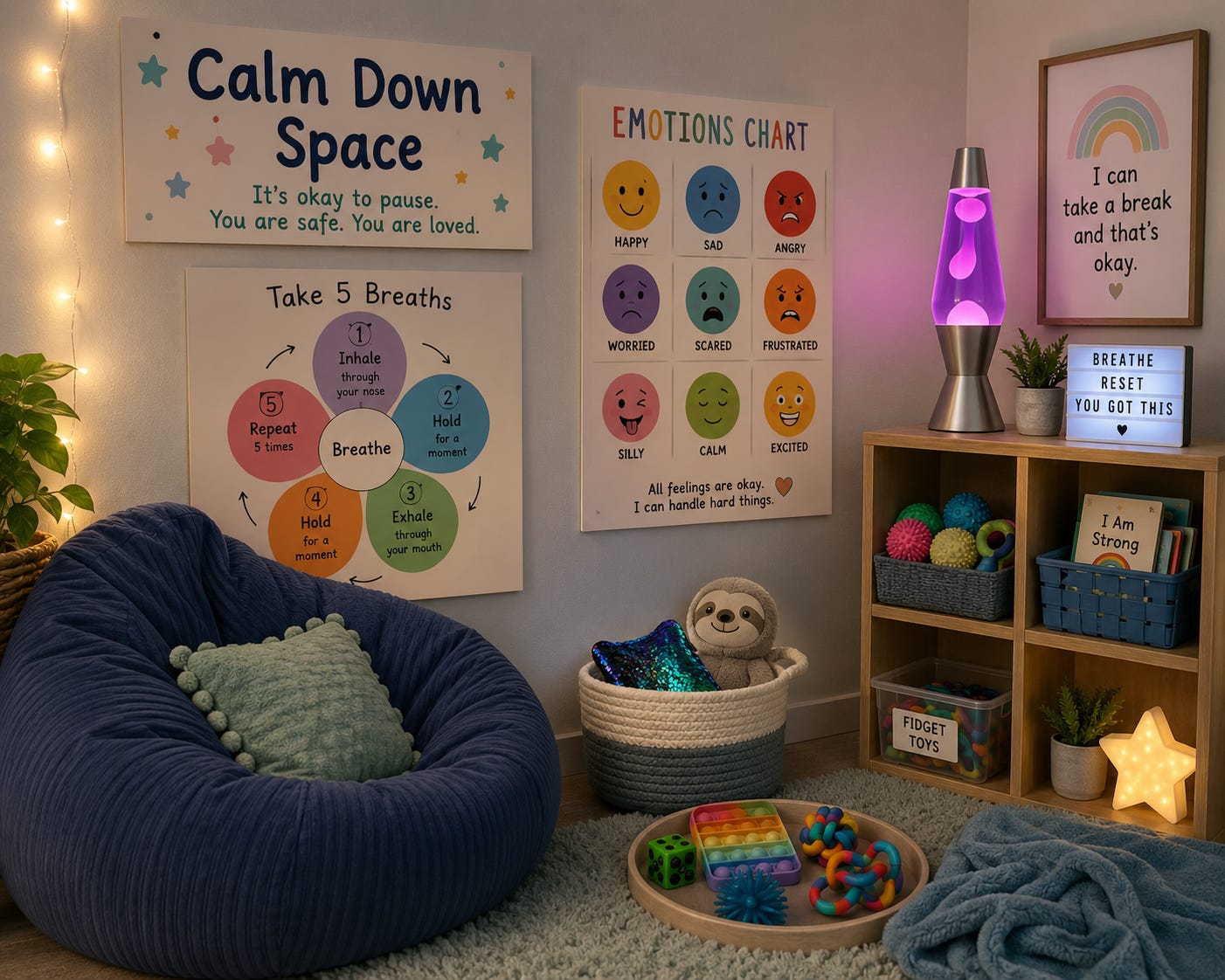
A calm-down corner - also known as a calming corner or quiet space - is a dedicated area children can go to when emotions are running high. It’s essentially “a safe space for self-regulation” that helps facilitate a child’s ability to reset and address challenges in a structured, safe, and consistent manner. Personally, I like calling this area a “feel good space” because the goal isn’t always to “calm down”; sometimes we just need to feel a bit less frustrated in order to regulate.
It is NOT a time-out area; it’s a positive place, not a punishment.
Designate a corner in a typically quiet room in your home. If your child is older, you can use short bookcases to help block the space out and provide some privacy. Team up with your child to decide how to create the space and what to name it; it could be as simple as “the calming corner,” “the reset space,” or “the chill-out zone.” The more input your child has in designing the space, the more likely they are to use it.
Cozy Seating The space usually includes soft seating like a bean bag, pillow, or small chair. You can get creative - throw a few old stuffed animals into a pillowcase for a DIY cushion.
Sensory & Comfort Items Things like low lighting or fairy lights, glitter bottles, fidget toys, or squishy sensory toys are great options. You can also include cuddly toys for hugging, puzzles, or simple quiet activities. Weighted blankets are another option - sensory tools like these can help individuals regulate their emotions and provide a calming effect.
Breathing & Mindfulness Aids Posters or books with age-appropriate breathing exercises (such as box breathing or rainbow breathing) can serve as a helpful reminder for children of what to do in the space. Calming books or coloring sheets are also great tools for all ages.
Feelings Charts A feelings chart is helpful for younger children because they can see a visual representation of the emotion they are experiencing. Being able to name what they feel is a crucial skill. You can’t work through an emotion you can’t name or understand.
A Timer A visual timer can help children understand how long they can stay in the calm down corner and when they can leave, helping them feel more in control of the situation. Sand timers work especially well - watching the sand filter through has a soothing effect on its own.
Calming Colors Whether you use warm or cool tones, try to keep colors pastel and neutral. Calming colors won’t stimulate the brain further and allow kids to manage their emotions more easily.
Scent Consider incorporating lavender-scented rice bags or essential oil bracelets. A diffuser is a great addition if there’s a safe place for it in the space.
Talk and teach about the space before your child actually needs it. Practice using it during calm times; it’s tough to learn new skills when you’re having a hard time.
Introduce a few coping tools at a time rather than overwhelming your child with too many options at once, then build their toolbox as you go. Model using the tools yourself and talk about which ones you (and your child) like best. This can get them more interested in using the space independently.
Ideally, proactively suggest the calm-down corner when you think your child is on the verge of a tantrum caused by anger or frustration. Watch for warning signs (like a red face or clenched fists) and calmly share your awareness of these signs to build their awareness.
As a general rule of thumb, begin with one minute in the space, then check to see if they’d like a little more quiet time.
Post simple visuals so kids can remember how to use the space on their own - pictures or charts are great. Use the space for calming down, not playing, and keep it to one child at a time. It’s important that kids understand the calming corner is not an excuse to escape chores or other responsibilities, but rather a place to take a break and reset, then come back to the task. Again, practice this and role play how to use it before giving up on the space.
When children have access to these tools, they experience less stress, fewer emotional outbursts, and are able to return to learning or playing more quickly. Calming corners also help children build lifelong skills such as self-control, understanding feelings, and problem-solving.
Personalize the space. Make it unique to the needs of your child. For example, if they love Pokemon, include visuals, stuffies, and Pokemon card breathing options. Kids won’t want to self-regulate if it’s not engaging.
You could also make a “feel better” space for yourself and show it off, explaining your favorite tools that help you regulate.
For questions or advice, click the “message Dr. Ashley” button below. I’d be happy to help. Cope well!
Thanks for reading Cope Well: Mindfulness & DBT Skills for Mental Wellness! This post is public so feel free to share it.
No posts
Comments
Nothing yet. Say the first thing.
Sign in to join the conversation.