
Early May in Vermont means lamb season, and our weekends fill up fast. The first farmers markets open on Saturdays, and Sundays bring community days at the local farms. Sheep barns, maple sugar houses, potters and artisans, and everything in between, all welcoming neighbors in as spring unfurls across the landscape.
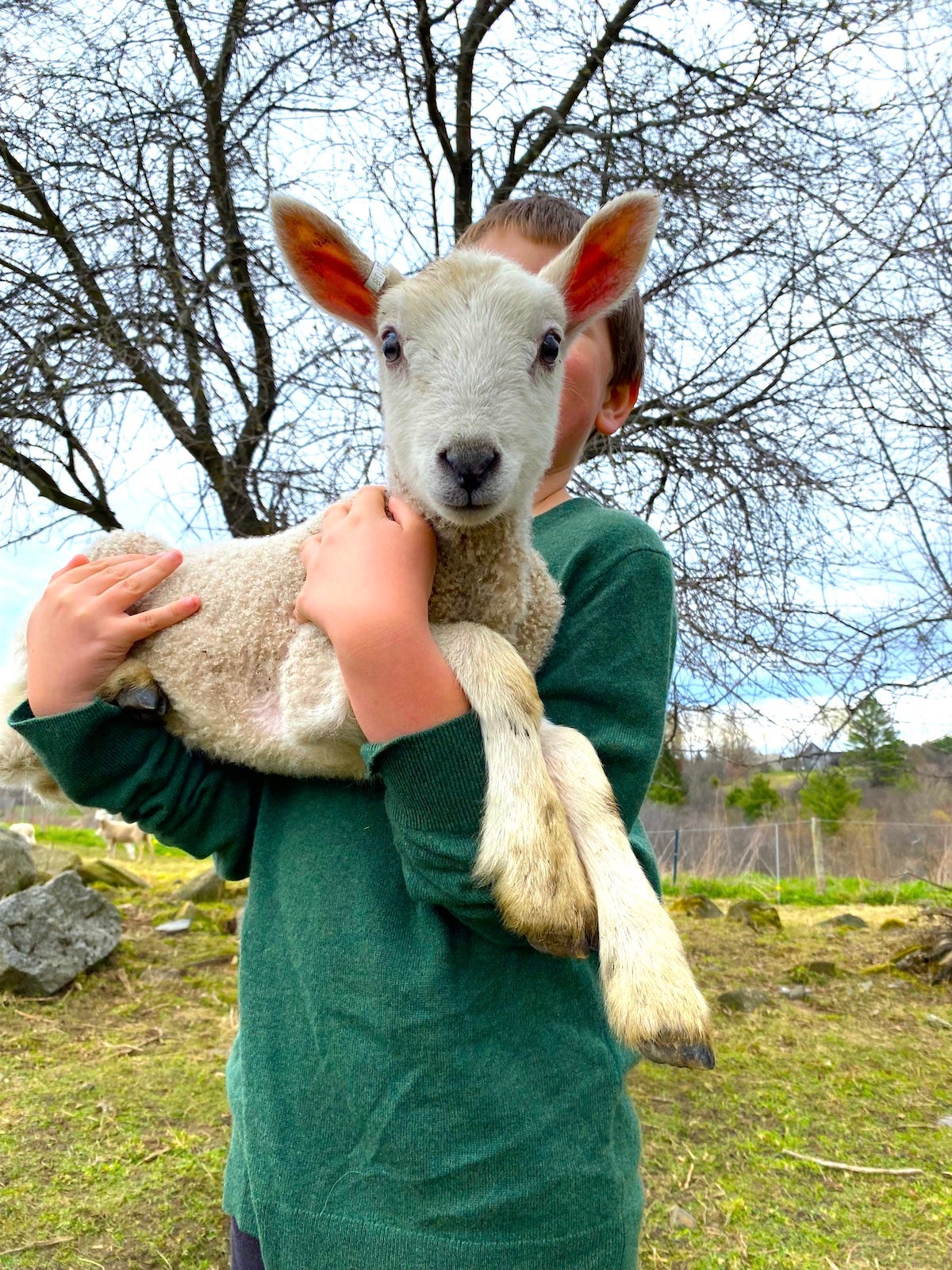
The local farms throw open their doors for “lamb days,” part open house, part social hour, part neighborly investment. Bring the family. Pet the lambs. Watch a sheepdog work. And remember us when it’s time to fill your basket at the farmer’s market. The lambs get socialized to humans and the farmers faces are remembered fondly at the farm stand in July. And, of course, the kids go home muddy and tired and asking when we can do it again.
Some farms even run lamb camps over spring break, where elementary-aged kids spend the week weighing newborns, learning to handle wool, frolicking with herding dogs in training, and getting a good honest dose of farm chores in between.
It’s a brilliant arrangement, really. The farms get extra hands, the kids learn where food comes from from the actual people who grow it, and the community of folks who buy from local farms grows up right alongside the lambs they once held.
The little courtesies, the open gates, the willingness to let muddy strangers into your barn at lambing time. Those are the axle grease that keeps small agriculture turning in a state like ours.
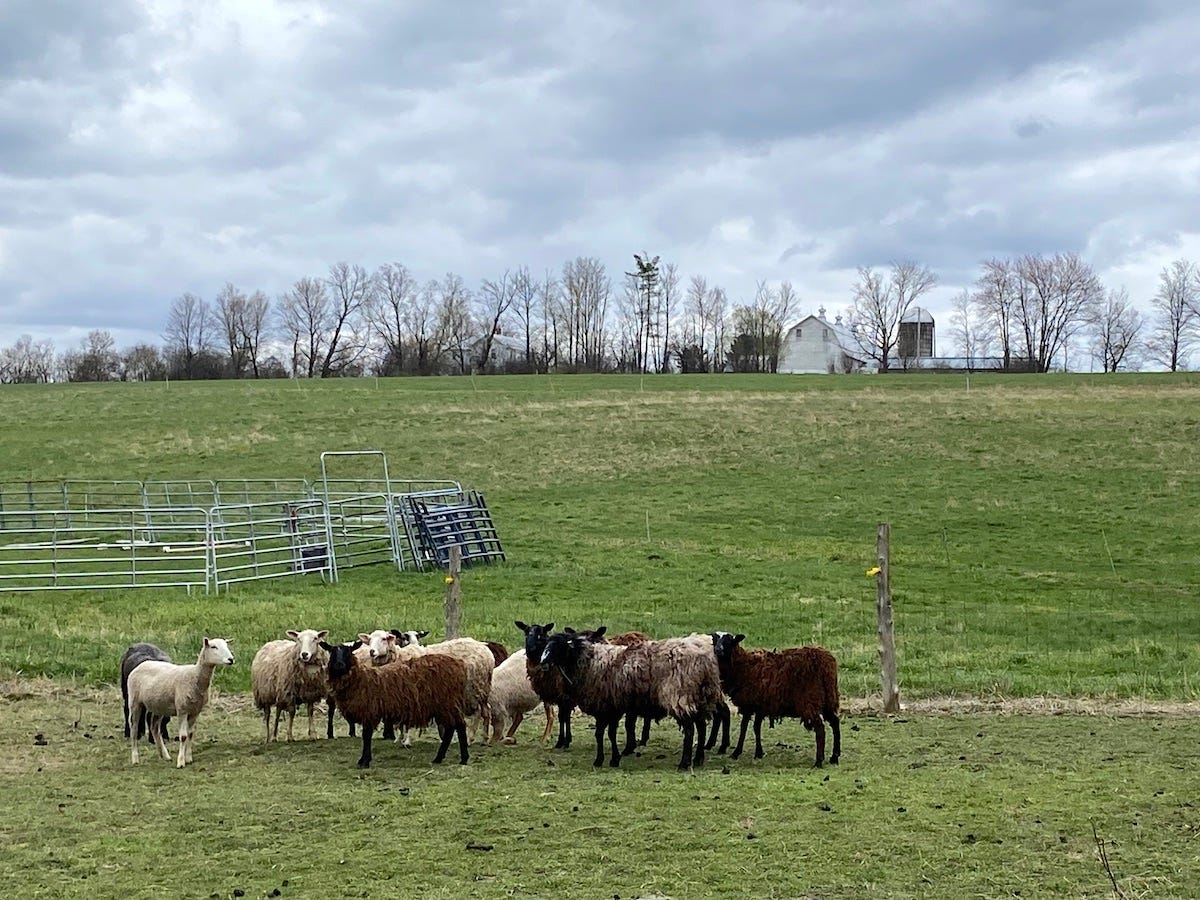
Early May is also when the land really and truly wakes up. The first trees break bud, and the woods go from grey-brown to that pale, almost-glowing chartreuse that lasts about ten days before everything settles into proper summer green. The dandelions finally open, and the woods are full of spring ephemerals: ramps, fiddleheads, trout lily, wild asparagus along the road edges.
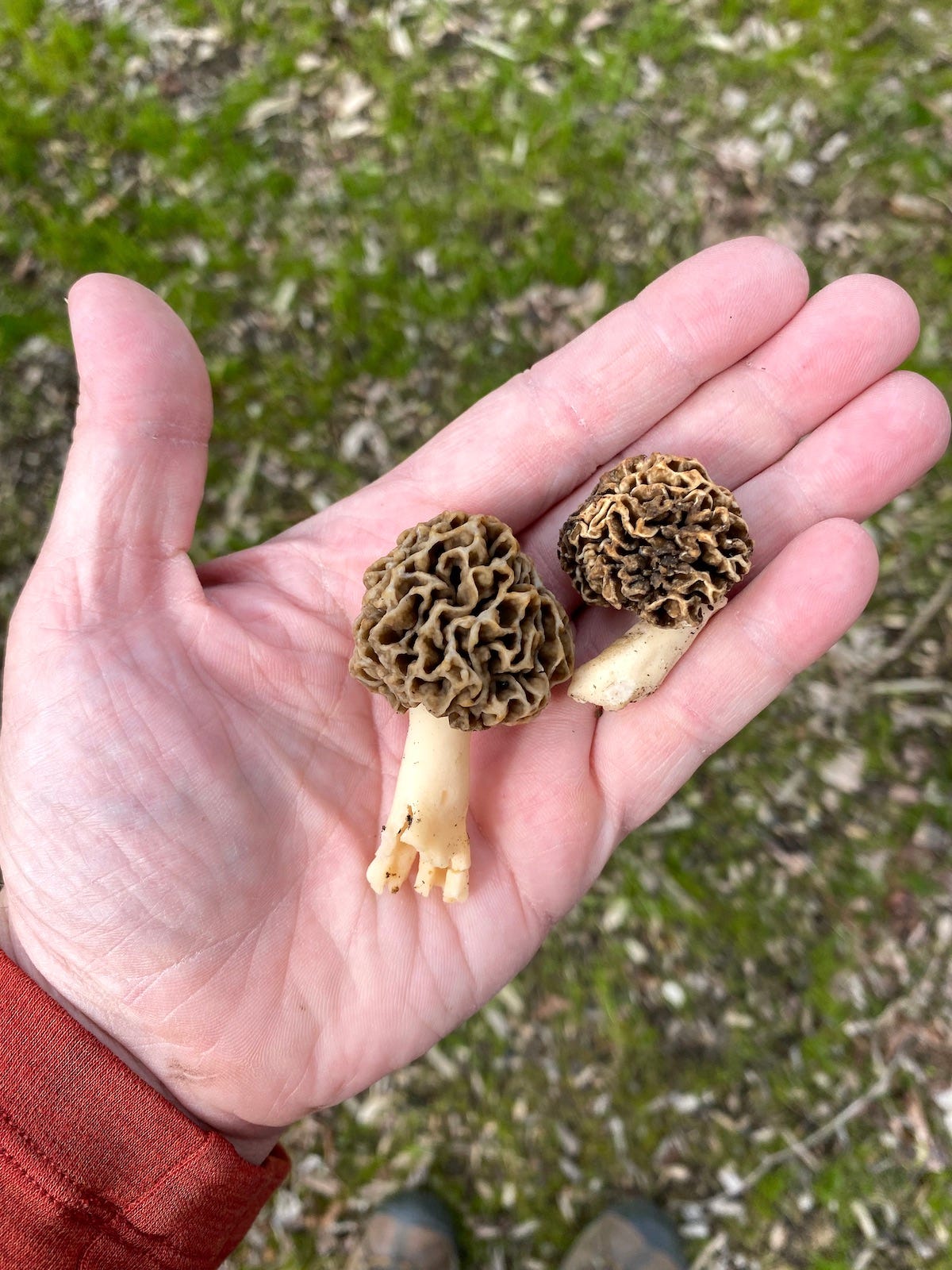
I give my littles a $1 bounty for every morel they find, and they each got their first payout of the season this week.
(Worth every penny. They’re out there for hours, eyes to the ground, learning the trees and the soil and the way the light falls under maple trees swaying in the breeze without me having to say a thing.)
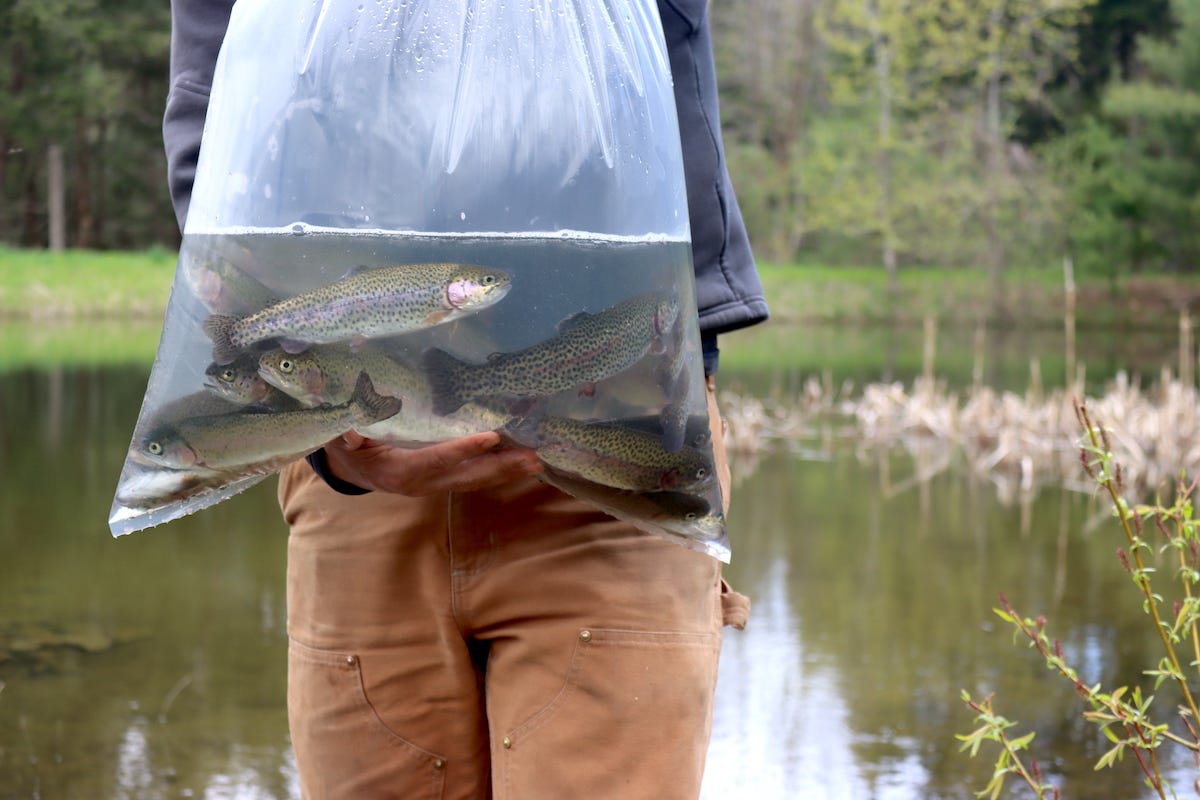
Early May is also trout day around here, the week the pond gets stocked. Ours is the only year-round water in our particular 600-acre block of forest, which means come summer it’s a busy place.
Frogs, herons, the occasional bear track in the mud, and now, freshly arrived, a new class of rainbow trout figuring out their neighborhood.
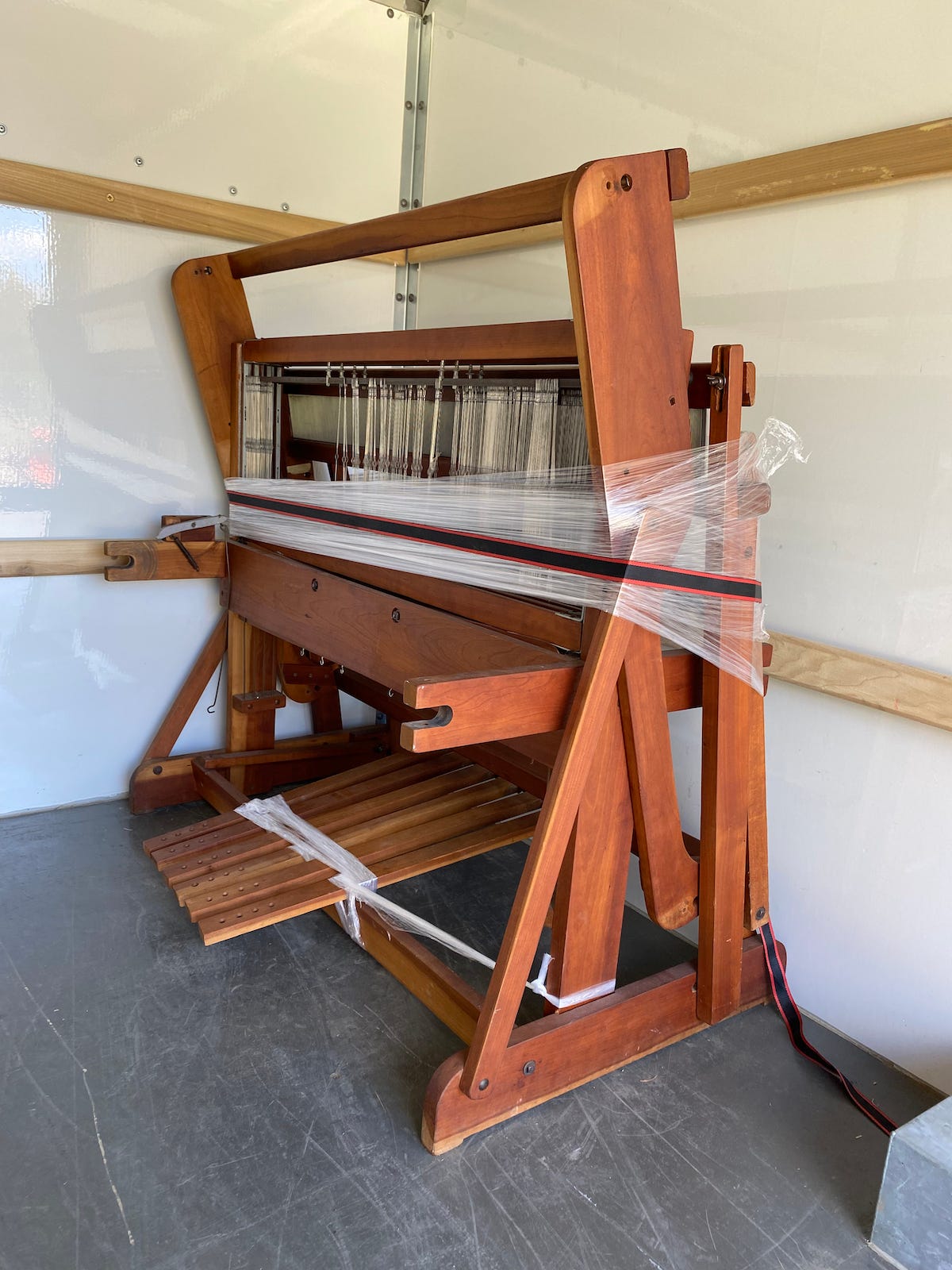
A while back I told you my daughter is smitten with weaving, and we’d just wrapped up a six-week intro to weaving class together. Near the end of the class, our instructor mentioned that a friend of hers was selling a beautiful antique cherry loom for an absolute steal, and when she saw my daughter’s eyes light up, she picked up the phone right there in the middle of class and called the woman.
With all of us listening, the woman on the other end told her story. She was retiring and following her dream: moving to Ireland in her sunset years to write fairy stories. (I am still not over that sentence.)
In the 1970s, she’d attended a weaving school and learned her craft on a 45-inch handmade Nordwood cherry wood loom. A few years later, the school shuttered, and when they sold off all the equipment, she bought the loom she’d loved for $400. She wove on it for fifty years.
And she thought it was only fair that when she parted with it, she’d sell it for what she paid, $400, along with everything that went with it. Warping board, weaving chair, skein winder, spare parts, and a generous stash of wool.
One road trip in a box truck later, and it seems we have a loom.
I keep thinking about that math. Fifty years of use, and she’s passing it on at cost, with all the accessories thrown in, because it feels right to her. That’s not a transaction. That’s a gift wearing a price tag for politeness’s sake. And it’s exactly the kind of thing that happens in the world of people who actually use their hands to make things, a quiet, generous economy running underneath the loud one.
My daughter has already started sketching her first project. (Linen. Of course it’s linen. The girl has been plotting a flax patch since she met the spinners at last summer’s fair.)
We also, through an odd chain of events, inherited a duck this month.
All through April, our town email list had been buzzing with reports of a domestic duck loose on a local pond. Was anyone missing a duck? Did anyone know whose duck this was? An impromptu rescue committee formed, with multiple nights, multiple kayaks, and multiple attempts. I followed the saga with a smirk, knowing perfectly well that you are not going to catch a duck on a pond who does not want to be caught. (And, secretly, cheering for the duck. Out there wild and free, living her best life.)
Eventually, though, they did catch her. And she was hurt.
Mating season is not kind to lady ducks, and a chubby domestic girl is not nearly as swift as her mallard cousins. The drakes had a field day, and she paid for it. Battered and worse for wear, her rescuers put out a call for someone to take her in and rehab her.
My kids and I were so taken with her story we volunteered on the spot.
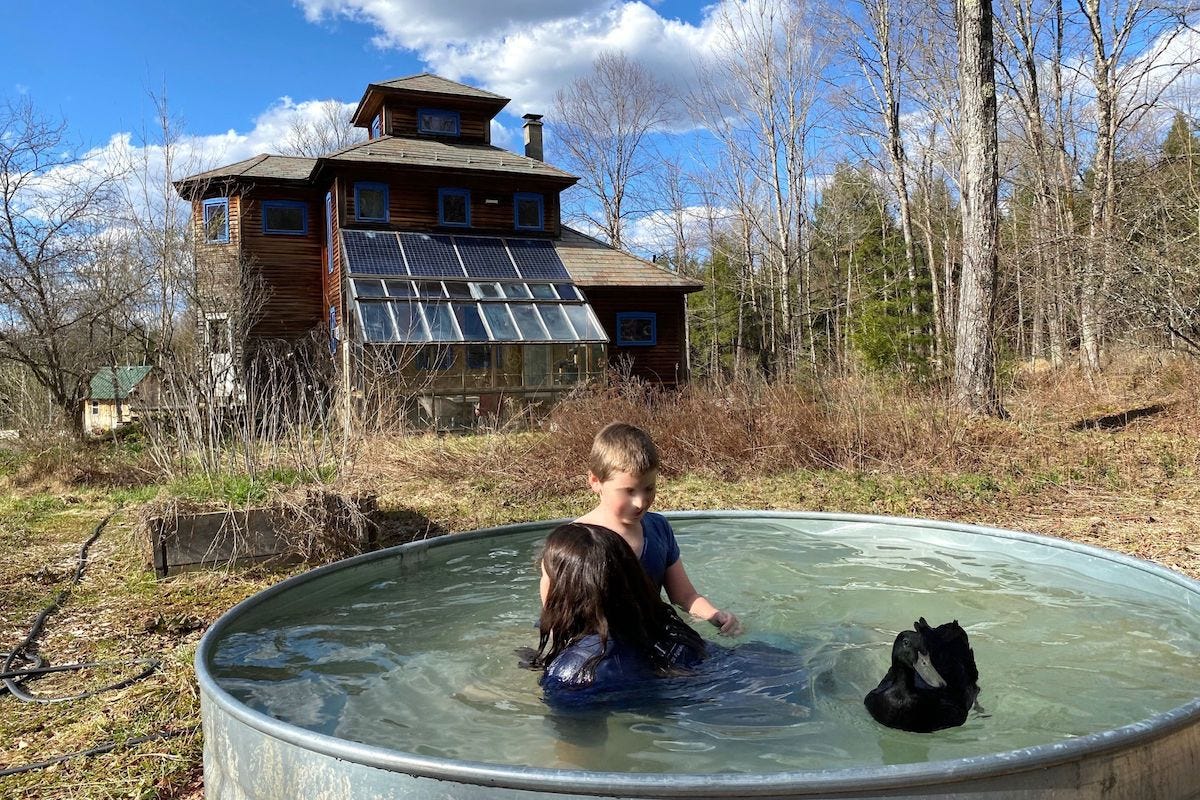
What I did not expect from a “wild” duck was snuggles. But that’s what we got. She’s a Cayuga, a breed known both for being shockingly good foragers (hence her survival skills out on that pond) and for being unusually gentle. Within hours of arriving here, she was at my heels in the yard. I sat down in the grass to weed and she climbed right into my lap, tucked her head against my knee, and wiggled her tail for pets like a dog.
The kids have taken her swimming in their stock tank pool every day since, rain or shine, never mind that spring in VT means 40-50 degree daytime highs. They splash and play, and she’s taken to it, well, like a duck to water.
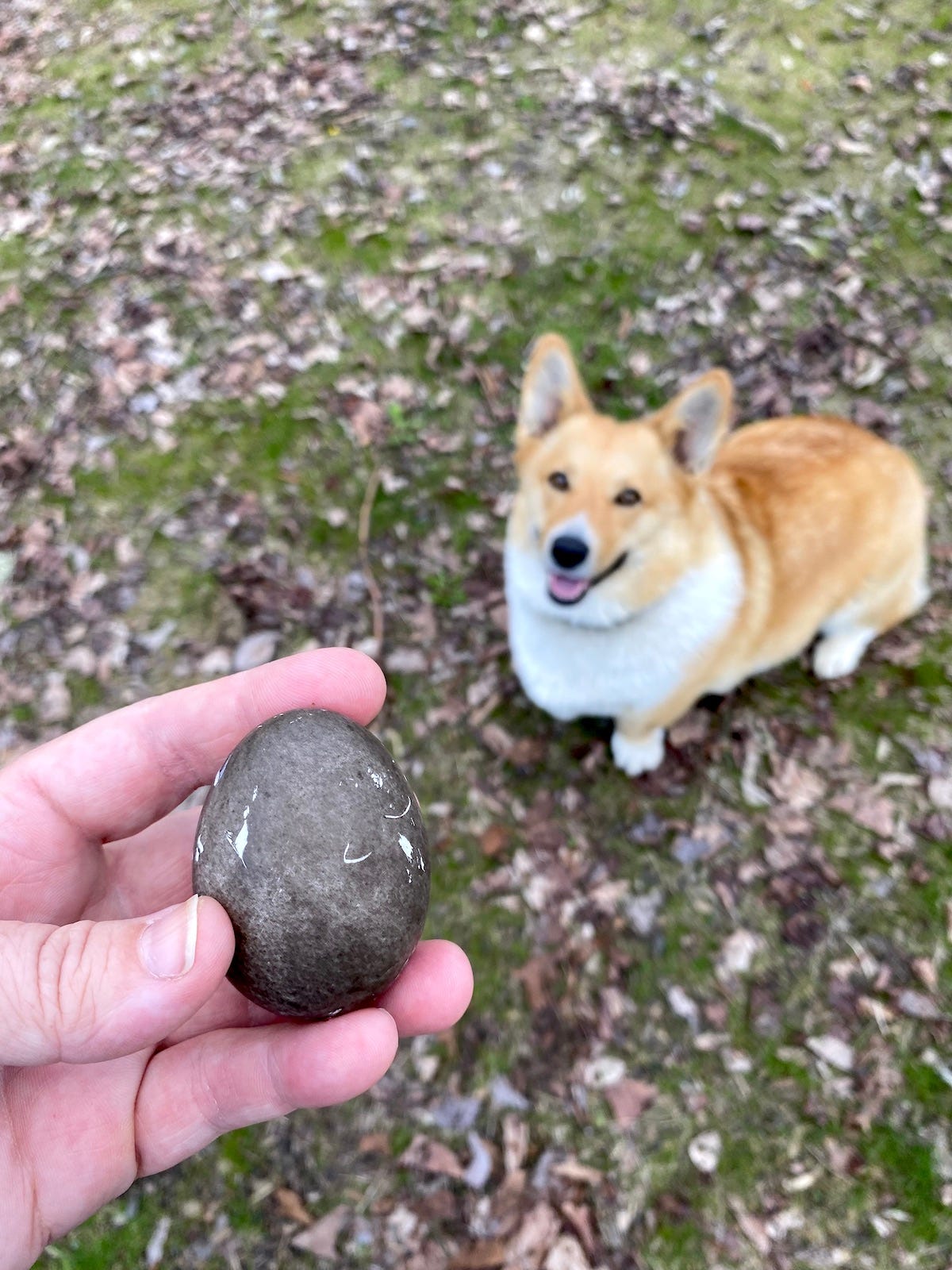
She’s also started laying. Black eggs.
That’s another small wonder of the Cayuga: sleek, iridescent black feathers that catch green and purple in the sunlight, and dark grey-black eggs that lighten as the season goes on. The yolks are rich as can be, deep orange from all that foraging.
The kids named her…Raven.
So here we are, soaking in a Vermont spring, awash in lamb snuggles, duck snuggles, and gratitude for a loom with a history as rich as its deep cherry wood. The ephemerals are already starting to pass, the trees are leafing in, and the year is rolling forward at its usual breathless pace.
What’s coming alive on your side of the world right now? What sparks are catching at your house? I’d love to hear about it. Leave me a note in the comments.
Or, if you’re so inclined, send me a note via email. I have noticed that my substack replies are often enough filtered out and lost to spam folders, so I set up a dedicated email where I’ll actually see your lovely words…more on that later this month. But for now, feel free to send me a note at Ashley@practicalselfreliance.com
Until next time,
Ashley at Practical Self Reliance
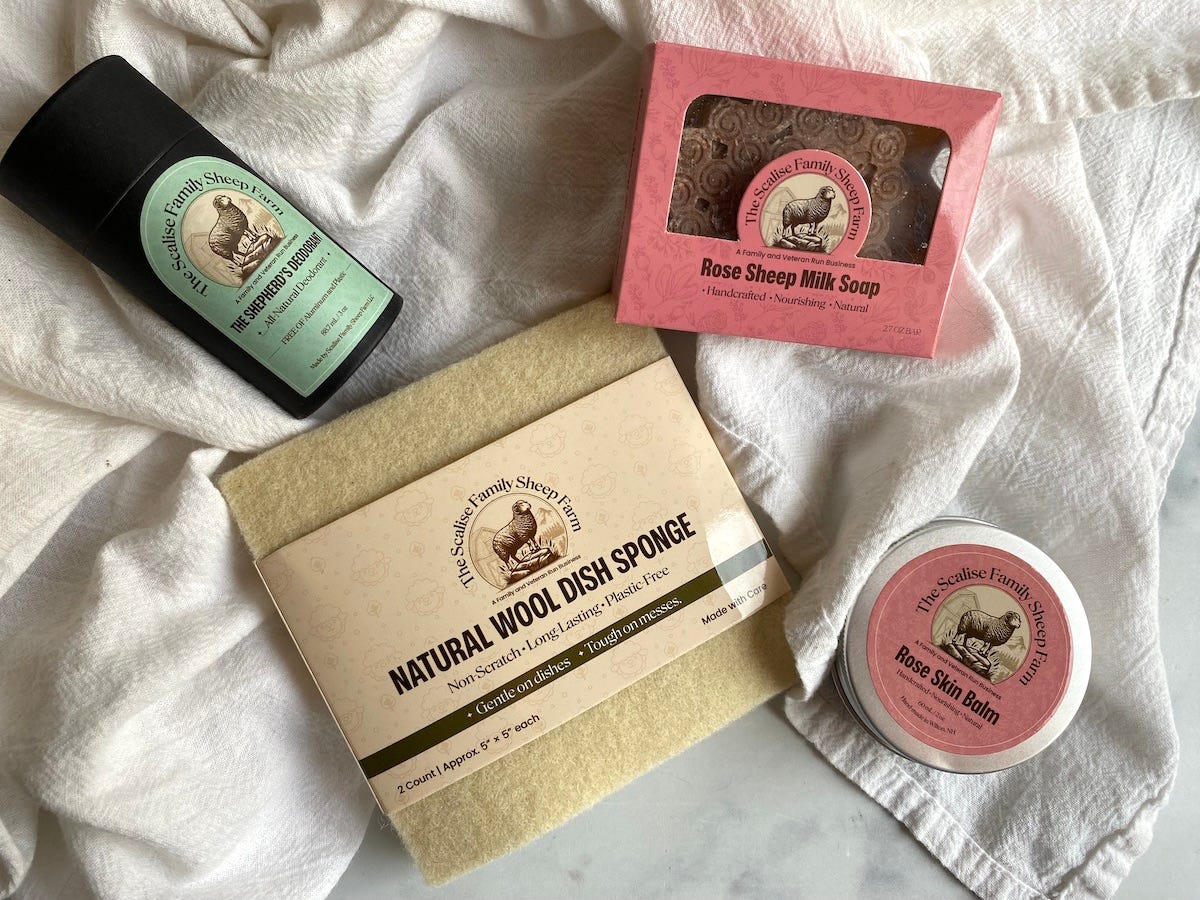
PS. On the subject of lambs, Ben Scalise of Scalise Family Sheep Farm was kind enough to send my daughter some of his sheep-based skincare to try, and she is in love. Lanolin salves and sheep milk soap are wonderfully nourishing, and his felted wool dishcloths are a lovely way to keep microplastics out of your dishwashing routine. We loved everything he sent, but the runaway favorite at our house is the sheep milk soap shaped like a tiny sheep, because of course it is. I’m not affiliated with Ben or his farm in any way, and I get nothing from telling y’all about his work except the satisfaction of pointing you toward a good local sheep farm. Take a look if you’re so inclined.
Comments
Nothing yet. Say the first thing.
Sign in to join the conversation.