
The Middle Ages in film is a substantial topic, to say the least, and occasionally a charged one. There are deep and long-standing controversies about how this period of European history has been depicted in both scholarly works and pop culture, which have long since burst the banks of academia, and penetrated into the Twitter and sub-Twitter ecosystems.
To give a rough and vagueposty outline of the debate:
Viewpoint A - The Middle Ages were exceptionally backwards, barbaric, and miserable. Everyone ate slop, no-one knew of the existence of colours other than grey and brown, life was largely about plague, leprosy, fear, superstition, getting cucked by lords, etc. etc. This was a view that became established during the Renaissance and Enlightenment periods, and was heavily reinforced through the Victorian era. It’s a load-bearing structure in ‘Whig history,’ the conception of history as a straightforward journey from an oppressive past to an enlightened present. It’s also connected to the tendency of Europeans to idolise the Roman Empire, and to take for granted the value judgements of Roman historians.
Viewpoint B - Since the later 20th century, scholarship has gradually shifted away from A, and become critical of the assumptions of Whig history. Proponents of B point to complex trade networks spanning long distances, sophisticated material culture, literature, poetry, theology, etc. These scholars are also critical of the generalisation inherent in A - the Middle Ages spans circa 1000 years, and involves the entire European continent, as well as parts of West Asia, North Africa, etc., and can’t be understood in terms of a single stereotype.
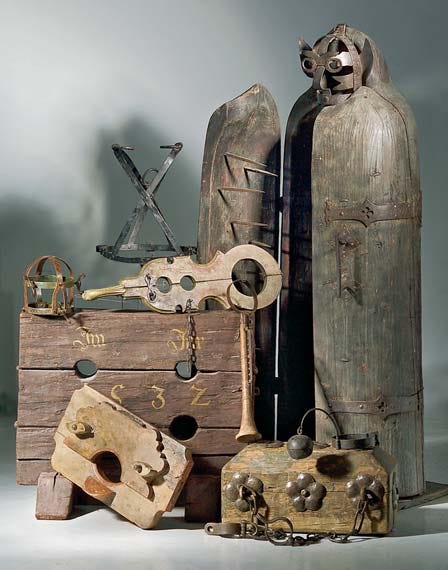
As you can probably tell, I have more time for B than A. The Whig view has many nasty associations: it was popularised through Enlightenment era universities, which relied on patronage from the new mercantile elite, who, like the Romans they idolised, were deeply invested in colonial exploitation, and in finding ways to justify it. For Victorian Britons, ogling fake medieval torture devices wasn’t a neutral act, but an ideological one - by comfortably shuddering at the barbaric past, they affirmed their present self-image as ‘civilised,’ in contrast to ‘uncivilised’ peoples elsewhere.
It’s therefore no surprise that in the present day, Elon Musk is a raging Whig (albeit an illiterate one).1 This is an instructive example, as Musk is so obviously a literal and spiritual descendant of old-style colonialists, and his notion of a free and enlightened present is as exclusionary as the apartheid he grew up in. The fact that he identifies with and holds forth about Rome, a society based on slavery, while profiting from modern slavery, and is also one of Israel’s key partners in crime, speaks to the Whig view’s compatibility with a ghoulish misanthropy.
The reason I bring up Whiggery and its consequences at the outset is that the films I want to talk about here are old, and therefore lean towards the older view of history, which characterises the Middle Ages as barbaric. By acknowledging this, I do not necessarily make a judgement on these films as works of art - actually, I would argue that a huge part of why they are so good is not in spite of their Whiggish tendencies, but because of them. As a medium, film is fundamentally about strong images and dramatic scenarios, and therefore a little sensationalism is, if anything, preferred, and the Whig view’s longevity in the popular imagination is pretty plainly connected to its sensationalist qualities.
The movies I discuss here stem from various countries and contexts, and we’ll get into the nuances of that, but they were all made in the same eleven year period, and are closely connected in terms of their foundations and subject matter, i.e. they are all very heavily about sex and death, and conceive of their settings as a chaotic, Hobbesian state of nature where men are subjected to extremes of violence and temptation, and must struggle between their bestial and spiritual natures.
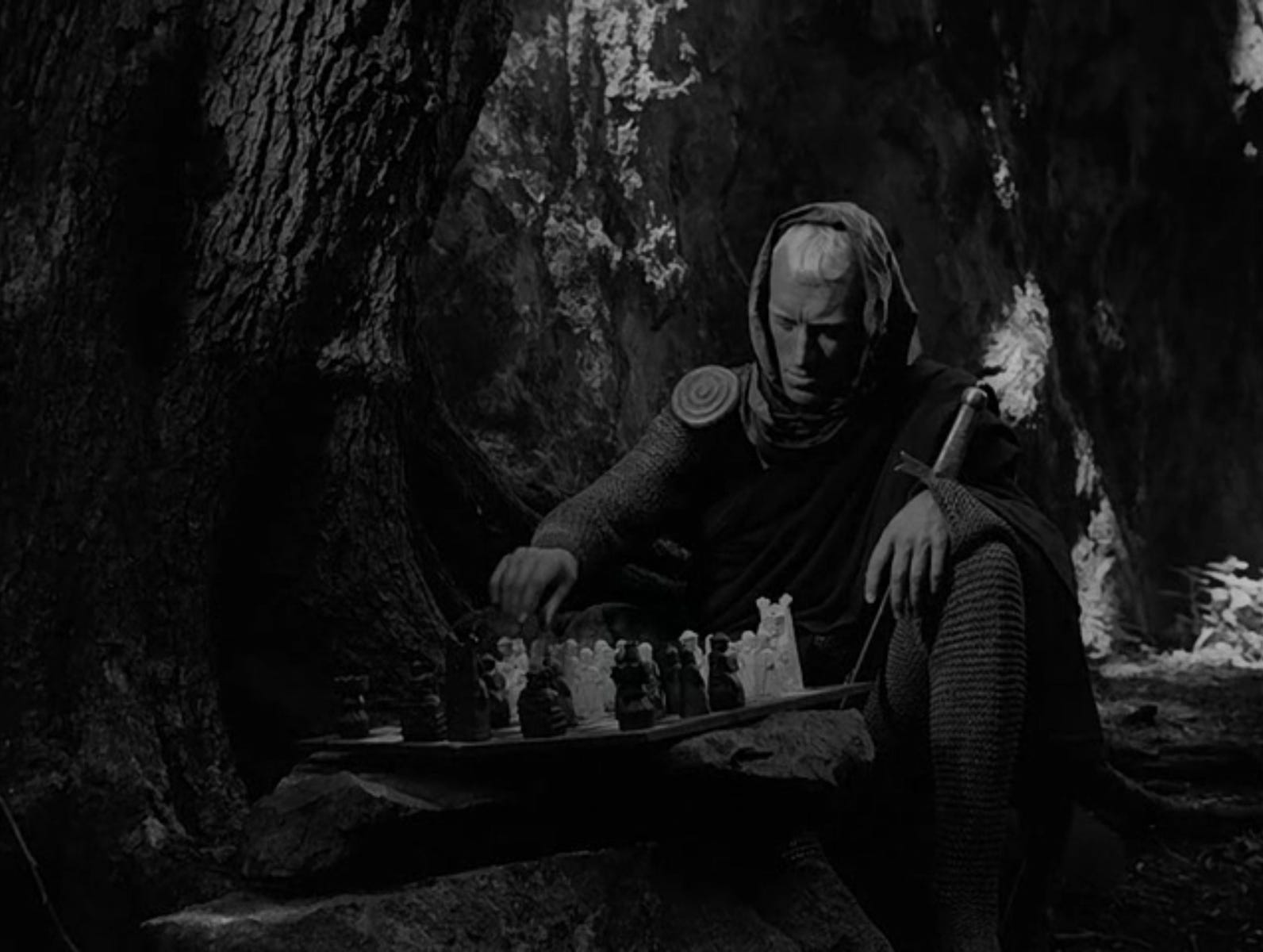
The Seventh Seal is an absolute classic in medieval cinema, but, like many a classic, most people (including me until circa three weeks ago) know only a few iconic images from it and not much else. In this case, the bit that people do know about is the opening scene, when Max von Sydow’s character - the weary crusader Antonius Block - encounters Death on a beach, and challenges him to a game of chess, with his life as the stake.
What follows, however, is a rich and lively picture of medieval life (/medieval death) reminiscent of The Canterbury Tales, as Block and a number of rag-tag companions make their way through a perilous forest towards the castle where his wife has been awaiting him for twelve years. The movie is carried by several outstanding performances:
Max von Sydow plays the character of Block with great nuance and humanity. Block is a compassionate and introspective figure, who is beset with existential anguish, and as he faces his looming death, he struggles with the question of whether or not there is a God.
Gunnar Bjornstrand brings a sardonic, almost Mifune-esque quality to the squire Jons, a dissolute rogue full of ribald songs and cynical commentary, but ultimately devoted to his master.
Bengt Ekerot’s version of the Grim Reaper is notable as a key inspiration for Terry Pratchett’s famous take on the character. Tall and thin in his black robe, with a pale and nondecript face devoid of hair, the actor is brilliantly cast, and brings a sly mischief to the iconic role. In a characteristic episode, he casually saws down a tree while the doomed man in its boughs attempts to bargain with him in vain. He has the air of a long-suffering functionary who is prepared to indulge his human victims, but only to a point.
The film crystallises around these excellent central roles, as Death and Block carry on their game of chess - and their larger game of cat and mouse - over several days, with trickery and deceptions on both sides. The story takes place during the Black Death, and is a nutritious, if occasionally anachronistic,2 soup of iconic medieval images - Bergman presents us with flagellants, crusaders, travelling minstrels, witch burnings, and the Danse Macabre, seen at the start and end of the film.
The Seventh Seal is, unsurprisingly, concerned primarily with death, and with the terror of death. Its protagonists live their lives not knowing what the next hour - let alone the next day - will bring, and cope in different ways, acting as foils for one another.
Block seeks solace in religion, and his struggle to find it is as much a theme of modern as medieval culture.3 Others distract themselves with lustful hedonism, leading to a comic subplot involving a minstrel, a blacksmith and the blacksmith’s wife, which could have been lifted straight from Chaucer.
The film in general is much funnier than you’d think, while still dealing with serious issues and ideas, and ends on a bittersweet but strangely comforting note.
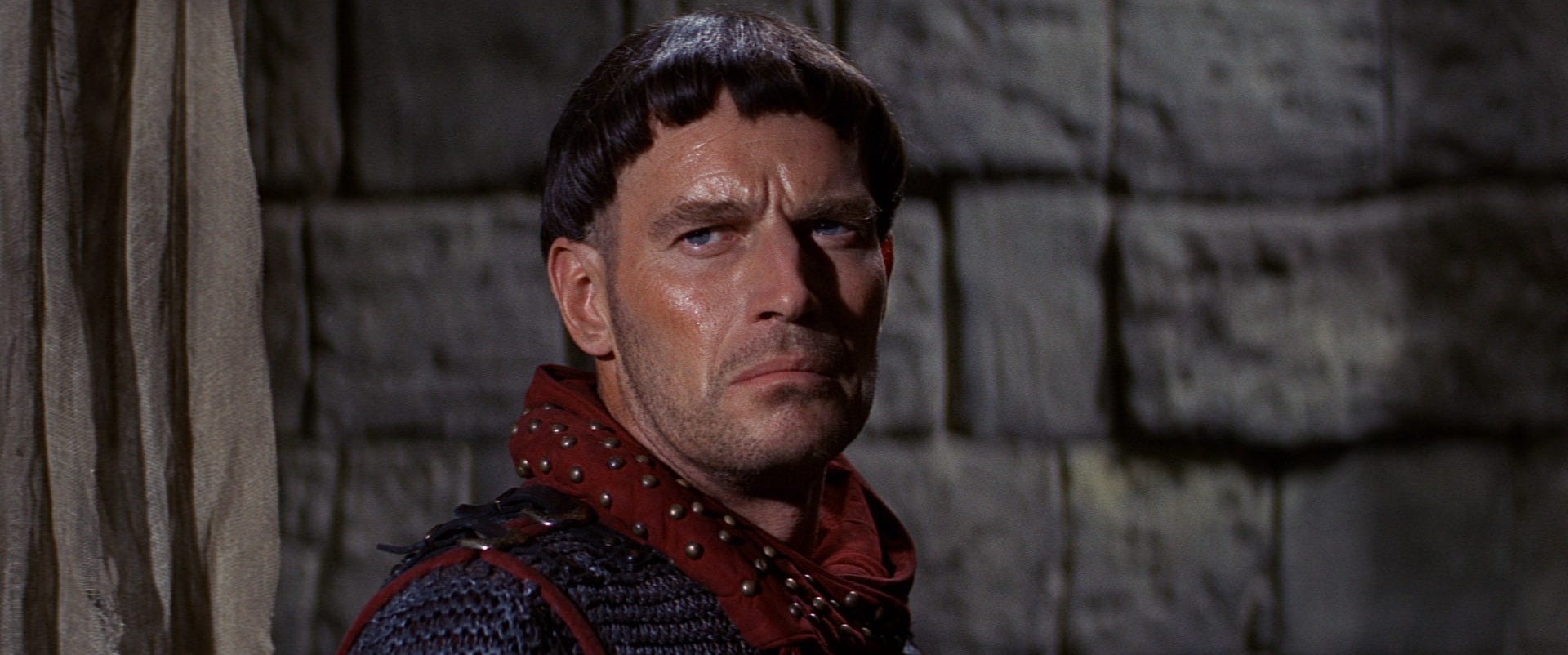
A lesser known Hollywood offering, and a box office flop, The War Lord is nonetheless a highly entertaining watch, and worth a few words for its thematic similarities to some others we will be touching on. This film was the work of Franklin J. Schaffner (best known for pop sci-fi like Planet of the Apes and The Boys From Brazil), and starred none other than Charlton Heston in its lead role.
Heston plays Chrysagon de la Creux, a Norman knight arriving in his new fief in northern France. The film is far grittier and bleaker than the more romantic American medieval films of the 1950s (e.g. Ivanhoe), and its screenplay is derived from a stage play, which gives an intimate quality to its central drama.
The War Lord revolves around Chrysagon’s infatuation with Bronwyn, a local peasant girl, who he sleeps with4 per the mythical ‘droit de seigneur,’ here depicted as a pagan custom kept alive by the local population. Unrest breaks out when he refuses to give her back, which leads the peasants to collaborate with Frisian raiders against their new lord. This is all further aggravated by Chrysagon’s contentious relationship with his slimy younger brother (a classic failson of the Theon Greyjoy type), played brilliantly by Guy Stockwell, which boils over during a dramatic siege complete with siege towers, battering rams, flaming arrows and more.
In short, they threw everything, including the kitchen sink, at The War Lord, and I have to say, it works… surprisingly well. The swampy wetlands, inscrutable locals and pagan trinkets give an almost folk horror atmosphere to the production, and Chrysagon’s austere tower house conveys the straightforward brutality of High Medieval feudalism.
It is also, however, a highly mythologised piece - obviously, there would not have been pagans anywhere in France in this century, and the film’s bizarrely iron age-looking Frisians add to the anachronism. However, The War Lord is expressing a real theme of medieval historiography - in the Middle Ages, they perceived their current era as one of enlightenment, and the result of the triumph of Christianity over ‘barbaric’ pagan ways (we’ll be circling back to this theme shortly).
This narrative is apparent in The War Lord, with Chrysagon’s decision to marry Bronwyn, rejecting the pagan custom,5 and his later reconciliation with the Frisians representing the Christian theme of forgiveness.
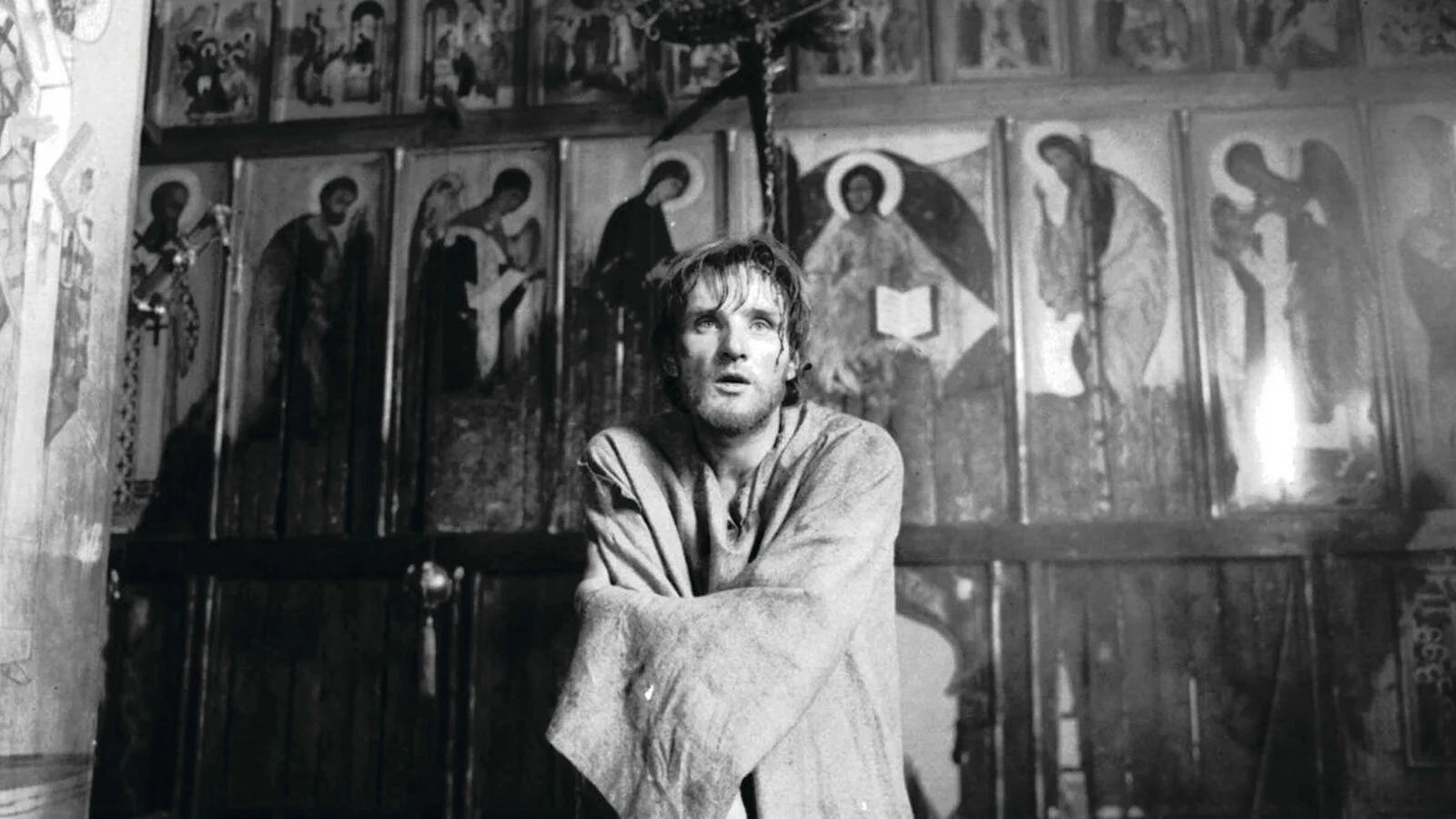
Andrei Rublev is only the second film made by the great Soviet director Andrei Tarkovsky (written about previously), but by its mesmerising quality you could easily mistake it for the work of an experienced director at the height of his powers. Of all the films discussed here, it is distinguished by its visual authenticity, and also by sheer drama and spectacle. It’s a must-watch for fans of Tarkovsky, as it features many images that would become recurring symbols in his later work (e.g. horses and hot air balloons).
In terms of genre, it’s a sort of biopic, centred on the eponymous 15th century icon painter, but also a portrait of medieval Russia more generally. Structurally, the film is divided into a number of ‘short stories’ showing various incidents in the life of the hero, played by the excellent Anatoly Solonitsyn, thereafter a frequent collaborator of Tarkovsky’s. (Both men died of lung cancer within a span of four years, and Tarkovsky’s wife later died of the same disease. Rumour has it that this was due to chemical exposure while filming Stalker.)
The film is truly epic in terms of its visuals, and captivates the viewer with a sense of scale rivalling and even surpassing many modern blockbusters. Tarkovsky appears to have built an actual medieval city for the purposes of the film, which is sacked in an apocalyptic outburst of violence by Rus and Tatar forces around the film’s midpoint. This gruesome sequence involves hundreds of actors and dozens of horsemen in authentic suits of armour, armed to the teeth with lances, bows and sabres. The terrified townsfolk bar themselves in the cathedral, only to be slaughtered when the doors are broken down, and the priest is tortured with molten lead when he refuses to give up the gold, and dragged out by horses.
In terms of spectacle, this episode is a high-point to rival any Hollywood epic, and yet it is almost surpassed in the film’s final segment, which shows the founding of a gigantic cathedral bell inscribed with an image of Saint George, with swarms of workers building the enormous clay mold and slaving away in furnaces, and finally heaving the enormous bell up on a groaning scaffold that obviously had to be physically built.
Tarkovsky famously defected from the Soviet Union in later life due to censorship of his work, and this was forecasted by the state’s reaction to Andrei Rublev - the film was initially banned for several years due to its themes of religion and artistic freedom. However, Andrei Rublev is not necessarily pro- or anti-religion. In the existentialist tradition, Andrei struggles with his faith throughout the film, and in an incident reminiscent of The War Lord’s pagan subplot, the hero is at one point tempted by a pagan girl, and subsequently looks away in shame as she is put to death by Christian fanatics.6
The film also interprets Russian history in a way that would be familiar to Soviet viewers, and not incompatible with the state ideology. In a scene showing a Passion Play, Tarkovsky draws a parallel between the suffering of Christ and that of the common people languishing under princely tyranny, and throughout there is an emphasis on class struggle.
The opening shows a jester arrested for mocking the nobility, and in later episodes violence is driven by a petty feud between two noble brothers, one of whom collaborates with Tatars to sack the other’s city, while the other has poor artisans’ eyes gouged out to stop them from going to work on his brother’s cathedral. Later, the images of industrial labour during the bell-founding plays on the Soviet self-image as a union of workers.
However, like all art that’s actually good, the film is not didactic and can be read in different ways, which clearly wasn’t compatible with the strident and inflexible politics of the Soviet Union at the time.
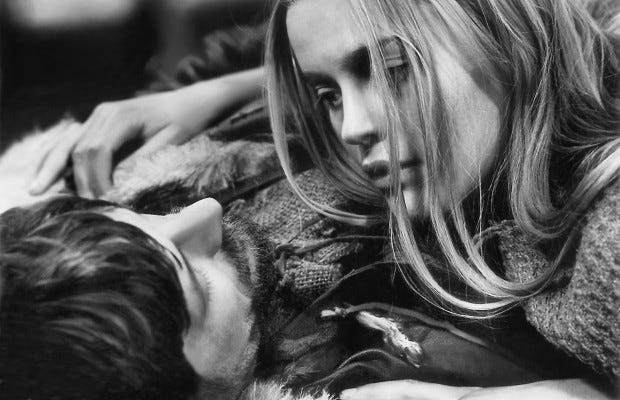
Another Soviet classic, Marketa Lazarova is often cited as the best Czech movie of all time, and, of all the films described here, it is perhaps most apocalyptic in tone and atmosphere. The film is centred on the Kozliks, a family of brutal robbers in a wintry and desolate Bohemia. The story follows their troubles with the law, and their feud with their opportunistic neighbour, Lazar, whose daughter, the eponymous Marketa, is kidnapped by the Kozliks.
In terms of class, the Kozliks are at best the pettiest of petty nobles, unkempt, dishevelled, and half-feral, with strong animal motifs. The head of the family wears a goat’s skin and horns on his head, alluding to his base and devilish nature, and his sons are often likened to the ever-present wolves that lurk beyond the pallisade and prey on travellers.
These animal motifs have an obvious sexual component, with a shocking incest subplot revealed through flashbacks, and Marketa’s abduction and rape by Micolash, Kozlik’s elder son, forming a central element of the story. As with other medieval films of this era, paganism is a strong theme, with the Kozliks as wild quasi-pagan remnants contrasted with the Christian piety of their captives, and the director plays on the conflict and attraction between these extremes.
Micolash is at once Marketa’s tormentor and protector, and this uneasy dynamic7 is paralleled in the love affair between Alexandra, Kozlik’s daughter, and a German captive who is literally called Christian. The Soviet themes of class struggle are not so apparent as in Andrei Rublev, but are surely there: the poverty and isolation of the Kozliks drives their opportunistic crime, while the absentee king’s forces sent to bring them to justice are led by a man who was once a travelling merchant, now risen to a higher rank; there’s also the contrast between the wealthy German captives and their Czech kidnappers, a dynamic with which players of Kingdom Come: Deliverance will be familiar.8
MK is not quite so spectacular as an Andrei Rublev, but with its bleak and dilapidated scenery, ethereal choral music, and the director’s skillful camera work, which often uses PoV shots to place the viewer directly in a character’s shoes, the film works a dream-like spell, bringing the viewer directly into its bleak vision of medieval life.
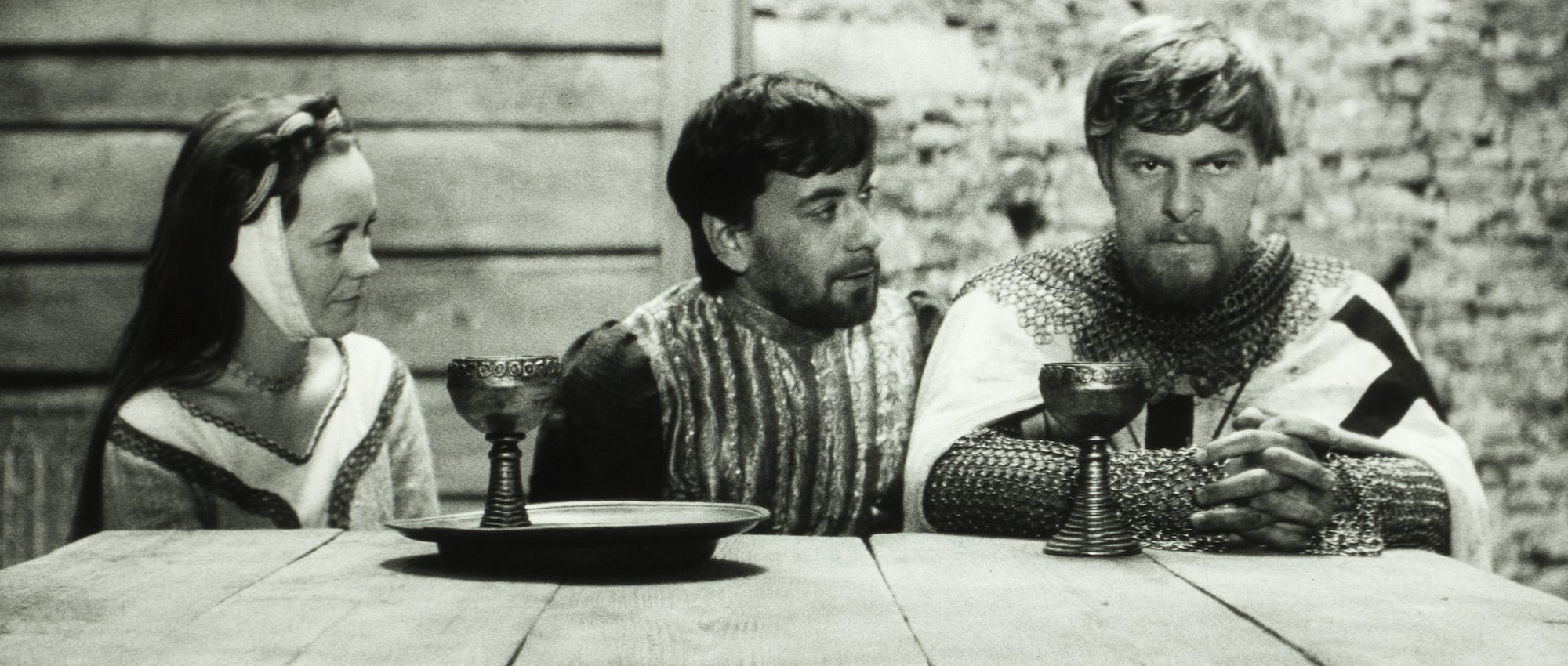
A kind of spiritual sequel to Marketa Lazarova, The Valley of the Bees was Vláčil’s second edgy, sexually charged medieval drama in as many years, and, while not as famous as its predecessor, it’s still compelling cinema and well worth a watch. It’s also the gayest film we’ll be discussing here by a large margin, which adds a whole other dimension, and deserves examination.9
(Side note: I inevitably picked up on the homoerotic subtext, then wasn’t sure whether or not I had hallucinated it, and had to dig out my old Marketa Lazarova DVD, which has an essay by film scholar Peter Hames in it. Fortunately, Hames’ essay does indeed affirm my reading of the film, and I wasn’t groundlessly headcanoning like a tumblr user circa 2011.)
TVotB begins with Ondrej, the son of a Czech lord, at his aging father’s wedding… to a child Ondrej’s own age. In a well-meaning prank, the boy hides live bats in a basket of flowers he gives to the bride, which drives his father into a rage. After throwing his son against a stone wall and leaving him mortally wounded, the father, in fear as much for his own soul as his son’s life, bargains with God, promising that if the boy lives, he will send him to join the Teutonic Knights.
(Un)fortunately for Ondrej, he does live, and is duly sent to join the Teutonic Knights, an order of ascetic, celibate warrior monks. Here, he befriends Armin, a German knight, who proceeds to act insane for the remainder of the film’s runtime.
Throughout, Armin is subtly but consistently hinted to be in love with Ondrej, though this is never outright admitted or acknowledged by either of them. The two are inseparable in their time at the Teutonic fortress together: in preparation for a fast, they lie side by side on the beach, each gripping the other’s arm while the cold waves numb their lower bodies as a precaution against lust.
In a subtle but telling moment, without a word spoken, Armin gives up his own opportunity for a last meal before the fast, giving his food instead to Ondrej. Like all of Armin’s actions, this can be read in two ways, and thus has a plausible deniability - by giving up his meal, he is affirming his fanatical devotion to the Order, yet it is also an act of self-sacrifice which betrays his care for Ondrej.
However, the two’s paths sharply diverge, with Ondrej deserting the Order, unable to live by its rules. Armin’s reaction is explosive: he feels personally betrayed and sets off in pursuit of Ondrej, vowing to return him to the Order and save his soul even if it costs him his own.
Ondrej, meanwhile, returns to his home, where he learns that his father has died, and becomes involved with his widow, Lenora.10 However, the film is equivocal as to whether Ondrej’s bid for freedom is a good thing: as in Marketa Lazarova, there is a dark and animalistic side to Ondrej that runs wild without the Order’s discipline, and he is drawn to follow in his father’s footsteps, indulging in blood sports11 and assuming the same arrogant and impulsive persona.
Armin’s reaction is like that of a jealous lover, and he arrives at Ondrej and Lenora’s wedding like a man stricken. As a wedding present, he gives Lenora sand from the Holy Land; when Ondrej fails to recognise this precious token, taking it for sand from a beach, the betrayal is complete, and tragedy becomes inevitable.
I will not spoil the ending, but suffice to say, The Valley of the Bees finishes in an unforgettable outburst of bloodshed and pathos, and its final scene is ambiguous, leaving the viewer uncertain of how to feel.
Through this overview, we can see a number of common elements running through medieval cinema in this particular era, which are still for the most part embedded in the genre to this day.
Struggles with faith are a recurring feature, present in foundational classics like The Seventh Seal and Andrei Rublev, both of which draw on the existential tradition, featuring troubled and introspective protagonists who question throughout their lives, and are never definitively answered.
Conflict between desire and the intellect is a common theme, with protagonists often struggling with temptation, and directors are often equivocal about this, preferring to let the viewer interpret and judge the characters’ actions for themselves.
Related to this, medieval films often contrast fictionalised wild and passionate pagans with repressed Christian protagonists.
Medieval dramas rely heavily on a dialectical contrast of opposites to define their characters and conflicts, such as pagan/Christian, chaste/lustful, noble/peasant, male/female, etc., and societal conflict is therefore fundamental to the genre.
An apocalyptic element is often present, whether through plague, famine, war, or all three. Like post-apocalyptic fiction, characters live in a state of fear, uncertainty and lawlessness.
To fans of George R.R. Martin (always the spectre at the feast), much of this will be sounding familiar, and all things considered, it’s no surprise that his medieval series became his magnum opus. It’s worth noting that Martin has also been a prolific sci-fi writer, who has written post-apocalyptic stories, and his atheist/agnostic worldview accords with the existentialism of medieval cinema.
While the factual foundation of the genre in history remains open for discussion, there is no denying its allure, and of course every medieval film is also a historical artifact in itself, reflecting the time and place it was made in. Andrei Rublev is intensely Russian and Soviet; Marketa Lazarova and The Valley of the Bees reflect an artistically and socially transgressive Czechoslovakia; The Seventh Seal successfully combines medieval and modern elements in its style and preoccupations.
Likes, comments and shares also help!
Touched on here by based Ghost of Giraldus, who is more knowledgeable than I and gets further into the historiography.
(such as Block’s status as a crusader, though the crusades were over by the time of the plague)
See: Dostoyevsky’s entire body of work.
(/rapes. Like many of the men in these films, he’s some kind of sex criminal for sure, though by the end he’s maybe a somewhat reformed sex criminal.)
Obviously, there’s no real evidence of pagans having such a custom either, and there’s a long-running theme of Christians projecting sexual immorality onto non-Christians (/ingroups projecting immorality onto outgroups more generally).
Very doubtful that there would have been pagans in Russia at this point. Again, we see this theme of film-makers using fictional wild pagans as a contrast with repressed Christian protagonists.
Which is, I think it’s fair to say, deeply problematic, but therefore interesting and challenging to the viewer. I would not necessarily say that MK romanticises rape, though it certainly depicts a rapist in an equivocal light. It’s kind of a Stockholm syndrome film, in which both Marketa and the viewer have a degree of empathy towards Micolash by the end - we are given to understand that he is the brute that he is because of his father’s influence, but is not totally heartless.
And KCD may well reference MK: in the second game, pagan sites very reminiscent of locations in the film can be found in the wilderness.
It’s worth noting that this was in the context of a Czechoslovakia that had decriminalised homosexuality in 1961, and that viewed a kind of sexual liberation (in the context of hetero relationships) as a socialist agenda.
Tellingly, Ondrej kneels in the same way for Lenora to help him with his armour as he did previously with Armin, cementing the equivalence of these two relationships; this goes alongside a lot of symbolism of ‘drinking’ as a metaphor for sex, so, uh… I think you can join those dots.
Ondrej’s father’s violent and reckless nature leads him to be eaten by his own dogs after an accident while hunting; the same fate befalls two other lustful characters in the film, who I can’t name without spoiling the ending.
Comments
Nothing yet. Say the first thing.
Sign in to join the conversation.