
In 1997, the Fallout series made its raucous debut, and got off to a flying start with its intro cinematic. The part that I’m interested in, for the purposes of this article, is actually only the first half of the whole three minute clip, and features not a word of spoken dialogue, but tells us everything we need to know about how things got so bad in the first place.
The game opens with the Ink Spots’ song ‘Maybe,’ which plays to the midpoint. This wistful, nostalgic tune has a sharp dissonance with the images it accompanies, which are presented as a series of pre-apocalypse commercials. Between ads for Vault-Tec bunkers and Mr Handy robots, we see grainy black and white footage of US soldiers (‘our brave boys…’) occupying the recently annexed Canada.
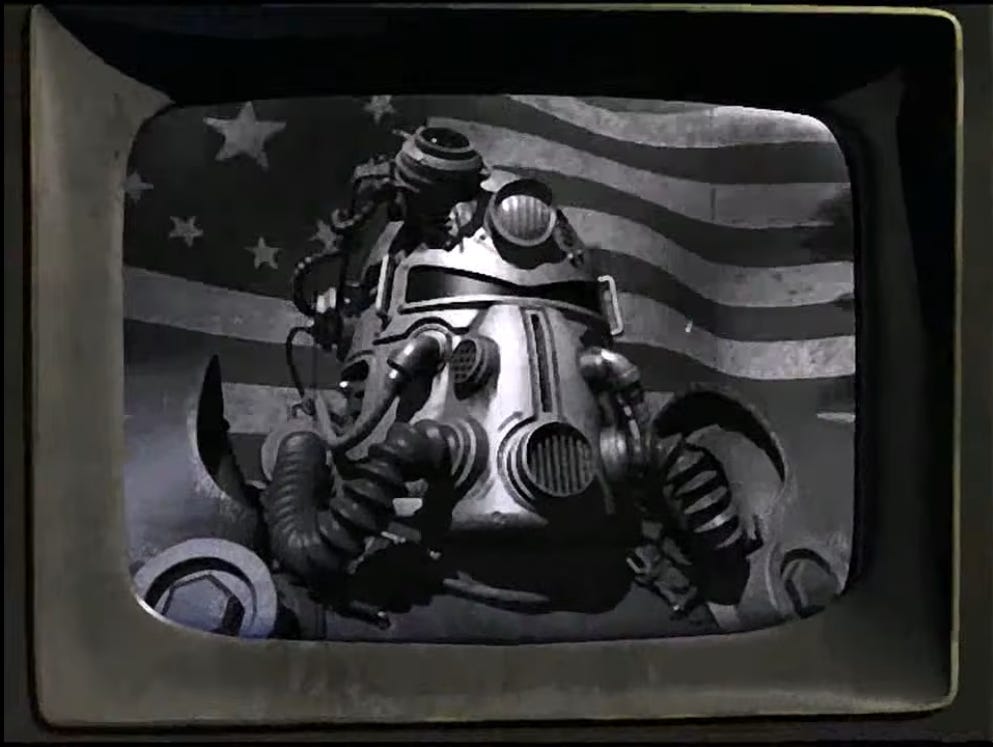
Two men in power armour appear to exchange words as they stand over a kneeling prisoner with his hands tied behind his back, then one quickly steps up to shoot him in the head. For a long moment, he lies twitching on the ground, prompting a second shot to finish him off.
Looking up, the soldier notices the camera recording him, but shows no anxiety at having been caught in the act. He cheerfully waves, and the image is soon replaced by a call to action - ‘Buy War Bonds.’ The next spot is an ad for a Corvega sports car.
The commercials continue, and gradually the camera pans out, showing that the old broadcast is playing on a TV in the burnt-out husk of a city. The music echoes in the desolation, stutters, and finally cuts out, giving way to silence.
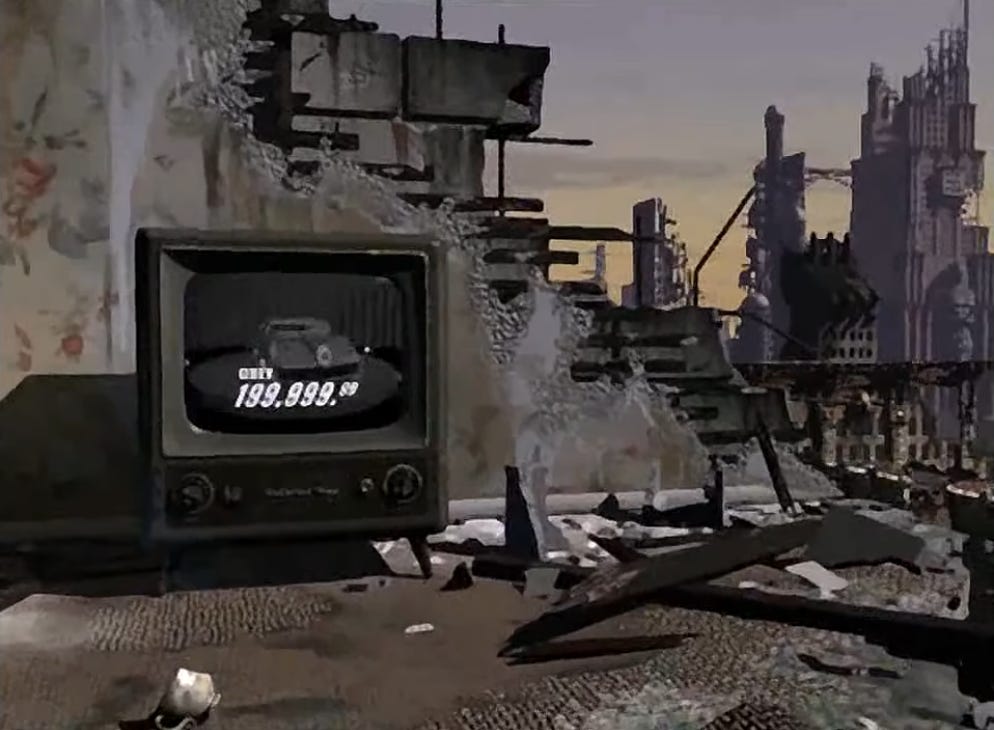
With very few words (and no dialogue), Fallout tells us everything we need to know about pre-war America. We have the sense of a society totally inured to violence, where jingoism has run riot and made the value of a human life trivial.
With this short clip, nuclear war no longer seems like a far-fetched premise, but an inevitability for such a society.
The fact that Fallout begins with this pre-apocalyptic flashback, before the narration even gets into the nuclear war, immediately establishes the series’ preoccupation with the past. As Ulysses would tell us (at great length), we must know history to understand the present, and therefore we have to understand what America was like before the Great War to understand how it is after.
This central concern gives the name of the series a double-meaning - in today’s English, the word fallout has come to mean not just literal nuclear fallout, but the lingering consequences of any destructive event. As we’ll see, Fallout as a series is less about literal radioactive fallout, and more about the psychological effects of past violence, and the lessons that survivors learn (or fail to learn) from it.
The sense of a belligerent pre-war America headed for disaster is everywhere in the original Fallout games, which established the visual language of the series as a whole. Aggressive art-deco faces glower from the ruins of Necropolis, and the Enclave’s sinister oil rig fortress is similarly adorned. In later games, female figures with classical helmets evoke furies and valkyries, while forbidding, hyper-masculine faces loom from the rubble of D.C.
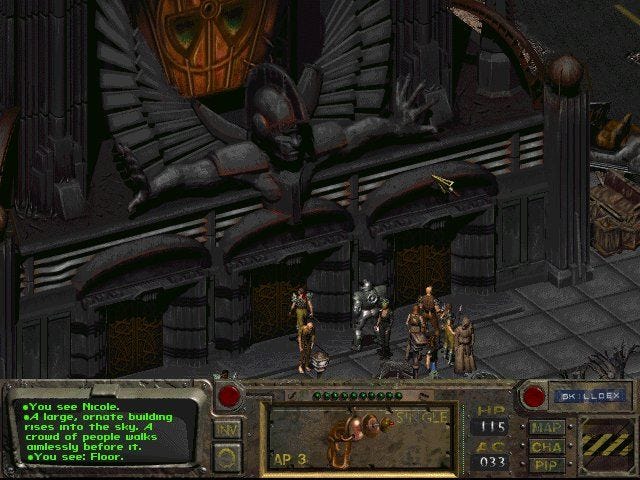
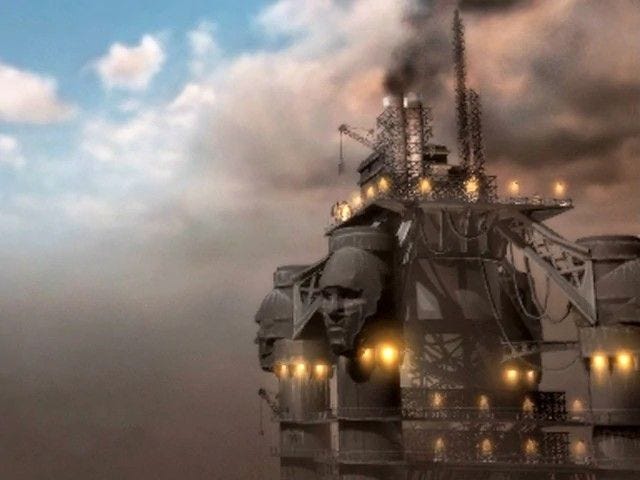
There is something distinctly off about the aesthetics of pre-war America, and we can infer that these strange architectural traditions must have developed during the decades-long Resource Wars, which heralded the atomic Great War.
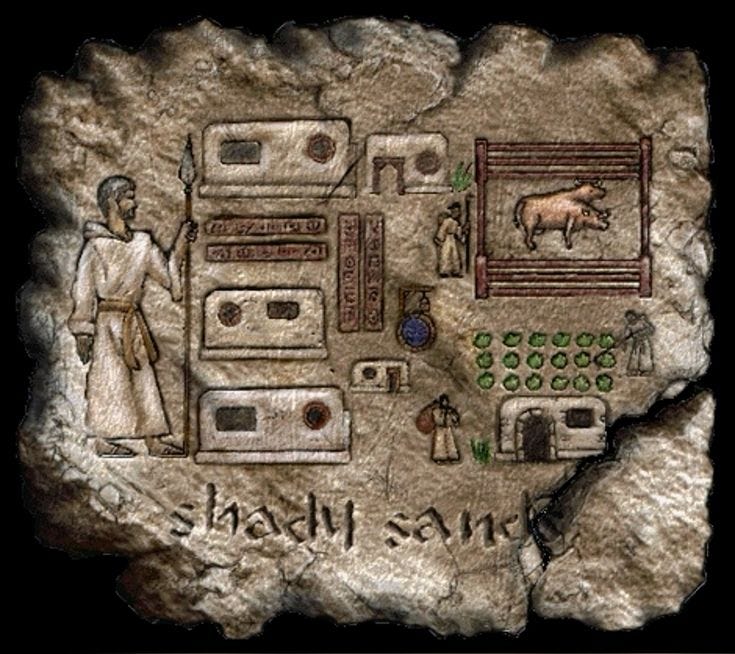
It’s suggestive that no such faces can be found anywhere in the post-war architecture of the wasteland - the simple adobe buildings of Shady Sands show a sharp break in continuity with pre-war America, and sure enough, its fair-minded farming community has little in common with the warlike spirit of old.
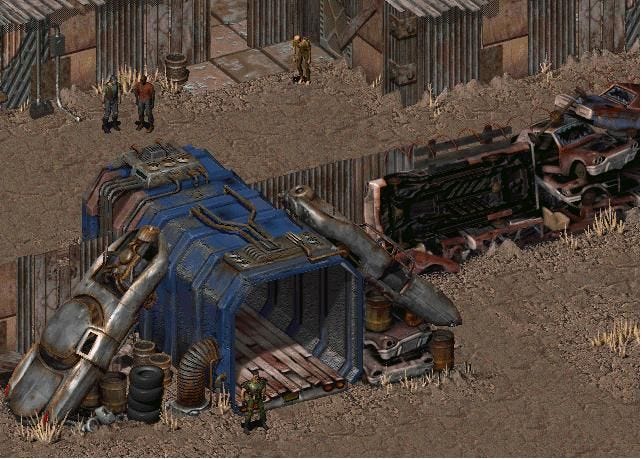
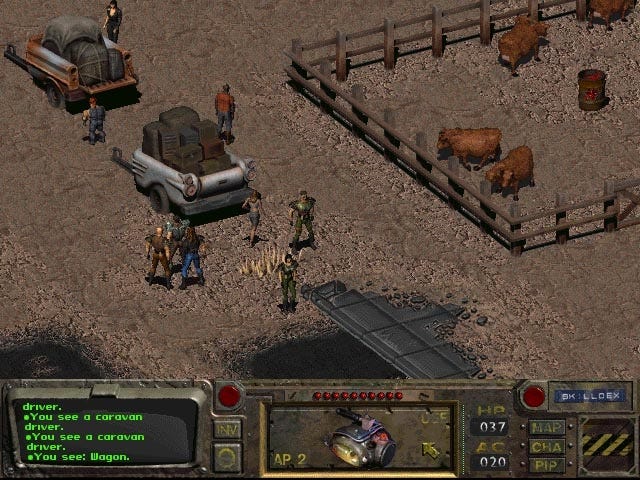
But the further we get from Shady Sands, the more Old World remnants we encounter. To the south is Junktown, an outpost ringed by a wall of rusting pre-war cars, just like those we see in the intro commercials. Further on lies the Hub, the trading centre of post-nuclear California, where grizzled merchants and caravan hands shelter in pre-war ruins of dark stone, hauling their baggage on wagons made from old car parts.
As the player continues to explore the desolation of the south, the game gradually assumes more and more of a gothic character. Undead ghouls lurk in the burned-out ruins of Bakersfield (now known as Necropolis), and the Super Mutants that occupy their water shed can only have been inspired by Frankenstein’s monster. What once was Los Angeles is now the Boneyard, and fittingly, the story ends with a battle under a deco-punk cathedral.1 Death and decay are everywhere.
In gothic stories, the past often intrudes on the present, and accordingly, when the player goes looking for the source of the mutants terrorising the wasteland, the trail doesn’t lead to some cave in the wilderness, but to a high-tech pre-war facility, where humans are being deliberately exposed to a man-made virus.
As we learn, the FEV (forced evolution virus) was being used before the war to turn humans into super-soldiers, but post-war, the same virus transformed an infected survivor into a unique mutant called the Master. Over time, he learned to physically absorb human beings, including their conscious minds and memories, and came to believe that by this method, he could combine all humans into a harmonious collective that would never go to war again.
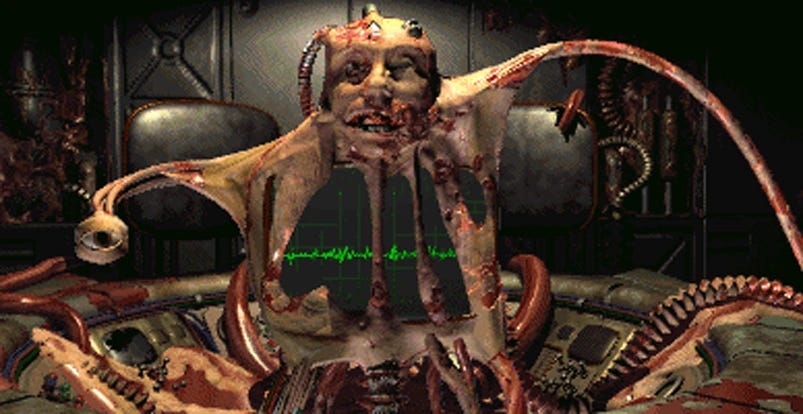
The Master’s core belief - that humans are fundamentally destructive, and have to be forced to cooperate - is a response to the violent history we see in the intro cinematic, but it is also a continuation of it. The nuclear war is seen as proof that humans are essentially bad, and this conclusion becomes a self-fulfilling prophecy, justifying further acts of violence. The Master’s pessimistic idea about human nature is a constant refrain throughout the series, and again and again, we’re shown variations of where this premise leads.
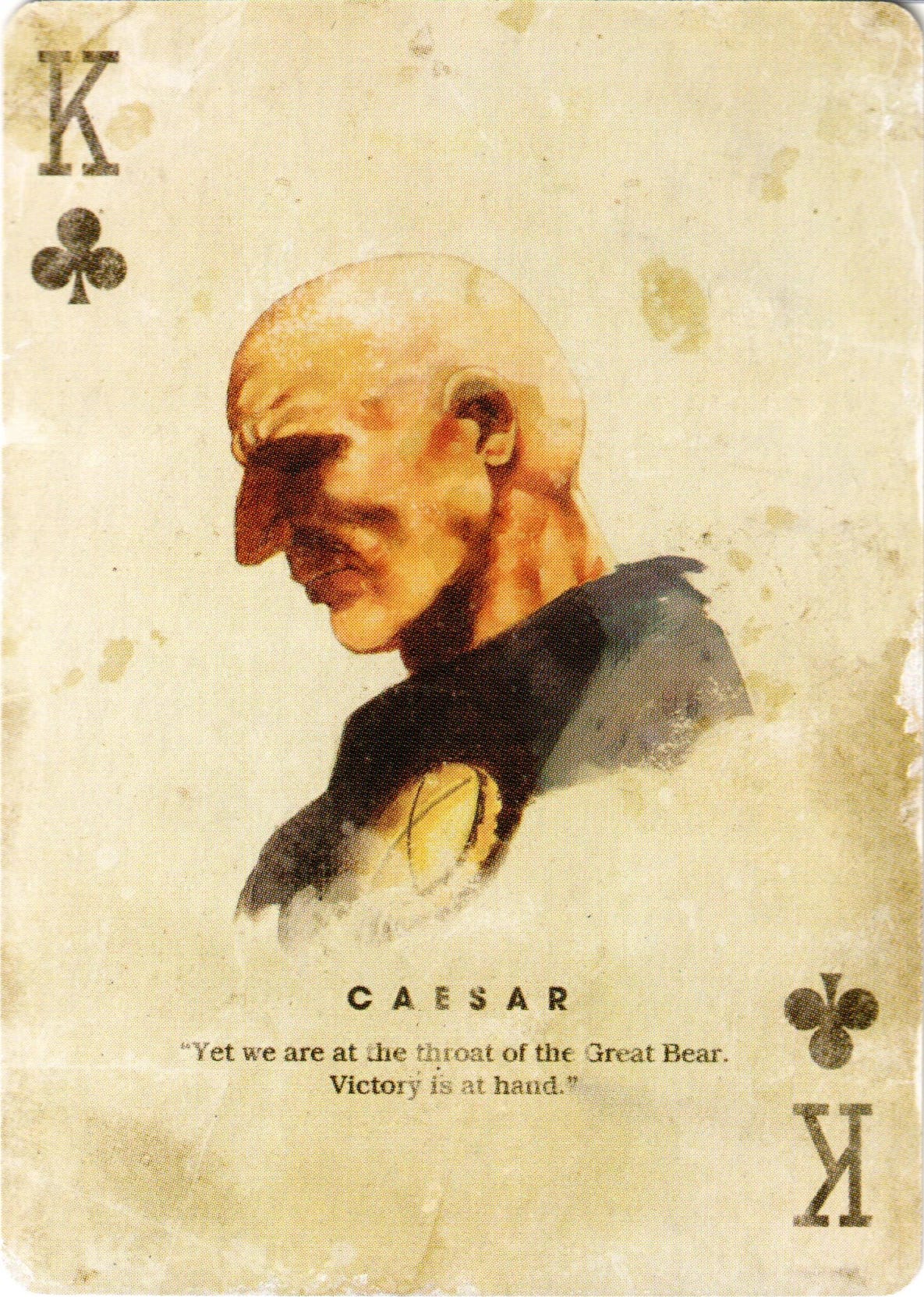
New Vegas’ Caesar imposes a brutal regime on everyone under his rule, using terror tactics to make independent tribes into subjects and slaves. According to his rhetoric, this is the only way to restore order and civility to the wasteland.
Dead Money’s Father Elijah uses prisoners to scout out the Sierra Madre casino, and forces them to wear explosive collars, believing that cooperation is impossible without the threat of death.
In the TV series, Hank MacLean forces mind-control implants on prisoners, wiping their memories and making them into docile, perpetually happy slaves, which he claims will bring about a peaceful utopia.
If Fallout writers love one thing, it is a talky villain, so of course all of these villains get to make their case, and the best of them manage to do so in a sort of plausible way. It’s credible that they all believe what they are saying to some degree, or else are trying to convince themselves as much as the protagonist.
However, we also learn just enough to know that each villain (with the exception of the Master2) also has more self-serving motives, which their gloomy verdicts on human nature just so happen to justify pursuing.
Caesar, as a bookish prisoner of a warrior tribe, started down his path out of pure self-preservation, but as time went on, it also became about ego and the thrill of power. His intellectual justifications are very woolly and seat-of-the-pants if looked at closely, and the sense is that these are post-hoc explanations for what he was already doing. His lack of a succession plan is a clear hint that his whole project isn’t about a long-term civilising mission: it’s about him.
Elijah is perfectly candid about his obsession with the wealth and technology of the Sierra Madre. He dreams of building (and ruling) a whole nation via exploding collars, military holograms and [checks notes] vending machines, but, as Dog/God (a Super Mutant with a split personality) tells the player, Elijah’s real motive lies in his old age and looming mortality - he knows that he does not have long left, and is desperate to leave some kind of legacy that will outlive him.
Hank’s wider agenda remains unclear, although it seems that he is in league with the Enclave (the remnants of the US government), which makes sense in terms of his patriotic rhetoric and his hostility to the NCR.3 His true motive is perhaps best revealed in a scene where he has Biff, a brainwashed NCR Ranger, acting as a servant and waiting on him at the dinner table, though he is perfectly capable of pouring his own drinks. Hank simply likes having power over others, and everything else flows from that.
It’s also worth noting that all of these villains’ stated beliefs are placed in doubt by their respective narratives. Caesar claims that conquest and enslavement are necessary to restore civility; meanwhile, the NCR - which reviles slavery - surpasses the Legion in prosperity, territory and above all stability.
Similarly, Elijah’s belief that greed will inevitably cause his captive scouts to turn on each other is really a reflection of his own character, and is contradicted by the cooperation between the player, Christine, and even Dog/God,4 who can all peacefully part ways in the end, leaving most of the treasure behind.
Hank’s claim that the Legion will inevitably destroy New Vegas if not for his technology is yet to be resolved, but is thrown into doubt by the NCR’s previous victories over the Legion at Hoover Dam.
Having started with a look at the dystopian character of pre-apocalyptic America, it’s also worth looking at how Fallout imagines such a society might survive and seek to reproduce itself in the post-apocalypse.
The Enclave is the post-war remnant of the US government, which puts its power armoured troops in a direct lineage with the anonymous war criminals from Fallout 1’s intro. Appropriately, the faction is therefore a total basket case, which makes the Legion look reasonable by comparison. Led in Fallout 2 by a sleazy old man named Dick Richardson,5 the Enclave is American exceptionalism on steroids, and has achieved levels of racism previously thought impossible.
To the Enclave, everyone outside their own ‘pure human’ lineage is a mutant, and therefore a threat to the purity of their race. As such, they plan to wipe out 99% of the human species with a modified version of the FEV, and to this end, they send out squads of soldiers to abduct wastelanders for human experimentation, killing whoever resists.
In Fallout 2’s introduction, they are shown machine-gunning a family of Vault dwellers, and in the player’s first encounter with their troops in the desert, we see them wipe out another family, not even sparing the children. Meanwhile, in the TV series, our introduction to the Enclave shows their scientists tossing newborn puppies under a certain weight into an incinerator.6
Whereas the Master is on some level a tragic figure, who wished for a better future but learned the wrong lessons from history, the Enclave simply hasn’t learned anything at all, and doesn’t want to. To them, the guys invading countries, shooting bound prisoners, and using nuclear weapons had the right idea, but just didn’t do it efficiently enough.
Fittingly, the designs for the Enclave soldiers and vehicles are inspired not by anything human, but by predatory insects: their power armour has a much more curvy, organic look than the angular suits we see in the first game, with a rounded carapace around the shoulders, bug-like eyes, and a breathing apparatus reminding us of an insect’s mouthparts.
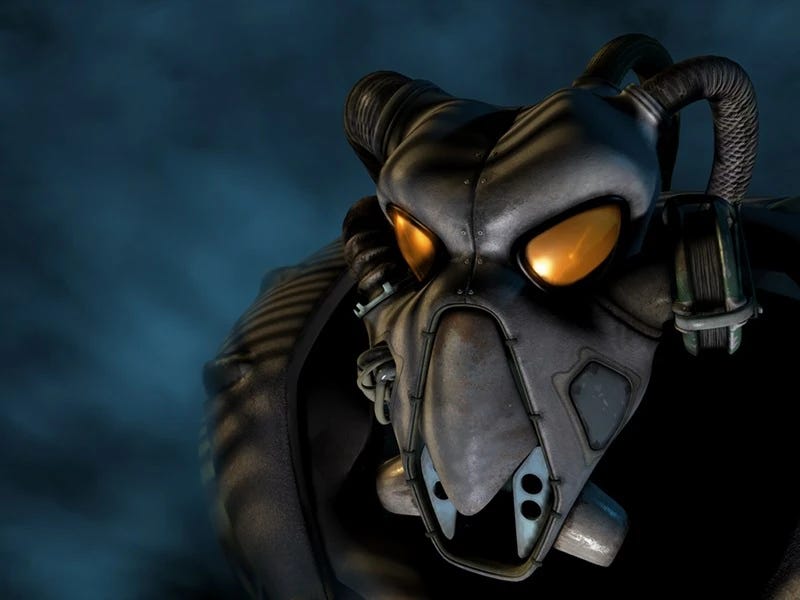
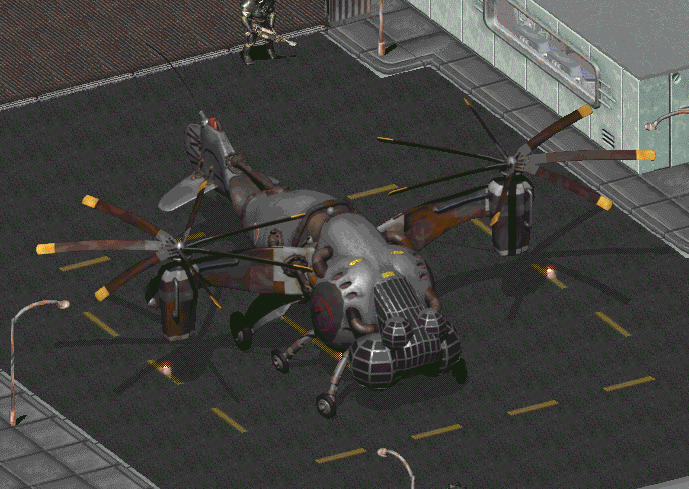
Similarly, their vertibird transports take after dragonflies, with tinted glass windows like compound eyes, landing gear like legs, narrow tails and wide wings. This insect theme hints at the cold, social Darwinist character of the Enclave - they are all hindbrain, and it’s hard to feel any sense of common humanity with them.
The Enclave would claim to be the only population of ‘pure humans’ left in the world, yet their insect aesthetics and reptile-brained worldview tells us how little that actually means. Ironically, their sapient Deathclaw slaves are shown to be gentler, wiser and more ‘human’ in a sense than their masters.
Fallout 3 would build on this irony, depicting the Enclave’s new leader as a super-computer rather than a human,7 and of course Frank Horrigan, the Enclave’s top soldier in 2, is a full-blown Super Mutant who accuses everyone else of being ‘muties.’
Before concluding, I would like to mention another post-apocalyptic story which is written from the perspective of someone who might as well have been a Fallout villain. This is a man who combines pessimism, misanthropy, and a selfish pragmatism. He makes the same essential assumptions about human nature as the likes of Caesar, and draws similar conclusions. He is not a Fallout villain, but he’s the platonic ideal of one.
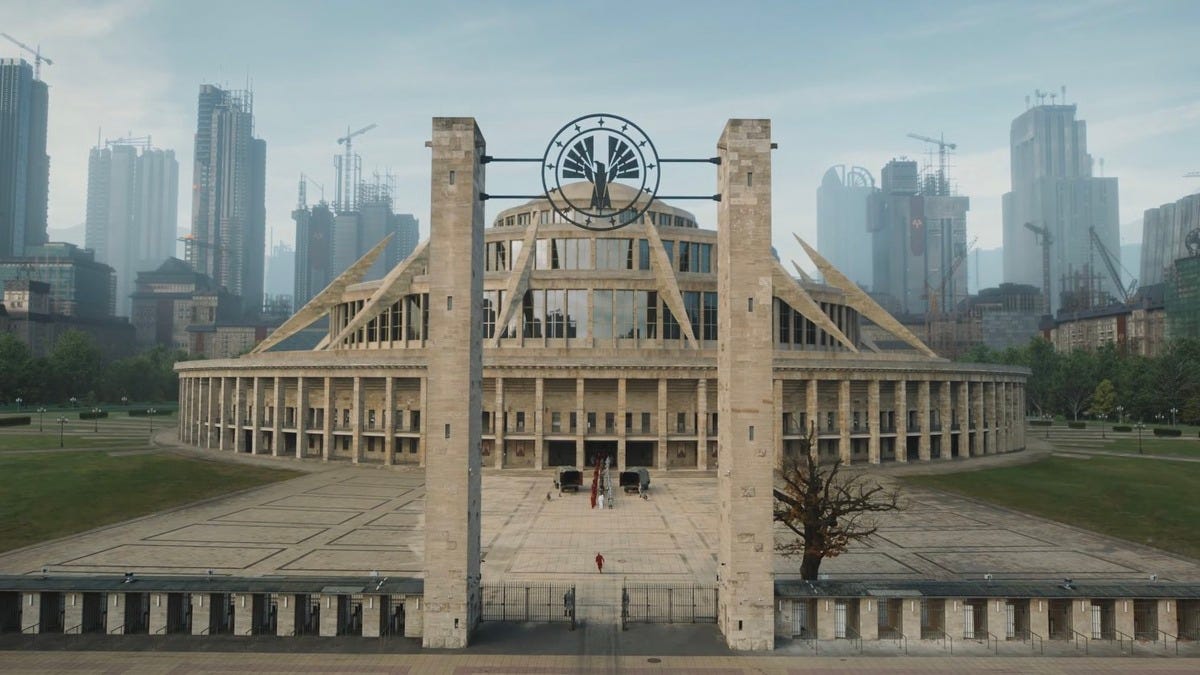
The Ballad of Songbirds and Snakes, the first Hunger Games prequel, is a kind of villain bildungsroman, following the future President Snow in his early years. Snow’s society, the Capitol, is pretty much what you would get if you combined the Enclave8 with Caesar’s Legion,9 which is to say that it’s a total horror show, complete with mad science, blood sports, rampant militarism, and industrial-strength racism.10
The book begins with several epigrams, first and foremost one from Hobbes’ Leviathan:
Hereby it is manifest, that during the time men live without a common Power to keep them all in awe, they are in that condition which is called Warre: and such a warre, as is of every man, against every man.
This gloomy polemic by Hobbes, who was writing in support of absolute monarchy, hangs constantly over the narrative. Snow’s mentor, the military scientist Doctor Gaul,11 seeks to model a Hobbesian state of nature - the ‘war of all against all’ - in the arena, believing that this is the natural state of mankind, and that the Capitol people mustn’t be allowed to forget it.
The Games are a symbolic collective punishment of the District people, and a ritual rallying the Capitol people together against them. For Doctor Gaul, though, they are also just good politics - the Capitol’s continued brutality towards the District people in the Games is itself a pretext for further oppression, to stop the Districts from retaliating. In this way, the Capitol can extend its tyrannical rule indefinitely, and justify anything in the name of order and security.
Although the young Snow’s chauvinist, de-facto racist12 beliefs are challenged when he becomes involved with a District girl, Gaul’s ideology is seductive to him - his early experiences of hunger, poverty and fear have left him with a jaded view of his fellow man, which he ultimately embraces, only briefly entertaining the alternative.
Snow has his ideological notions, but in the end, as with Caesar, it is self-interest that clinches it - when an exiled Snow sees an opportunity to worm his way back into the Capitol elite by selling out a District friend, he promptly takes it, and stands guard while the sentence is carried out. From this point on, his fate is pretty much sealed, and by the end of the novel he has shot and possibly killed the girl he once thought of running away with.
The film adaptation is worth a look, but it is outclassed by the novel,13 which I would heartily recommend, even those who are not traditionally Hunger Games fans - third person/past tense looks good on Suzanne Collins, and she makes the young Snow a horrible yet fascinating figure, reprehensible, but unsettlingly human.
If a Fallout villain believes that cooperation is impossible without coercion, then what does a Fallout hero believe? The answer, of course, is ‘anything you want them to’ - you, after all, are the player, and, assuming we’re not playing Fallout 4, this is your character to define, and your word is the word of God. You yourself might choose to roleplay as a Fallout villain, and ally with the likes of Caesar, if you so wish.
But if a Fallout hero is a rejection of a Fallout villain’s philosophy, then the moral lessons of the series are timeless, simple, but nonetheless important:
We do not have to assume the worst of everybody! Cooperation is possible, even in the wasteland! Golden Rule, motherfucker!
New Vegas is also pretty steeped in gothic motifs: the Ghost People and hologram ghosts of the Sierra Madre; House’s unnatural immortality, haunted house casino, and life-support pod like a vampire’s sarcophagus; the pre-war Big Mountain scientists intruding on the present. See also: Cooper Howard, undead cowboy extraordinaire.
Who is no longer enough of an individual to be selfish, and is also honest enough to straight-up die if you tell him that FEV mutants are infertile; this information fatally undermines his plan to create a new superhuman race.
(whose success made his ‘civilising mission’ obsolete)
And Dean Domino, technically, but I felt ethically obligated to shoot the son of a bitch.
(Who is, suitably, a dick.)
This is the backstory of CX-404, now Cooper Howard’s dog. 404 was supposed to be disposed of by Wilzig, an Enclave scientist, who instead hid and protected her at risk to himself. This is very likely a nod to the backstory of Lonesome Road’s ED-E, an Enclave robot with a dog-like persona who was similarly protected by his creator in defiance of orders.
Brilliantly voiced by Malcolm McDowell.
(American, high-tech, giga-fascist)
(Romanesque, gladiatorial, also giga-fascist)
Whose name is suggestive in the context of Fallout - Caesar is very into The Gallic War, which was his playbook for uniting the tribes of Arizona under his rule.
In the present-day sense, the Capitol and Districts are both multi-ethnic, but the language used by Capitol people throughout the book, which constantly compares District people to animals and portrays them as naturally dim-witted and barbaric, is obviously supposed to resemble racism.
While Tom Blyth plays Snow very well, one of the areas where the film falls short is the loss of his internal thoughts and observations, which are often very funny and revealing. One of the best things about the novel is that Snow is comically nasty and two-faced throughout, and is always looking for opportunities to ingratiate himself with people he inwardly despises.
Comments
Nothing yet. Say the first thing.
Sign in to join the conversation.