
In the last few days we have been seeing more and more online discussions about a potential near future invasion of Iran. Let’s just put that to rest. It will NOT happen. I assume much of this chit chat comes from American uber patriots who think why can’t the US stage Desert Storm v2?
This Substack is reader-supported. To receive new posts and support my work, consider becoming a free or paid subscriber.
First let’s have a quick look at Desert Storm. The 1991 Desert Storm campaign was considered a masterclass in logistics and staging. What generally goes unspoken is that it was UNCONTESTED staging. Coalition forces spent months quietly building up massive arsenals in Saudi Arabia and Kuwait without any realistic fear of strategic disruption or long range strikes. A modern invasion of Iran could never replicate this environment. The staging process would be intensely contested from day one. Iranian ballistic missiles, cruise missiles, and swarms of loitering munitions would actively target any concentration of troops, ships, or supplies, turning the necessary buildup into a deadly and continuous target practice for the defender.
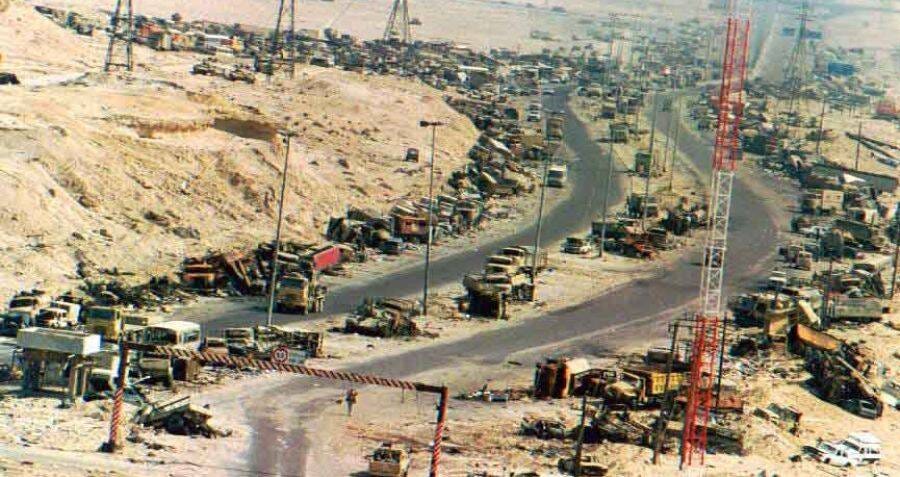
Those arguing that an invasion is imminent point to the steady stream of US Galaxy planes flying into the Gulf, dozens of them. Let’s put that into context. ONE US military Sealift cargo ship carries as much as between 200 and 400 Galaxies. For Desert Storm there were 170 such Sealift deliveries, perhaps equivelent to 50,000 Galaxy flights. Not a typo - fifty thousand! And on top, hundreds of Galaxies as well delivering all manner of supplies.
Then there is the weather. The actual Desert Storm offensive began in the middle of winter on January 17, 1991. Nice sunny, pleasant, fighting weather, temperatures in the 15 to 20 degree Celsius range. July in the Gulf is a little bit warmer than that… Normal daily highs above 40, sometimes far above. Will the US Army be including A/C units in the invasion equipment?
The geography is also basically the opposite. Where Iraq presented a completely flat terrain, that allowed for perfect maneuver warfare, Iran is a natural fortress, surrounded by mountains. Not to mention that Iran is four times as large as Iraq, and with a population five times larger than Iraq 1991.
Compounding these staging nightmares is the loss of critical regional infrastructure. The United States Fifth Fleet headquarters in Bahrain, which served as the vital command and control hub for the Persian Gulf for decades, is now largely out of action. Its extreme proximity to the Iranian coast makes it entirely indefensible against a saturation missile strike. Without Bahrain, the Navy must rely on distant, less efficient command centers or disperse its forces across the Indian Ocean, severely complicating the coordination of a massive naval and amphibious operation.
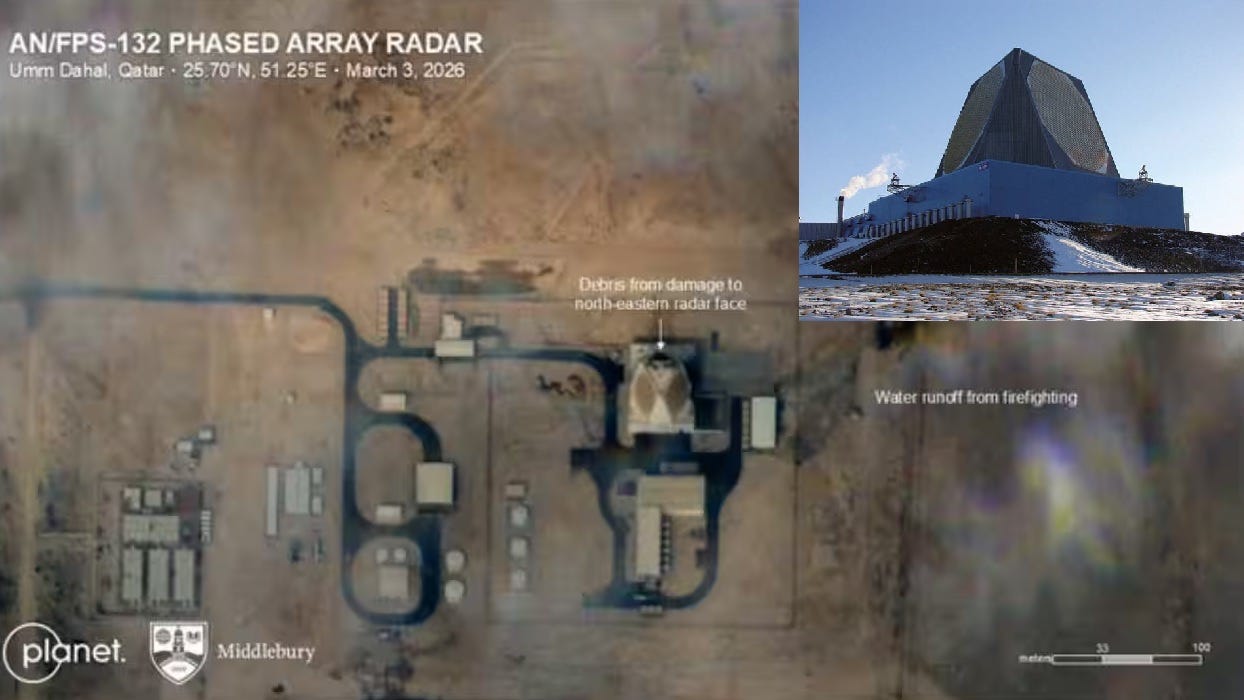
And generally ignored in western narratives of Desert Storm was the role likely paid by treason against Saddam. It is believed many Iraqi generals were paid off and didn’t present battle. While the same cannot be discounted in Iran, it seems likely that potentially treasonous military leaders would have been discovered in the opening days of the war starting on February 28.
Does anyone really believe Iran would sit idly by while the US spent months building up a sufficient force to attack them? Iran has access to Chinese and Russian ISR, so they will know full well if there is a large invasion force being prepared and where. And given the current critically low level of US air defense systems, much of that force would be under constant attack.
So, yes, the US could potentially carry out small scale incursions. But Desert Storm involved 540,000 troops. Anything even remotely similar is impossible and any such talk is either uninformed, delusional or simply clickbait.
This Substack is reader-supported. To receive new posts and support my work, consider becoming a free or paid subscriber.
Comments
Nothing yet. Say the first thing.
Sign in to join the conversation.