
Sumarmál is the fifth-holiday of Asatru, and the May holiday. It’s probably better known as “Mayday”. Nornanótt was the business end of European fire-rituals, and Sumarnál, is the party end. As such, this makes this article a little slimmer, as most of the history stuff was actually in the Nornanótt article. There’s still elements of ritual purification, but these have become less protective and more offensive: living properly. May is a time to gather with your folk, and live a full life. That includes having fun.
Because Nornanótt precedes Sumarmál, the official date of Sumarmál is at the beginning of May, although as usual the observed date is the third-Saturday of the month.
Roman Stuff
The Roman holidays of FLORALIA and MAIOVMA were celebrated at the end of April and into the beginning of May. FLORALIA was a very old Italic festivity, in honor of the Goddess FLORA. MAIOVMA, meanwhile, was an imported Greek festivity involving Dionysus and Aphrodite, and it’s actually where we get the word “orgy” from, which comes from the Greek “ὄργῐᾰ”, meaning “rites, secret or otherwise; initiation”. The orgia weren’t actually sexual in nature, but were rather ecstatic ritual festivities (think the “Jesus is in the room now!” stuff; Pentecostalism, 7th-Day Adventism, snake handling). The word came to mean “group-sex” in the 1500s in France, because that’s what the clergy of France were doing late at night (the orgia took place at night) in the 1500s, which was jocularly compared to ancient religious rites.
Neither of these Roman festivals seem to be particularly related to the European tradition of “religioveterinaration followed by festivity”, however. FLORALIA is specifically about worshiping the Goddess FLORA, who was associated with flowers, and MAIOVMA is actually an imported Greek holiday related to the cult of Dionysus. Despite general “summer” themes to both, and claims by early-modern peoples in the 1400s, they aren’t really related to what we’re talking about here (very similar to Valentines Day, in that regard).
But then, this entire three-month stretch in the ancient world was defined by the movements of animals and natural phenomena, not the actual calendar, so the “Nornanótt-Sumarmál-Miðsumar” trinity here is a bit more artificially separated than people in the ancient world would recognize. It isn’t unto the late Medieval period that we really see this stretch of time breakup into more discrete chunks
May things
The two most famous May traditions are maypoles and the may queen.
Maypoles
These first show up in the early 1200s in the British Isles. So, for those who don’t know, what you’re supposed to do is do a fun little dance around the maypole (traditionally men go one way while women go the other, each in a circle), and as you go the ribbon that you’re holding wraps around the pole, and everyone’s ribbons together make a cute little pattern on the pole. As this tradition spread out of the British Isles, the ribbons were lost, and it just became a big decorated pole that was erected.
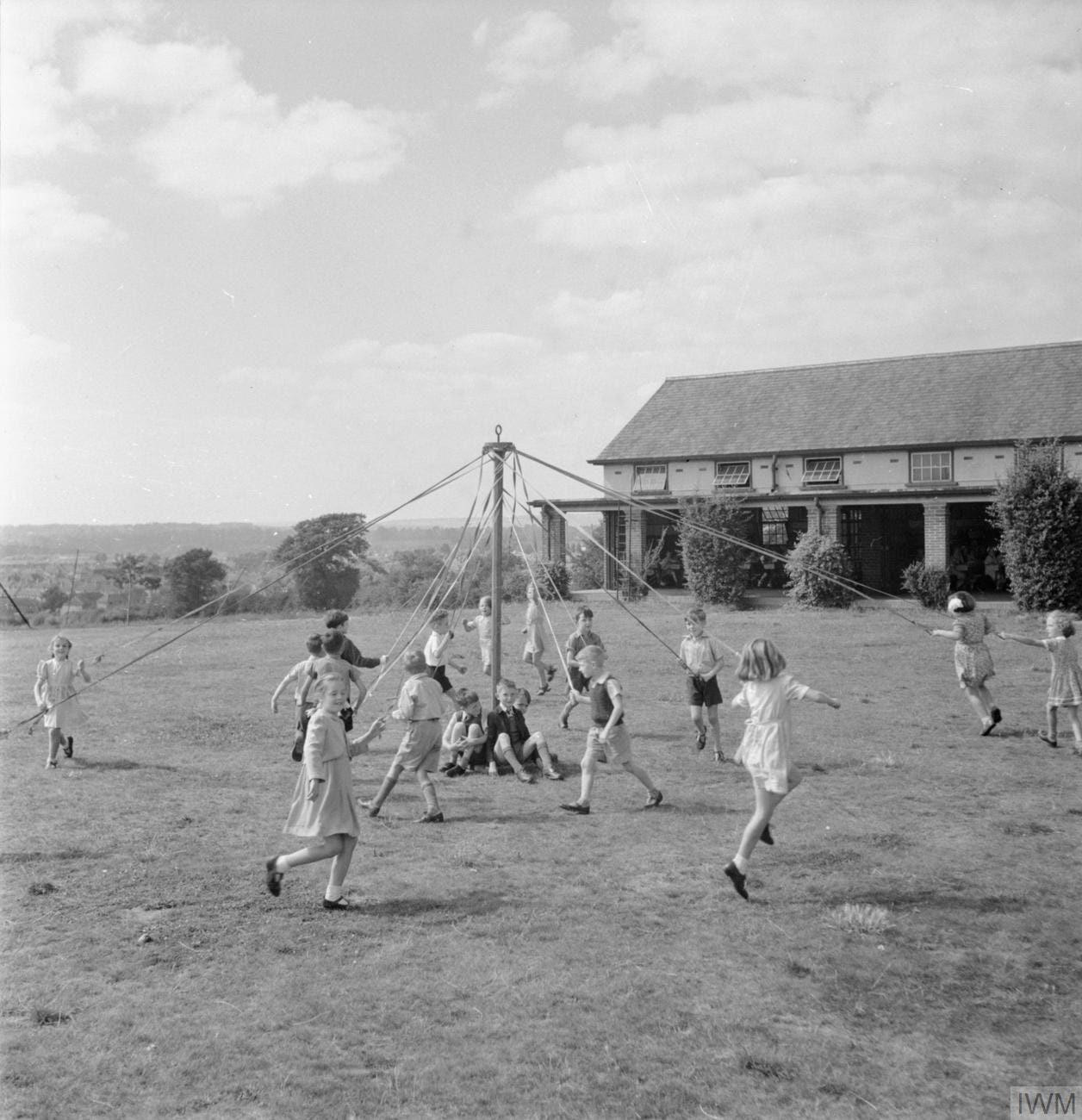
As this spread throughout Europe, it becomes increasingly attached to Christian celebrations of Shavuot, Napoleon, Socialism and other random things. The maypole typically has something on top, but what that is varies pretty wildly. It’s usually floral in nature, however.
May Queen
This also first appears to us in the UK. In short, a woman (“the prettiest in the land”, generally) is made the Queen of May, and paraded and lauded. She then does some ritualisms (which vary by locality) culminating in May Day, or summer, beginning. She may or may not be given a throne, or have a male companion who is generally associated with foliage. Every single village in England has a different set of traditions for what the May Queen actually does.
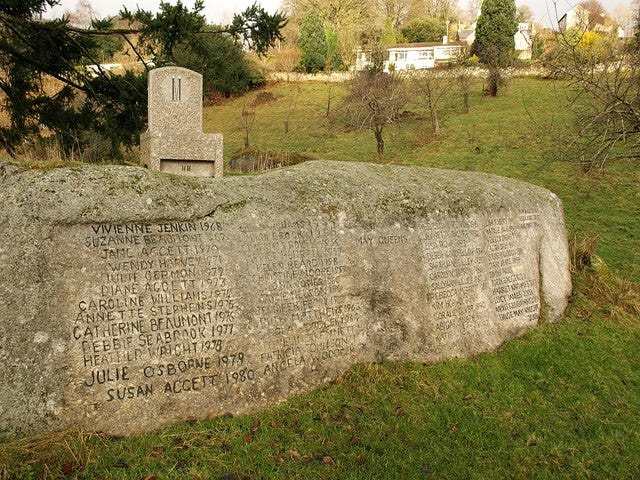
Some internet Catholics claim that the May Day was invented in the 1800s, but obviously that’s not actually true (the earliest attestations go back to the 1300s-1500s). What this is referencing is that in the early 1800s the Vatican realized that all of this fun that was being had was simply unacceptable, and declared that Catholics were supposed to spend the month of May worshiping Mary. It took until 1965 for an actual papal encyclical to be made officially declaring that you are supposed to worship Mary in May, however. One tradition that developed was to crown idols of Mary; I assume that this is an attempt at coopting the May Queen traditions, as those usually involve giving the lucky girl a crown, tiara, wreath, or some such thing.
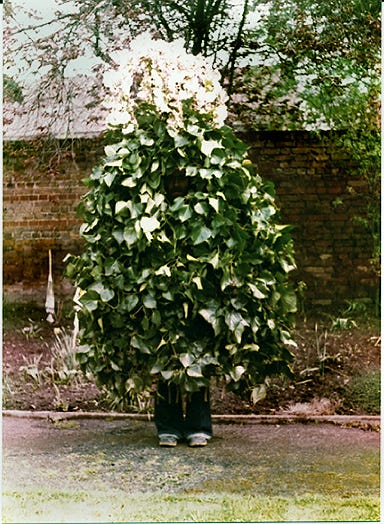
Sometimes the May Queen gets a boyfriend, or a husband, or a helper, or a guardian, who is the Green Man, or Jack in the Green, or something like that. He’s... generally pretty silly looking.
The other May Day
On 1886’s May 4th, in the Haymarket Square, Chicago, a strike was held at the McCormick Harvesting Machine Company (currently International Harvester Company, by way of merger of McCormick and Deering Harvester Company in 1902). The police arrived, due to concerns about damage to the building. Evidently Capital was right to worry, as one of Labor’s finest threw a bomb at the police, killing an officer. Then, gunfire erupted, from both sides. Six policemen were dead, two more were wounded badly enough to die of injuries later, and four protestors joined them on the road to the afterlife. After an investigation and trial, seven ideological anarchists were sentenced to death for the affair; an eighth was sent to prison for 15-years.
This would begin a complex and lengthy series of attempts by labor unions and socialists to make up for the catastrophic PR nightmare that this all was, what with the literal “bomb-throwing anarchists trying to kill random people” and all, eventually resulting in various pressure groups successfully getting Labor Day recognized as a state holiday in Oregon, in 1887. In 1894, Grover Cleveland then declared it a federal holiday. Once again, the Papacy thought that this was unacceptable, and as such declared May 1st to be a day dedicated to the worship of Yosef, Rabbi Yeshua’s adoptive father.
None of this has anything to do with Asatru, but I’m thorough like that.
Sumarmál today
So, the smoking of people and animals is based on when the animals are moved to summer pastures, and after that festivities, usually involving bonfires, were had. Thus, there’s actually a pretty big stretch of time, from May to June, when the “jump the bonfires” festival is “supposed” to happen, dependent upon where in Europe one was. Thus, Sumarmál shares space with Miðsumar and Nornanótt to a degree.
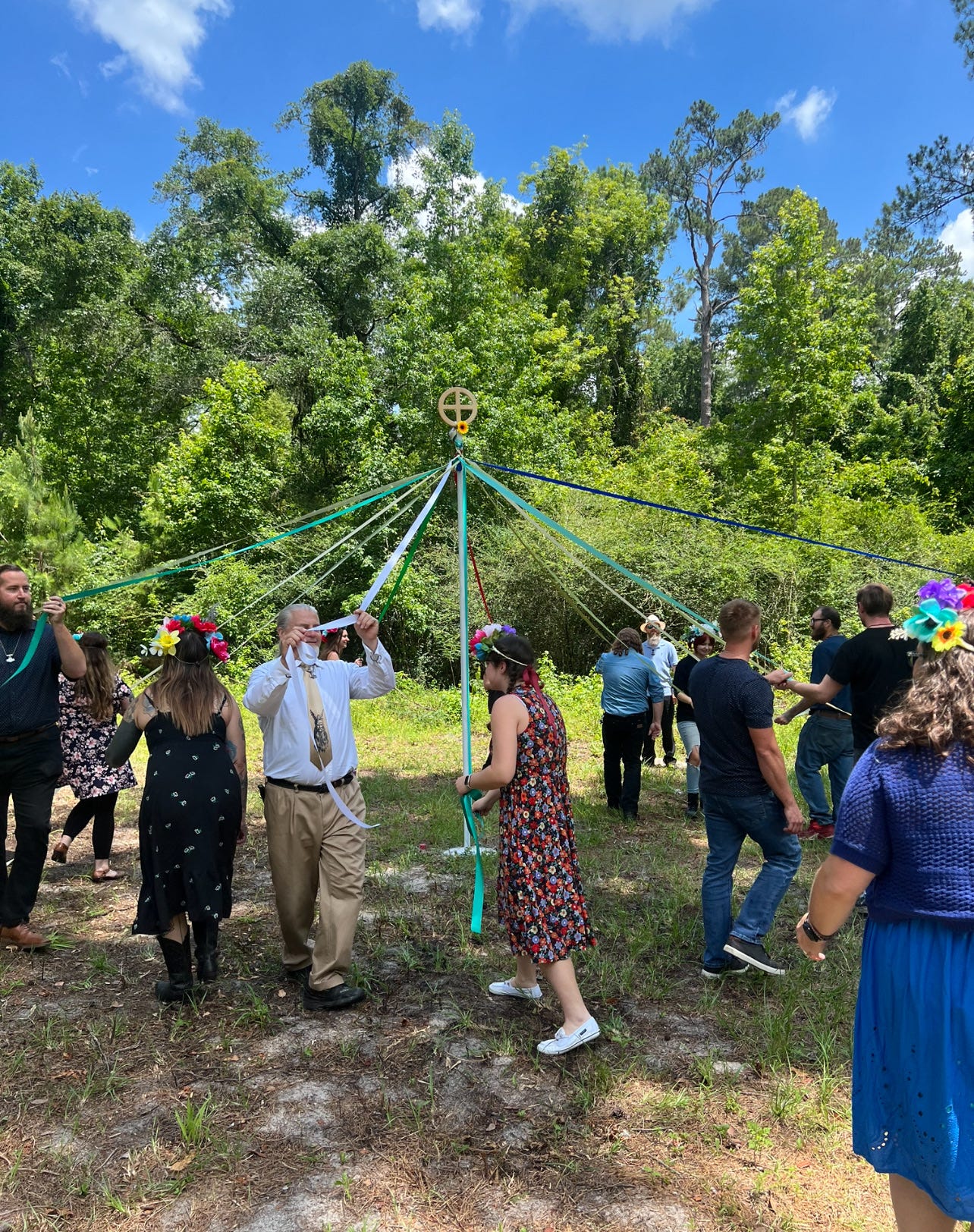
The maypole is the central feature of Sumarmál. It’s a masculine symbol of order: a vertical pillar with a periphery that flows around it. Whereas Nornanótt was a very feminine holiday, about cleansing and purification in preparation for ordering, this is the ordering. In the calendar, Sumarmál is when whatever plans you’ve made for the year are underway, and actively being worked on. Thus, the holiday is literally about erecting a structure and then decorating it.
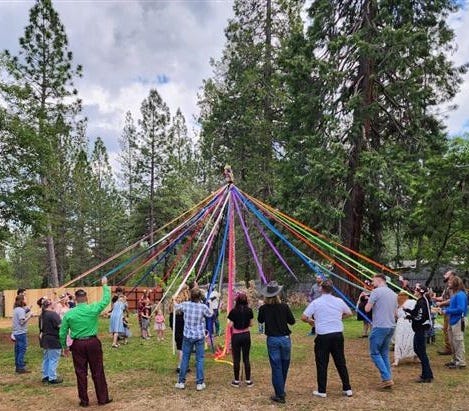
Maypoles are traditionally viewed as a thing for children: as in, the point is to get the children to do the maypole. However, we like to get the adults involved too: children learn by imitation, so lighten up, dance, have fun, be seen being joyous. It’s a time of joy and celebration: of having fun.
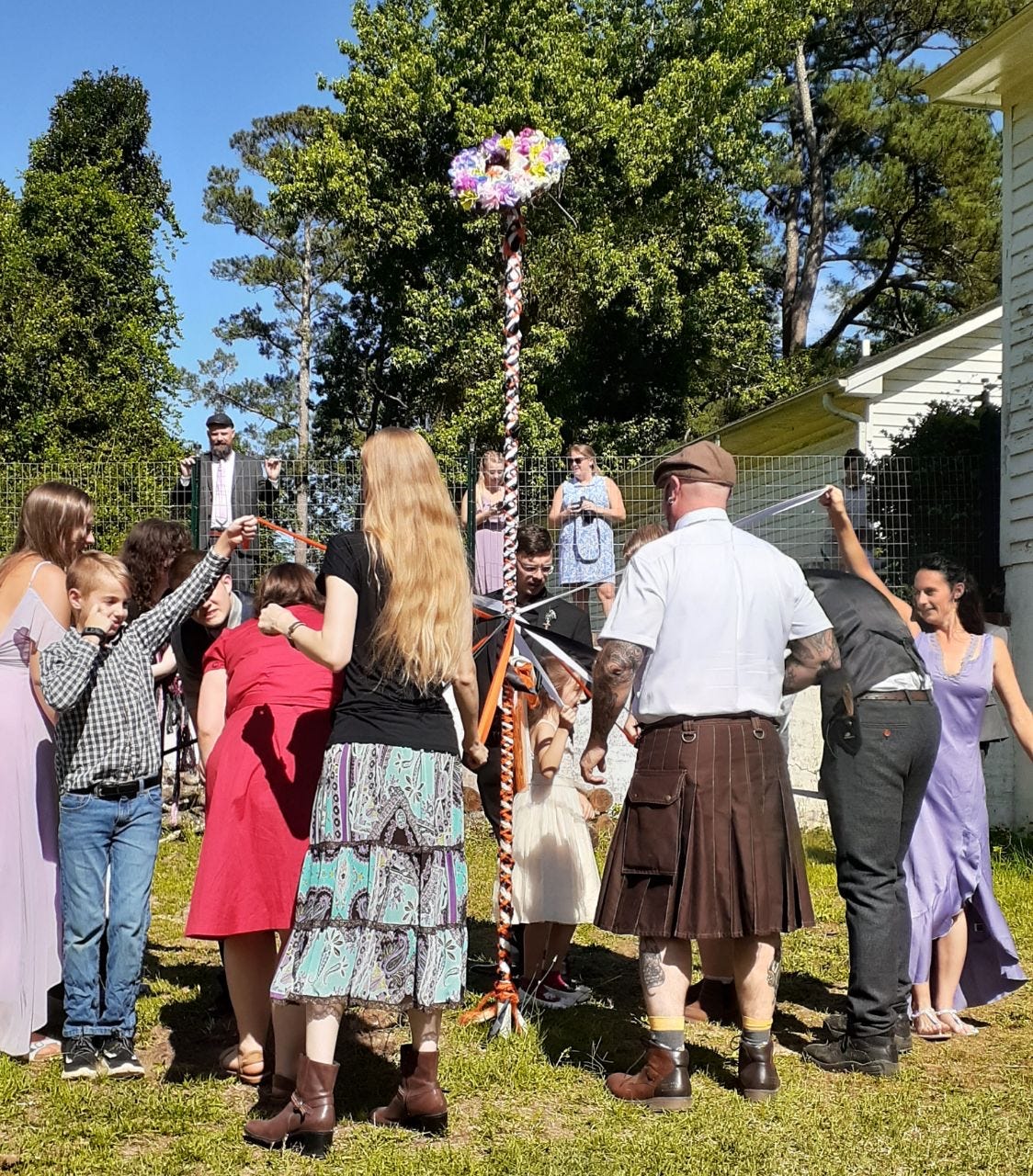
The reason why you are celebrating is that at this point in the Agricultural Cycle, you will have planted your seeds, and moved your cattle into their summer pastures. Things are in motion: things are growing. You are working. You are building things, you are advancing. In Asatru, we celebrate good things, and the good things that we mke. Have some fun.
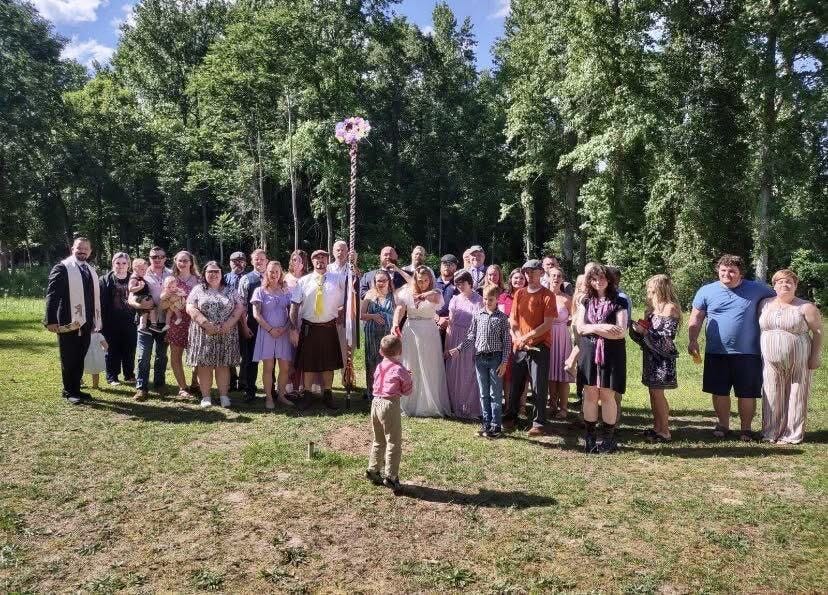
Sumarmál in the records
May Day as an official day of celebration for Asatruar first shows up in 1981’s Spring Runestone, with this message from the Herald:
May 1 – May Day was an Old Pagan holy day of rebirth long before it was taken over by the Church and by the communists. It’s not a day officially celebrated by the AFA, but its Pagan connection deserves attention. Someday we will reclaim it!
By 1987’s spring, it was apparently obvious that celebrating this day for several years did in fact mean that the AFA celebrated it, and that it had in fact been reclaimed. Thus, we are given this:
May 1 - MAY DAY. This is a light-hearted day celebrating – and that’s definitely the word! - Nature’s resurgence. The Goddesses of life and liveliness, of fertility and fullness, are lustily praised. Have fun today. Go barefooted in the grass. Take a picnic lunch to the park and offer toasts of wine or ale to Frigga and to Freya.
JOYOUS THINGS TO DO AT SUMARMÁL
Don’t think too hard about this one, because it should come naturally. Get together with friends and family. Have fun. You don’t need to do a maypole, or choose a may queen, but those are fun things to do. Be outdoors. Be in the sun. Enjoy the warmth. Enjoy your family. Enjoy your Folk.
For more about the Ásatrú Folk Assembly, visit our website!
Thanks for reading the Runestone Newsletter! Subscribe, share, and donate to help bring the Folk home.
.
Comments
Nothing yet. Say the first thing.
Sign in to join the conversation.