
Happy Sunday,
Buckle in for a good one this week! Saks Global, the luxury department store group behind Saks Fifth Avenue, Neiman Marcus, and Bergdorf Goodman, filed for Chapter 11 bankruptcy protection. Now, we aren’t trying to be negative and focus on failures, but these situations are part of the modern business cycle, and we feel they are hyper-valuable to look at and gain a deeper understanding.
Most of what we’ve read focused on the names people recognize. The billion-dollar fashion houses. The corporate empires. Chanel. Kering. LVMH. The “top 30 creditors” list reads like a reality TV show, and a board meeting had a baby.
There is a reason, that’s the angle. It’s easy to write. It’s clickable. It turns bankruptcy into celebrity gossip. But if you’ve ever made product, shipped wholesale, or tried to float a small brand on thin margins, you know the real story isn’t the biggest names on the creditor list. It’s the thousands of smaller and mid-sized brands sitting behind them. It’s the people who delivered inventory months ago and are still waiting (hoping) to get paid.
It’s the independent designers who budgeted production, paid factories, covered freight, maybe even took on short-term financing… because they believed Saks or Neimans are “good for it.”
When a retailer this big files, the system doesn’t crush the biggest players first. It comforts them. It quietly squeezes everyone else. Saks’ filing comes after a very debt-heavy push to consolidate luxury retail, including the Neiman Marcus acquisition, and after vendor payment delays and inventory issues. The company also announced a financing package intended to keep operations running during the restructuring.
The press releases always say the same reassuring things: stores will remain open, customers will be served, operations will continue, vendors will be “supported.” But here’s the part that matters for smaller brands: “vendors” isn’t one group. It’s a food chain. And Chapter 11 is where the food chain becomes very, very real. If you’ve never lived through a bankruptcy from the vendor side, here’s the most honest translation we can offer:
Even if you did everything right: you produced, delivered, invoiced, followed compliance, waited through the usual retail payment terms, the moment bankruptcy hits, you’re no longer operating in normal commerce.
You’re operating in the world of priority. Who gets paid first? Who gets paid later? Who gets paid pennies on the dollar? Who gets paid because the court decides they’re “critical.” Who gets paid because they have leverage? Who gets paid because they can afford lawyers. Who gets paid because they can stop shipping tomorrow, and the retailer can’t risk empty shelves.
And yes, usually the biggest brands get paid because they can make the bankruptcy inconvenient for the retailer. A luxury department store can’t rebuild its business selling only “whoever is left.” It needs heat. It needs the brands that drive traffic and credibility. The big houses know that. They can pull supply. They can reroute inventory to their own stores and DTC. They can demand tighter terms. They can negotiate from a position of strength.
That’s why the coverage is always initially centered on major luxury groups and what they’re owed. But the smaller brands? The mid-sized labels? The designers who don’t have a direct retail network, or big-time lawyers? The ones still building their audience and using wholesale as oxygen?
Their leverage is emotional. Not structural. They’re the ones who get stuck in the middle of a brutal sentence: “You might get paid… eventually.” Eventually can be a death blow. The smaller brands don’t have the same balance sheet reality. A big house can carry receivables for long periods, and even absorb the loss as a whole if necessary.
And it gets worse, because wholesale isn’t just about the money you’re owed today. It’s the money you already spent three months ago to fulfill the order. You already bought the yarn. You already paid the factory. You already shipped the cartons. You already ate the chargebacks. You already managed the EDI, the routing guide, the labeling, and don’t get us started on the duty bills. All that cash is already gone.
So when the retailer hits pause, it doesn’t pause your cost. It stops your recovery. This is why retail bankruptcies so often look “contained” from the outside, while quietly detonating smaller brands behind the scenes.
From the consumer side, you’ll still see the lights on and the website running. From the vendor side, you might be staring at a receivable that becomes a negotiation, a legal process, a settlement, or a write-down.
Saks’ case is also happening in a moment where retail, and luxury specifically is shifting, more DTC, more selective wholesale, more cautious consumers. That backdrop matters because it changes how willing brands are to keep feeding the machine.
This isn’t us bashing Saks. We aren’t part of this specific situation, but we have been part of multiple other restructurings. Retail is hard. Department stores are dealing with a structural change that’s been brewing for years. And bankruptcy doesn’t automatically mean “evil.” It often means “the math finally caught up.” When the math catches up, the pain doesn’t distribute evenly; in these moments, the industry tends to show sympathy for the brands that least need it. The billion-dollar houses will negotiate. They’ll restructure terms. They’ll extract concessions. They’ll be “made whole” in some form or another because they’re too important to lose. They can also afford to play the long game.
The smaller brands need the money more. Not because they’re more virtuous, but because they’re more fragile. This is also where the conversation gets uncomfortable, because wholesale has always been a trade-off. For a small brand, a big wholesale account like Saks can feel like validation. Like momentum. Like “we made it.” Sometimes it is, but it’s also concentration risk and dependency. It’s building your production calendar around someone else’s payment calendar. It’s letting a retailer’s internal problems become yours.
These situations are why so many independent brands eventually shift their energy toward channels they can control. DTC. Owned retail. Partnerships with tighter terms. Wholesale with retailers who pay on time and treat suppliers like partners, not an inventory lender. Not because they hate wholesale. Because they can’t afford to be the bank.
And if you’re reading this as a customer, someone who likes discovering smaller brands in the marketplace, this is the consumer-side impact: When these collapses happen, the “newness” dries up first; it’s actually penalized. The interesting stuff disappears. The fresh emerging labels vanish. The brand you found once and fell in love with can’t afford to show up; they can’t keep shipping into uncertainty.
The floor becomes safer. More predictable. More corporate. More of the same. That’s not just a merchandising problem. That’s a cultural problem.
We don’t know how Saks’ restructuring ends. They’ve lined up financing intended to support operations through Chapter 11, and they’re signaling a plan to keep the business moving. No matter how it ends, thousands of smaller suppliers are about to feel the next few months in a very painful way.
And we hope you can hold two thoughts at once: You can want Saks to survive for employees, for cities, for retail, and still say, clearly, that the vendors who need the most protection in this process are not the biggest names. They’re the ones with the least leverage. They’re the ones who financed the shelves. They’re the ones who kept the assortment fresh. They’re the ones who don’t have a billion-dollar safety net.
If department stores want to be relevant again, they can’t rebuild the future by squeezing the emerging brands that are the future. This is the tension: the stores need small brands to stay interesting. Small brands need stores to stay solvent. But right now, small brands are the ones being asked to float the industry. That math doesn’t work forever.
As always, thank you for reading! Enjoy the news below, and we wish you a great week!
Hope you enjoy today’s Clean Up. We would love to hear from you. Comment here on Substack, hit us on social, or email us at info@arvingoods.com. Have a great week. Cheers,
Stories Of The Week…
Design

You Enter This Japanese Home Through the Camping Gear Storage Area - DWELL
From the Architect: “Attracted by the spacious site and the surrounding environment with its old townscape at the foot of Mt. Hakusan, one of Japan’s three sacred mountains, a young couple sought a one-story house with a large garden and open living, dining, and kitchen areas. Traditional industries such as sake breweries, soy sauce, miso, and koji remain in the surrounding area, and the site is also surrounded by a group of sake brewery buildings.
“The adjacent land to the west of the site is vacant and has no fence. The vacant lot, as seen from the site, is surrounded by fields and beyond it are town houses and a view of the mountains. The layout of the building was studied in order to create a visually expansive courtyard that feels as if it’s borrowed landscape. In order to keep some distance from the bustling road in front of the house, the building was placed in an L-shape along the road. Considering the loading and unloading of camping equipment, since the owners love camping, we designed a floor plan that allows a view through the courtyard to the garage like a Japanese traditional gatehouse. Here, horses have been replaced by motorcycles and farming tools by camping equipment. The plan of the house is such that the living room, dining room, and kitchen can be seen through the courtyard. 🗾🇯🇵🏠
Photo

World Sports Photography Awards 2026 winner revealed - BBC
BBC Sport and the World Sport Photography Awards present a selection of the world's finest sporting images from this year's competition. Displayed below are Gold, Silver, Bronze and Special Merit winners across all 24 categories of the awards, now in their sixth year.📷🏀
Industry
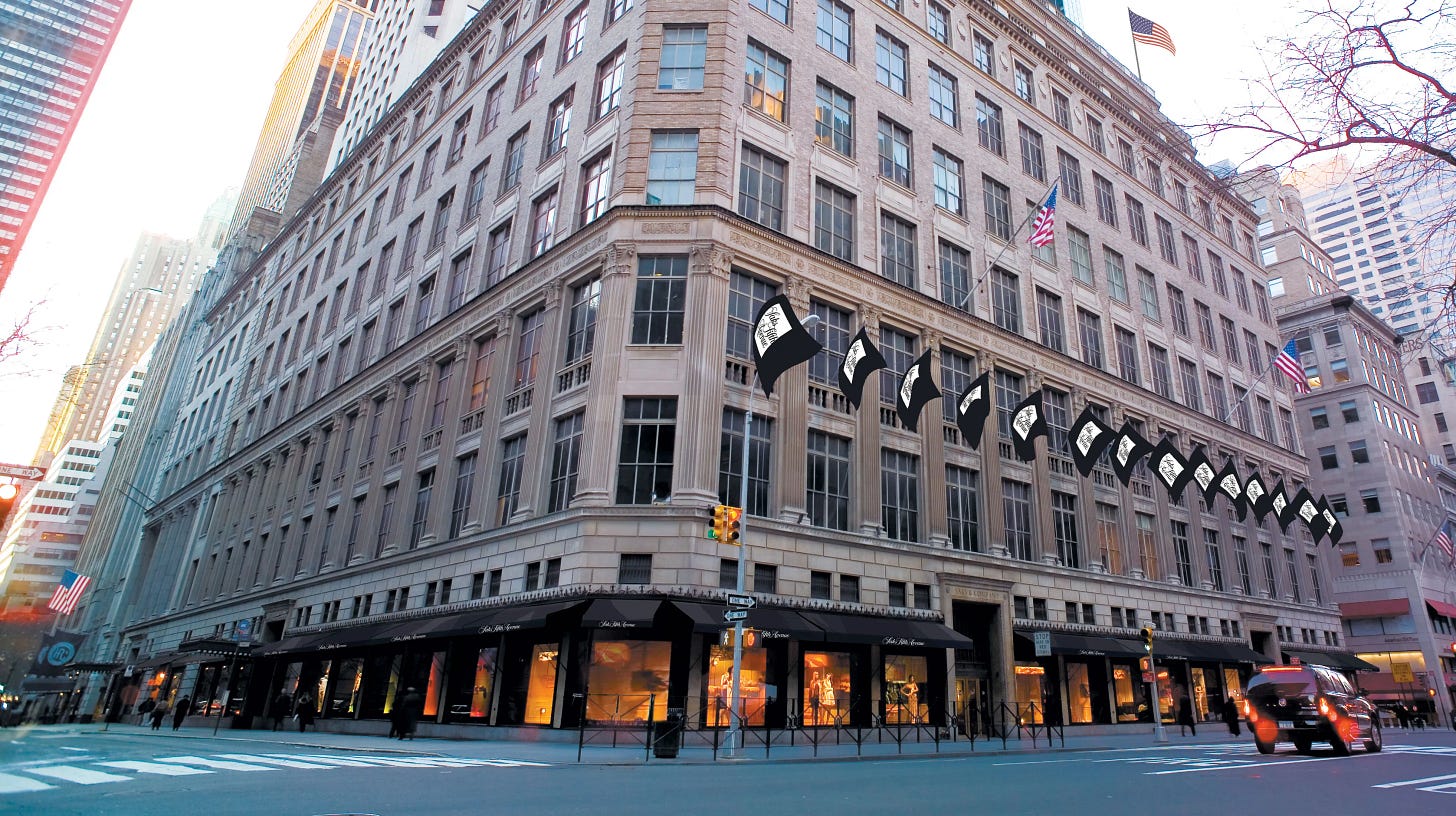
Saks Global Files for Chapter 11 Bankruptcy - Sourcing Journal
Saks Global’s high-wire financial act is finally over.
The company, which just over a year ago bought Neiman Marcus Group for $2.7 billion, filed for Chapter 11 bankruptcy late Tuesday—scrambling high-end retailing and leaving both vendors and lenders holding the bag.
Saks Global went to court with $1.75 billion in financing from a group of its bondholders, which will help keep the lights on during the process and, at long last, should provided more certainty for vendors that they’ll be paid for what they ship.
It was a fast fall and one sped up by a ton of debt, deteriorating relations with designers and a by a vision of the luxury department store model that never quite had enough money to take off.💸🏬
Entertainment
Kaytranada (DJ Set) - Elevator Music - YouTube
To kick off 2026, the Montreal producer steps into the Elevator for a live set that moves effortlessly between house, soul, and R&B and is guaranteed to make you dance. Electronic, House, R&B🔊🛗
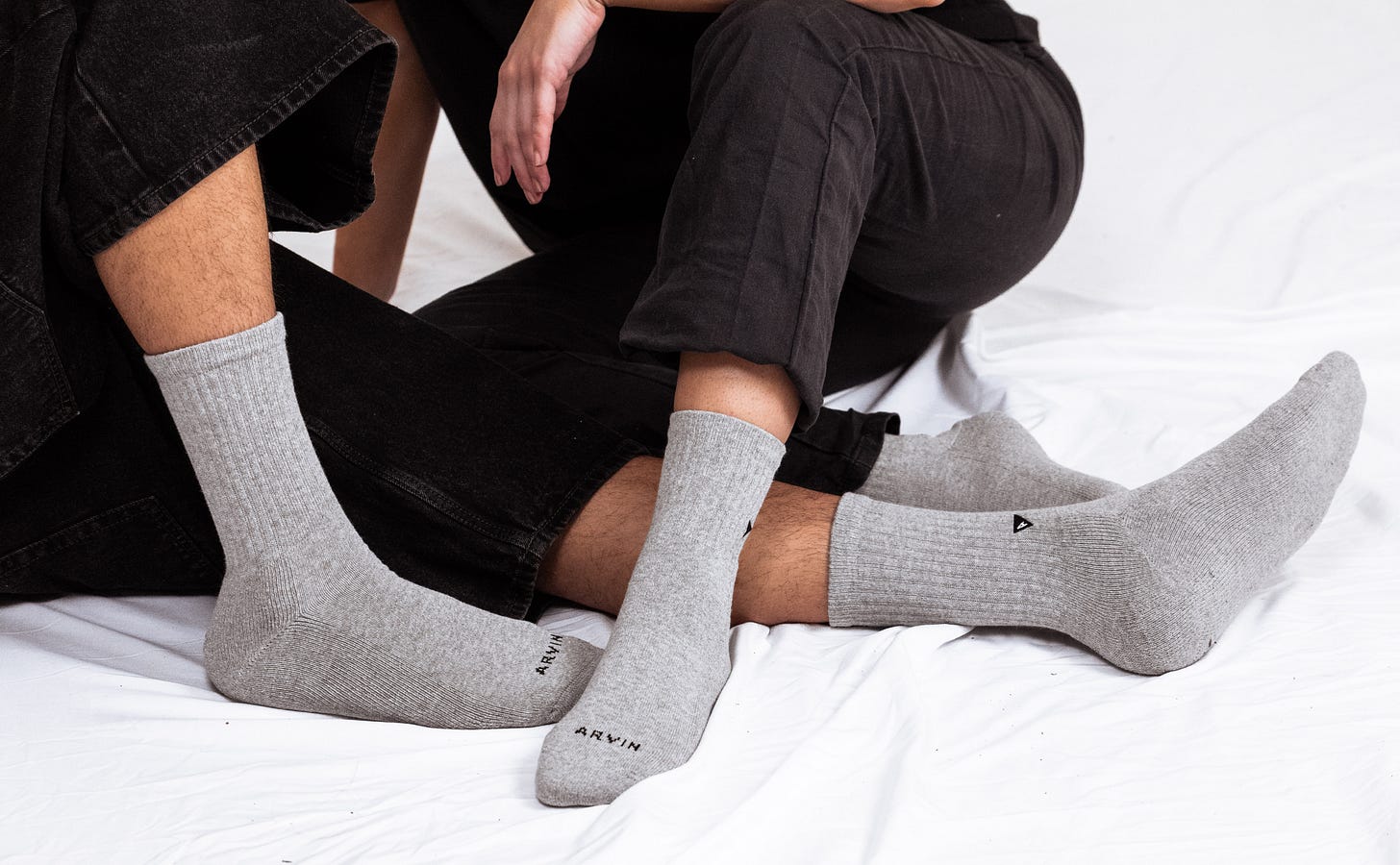
'The Clean Up' is a weekly newsletter that mixes in some Arvin Goods news, products, as well as stories we saw during the week that are worth a share. From books to podcasts, sustainability to business news, we try to keep it interesting, and fun. If you are not a subscriber, sign up and join everyone who receives The Clean Up directly in their inbox every Sunday.
Thanks for supporting Arvin Goods. Subscribe for free to receive new posts
Comments
Nothing yet. Say the first thing.
Sign in to join the conversation.