
Happy Sunday,
Sock-o-nomics is back. And honestly, we wish it wasn’t.
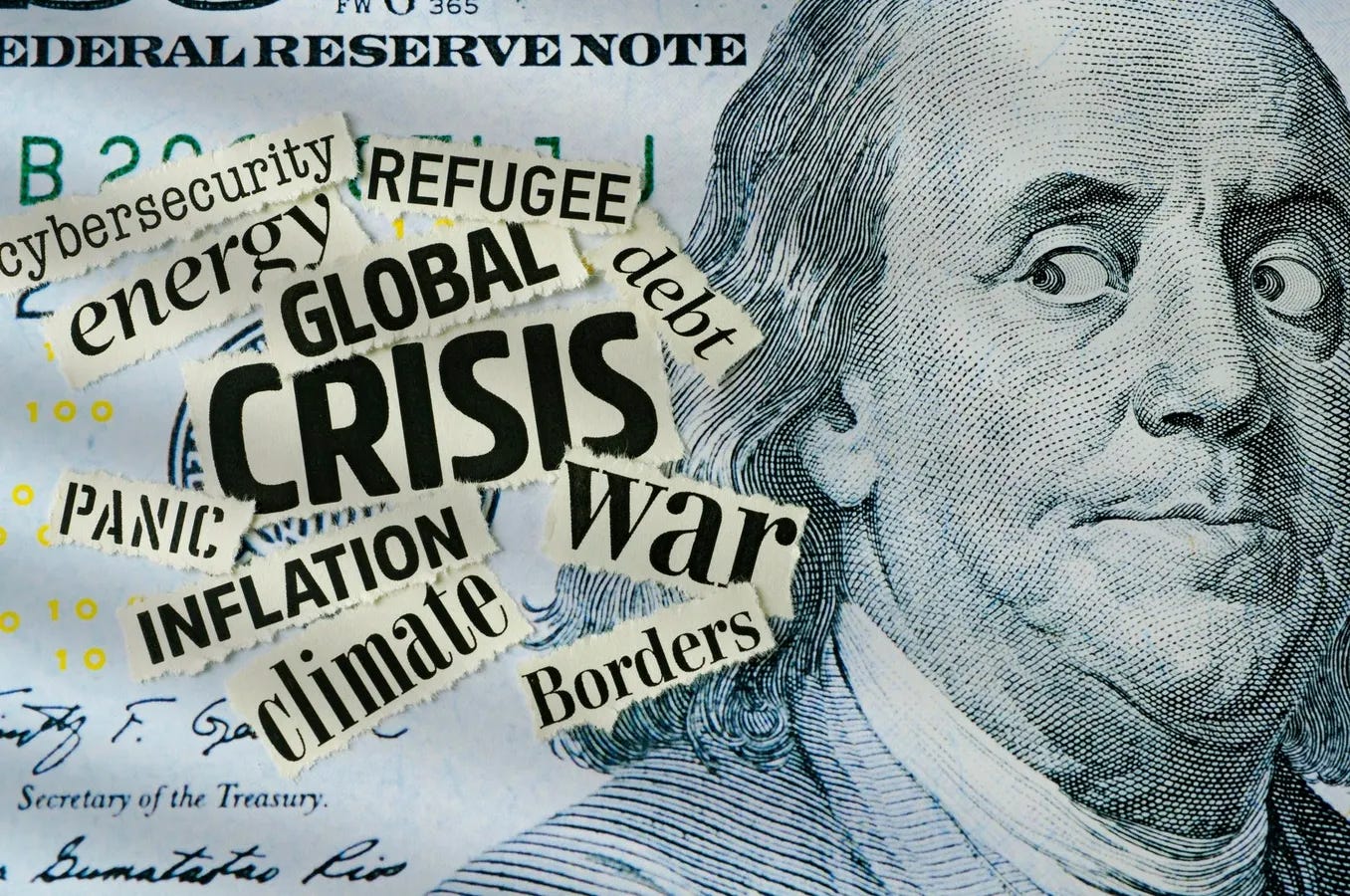
We try not to be all doom-and-gloom around here. But right now, if you import anything, ship anything, or sell anything in the United States — and especially if you do all three — the news is genuinely rough. Not “the headlines are scary, but it’ll be fine” rough. More like “holy sh*t, all of it’s happening at once and seems to be getting worse” rough. Here’s a small state of the market.
The EU “deal” that wasn’t
Remember all those trade deals the administration negotiated last year? The ones that were supposed to represent the wins of the tariff strategy. The moment when all the pressure paid off? Turns out, most of them weren’t real.
The EU deal, officially called the Turnberry Deal, signed in July 2025, was structured around the IEEPA tariffs as a negotiating tool. The EU made concessions in exchange for capped duty rates. When the Supreme Court struck down IEEPA as the legal basis for those tariffs, the deal lost its foundation. The European Parliament summarized: the key instrument used on the US side to negotiate and implement the Turnberry Deal is no longer available, and the situation is now more uncertain than ever. The EU paused ratification. India deferred talks. The whole framework is in question.
What replaced IEEPA? A 10% tariff on all countries imposed under Section 122 of the Trade Act. The problem is that Section 122 tariffs stack on top of existing duties, meaning the total rate for EU goods now exceeds what the Turnberry Deal had supposedly capped. Trading partners had made concessions to avoid the IEEPA tariffs. With those tariffs now illegal, they’re reassessing whether those concessions made any sense at all.
There’s another part of this not well-thought-out “plan”: Section 122 is a temporary authority. It expires in 150 days from when it was imposed, putting the expiration somewhere around mid-July. At that point, the administration will need a new vehicle to maintain any tariffs, and Section 122 itself is likely to face legal challenges before it even gets there. Critics have already noted that using it as a permanent replacement for IEEPA is constitutionally questionable on similar grounds. This means the tariff situation is murky at best. And for brands, importers, and anyone trying to price a product six months out, this is not a stable foundation to build on.
For us, goods coming from Portugal are now subject to a layered duty structure that is higher in practice than what was “agreed to.” It’s a concrete example of why “we made a deal,” and a deal is “ratified” are two very different things.
IEEPA refunds… maybe🤷🏻♂️
The Supreme Court ruling that struck down IEEPA also created a refund opportunity, in theory. Tariffs paid from February 4, 2025, through February 24, 2026, are eligible for refunds. That’s a meaningful window. As of late March, CBP had enrolled over 26,000 importers in its refund system, accounting for roughly $120 billion in duties.
But getting the money back is a whole separate problem. Refunds won’t be issued until entries have fully liquidated, and even once an entry is accepted by the new system, that process could take up to 45 days. The administration has not been racing to get the money out the door, and the timeline is murky. Real cash is tied up in a bureaucratic process with no firm finish line. This dramatically affects pricing power and inventory decisions across the industry.
Add in a new war, a strait, and diesel at $5+ a gallon
Now layer in an energy shock.
The conflict in Iran, which began with US and Israeli strikes in late February, has effectively closed the Strait of Hormuz, a chokepoint through which roughly 20% of the world’s daily oil supply passes. Crude went from ~$65 to over $100 per barrel in March and reached a high of $126. A price surge described as faster than during any other conflict in recent history, including the Ukraine war.
What (the F) does this have to do with socks? Everything, once you get to the shipping side. Diesel prices jumped 38.6% to over $5.40 per gallon by the end of March, pushing up spot rates and fuel surcharges across every freight mode. Ocean vessels are rerouting around Africa, adding time and cost to every shipment. The global freight market was already fragile before this conflict. Overcapacity in ocean shipping and soft demand for truck freight have been beating up carriers for over a year, and the war has injected new pressure onto an already fragile market.
Materials have to get to the factory. We then ship finished goods out of Portugal via ocean and air freight. None of this is abstract.
Amazon, UPS, and USPS add a new tax on selling
This is how it all rolls downhill to you, the consumer. Just this week, Amazon announced a new 3.5% fuel and logistics surcharge on third-party sellers. The charge takes effect April 17 for sellers using Fulfillment by Amazon in the US and Canada, and expands to Buy with Prime and Multi-Channel Fulfillment on May 2. Amazon says it’s “temporary.” Sellers are already betting it stays, noting that Amazon’s 2022 fuel surcharge, also described as “temporary,” set a precedent for this kind of cost-shifting.
Amazon FBA isn’t a channel we use. But we’ve had the conversation about Amazon before, and moves like this are exactly why we stopped. The margin math on marketplace selling was already thin for a brand like us. A 3.5% surcharge on fulfillment fees, on top of everything carriers are already adding, makes it even thinner. USPS is adding an 8% fuel surcharge starting April 26. UPS and FedEx have been hiking fuel fees for weeks. This is becoming a cost layer that doesn’t go away.
What does this mean, and why do we write this?
We’re not economists, not even close. But we do run a business that imports goods, ships them domestically, and sells them in a market where every one of these pressures is now active simultaneously: trade deals that turned out not to be deals, tariff refunds that are legally owed but operationally delayed, an energy shock with no clear end date, and a major marketplace adding costs to the stack. $15-$20 consumer goods can only absorb so much. Eventually, it has to be passed on.
The result is an inflationary environment for consumer goods that has nothing to do with consumer demand. Prices are going up because inputs are going up. Freight, fuel, duties, fulfillment. For brands that built their business on thin margins and marketplace dependency, this is a hard moment. For brands that stayed DTC, kept their supply chain tight, and didn’t chase volume at any cost, it’s still not easy. We try to be simple and streamlined, but still deliver the highest quality possible. But each week it seems to get harder and harder to maintain.
As always, thank you for reading! Enjoy the news below, and we wish you a great week!
Hope you enjoy today’s Clean Up. We would love to hear from you. Comment here on Substack, hit us on social, or email us at info@arvingoods.com. Have a great week. Cheers,
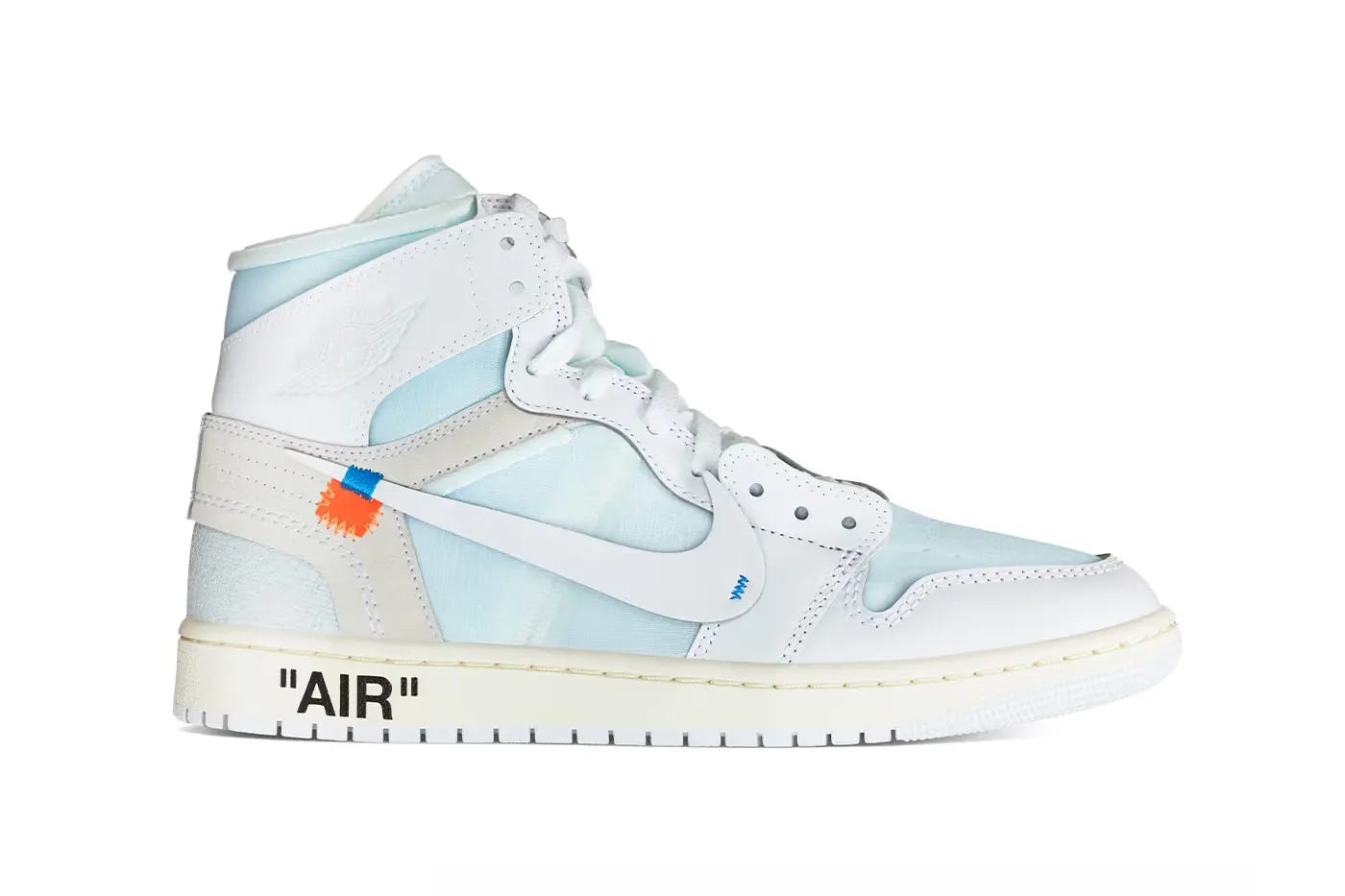
One of Virgil Abloh’s Most Iconic Nike Collaborations Is Finally Back - GQ
Back in 2017, Virgil Abloh and Nike launched The Ten, a landmark project that applied the designer’s kitschy, desconstructionalist approach to a handful of the most beloved Swoosh kicks of all time. Nine years after the initial drop, and nearly half a decade after Abloh’s untimely passing, the collection remains deeply beloved among sneakerheads, a high bar for footwear design in the 21st century. Now, one of Abloh’s most iconic Nike shoes is making a long-awaited comeback: the Virgil Abloh Archive x Air Jordan 1 ‘Alaska.’🏀🎨

How Artemis II astronauts plan to capture a new ‘Earthrise’ - National Geographic
On December 24, 1968, Frank Borman, Jim Lovell, and William Anders became the first humans to enter orbit around the moon, on a mission that set the stage for America’s historic moon landing the next year. As they looked out the windows of their Apollo 8 command module, they glimpsed the blue planet they’d left behind, home to every human in existence.
“Wow, is that pretty!” Anders said, grabbing a modified Hasselblad 500EL camera to snap the iconic photo now called Earthrise.🚀👽🌔
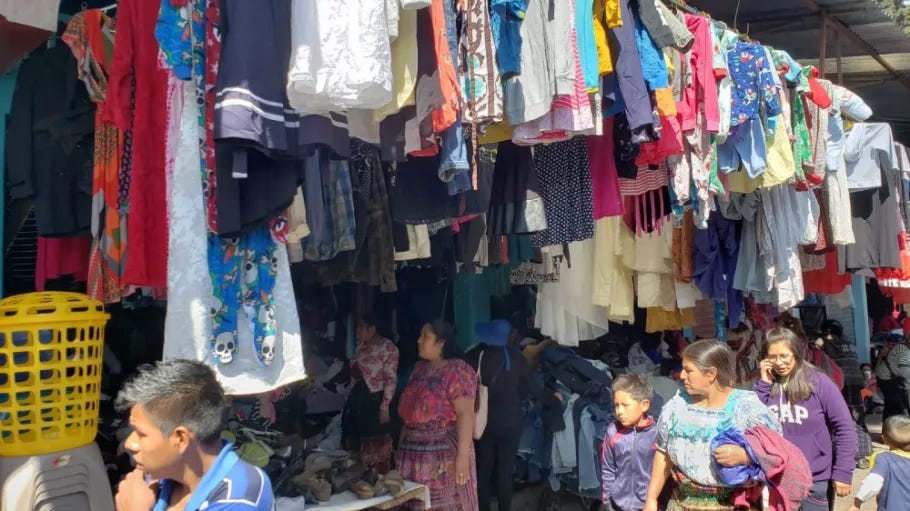
Why We Can’t Innovate Our Way Out of Fashion Overproduction - Sourcing Journal
Earlier this month, I had a front-row seat to the future of textile recovery on the Innovation Stage at the Textile Recovery Summit in San Diego. I served as one of the judges alongside leaders from product stewardship, investment, and advanced manufacturing.
The pitch competition was a compressed version of the real world, where founders had minutes to persuade judges that their solution can transform a system that currently sends enormous volumes of textiles to landfill, while brands face mounting pressure to prove progress.
Pitch after pitch offered new ways to handle the mounting tide of discarded clothing: platforms to scale repair, technologies to sort faster, systems to enable fibre-to-fibre recycling. The ingenuity is real, and pitches from Alternew, Fibarcode, IntheLoopAi, and the eventual winner, Intrinsic Advanced Materials, were very impressive. But from the judge’s table, one truth is hard to ignore: we are asking “end-of-life innovation” to fix what is fundamentally an upstream problem of overproduction and overconsumption.👕♻️
Vinyl Set // Dark Eclectic - LuchoGF (Depeche, Sumo, Radiohead, Joy Division) - YouTube 🔊🎧

'The Clean Up' is a weekly newsletter that mixes in some Arvin Goods news, products, as well as stories we saw during the week that are worth a share. From books to podcasts, sustainability to business news, we try to keep it interesting, and fun. If you are not a subscriber, sign up and join everyone who receives The Clean Up directly in their inbox every Sunday.
No posts
Comments
Nothing yet. Say the first thing.
Sign in to join the conversation.