
On the world’s oldest images – and everything we still do not know about them
In January 2026, researchers published a dating analysis of hand stencils on the walls of Liang Metanduno cave on the Indonesian island of Muna. The result: at least 67,800 years old – the oldest known cave art in the world, by a margin of more than fifteen thousand years over anything previously recorded. This followed a July 2024 paper in Nature dating a narrative scene at Leang Karampuang on Sulawesi to at least 51,200 years – the oldest known figurative painting. Which had itself followed a 2021 finding of a single pig painting at 45,500 years that had already seemed transformative. Each time, the story the discipline had been telling turned out to be a story, not a fact. And each time, the new record was in Indonesia, not Europe.
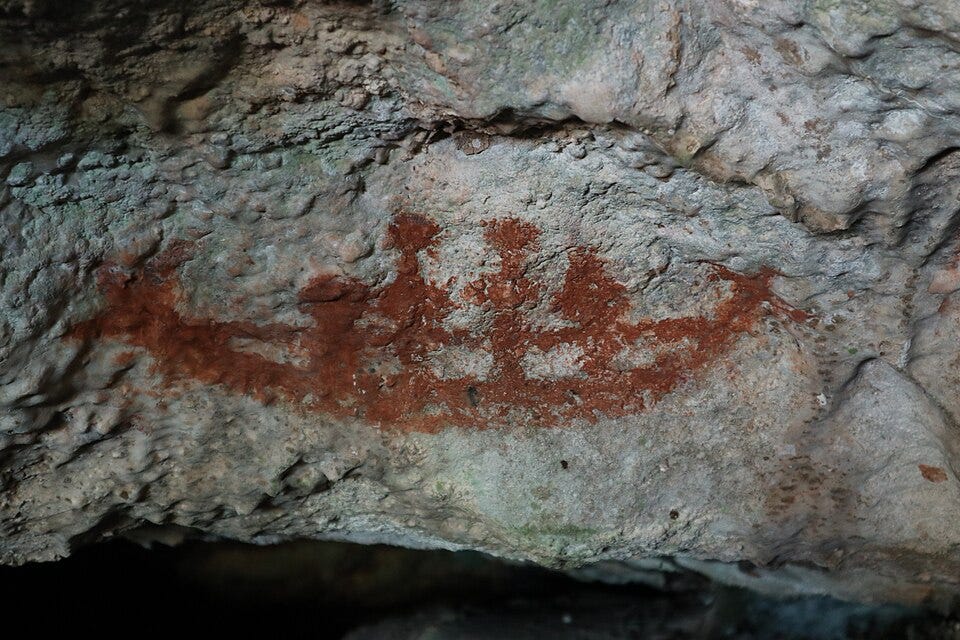
“Prehistoric” means before writing – before the records that allow historians to attach names and dates to objects. It does not mean before sophistication. The label covers approximately 70,000 years of image-making across every inhabited continent, which makes it by some distance the longest chapter in art history. The problem is not only temporal. Different regions enter the written record at different points, and Indigenous Australian communities maintained continuous visual traditions that outsiders classified as “prehistoric” well into the twentieth century. When a label applied from outside describes a living tradition as belonging to the past, it is doing more than periodising.
Comments
Nothing yet. Say the first thing.
Sign in to join the conversation.