
Hi all,
I’ve never shed tears while doing research for a piece. This is my first one.
A completely out-of-the-box view of Art :
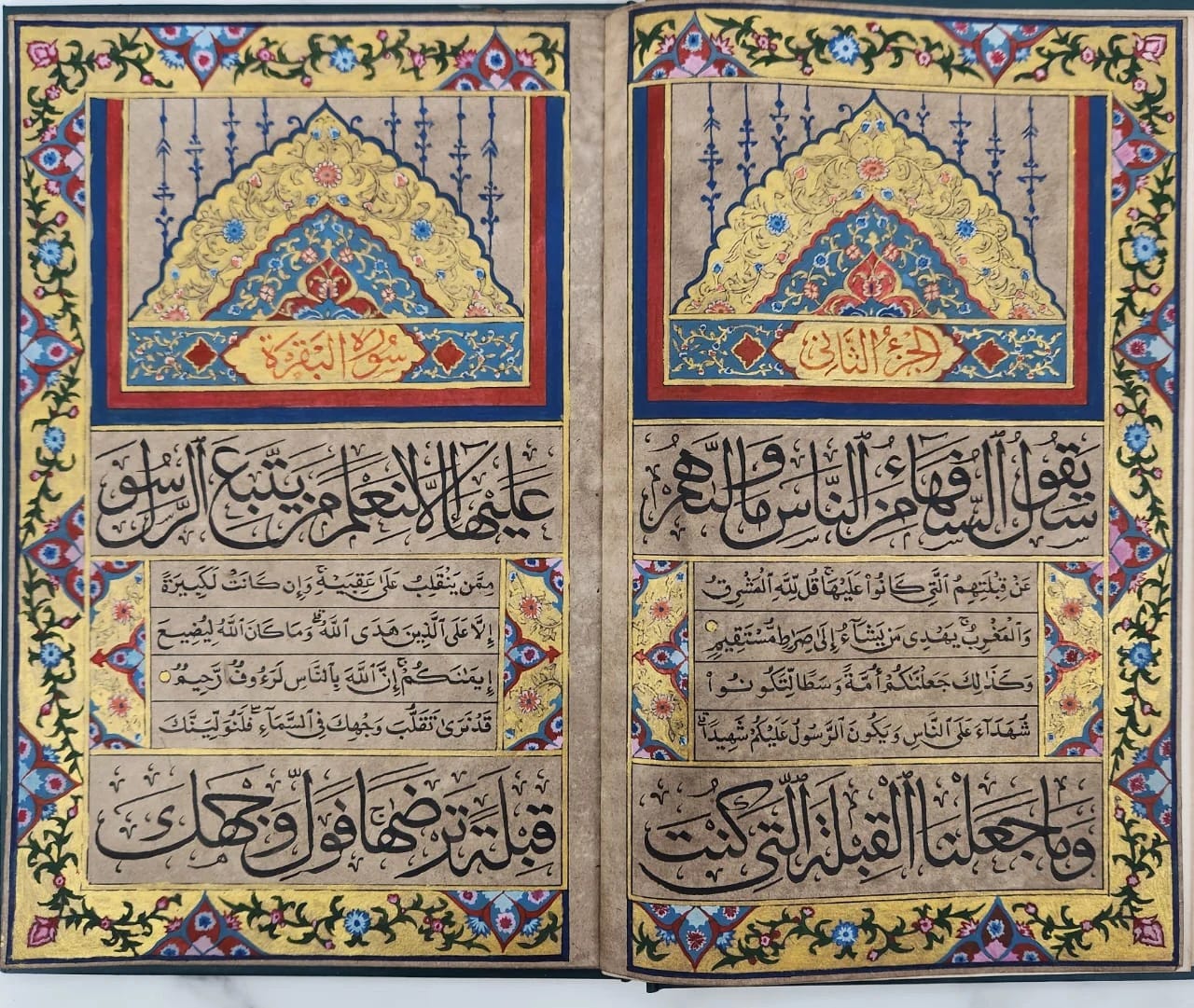
«إنّ الصينيينَ واليونانيينَ زَعَموا أنّهمُ الأبرَعُ في فنِّ التصوير. فاختارَ السلطانُ قاعةً عظيمةً، فأعطاهم جدارَينِ متقابلَين. انشغلَ الصينيونَ بالأصباغِ والزينةِ والألوان، أمّا اليونانيونَ فتركوا الأصباغَ كلَّها وصاروا يُجَلّونَ حائطَهم بالصقل. فلمّا رُفعَ السِّترُ، أشرقَت رسومُ الصينيينَ في مرآةِ حائطِ اليونان، وأضحت أجملَ وأصفى. فقال الرومي: إنّ هذا مثالُ قلبِ الصوفي، يُطهِّرُه بالرياضةِ حتى يصيرَ مرآةً تعكسُ الحقَّ كلَّه.»
The Chinese and the Greeks claimed mastery in painting. The Sultan gave them two facing walls. The Chinese busied themselves with pigments and ornament, while the Greeks abandoned all colors and simply polished their wall to a high sheen. When the curtain was lifted, the Chinese images shone forth within the Greeks’ polished wall with even greater beauty. Rūmī concludes: this is the parable of the Sufi’s heart—cleansed by discipline until it becomes a mirror that reflects all truth.
(Jalāl al-Dīn Rūmī, Mathnawī-yi Maʿnawī, Book I, vv. 3465–3475, Nicholson ed.)
«چون برون آمد ز ميان آن حجاب
ديد شاه آنجا عجبهاى عجاب
نقشهاى چين چو اندر آينه
شد پديد و صد فزون شد سينهبه
شاه گفت: اينان بُردند اين نَفَس
زانكه صافی كردند از زنگار و خس»
When the veil was removed, the Sultan was astounded. He saw wonders upon wonders. The Chinese paintings appeared in the Greeks’ mirror-like wall, and their beauty was multiplied a hundredfold. The Sultan said: “These have won the contest, for they purified [their wall] from rust and dross.”
(Rūmī, Mathnawī, Book I, vv. 3465–3495)
I have met quite a few passionate Muslims in my life. They all radiate love, carefulness, and a deep respect towards their God and Sacred Texts.
Doing my research on this subject, I could find the same energy in all the writings I came upon, telling me “don’t rush it, this post can wait. Enjoy your time in this alternate, beautiful universe”.
This Substack is reader-supported. To receive new posts and support my work, consider becoming a free or paid subscriber.
As a result, I will have to split this post into two parts.
Part 1 - A Window into Truth
Part 2 - The Soul of Society
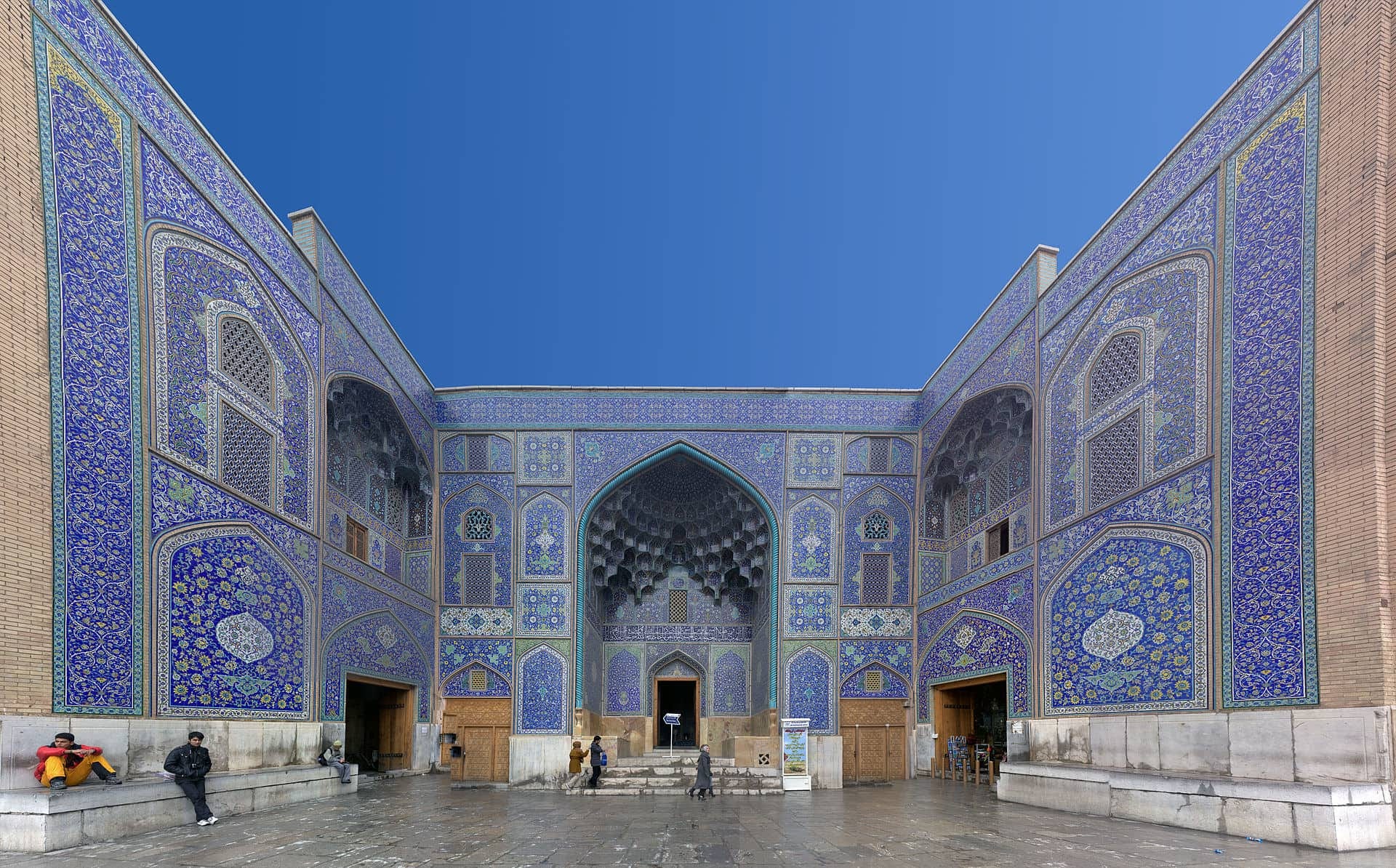
Quick reminder : this is part of a series that started when we realized that :
1- AI isn’t going away
2- We don’t want real art to shrink, nor do we want to become AI Artists
3- Thus a new definition of art is required, one to thrive in the face of AI
4- To find the new power of art, we must find the source of its power in all past civilizations.
(links at the bottom for more context)
All of humanity turns on this single question : “Have I understood life rightly and sought what is worth seeking, or have I strayed after illusions?”
Islamic art confers the power of such understanding to those who make it, and those who understand it.
The story of Islamic art
What was the story that everyone believed deeply, that led Islamic Art to have the effect on society that we also wish to have with our own art ?
Allah created the universe, and we are part of his work.
We don’t understand Him and never can. But still, it is our duty, and the greatest form of piety to try to understand Him and his work.
…فَنَفَسُ الرَّحْمٰنِ هُوَ المُعْطِي صُوَرَ المُكْناتِ الوُجُودَ، كَمَا أَعْطَى النَّفَسُ وُجُودَ الحُرُوفِ، فَالعَالَمُ كَلِمَاتُ اللهِ مِنْ حَيْثُ هٰذَا النَّفَسِ…
”…the Breath of the All-Merciful is what grants existence to the forms of the possibles, just as human breath grants existence to letters; thus the world is God’s words by virtue of this Breath…”
— Ibn ʿArabī, al-Futūḥāt al-Makkiyya
The very name of a popular 8-point star pattern, “nafās al-raḥmān” (“Breath of the Compassionate”), used in Islamic geometric art, confirms this : the Islamic artist needs the breath of Allah to make his art, just as a human needs breath to speak words.
Moral perfection is paramount in this task. So to speak, it polishes the mirror, to reflect the truth properly. (see the anecdote at the very start of the post !)
Following the very word of the prophet : “Allah is beautiful, and he loves beauty”, the achievement of beauty was both a proof of piety, and a form of gratitude to the Creator.
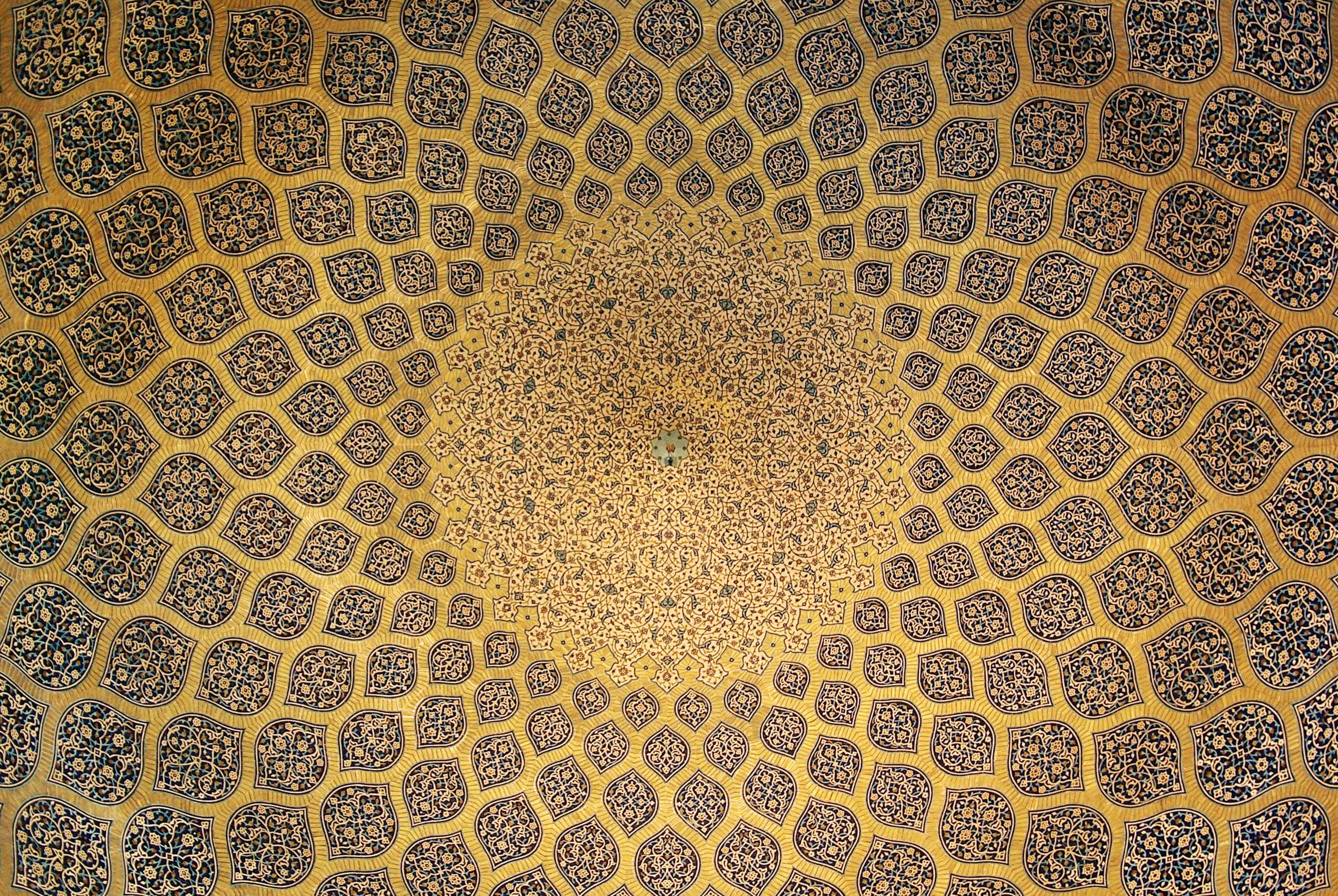
Why is Islamic Art non-figurative and abstract ?
It allowed God’s Breath to flow through the artist. The value placed on harmony, continuous patterns, and vitality in design, has a very specific purpose : to create a piece like an actual organism, repeating God’s task of world creation, on a much smaller scale.
All in all,
Islamic art is a magical act of exploring the nature of reality with an empty, non-selfish mind, beyond any previous knowledge, and understanding Allah better this way. In non-religious terms, Islamic art looks for answers to the question : “How should life be lived ?”. And because this knowledge is so uncommon, it has to find it beyond the realm of words.
Who is the islamic artist ?
The Islamic artist creates a two-way passage (a window of sorts) between the sensuous and the divine, between Truth and Reality.
أبو حامد الغزالي — كيمياء السعادة (الفصل الأول في معرفة النفس)
والمقصودُ من الرياضةِ تَخليصُ القلبِ من صَدإ الشهوة، حتى يصيرَ كالمرآةِ الصافية، فَيَنعكِسَ فيه نورُ اللهِ تعالى.
“The aim of moral discipline is to purify the heart from the rust of passion, until it becomes like a clear mirror in which the light of God is reflected.”
—Abū Ḥāmid al-Ghazālī, Kīmiyāʾ al-Saʿāda (The Alchemy of Happiness), ch. 1, Persian/Arabic text; Eng. trans. Claud Field (1910), p. 21.
The Islamic Artist experiences the divine, and brings it down to earth, to the sensuous. Then this sensuous manifestation, in turn, becomes a the bridge that allows everyone into the mind of God.
Islamic Artists are the scholars, religious figures, and gifted artisans who, from a position of high piety, serve Allah by helping everyone understand him, and bringing the world into greater harmony.
The calligrapher was a particularly revered form of artist : calligraphy was described as the “geometry of the soul”. Its principles were handed down generation by generation, ultimately going back to God’s revelation. No one could claim mastery in calligraphy without an ijāzat al-khaṭṭ (written certificate) from their teacher.
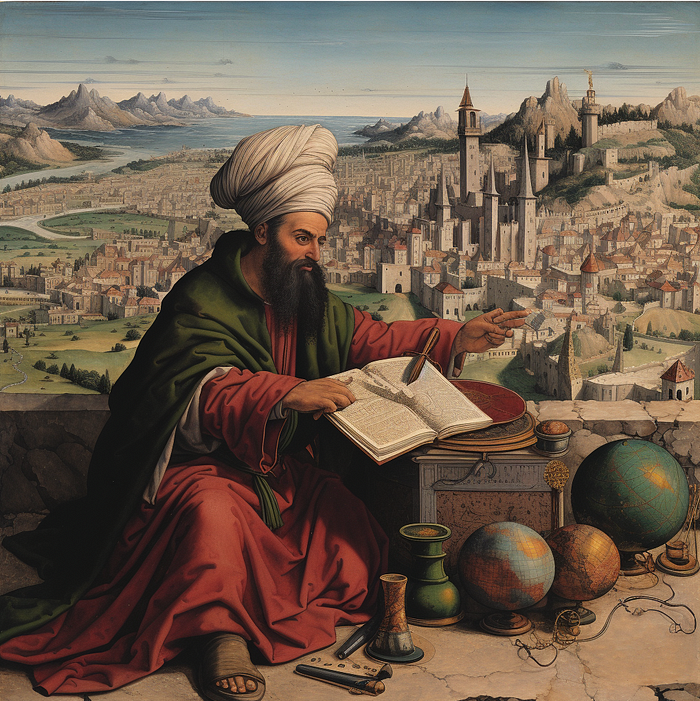
The artist is a creator of architecture as a way to bring God’s presence into the physical realm. They create highly beautiful, handcrafted copies of the Qu’ran as an act of worship, and paint abstract patterns on walls and paintings, because this is the only way to express ideas that go beyond physical reality.
All in all,
Islamic Artists were intermediaries of sorts. Whether in the mirror analogy or in the window (two-way passage, bridge) analogy, they act as the communicator of Allah’s truths in this world, and as the communicator of human gratitude and admiration to Allah. Thus they maintain harmony in the cosmos.
The source of Islamic Art’s Power
Islamic artists were often revered for their religious standing. The association could go either way : an artist becomes revered because of the uncanny vitality and order of their work, interpreted as divine blessing. Or, the other way, an artist’s work is perceived as revelatory because they have spiritual authority (often Sufis or philosophers).
Look at the passage below :
«قال رجلٌ: يا رسولَ الله، إنَّ الرَّجلَ يُحبُّ أن يكونَ ثوبُه حسنًا ونعْلُه حسنًا؟ فقال ﷺ: إنَّ اللهَ جميلٌ يحبُّ الجمالَ.»
A man asked: “O Messenger of Allah, what if a man likes his clothes and his shoes to look good?” The Prophet ﷺ replied: “Allah is Beautiful and loves beauty.”
(Ṣaḥīḥ Muslim, Bāb Taḥrīm al-Kibr, no. 91)
This grants religious authority to beautification when done without arrogance. Rulers and patrons commissioned ornate Qur’ans, mosques, and gardens under this ethos, considering beauty a sign of piety.
Sufi Orders & Guilds, believing in the mirror analogy, permeated society — the sultan himself was sold on this (see the anecdote at the very start) !
It seems strange to us, but faith and genuine spiritual search made these artists very influential, and they frequently received court patronage. Thus they could both influence society through their art, and gain power by serving powerful masters.
Conclusion :
In the first episode in this series, we looked into cave paintings, and noted that the cave painter was a magician, manifesting reality through his art, and holding sway over the emotional state of the tribe.
In some ways, Islamic art is very similar : it does have an effect on emotional states, and it is codified and transmitted from master to student. In addition, it does have that exclusive, spiritual, intuitive aspect of cave-painting shamans.
But we can also see ways in which a different society pushed Art in different directions. Remember here, we are training ourselves to see how society determines what kind of art will be successful, so that we can know what art will be successful in the face of the AI Art society.
In a highly unsure world, where people had no power, Cave painters became magicians, controlling things like the weather, the amount of prey, and the will of the gods.
In a highly sophisticated civilization, where the ultimate aim was religious piety, Islamic Art became a highly complex, abstract, and at the same time religious act, funded by religiously-minded aristocrats.
I have to note something very interesting here : we see, with these two data points, a pattern that may continue with other eras of Art : it is a tradition handed down generation after generation, and leaves somewhat little space for personal expression. Why ? Precisely because it is important. You can’t mess it up.
And so, each age reinvents art in its own image : perhaps the less art belongs to the individual, the more it belongs to the world !
Two forms of Art down.
Many many more to go.
Subscribe to the Substack for more !!
And restack if you feel this deserves more attention :)
sources :
https://renovatio.zaytuna.edu/article/the-silent-theology-of-islamic-art
This Substack is reader-supported. To receive new posts and support my work, consider becoming a free or paid subscriber.
Comments
Nothing yet. Say the first thing.
Sign in to join the conversation.