
I pray for the sake of Art, that no AI researcher ever lays eyes on this essay…
I’ve got a full drawing on the way, titled “The middle way”. While making snapshots for it, I realized something about AI Art that greatly scares me.
This Substack is reader-supported. To receive new posts and support my work, consider becoming a free or paid subscriber.
There are some things I do when I’m making art, that AI Models don’t do.
Not because they can’t… But because AI research has no clue about Art.
Given the popularity of this substack, I feel it’s fine to share everything with you guys. The likelihood of an AI researcher (apart from me) laying eyes on this, is extremely low.
(this is post 1 of a series of 2 posts)/(there are one or two technical terms in this that may not be immediately accessible to artists — but I explain them as the post goes. This is a learning opportunity for you !!).
Post 1- Things that are AI could do, but AI researchers have no idea
Step by step
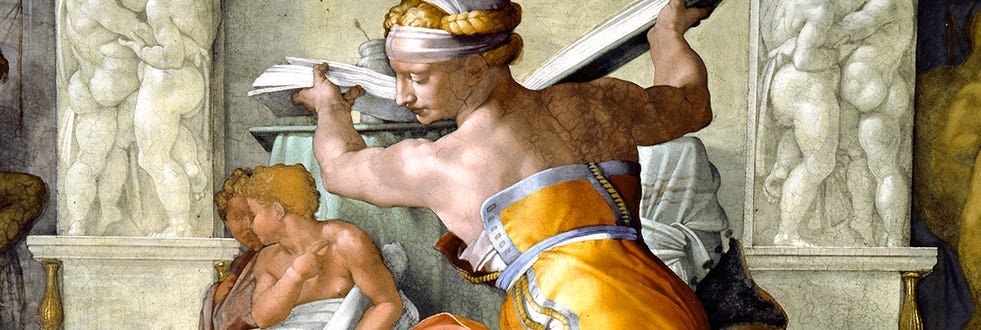
Art museums are full of drafts, sketches, and composition/arabesque/tones studies from the greatest artists of all time. The fact is : Art is an iterative process, even for the most skilled.
If you don’t need to iterate for a piece, then your standards are too low.
But AI doesn’t iterate. It generates the entire image all at once. The “denoising steps” of modern diffusion models (AI Art models) don’t compare to human-style iteration.
Baking iteration into AI Art models would make them better at Art. Why don’t AI researchers do it ?
Not because they can’t…
Reasoning is in fashion in Large Language Models today. It basically involves iterating over the response to the prompt, allowing the model to “reason” about its own errors, and overall, give a better, more human-like response.
More and more, LLMs are being given autonomy and allowed to run over a long period of time, trying to figure out a problem on their own.
So why don’t AI researchers do the same for Diffusion models (AI Art models) ?
Because they have no clue about the artistic process.
Influence, communication
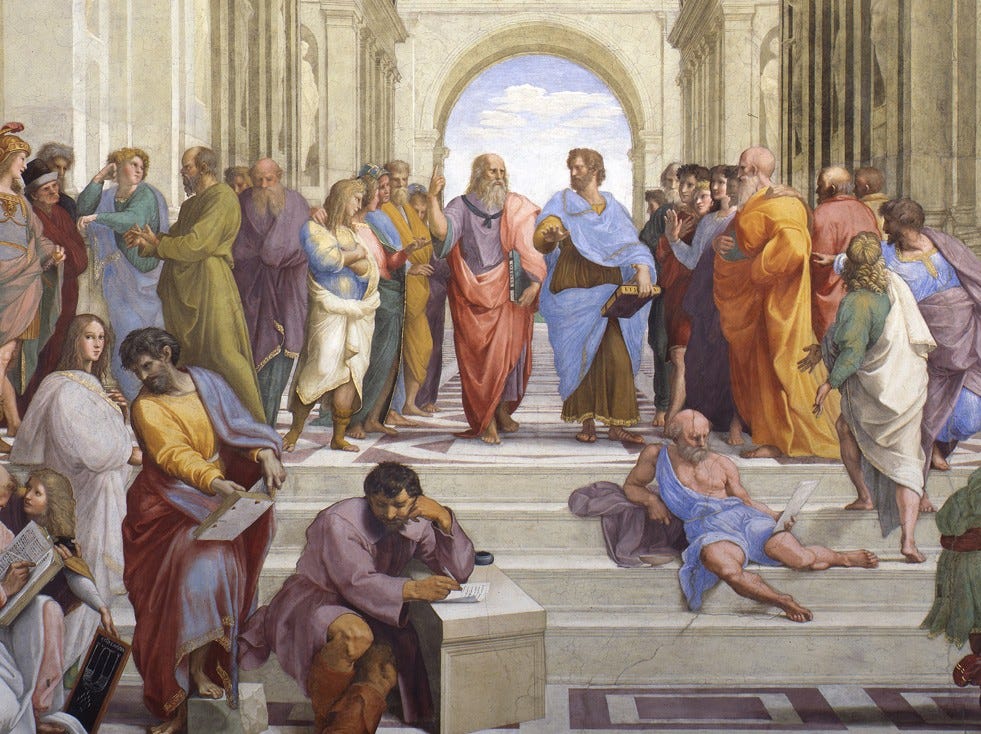
What motivates the greatest artists, deep down ? Purpose, legacy, self-belief… In all cases, a self-overcoming mechanism, always trying to push themselves and their art further. And once they have gone beyond all previous human understanding, they find themselves equipped to SHARE this discovery with everyone else.
One way my neuroscientist colleagues explain human goal-following, is through reinforcement learning. Basically, stick-and-carrot learning : define a goal. Get closer, feel happy, reinforce the action that moved you closer. Get further, feel bad, discourage repetition of the action.
The engine for AI learning is two-fold (those of you who’ve followed this substack for some time will know this already) :
1- The learning of intelligence : “produce outputs that look like they belong in the training data”
This learning process produces a monster-like system, that has a infinite smarts, and unlimited knowledge, but no idea how to behave or interact with the world.
2- The alignment phase : “produce outputs so that the humans will be pleased with you”.
This is done precisely through reinforcement learning !!!
Reinforcement learning works on AI models. So AI researchers have a free opportunity to set any goal they want the AI to achieve. They could have the AI try to overcome itself, and truly innovate, almost like an artist. And then they could set it on a quest to communicate these new truths to people.
Why haven’t they done so ?
Because they have no clue about the artistic process.
Physicality
Do we have souls ? Are we more than just atoms ? Is there something about us that science cannot figure out ?
Yes.
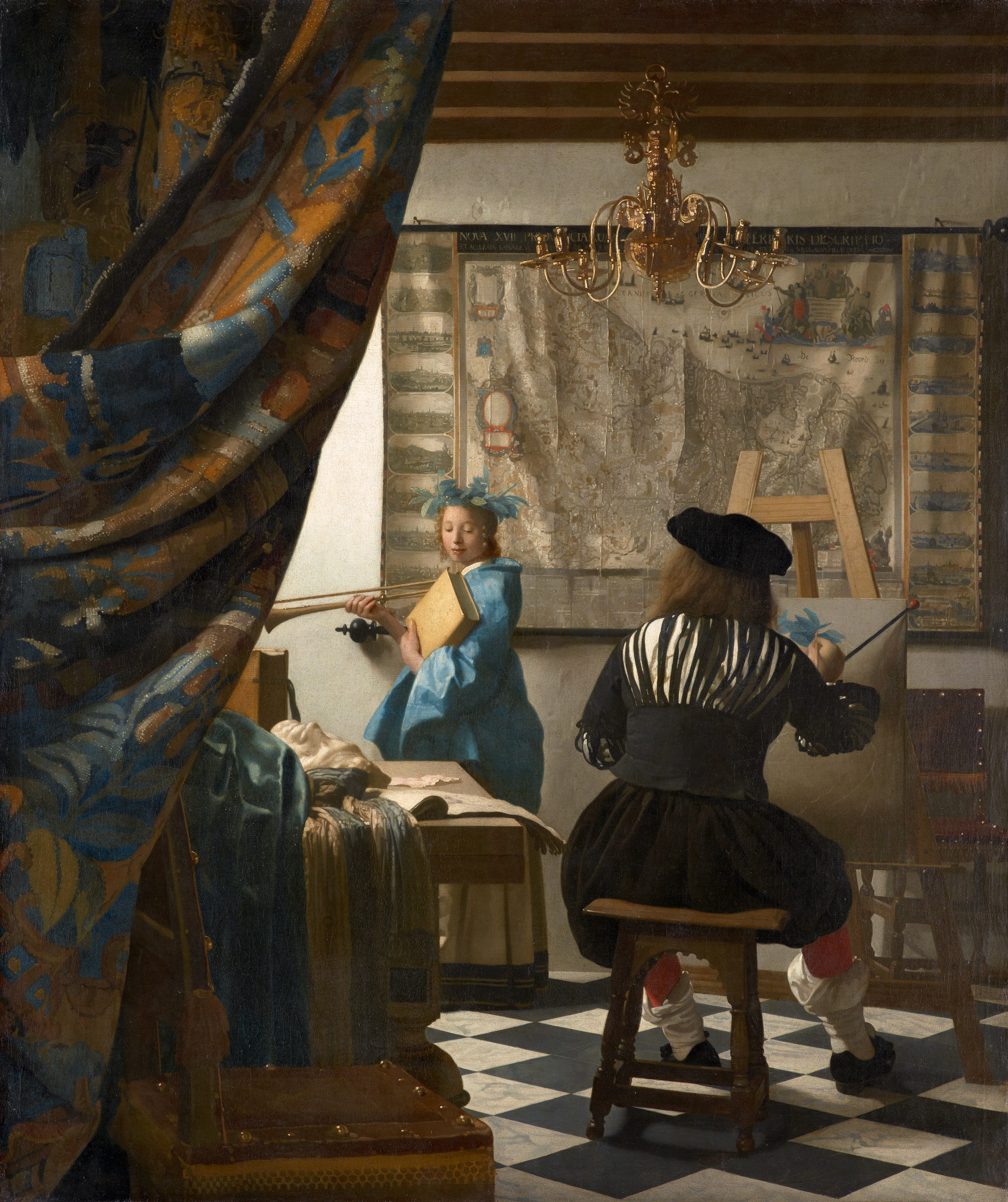
But this soul is inextricably linked to the physical body, at least in this life. Without a physical body, there is no instinct, no purpose, no struggle… No Art.
And guess what ? AI is stuck on the computer !
Is this because AI researchers can’t give AI Art models a body ?
You guessed it… They could, technically, do it. Robots have got pretty impressive these days. They’re agile, smart, and nimble. You can check out demos from Figure (the company) as just one example.
If full-body robots can collaborate together to autonomously perform a whole range of domestic tasks, training a single robotic arm on a painting task shouldn’t be impossible.
So why haven’t they done it yet ? You guessed it again…
Because they have no clue about the artistic process.
Alright, enough self-destruction for now…
I played a lot of devil-advocacy in this post.. As you’ve hopefully noticed.
As an AI researcher myself, it is my belief that real, physical art brings something irreplaceable to the table. I am looking for the first opportunity to leave AI behind. I will never use AI in my art, regardless of my AI skill. In fact, if I could delete all of AI right now with a snap of my fingers… I would do it.
Thus, I swear that I won’t be the one to apply any of these improvements to AI Art..
But I can’t say someone else with the same skills as me won’t. Because then we’ll be in real trouble.
See you next time…
ArtPostAI.
This Substack is reader-supported. To receive new posts and support my work, consider becoming a free or paid subscriber.
Comments
Nothing yet. Say the first thing.
Sign in to join the conversation.