
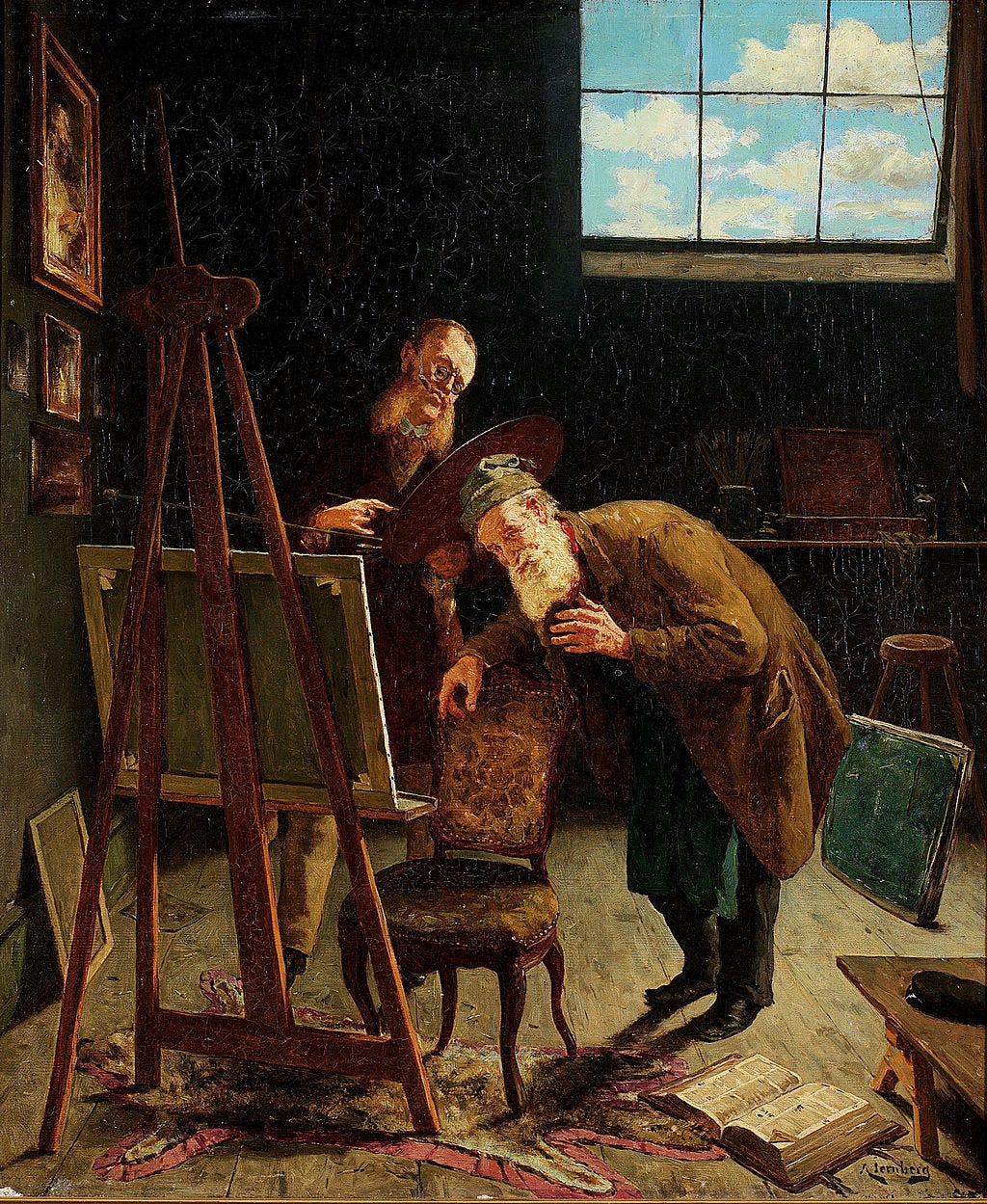
The general public has this idea of artists as privileged, ivory-tower dreamers. Sitting around all day, painting and doing nothing else.
But the truth is much more impressive : from the high competition of medieval guilds, to academic elitism and the scarcity of government programs, artists have always doubled as fundraisers, networkers, and makers of change. In one sentence, they are fighters with a passion, who know how to get what they want.
This Substack is reader-supported. To receive new posts and support my work, consider becoming a free or paid subscriber.
As an AI researcher who refuses AI in my own art and has practiced traditional techniques for six years, I’m committed to keeping traditional art alive. My purpose is to distill my specialized knowledge to artists in the most useful way possible. I want to show you the simple moves we can take now to defend Art.
The tech giants and ethics-free engineers thought they had the monopoly of problem solving. They are slowly coming to a painful realization.
The story
A German court has just ruled that OpenAI’s ChatGPT illegally used and regurgitated German song lyrics it was trained on, forcing OpenAI to pay damages up to hundreds of thousands of euros to creators !
In plain English: these models are trained to imitate what they’ve seen. They don’t memorize the whole internet, but they do sometimes memorize pieces of it by accident, which is exactly what showed up with those song lyrics. This makes their learning a mix of by-heart, and generalizable visual knowledge. This is a big hurdle for yacht billionaires. And while memorization issues are being targeted, zero-risk doesn’t exist, because AI researchers themselves (I being one of them) don’t know what’s going on inside these models.
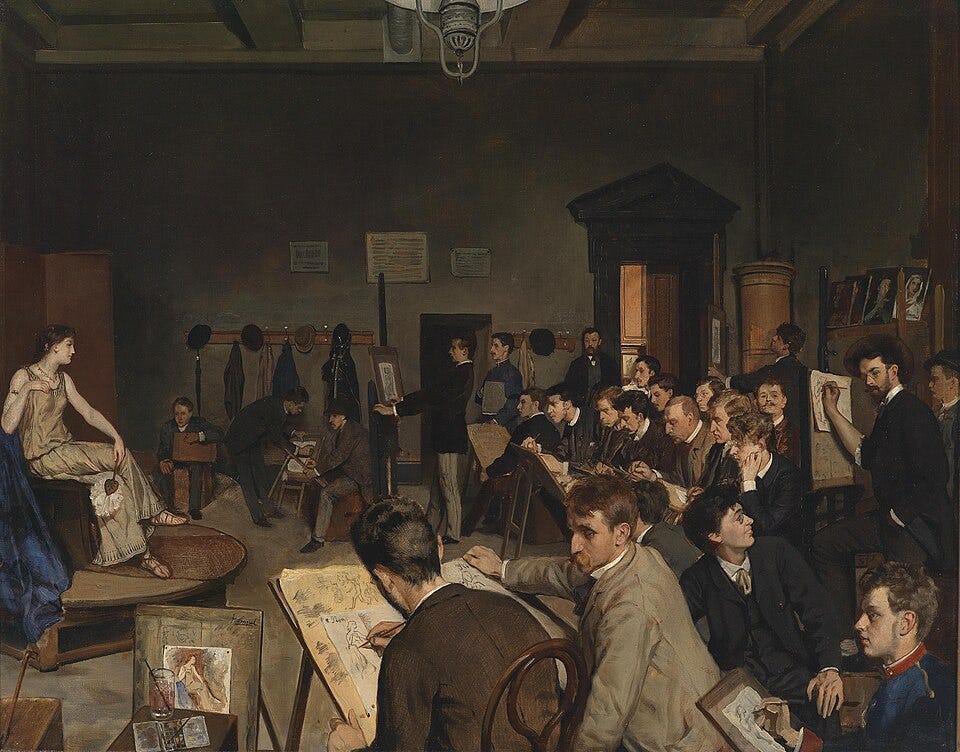
This is the first big European precedent that says “you can’t just scrape creative work for AI for free.” From it, a lot of copy-cat lawsuits could arise, making Europe a landmine for greedy tech Billionaires, so much so that they might actually have to remunerate artists.
The society that made the complaint, GEMA, showed a simple truth that everyone already knew. With simple prompts ChatGPT could output near-verbatim lyrics from nine famous German songs (e.g. Herbert Grönemeyer’s Männer, Helene Fischer’s Atemlos durch die Nacht, Reinhard Mey’s Über den Wolken). This constitutes unauthorized reproduction under German copyright law.
So who are the heroes over at GEMA ? They’re a collective founded in 1933, representing the rights of ~100,000 members (composers, lyricists, publishers). Since the start of the AI craze, they’ve been front-line defender of creators against “self-service” AI scraping. They also have a lawsuit against Suno AI in the works. I say thank GEMA !
But let’s not get ahead of ourselves..
The reality
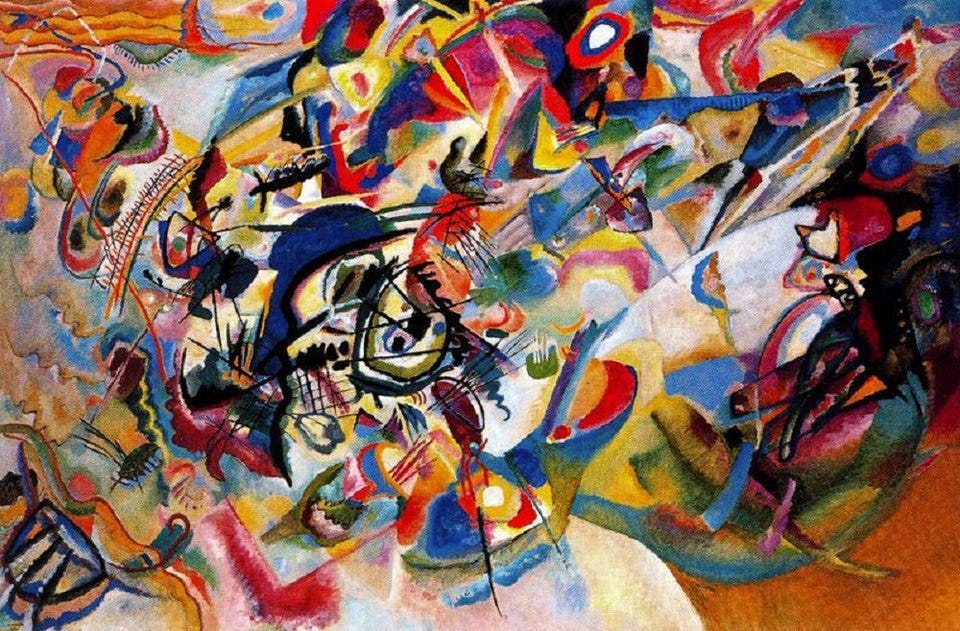
Gema is not nobody. They are the sole body that licenses most music uses in Germany. Is there an equivalent in visual arts ? In literature ? In acting ? In all the ranges of specific creative jobs ?
Not so sure.. The music industry, being so litigious throughout it’s history, will likely be the best protected against the AI predators. The biggest fight remains ahead of us in most cases.
The job of “artist” has always been a fluctuating thing. What seems likely to happen is that in the next ten years, as regulation catches up, one source of revenue for artists will be these ethical AI systems, to whom they will sell licenses to their art. This’ll be a choice to be made by each artist : a steady source of income, or ownership of your art. There is no right answer here. You could also only license the art that you’re not that proud of, and so on.
The lesson is this : As an AI researcher, I’ll be the first to say AI has very clear limits. You must see it not as an existential threat, but as a potential source of income. Start looking around for options for remunerated AI licensing. One seemingly great solution is to only license the works that don’t matter to you. You could even purposely make low-stakes works to license, and keep ownership of your meaningful work.
The long game
So at the end of the day, Art is safe to some degree. But the degree to which it retains agency and power, instead of being subservient to tech giants, will depend on us.
This is what it means to “adapt to AI”. I don’t mean “use AI as part of your workflow”. That’s something I will never do myself. What I mean is that AI is going to change the entire landscape, and we have to find our place of power in this new landscape.
To this end, we have two historical examples to learn from : the painters, and the Luddites.
The Luddites united against the introduction of machinery that could replace them easily. This was class struggle against tech oligarchs chasing ethics-less money. It seems like the replacement of their labor was inevitable, and the Luddites failed to burn all the machines down. At the end of the day, they became activists and protectors of artisanal work, which is valuable. But little creative breakthroughs seem to have arisen out of their resistance.
Not ideal.
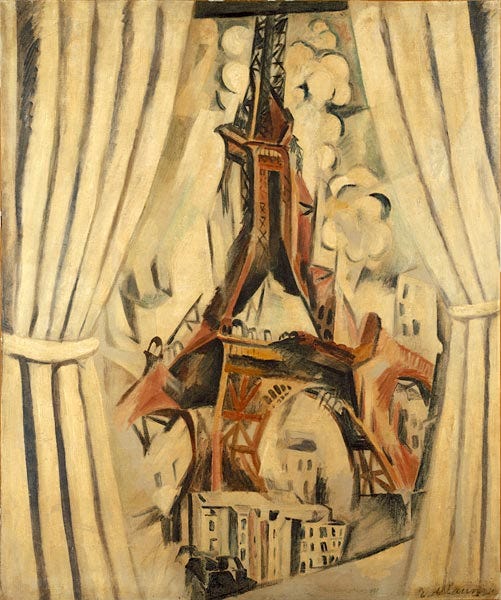
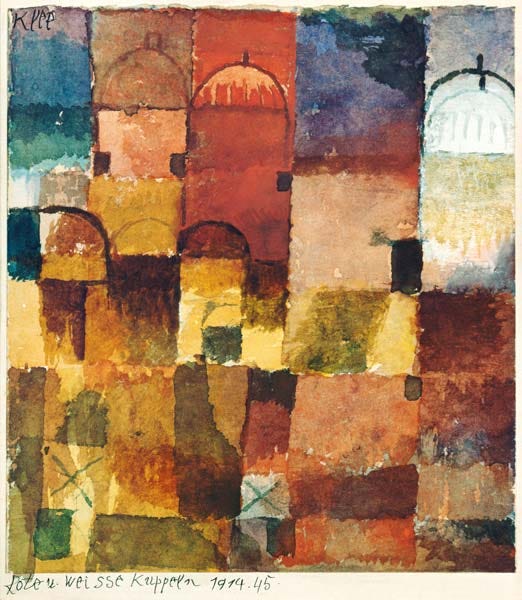
Let’s look now at the painters. When photography came along, it was declared by many that “painting was dead”. Baudelaire, the french poet, led a resistance of sorts against it. But the loss of jobs and revenue among photorealistic portrait painters was inevitable. Activism didn’t save painting. It was the painters’ own inventivity that did. Movement after movement probed the depths of human experience and went beyond what the photorealism and easy access of photographs could offer.
Now that is ideal.
Concluding thoughts
From the Luddites, we learn the timeless lesson that artists must fight for themselves. That the world isn’t a kind place, and that we have to carve out a place for ourselves in society. We owe them a great deal of rights and advantages, directly and indirectly. If you want my mentor rule in one breath: license only sketches and studies; keep signature work off-limits.
And yet we aren’t just activists. Our activism must serve our invention, and our art. Let’s not get obsessed by the means, and forget our end goal, which is Art. Our role models must be the painters of the late 19th century and early 20th century, who fought the new tech of the day through their own creativity.
So while GEMA and others secure the money half of the fight, the other half (making art so alive that AI looks dull beside it) still falls on us.
The tiring, handy work of luddite-like activism is being achieved. It remains our role to find creative turns in art, that’ll make it indispensable, even with AI around.
See you next time,
ArtPostAI
This Substack is reader-supported. To receive new posts and support my work, consider becoming a free or paid subscriber.
Comments
Nothing yet. Say the first thing.
Sign in to join the conversation.