
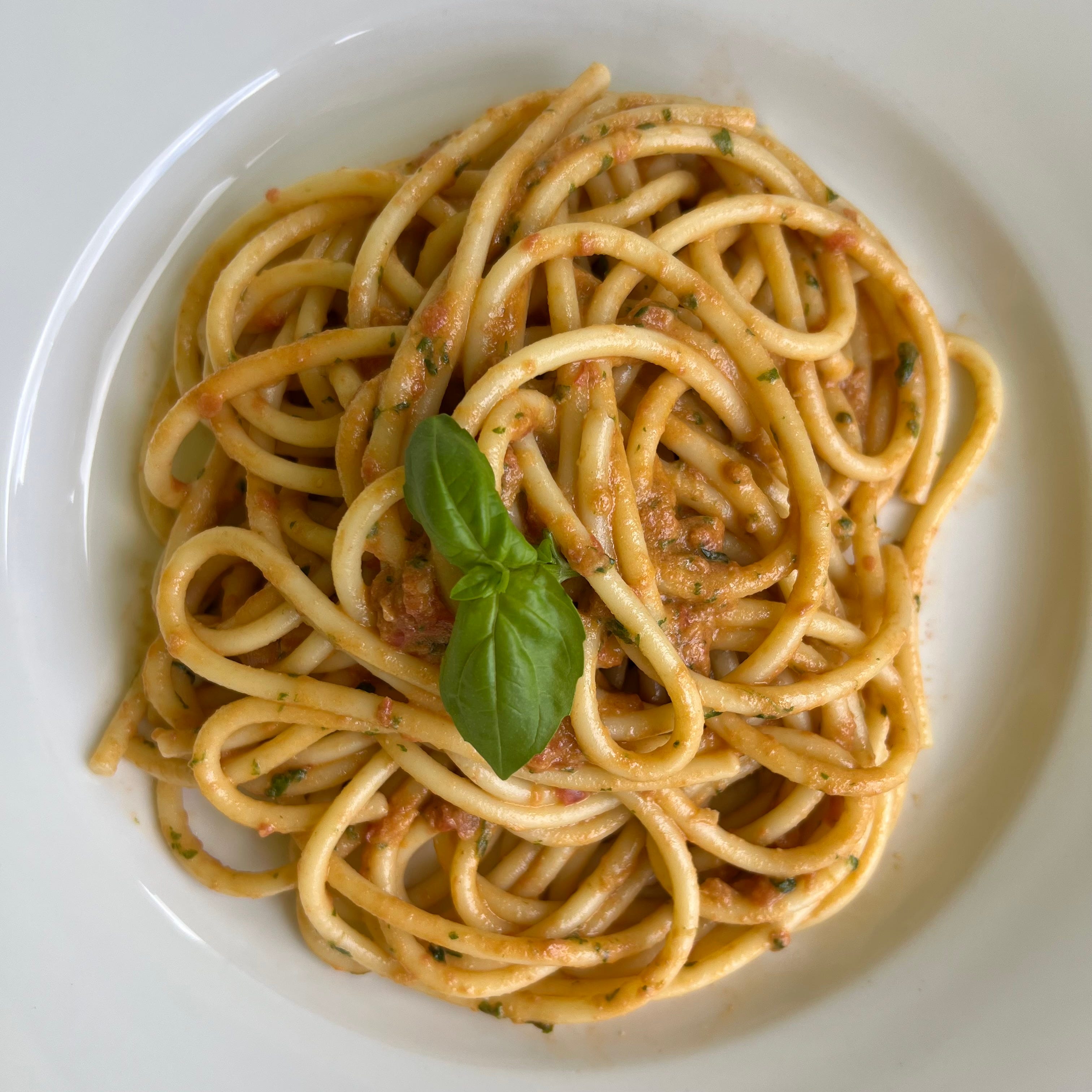
I’m in the midst of my largest, best tomato harvest ever, planning to can and freeze, and thinking about the best ways to use the fresh tomatoes right away. This recipe appeared in print in 2003. It hugely deserves to be made, especially at this time of year. Here it is with a few changes and additions, although nothing that changes the taste.
Other pasta sauces are as good, but none is better than this creamy pesto from the city of Trapani in westernmost Sicily. Pesto trapanese is partly like the famous pesto from Genoa, but the Sicilian one contains no cheese, adds tomatoes, and uses almonds in place of walnuts or pine nuts. Both kinds are served raw over hot pasta, which in Trapani, ideally, means homemade busiate. Those are long corkscrews made originally by rolling strips of the dough around busi, “straws,” although other shapes are often used, such as bucatini (long, narrow, hollow tubes) and even spaghetti. I first tasted pesto trapanese at the Cantina Siciliana, which opened in 1958 on a back street of Trapani. At lunch, the small, tiled dining room was nearly full. Two policemen in uniform sitting at one table were a sign that the food would be good. A young waitress smiled so sincerely that it might have been her first day. I started with bruschette with thin slices of tuna bottarga; then came fresh sardines, soaked for a few minutes in vinegar and fried. The unexpected revelation was busiate col pesto trapanese: garlic, basil, ripe tomatoes, peeled almonds, olive oil, salt, and pepper mashed and turned into a cream in mortar. The sauce is so good because of its freshness and rawness and flavors that go perfectly together. The texture achieved in a mortar, as at the Cantina Siciliana — more uneven and slippery — pleases the mouth more and preserves more basil aroma than the texture from a machine. But if you don’t have a mortar, don’t let that stop you.
Comments
Nothing yet. Say the first thing.
Sign in to join the conversation.