
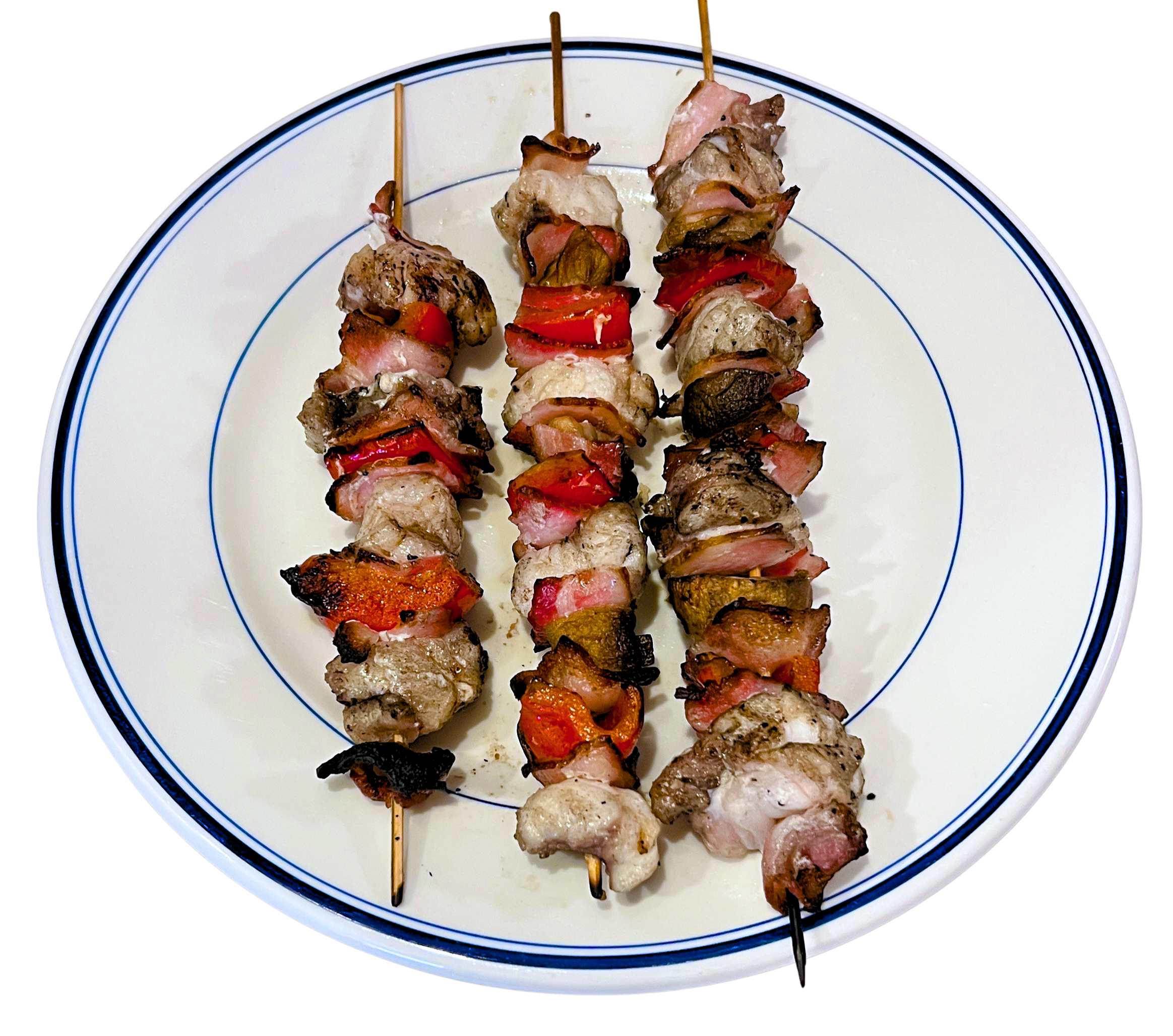
You don’t see whole monkfish sitting on the ice at a fishmonger. They’re particularly unattractive, dominated by an oversized head. Only the tail and sometimes the cheeks are eaten (and the head makes soup). Fish should always be beautifully fresh, but I’ll risk saying that monkfish keeps its freshness a little better than some fish. The spine divides the tail into two boneless filets; they’re lean and the meat doesn’t flake in cooking. With its firm texture, monkfish has often been used as a stand-in for lobster, despite not having the flavor. Like other fish, monkfish is done at 50 to 55 degrees C (120 to 130 degrees F), though it’s less sensitive to overcooking than many fish. It does gradually dry and toughen, turning rubbery, or, conversely, in a chowder, it falls apart. Monkfish can appear in bouillabaisse, but there aren’t a lot of specifically monkfish dishes.
Comments
Nothing yet. Say the first thing.
Sign in to join the conversation.