
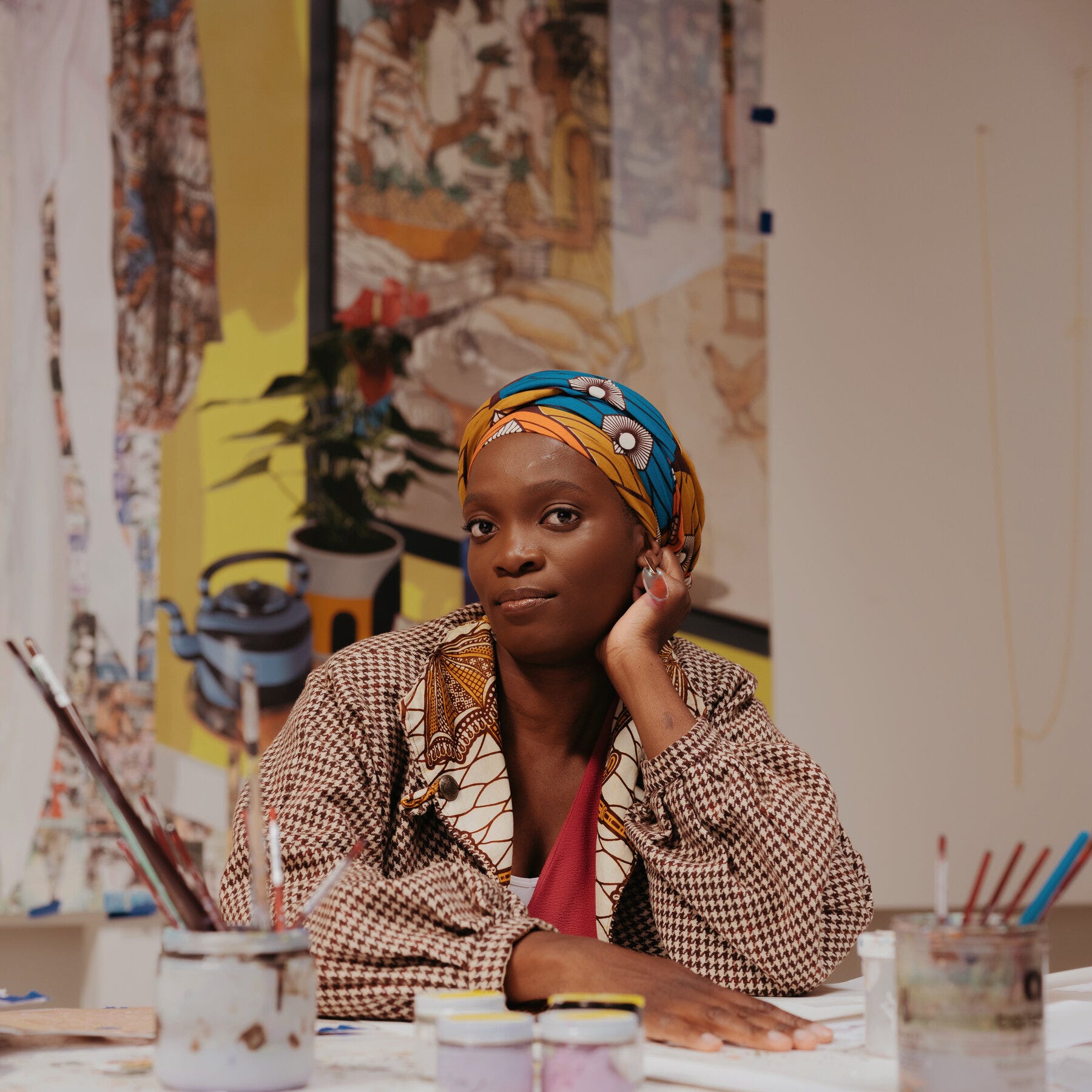
Njideka Akunyili Crosby has developed one of the most distinctive approaches to contemporary figurative painting by transforming intimate domestic scenes into complex reflections on identity, migration, memory, and cultural belonging. Born in Nigeria and based in Los Angeles, her work emerges from the experience of inhabiting more than one cultural world at the same time.
Her paintings often depict people within domestic environments: sitting together, eating, relaxing, talking, or simply occupying a shared space. At first, these scenes can appear almost conventional. Yet the surfaces reveal an extraordinary density of information. Photographic transfers, magazine imagery, patterns, personal photographs, and painted passages coexist within the same composition, creating visual environments in which private experience and cultural history become inseparable.
This layering is fundamental to understanding her portraits. The people represented in her paintings do not exist in isolation. Their identities are constructed through relationships, places, memories, objects, images, and cultural references. A domestic interior becomes almost a psychological map.
The effect is particularly powerful because Crosby does not explain these relationships. Instead, she allows them to coexist visually. Nigerian popular culture can appear alongside references to American life; personal photographs can sit beside mass-media imagery; carefully painted bodies can exist within spaces saturated with photographic fragments.
Her portraits therefore operate on several levels simultaneously. They are images of individuals, but they are also images of cultural negotiation. They ask what happens to identity when a person belongs simultaneously to different geographical, cultural, and emotional worlds.
This complexity is one of the reasons her paintings feel so contemporary. In an increasingly interconnected world, identity is rarely singular. Crosby turns that condition into a visual language, creating portraits in which belonging is not represented as a fixed state but as something constantly being assembled.
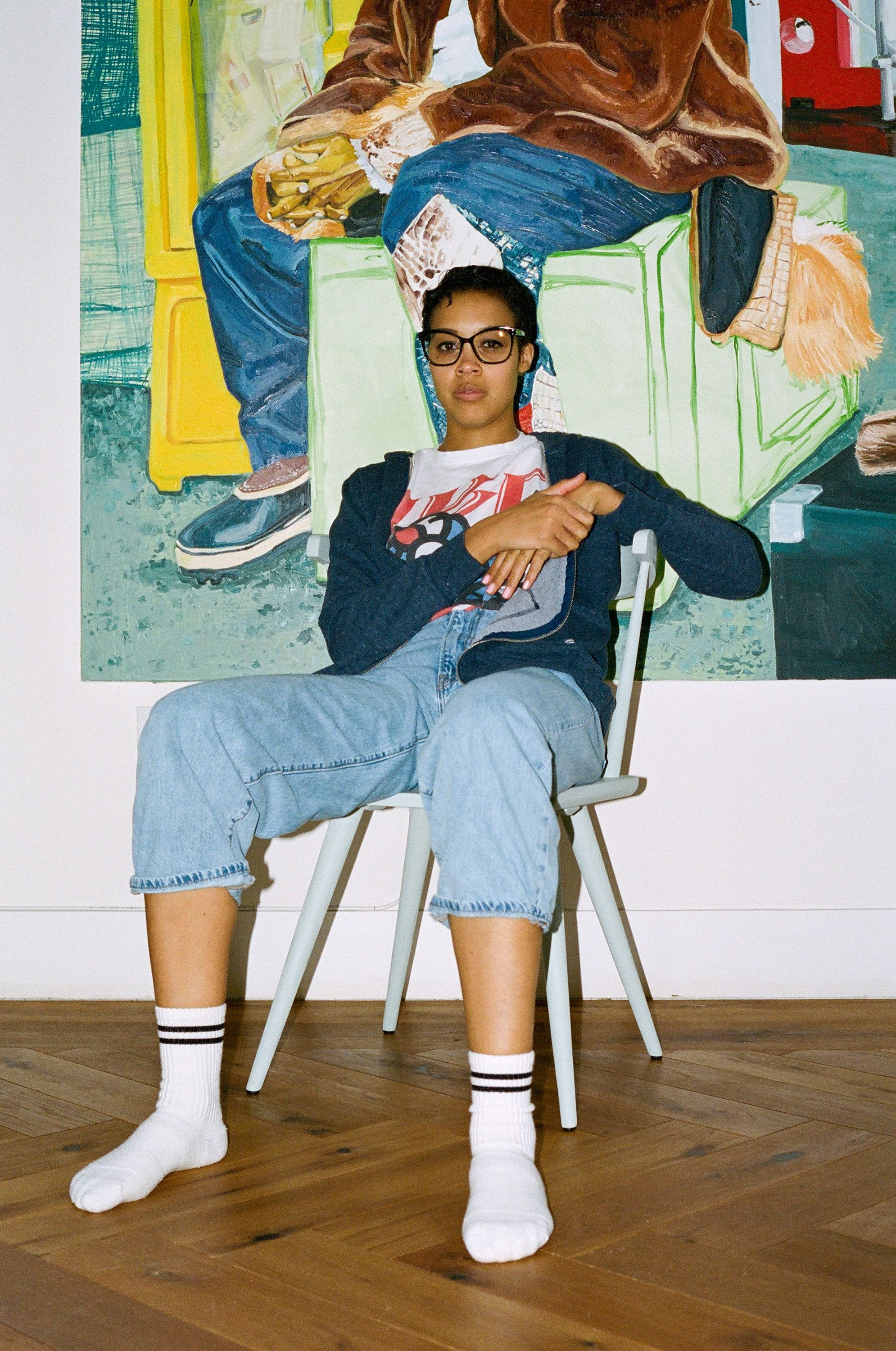
Jordan Casteel approaches portraiture through direct engagement with people and communities. Her paintings often depict individuals encountered in everyday environments—on streets, in shops, on public transport, or within neighborhoods. Her subjects are not anonymous symbols. They are individuals whose presence becomes the central event of the painting.
One of the most important aspects of Casteel’s work is the relationship between artist and subject. Her portraits are built from extended photographic observation and personal encounters, allowing the paintings to retain a sense of familiarity and specificity. Her approach has been described as deeply humanizing because the figures are presented not as abstract social categories but as people with distinct personalities and individual presence.
This becomes especially significant when considering the history of portraiture. For centuries, painted portraits were strongly connected to social status and power. The people who could afford to commission portraits were often wealthy, politically influential, or culturally important.
Casteel changes this hierarchy.
Her paintings direct sustained attention toward people who might otherwise remain visually peripheral within the city. The act of painting itself becomes a form of recognition. To dedicate an entire canvas to a person is to insist that their presence matters.
Her compositions also create a fascinating relationship between intimacy and public space. A portrait can feel deeply personal even when its subject is encountered within a busy urban environment. The individual becomes temporarily separated from the flow of the city and given a concentrated visual presence.
This is where Casteel’s work becomes more than contemporary portraiture. It becomes an investigation into who gets seen, how people look at one another, and what happens when painting becomes a mechanism for returning the gaze.
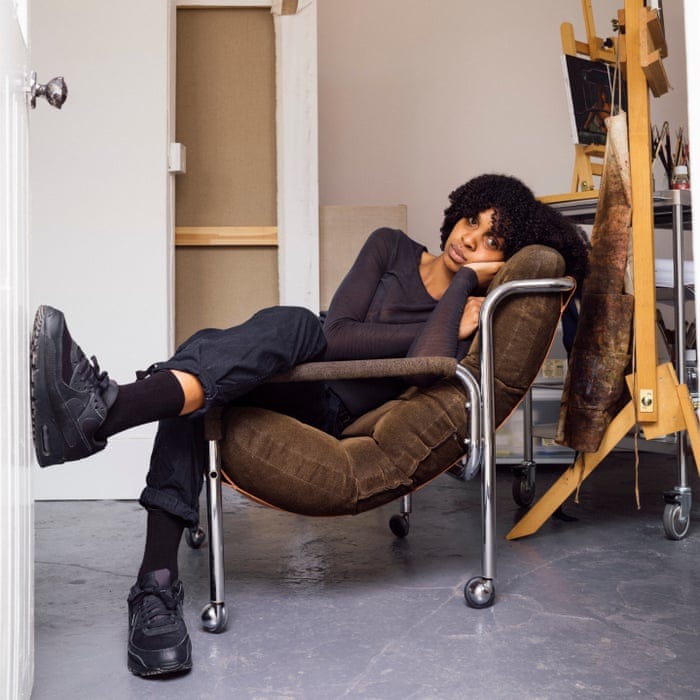
Somaya Critchlow occupies an intriguing position within contemporary painting because her work simultaneously embraces the history of figurative painting and completely destabilizes it.
Her paintings frequently depict female figures whose bodies and gestures appear familiar yet strangely elusive. Influences from Old Master painting, portraiture, mythology, and historical representations of women are transformed into contemporary images that resist straightforward interpretation.
The figures in Critchlow’s paintings often appear as though they have emerged from another painting. Their poses can recall historical portraits, but their expressions, bodies, and environments disrupt the authority traditionally associated with those images.
This creates an important tension. Critchlow is not simply borrowing from art history; she is questioning who has historically been represented, how women have been depicted, and what happens when those inherited visual languages are reclaimed and transformed.
Her paintings frequently possess a dreamlike quality. Bodies seem to emerge from darkness, backgrounds remain ambiguous, and narrative information is deliberately withheld. The viewer is given enough information to construct a story but never enough to settle on a definitive interpretation.
That uncertainty is one of the great strengths of her work.
The women in Critchlow’s paintings are not simply characters within narratives. They seem to exist outside the narrative structures that traditionally confined the female figure. They can appear powerful, vulnerable, playful, threatening, intimate, or completely unreadable.
Her work therefore demonstrates how contemporary portraiture can operate without providing a stable identity. A face does not necessarily tell us who someone is. Sometimes the most interesting portraits are precisely those that refuse to explain their subjects.
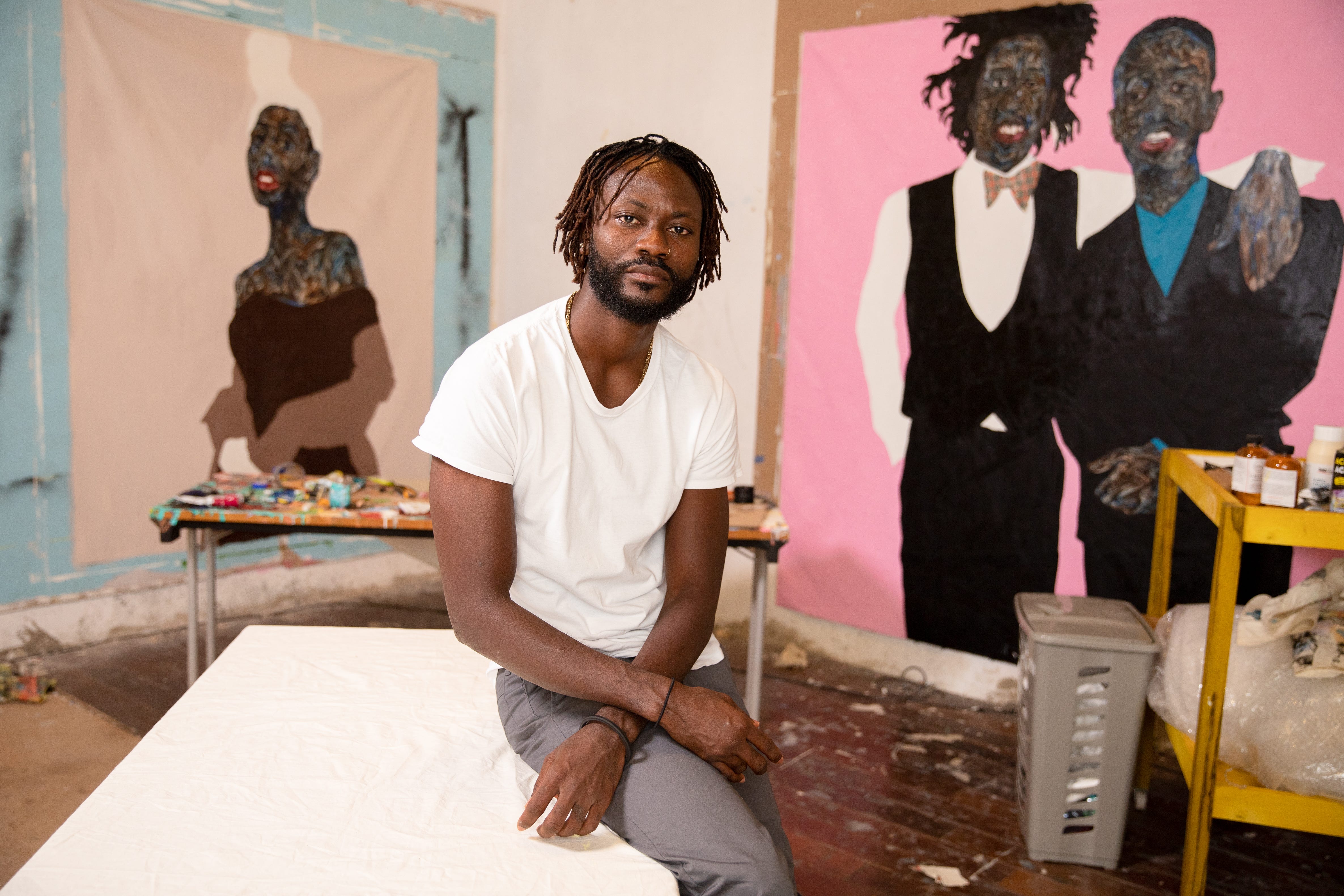
Amoako Boafo has developed a distinctive approach to portraiture centered on the physical and psychological presence of Black subjects. Born in Accra, Ghana, and based there, Boafo’s portraits frequently depict friends, acquaintances, and people from his surrounding community. His work has become particularly recognizable for its expressive handling of the figure and its distinctive use of finger painting.
The first thing that strikes the viewer is often the surface. Boafo’s fingers leave visible, energetic marks across the skin, creating a tactile relationship between body and paint. The technique is not simply a stylistic signature. It gives the figures a physical immediacy that makes the act of painting feel almost bodily.
His subjects often appear relaxed and self-possessed. They sit, stand, recline, or look away from the viewer. There is a sense of everyday life rather than theatrical presentation.
This matters because Boafo’s portraits are not constructed around the idea of exceptionalism. His subjects do not need to perform greatness to deserve representation. Their ordinary existence is enough.
The paintings therefore operate simultaneously as portraits and affirmations of presence. They offer images of Black life that are intimate, contemporary, and removed from the historical visual frameworks that have so often defined how Black bodies are represented.
Color becomes another important element. Boafo does not attempt to reproduce skin tones naturalistically. Instead, color becomes emotional and structural, allowing the body to exist as both recognizable human presence and painterly material.
This balance between identity and abstraction is central to his work. The figures remain unmistakably human, but the paint continually reminds us that a portrait is also a constructed image.
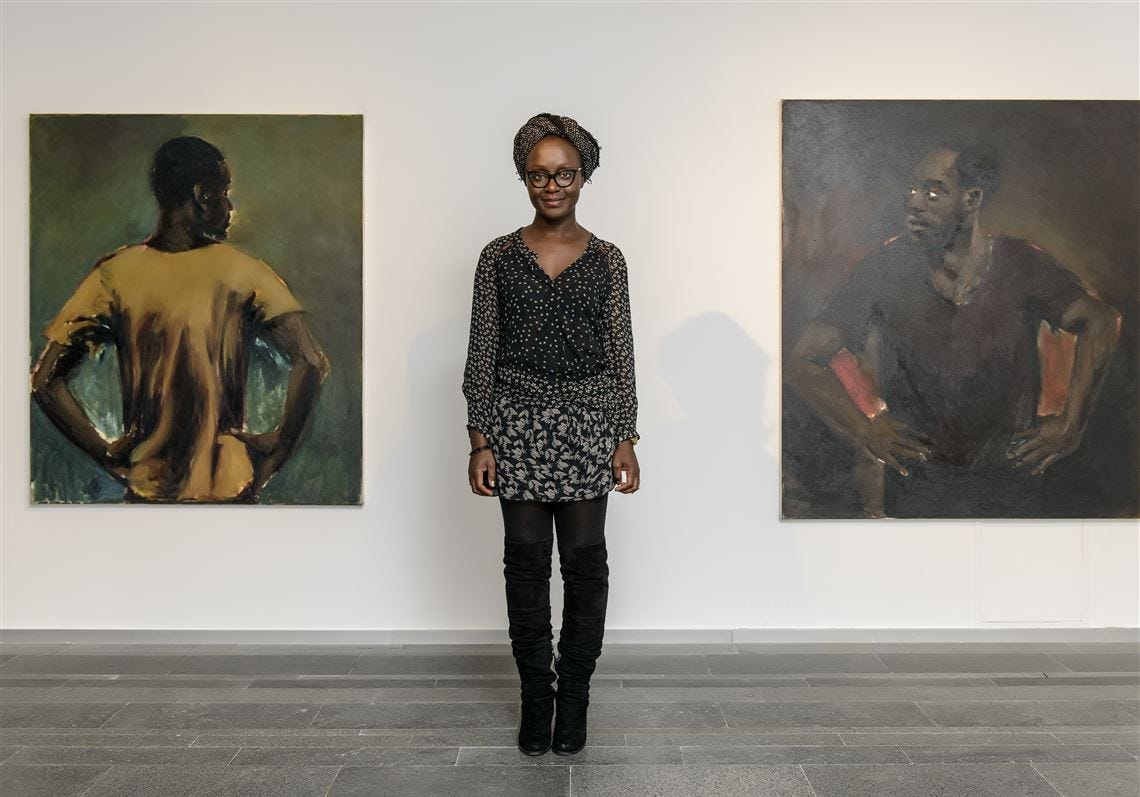
Lynette Yiadom-Boakye offers one of the most fascinating challenges to the traditional idea of portraiture. Her paintings depict Black figures who are not portraits of specific individuals. They are imagined people, constructed through memory, observation, visual references, and painterly intuition.
This immediately changes the relationship between portrait and identity.
A conventional portrait asks the viewer to wonder who the person is. Yiadom-Boakye’s paintings complicate that question because there is no identifiable sitter behind the image. Her figures do not belong to a particular biography. They exist entirely within the world of painting.
This absence of biography is crucial. Her subjects are not illustrations of a specific historical moment, social class, or political identity. They seem to exist outside conventional chronology.
The result is an extraordinary sense of freedom.
A figure can simply be a figure. A person can exist in a painting without having to represent an entire community or historical experience. Yiadom-Boakye’s work creates room for ambiguity, imagination, and psychological projection.
Her paintings often possess a quiet, literary quality. A solitary figure might appear seated in an interior, standing against a dark background, or caught in an undefined moment. There is enough information to suggest a story, but the story never arrives completely.
The viewer therefore becomes part of the construction.
We begin inventing identities, relationships, memories, and possible histories for people who do not have them. The portrait becomes an act of imagination shared between artist and viewer.
This is perhaps one of the most radical possibilities of contemporary portraiture: a painting does not necessarily have to tell us who someone is. It can instead ask us why we feel the need to know.
No posts
Comments
Nothing yet. Say the first thing.
Sign in to join the conversation.