
For this year’s Art’s Open Door Advent Devotional, “Advent Songbook,” I’ll use my musical expertise to bring rich examples of Christmas art to the forefront. We will pair each piece with a devotional reflection and a practical spiritual posture to shape this season of waiting and wonder.
What to do: take time to listen and/or view the music discussed for each post. When you’re ready, read through the devotional. At the end of the written portion, there will be an invitation: something for you to try or consider in response. Listen again to the music before ending your reflection time.
Does it sound different? How is God speaking to you today through art?
Jot down anything you heard in your journal….or tell us all in the comments!
Today’s video features S:t Jacobs Ungdomskör performing Benjamin Britten’s A Ceremony of Carols in concert at S:t Jacobs Kyrka with conductor Mikael Wedar and harpist Margareta Nilsson. The “Harp Interlude” is movement VII of a larger work. It begins at 12:40. The video should start right on the harp movement when you click the link.
If you are having trouble finding it, or if you’d prefer to hear just the audio, click play below 👇
0:00
-3:12
This 1953 recording features the Copenhagen Boys’ Choir (Mogens Woldike, choirmaster) with Enid Simon on harp, and Benjamin Britten himself conducting. (It is licensed for distribution by Creative Commons.)
26 In the sixth month of Elizabeth’s pregnancy, God sent the angel Gabriel to Nazareth, a town in Galilee, 27 to a virgin pledged to be married to a man named Joseph, a descendant of David. The virgin’s name was Mary. 28 The angel went to her and said, “Greetings, you who are highly favored! The Lord is with you.”
29 Mary was greatly troubled at his words and wondered what kind of greeting this might be. 30 But the angel said to her, “Do not be afraid, Mary; you have found favor with God. 31 You will conceive and give birth to a son, and you are to call him Jesus. 32 He will be great and will be called the Son of the Most High. The Lord God will give him the throne of his father David, 33 and he will reign over Jacob’s descendants forever; his kingdom will never end.”
34 “How will this be,” Mary asked the angel, “since I am a virgin?”
35 The angel answered, “The Holy Spirit will come on you, and the power of the Most High will overshadow you. So the holy one to be born will be called[a] the Son of God. 36 Even Elizabeth your relative is going to have a child in her old age, and she who was said to be unable to conceive is in her sixth month. 37 For no word from God will ever fail.”
38 “I am the Lord’s servant,” Mary answered. “May your word to me be fulfilled.” Then the angel left her. Luke 1: 26-38 (NIV)
The first morning I learned I was “with child,” I woke before my husband. Our bedroom was silent, save for the whir of the ceiling fan. We stood in that most awkward of times in the mid-Atlantic, between spring and summer, when you could find yourself wearing a coat or sweating out a heat wave. This year, it was the latter.
It would be romantic to say that I sensed the life growing in my womb, that this sensation, of some “knowing” that everything was different, woke me from my soundless sleep. But, in reality, the blistering sun shooting through our bedroom’s skylight had roused me. When my eyes opened, I felt exactly the same, if a bit expectant. I was planning to test that day because the fertility app told me to.
It was Pentecost Sunday. In a few hours, we’d be at the church where my husband was pastor. I had already laid out the red skirt I’d bought in Italy on our honeymoon and his cherry red tie. That too-bright, humid morning was the first day when a positive test was possible.
I slipped from the bed, my bare feet weightlessly tip-toed against the cream carpet. I snuck into the bathroom and closed the door silently. The sunlight followed me into the third-floor bathroom, the sky so cloudless and brilliantly blue, otherworldly.
I see friends and strangers on the internet post pictures standing in their bathrooms with their partners, holding the test stick, waiting together. But that morning—I’m not sure why— I wanted to be alone. According to the pregnancy app, there was a good chance it would still be negative anyway; it was so early. Even if it meant wasting a five-dollar pregnancy test, I had to know. I would, of course, wake up Edwin if it was positive.
We had been trying to get pregnant for a few weeks. On the one hand, I felt ready and excited. At 33, I knew I wanted to be a mom, and it felt like the right time. But even as I considered submitting to a very-much-wanted life in my womb, I felt a part of me falling away. I knew if the test were positive, life, up to this moment, would be the before to that morning’s after.
The bright light of joy can take some getting used to.
Maybe not everyone would be, but I wanted to be alone for it.
In the annunciation story in Luke, the moment when Mary finds out she’s pregnant by the Holy Spirit, it doesn’t say that she’s alone. And yet, most artistic renderings depict her that way.
Henry Ossawa Tanner shows her huddled in the corner of her bedroom.
Da Vinci depicts her seated behind a marble table.
Fra Angelico’s shows her on a columned patio.
I believe she was alone (save the angel, of course), not because of tradition, but for the same reasons I wanted to be that morning nearly ten years ago. There are some things we must do alone.
Today’s music, the first of our Advent Songbook series, is a solo harp interlude from a larger work by Benjamin Britten, a beautiful set of carols written for a treble choir and harp, called “A Ceremony of Carols.” In the middle of this joyful and dramatic work, there stands a haunting, three-minute-ish harp solo.
When I heard it for the first time, I pictured Mary alone, working out the grief and fear that almost always trail close behind joy. Verse 29 says, “Mary was greatly troubled at his words and wondered what kind of greeting this might be.” Even good news can be troubling at first. What a relief!
The foundation of the entire Harp Interlude is the Gregorian plainsong antiphon, “Hodie Christus natus est” (”Christ is born today”). This melody was first heard in the movement that opens the entire work (”Hodie chorus cantat”). By presenting it again, this time as a solo on the harp, Britten strips it down to its essence, creating a direct, simple re-statement.
The music is a dialogue of two hands.
Left Hand: Plays the slow, unadorned plainsong melody, representing the simple, ancient truth of the text.
Right Hand: Plays a syncopated, pulsating accompaniment, often employing arpeggiated figures and a driving rhythmic motive. I hear this as the “processing” or “working out” of the simple reality, adding complexity and a sense of stirring anxiety and contemplation.
While Britten often uses clear tonal centers in the rest of the piece, the Interlude has a modal language, scales reminiscent of Medieval music. He uses parallel perfect fifths and octaves throughout, giving it a hollow, archaic sound. The movement is largely centered around E-flat but constantly shifts mode, creating a feeling of harmonic instability and searching. The frequent clash between the simple left-hand notes and the more complex right-hand harmony creates a sense of profound clarity and mystery all at once.
What moves me most about this music this Advent is how an instrument so sparkly and shimmering, one made for the holiday flourishes of Tchaikovsky’s Nutcracker, suddenly has a depth and sorrow I didn’t expect. The two hands on one instrument, an internal dialogue of solitude, dancing in deep thought, working out the simplest reality, as complex as it is.
There are some things that can only be done alone, even joyful things. This music reminds me that the solitude we need is holy.
The test strip lit up with the faintest double line.
I stared at the pale pink stripe, my heart thrumming against the silence of the room. It was true. I was with child. I put the little stick on the porcelain countertop and sank onto the bathmat. The bright, punishing sun of that Pentecost morning suddenly felt less like a threat and more like an intense, singular compass calling me forward.
The feeling was dazzling, immediate joy, quickly followed by the profound, dizzying weight of the future. The before was over. I sat there in the silence, letting the two parts of the news—the simple, beautiful truth and the complex, syncopated fear—play out their music within me.
I stayed on the floor, breathing. The simple truth and the uncertain reality of the future finally started to harmonize, not perfectly, but in a way that felt like cautious joy.
Only then did I rise to wake Edwin.
There are some things we must do alone.
But here is the more profound truth: we are never really alone. God goes with us, providing the still, quiet, insistent song against our heart’s frantic countermelody. And God doesn’t begrudge us our fear.
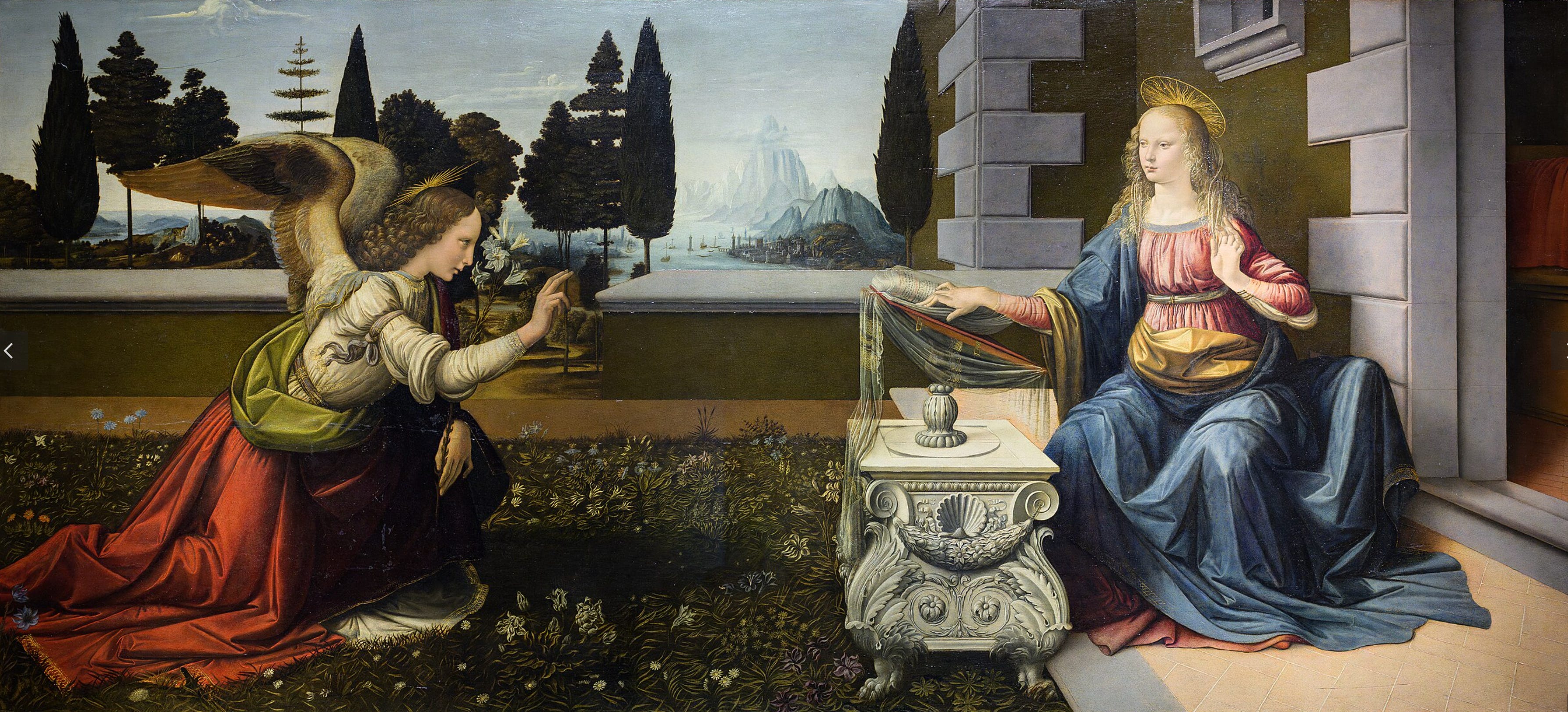
This Advent, as we look to perceive and understand again, the simple, ancient truth of Jesus’s birth, God with us, I want to invite you to find your own Interlude moment.
Seek out those necessary, quiet moments of solitude—the closed door, the pause in the car, the silence before the household wakes—and allow yourself to be with the complex truths of life right now.
This Advent posture isn’t about isolation; it’s about making space for your own type of annunciation—the moment where the great, complicated news of reality is received, held, and worked out in the immediate, intimate presence of God.
Listen to the music again and jot down what you hear. Share in the comments if you’d like.
The Advent Songbook will come out in twice-weekly installments to bookend your week. You can subscribe to the Monday Substack emails via the button below and find Friday’s posts on Artists for Joy podcast, via Apple, Spotify, or our website.
No posts
Comments
Nothing yet. Say the first thing.
Sign in to join the conversation.