
Last night, my 8-year-old casually mentioned that he had an idea of something he wanted to do with aluminum foil. Ordinarily, I would jump on this. I’d immediately stop everything I was doing to nurture this spark of creative inspiration. This article? It could wait. The meatballs simmering on the stove? Let them burn! My big kid wants to make something! But, we have a new puppy in our home, and my attention is darting back and forth constantly, so I said: “Great! Can’t wait to see what you do.” And left it at that. My kids played basketball in our driveway for a while. We ate dinner. We cleaned up.
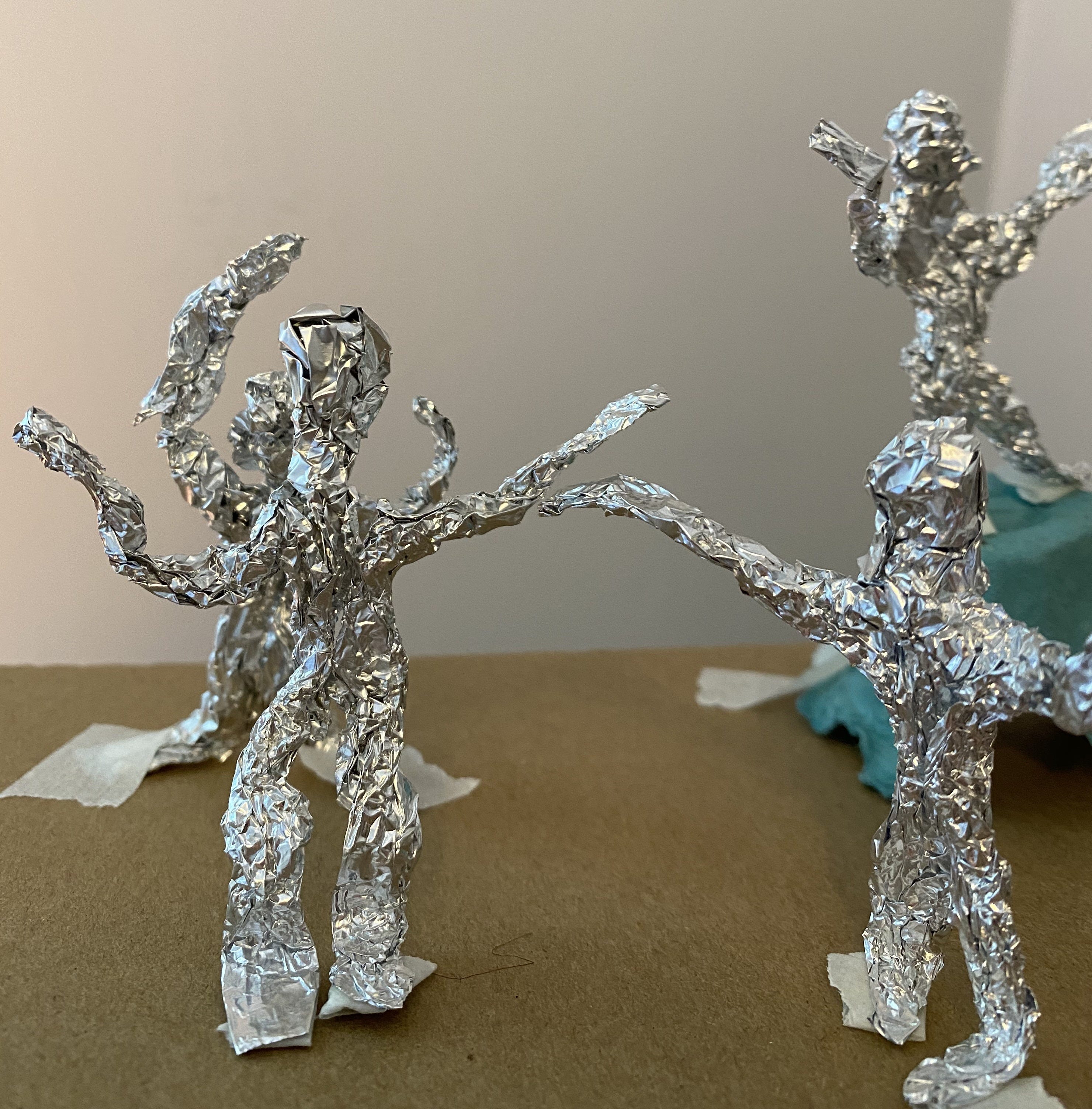
With an hour or two left in the day, Calvin came back into the kitchen. He didn’t say anything at all, just grabbed the roll of aluminum foil and got to work. He tore some big pieces and some small. I saw him shaping the foil with his hands. I saw him grab a piece of paper and expertly trim it down from square to circle. He asked me to come take a look, and I did. He asked me if I knew what it was, and to be honest, I didn’t. I said, “ Do you want to tell me about it?” He shook his head, asked me for my phone so he could look up a certain car logo, and it clicked into place. A steering wheel and gear shift made entirely of tin foil. I handed the phone over for reference photos and said nothing, just smiled.
Over an hour later, Calvin found me and said he was done. He asked if I wanted to see it. I could tell he was really proud of what he made, and I was beyond proud that he felt inspired and motivated to create. True creativity comes from this feeling, this desire to get started, to act on an idea.
Art is Play is a reader-supported publication. This week’s post is free! To read all posts and support our work, consider becoming a paid subscriber.
Step back and make space
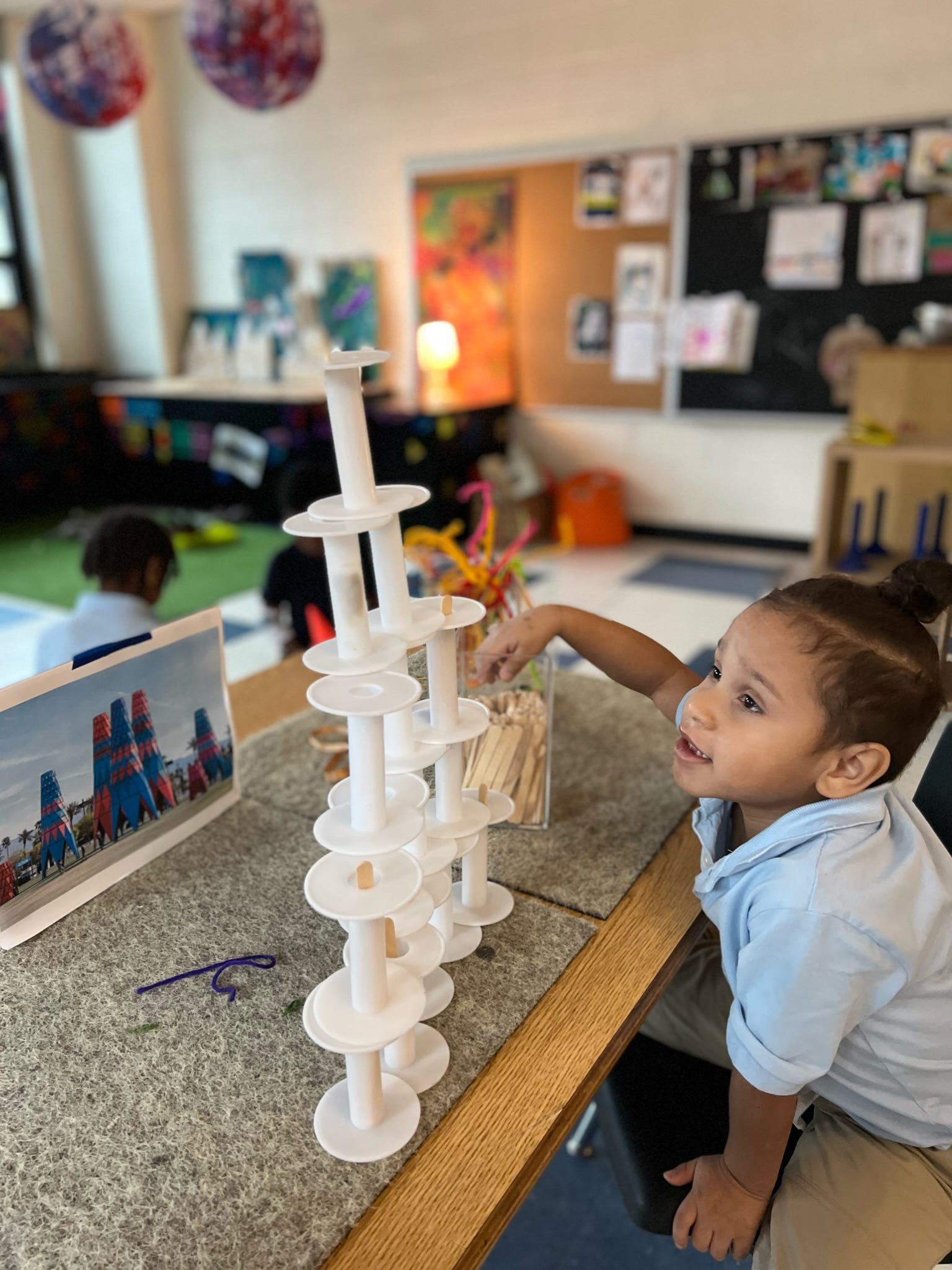
There’s a moment I notice in learning spaces that can feel almost foreign to many educators and caregivers. It’s when the adult steps back, stops narrating and questioning, doesn’t jump in with a suggestion or a prompt, doesn’t try to solve the problem. So subtle, but profound shifts in the room happen. A child who was lingering on the edge and observing finds a place to play. Another who was dabbling around for direction just… begins. A group of children finds flow quickly, creating a complicated construction or assuming roles in restaurant play. Why does this happen when we make time and space? Because the children are self-motivated to engage in play and making. They feel safe and trusted. They’re full of creative energy, and they’re ready to act on their ideas. And we are not interrupting. We’ve been taught to believe that motivation comes from us. That if we prompt enough, guide enough, encourage enough, children will engage and stay engaged. But what I see over and over again is that the opposite is often true. The more we fill the space with our direction, the less room there is for children to enter. When we pull back—intentionally, thoughtfully—we see their brilliance more clearly. We’re not abandoning children or ignoring them; we’re giving them some much needed breathing room.
In that brief moment with Calvin, I realized what really doesn’t work well… coercing him to do what I want (just play!) by dangling the preferred activity (screen time!) as a reward, nagging, setting up something elaborate for it only to be ignored for days. And I get it. None of those things makes me want to create either. Too much pressure. Children are increasingly spending most of their day being told exactly what to do and how to do it. And when compliance is the main value, especially at school, I think fear of getting started, fear of being wrong, and lack of that feeling of creative freedom prevent self-motivated making. Believe me, I know it is so incredibly and deeply engrained and I think most of the time, we’re not even really awake to our words and actions. But there are some really simple shifts we can make to explore this and make room for children and their amazing ideas.
Choice within structure
There’s a version of open-ended creative play that feels chaotic and overwhelming, and one that that feels like finding flow. The difference is usually in the structure. Children don’t need us to prescribe exactly what to make, but they also don’t benefit from being handed everything all at once with no frame. What works is something in between. Instead of telling children what the outcome should be, we can offer a curation of materials and environment and let them take their ideas on a journey. Usually, the simplest prompt, like “I wonder what you could make” is more than enough.
Self-serve environments
One of the biggest barriers to feeling motivated to make something is that children have to go through us to do what they want to do. In fact, especially in the classroom, many grown-ups still call the materials “mine.” And often in that classroom, if a child needs scissors, they ask. If they want tape, they wait. If they want to leave to get a drink and take a break from their frustration, they need permission. If something isn’t working, they look to us to step in and fix. This bogs everything down and makes it really hard to get started. But when materials are accessible and visible, reachable, and available, children feel empowered to get what they need. A self-serve space communicates you are capable.
Trusting their ideas
And along those lines, when we step in too quickly with suggestions and solutions, we communicate exactly the opposite. It can feel so uncomfortable to watch someone struggle and even fail. It can be inconvenient to have to manage big feelings when we could have just as easily smoothed something over. But when we trust their ideas, their process, and make space, creative confidence can skyrocket.
Join us and stay tuned
We have so much more to say on this topic! If this way of working with children resonates with you, this is something we’re going to be exploring more deeply in our paid Substack and in an upcoming workshop exploring irreplaceably human skills like self-motivation, communication, empathy, critical thinking, and, of course, creativity. Not just why this is so important now and in the future, but what this looks like in real spaces, with real constraints. We’re sharing specific setups, language, and examples that you can actually use, whether you’re in a classroom or at home. More to come!
Comments
Nothing yet. Say the first thing.
Sign in to join the conversation.