
There is a quiet heist underway. A small class of extractive technologists and their cheerleaders are trying to sell us a future where culture is cheap, instant, and owner-less, where human creativity is just fodder for their machines, to be used for training and then discarded.
In the short term this looks efficient – the scale at which production of such content masquerading as culture can be undertaken is nothing short of breathtaking. However, in the long term it hollows out the very conditions that allow culture to exist: if artists cannot make a living, we don’t get “the same art, but faster.” We get more content that pretends to be art, fewer artists, and a generation deterred from even trying. The pipeline dries up, the practice evaporates, and with it the collective memory that art carries across time. (I say “generation” but the question whether that ought not to be plural is very much an open one right now.)
I wrote recently about the civilisational risks of adopting generative technology without regard for cultural guardrails. The core point was simple: when we normalise extraction of data, of labour, of styles, of the patient effort behind a craft, we switch off the compounding engine that has quietly powered human culture for millennia. The sheer amount of synthetically produced content is amazing, but it has precisely nothing to with contributing to culture, the very thing it pretends to be.
Culture is not a pile of content, though from the outside it may appear as nothing more than a repository of paintings, sculpture, books and songs. On closer examination, culture reveals itself as a living network of people, rituals, tools and practices that need time, attention, and yes, money. You cannot pull value out of that network without putting value back in, and expect it to thrive.
This is where enlightened companies come in, not as patrons in the old sense, but as participants in the contemporary cultural ecosystem. Companies whose leaders see their place in society as somewhat broader than providing products and services. Leaders who appreciate that their success in business is actually a chance to contribute to culture in ways beyond time-honoured patronage or philanthropy. (Nothing wrong with either of those; we’re just suggesting there are more ways.)
A most direct way for a company to support culture is to engage artists over time, inside the organisation, on work that matters. Not as decorators of corporate HQ or providers of creative services for a product launch, or a creative thinking workshop to satisfy an L&D schedule - though all those functions are of course well-established. This is a new category of consultant whose craft is thinking in public, reframing problems, building things from incomplete information, and translating ambiguity into experiments that other people can learn from.
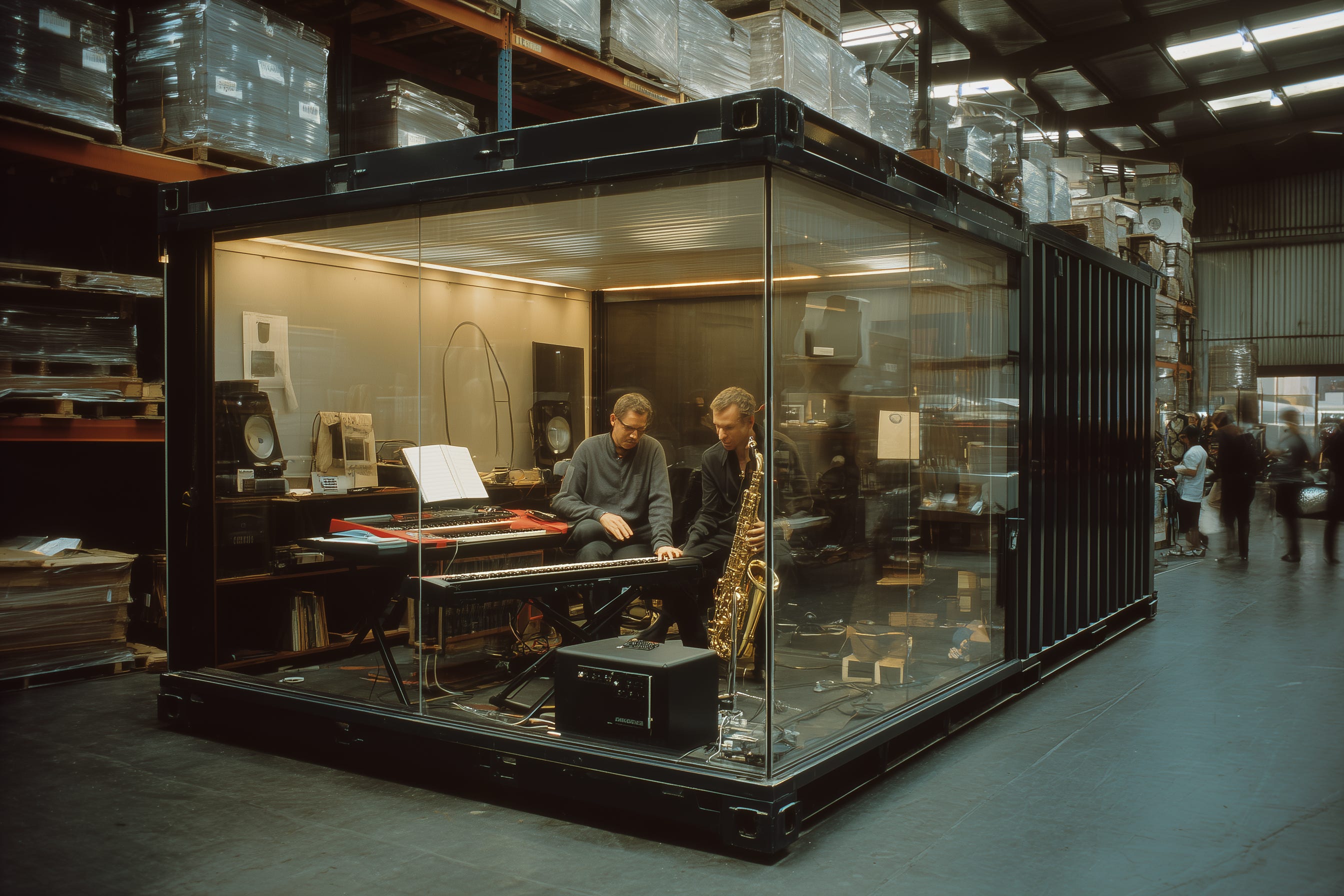
With Art in a Place of Work the proposition is straightforward. We bring artists into companies for residencies and related formats, not to stand apart and produce a final artefact, but to let the process itself be the consulting. A sculptor iterates by cutting, testing and cutting again; a choreographer who composes within constraints; a photographer who builds a narrative from fragments – each is a living example of a creative process. The artefacts that may emerge – a film, an installation, a performance – they are all valuable, but the key value is in the way people who watch these being created may themselves start to work differently.
This approach is grounded in what artists actually do, and is certainly not management theory with a dash of glitter. To begin with, artists rarely if ever treat finished works as an end state. A painting is a milestone; a book is a rung on a ladder; a composition is a provisional answer that helps in generating better questions. Business loves to talk about innovation, but often treats it as an add-on to be switched on in a sprint and switched off when the calendar flips. Artists don’t switch it off. They live in the uncomfortable middle, where there isn’t enough information and few tried and true methods. They try, test, discard, rework, and try again. They bring that habit into every room, it is contagious, and they don’t call it innovation. It is just work.
There’s a second, quieter effect that I have seen again and again. People are full of suppressed craft. In workshops and training sessions I have met project managers who are weavers after hours, CFOs who paint, sales people who restore classic motorcycles, and accountants who practice esoteric martial arts.
None of these passions are “hobbies” in the small sense. They are reservoirs of method, and deep repositories of skill. The weaver understands tension and pattern; the restorer understands tolerances, patience, and sourcing hard-to-find parts; the martial artist understands situational awareness under stress.
There is a myth that to protect “work–life balance” we have to police a hard border between who we are at work and who we are outside it. But the risk is not that life leaks into work; the risk is that work empties life out. Artists remind us that integration is not intrusion but alignment. The painter does not stop being a painter at the supermarket. The poet does not stop being a poet when she drops the kids off at the school gate. Both may well come back to their studio or study with inspiration taken from such ordinary, mundane activities.
Further, if you’ have ever had a problem solved by a thought that arrived while cooking, cycling, sanding a table or practising kata, you already know that the membrane is porous. It is quite normal – that is your brain doing what it does well, formulating ideas while you’re occupied with activity. The question is whether organisations will recognise this and design for it, or keep pretending that the only legitimate forms of thinking happen between 8 am and 5 pm, on weekdays.
When artists work inside a company, they visibility legitimise this permeability between “work” and “life.” They demonstrate that a person’s off-duty practice is not a distraction but a form of knowledge from which the organisation could benefit — without exploiting the person or trivialising the craft. Clear boundaries are still important. But the brain excels at integrating skills across domains if we let it.
A good artist residency is therefore a double invitation. It invites artists into contact with complex, real-world constraints and gives them the time and space to test ideas alongside people working in domains which they may not ordinarily come across, and it invites employees to bring their whole selves to the table, to try new modes of making that do not necessarily, or at all, fit neatly inside the standard nine-to-five.
The outcomes can be simple, such as better meetings, sharper briefs, fewer false binaries, or they can be striking: new prototypes, new rituals, new ways of seeing the customer or the factory or the ward.
Thank you for reading. Do, please, feel free to share this article with others.
If you’ve followed the literature on artist residencies in organisations, you will know that all this is not just wishful thinking. Across factories, hospitals, labs and offices in places many and varied, long-term artist engagements have been shown to broaden problem frames, strengthen cross-disciplinary collaboration, and build the kind of exploratory mindset that companies say they want.
The mechanism is not mysterious. When people spend weeks with someone who works skilfully in ambiguity, they tend to understand that stance, and in time borrow it. They prototype more. They listen better and cogitate more. They spot patterns earlier, even - or especially - if they do not understand their meaning.
None of this may show up in a quarterly metric, but it does show up in the stories colleagues tell each other about what is possible, in the confidence to try a different approach, in the courage to ask for time to explore.
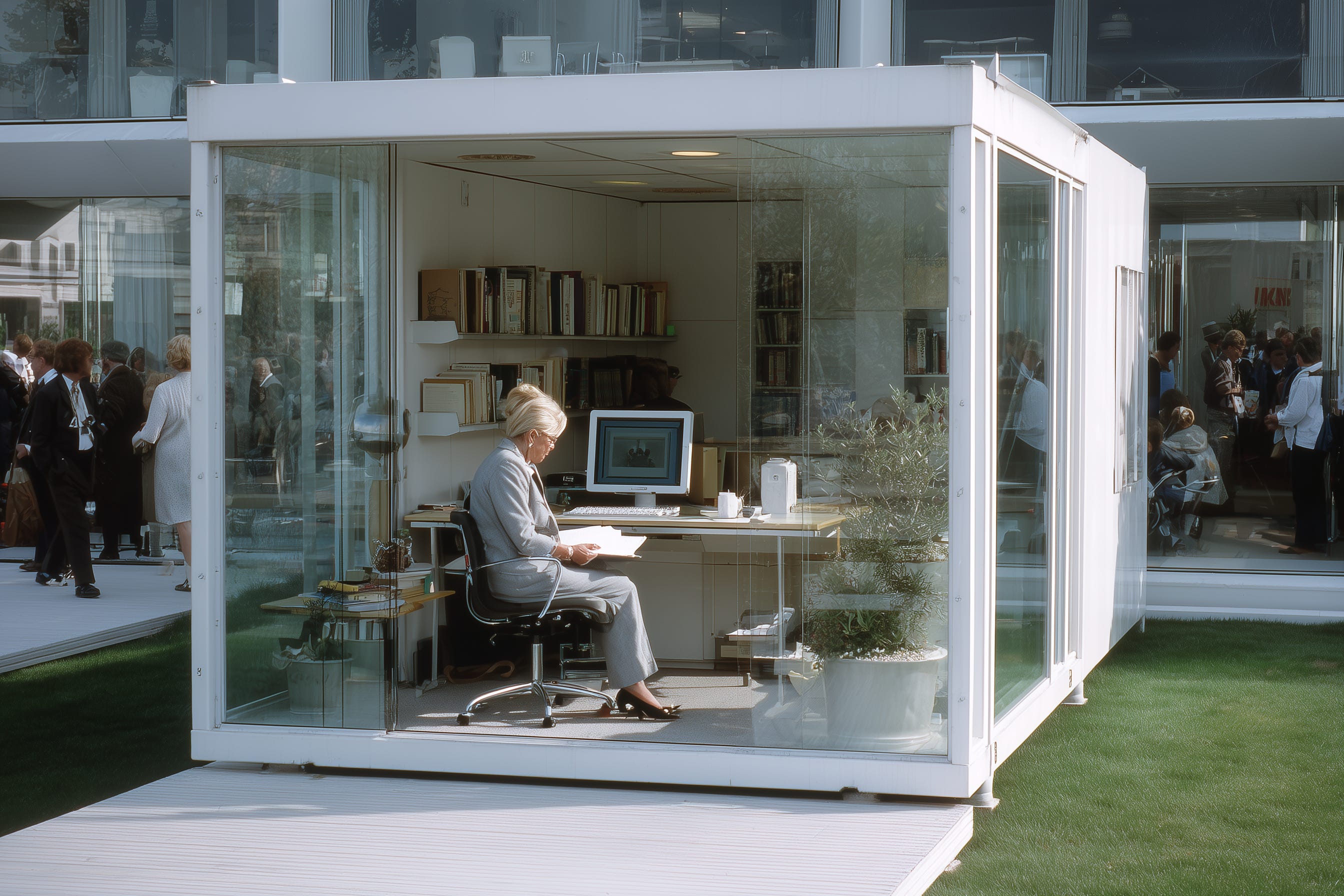
All of which brings us back to the wider cultural stakes. A residency is not a nice-to-have. Of course I would say that, but I am hopeful that you will also see the multi-layered value such a residency bestows, on recipients within the organisation and outside of it.
Not least, it is one of the cleanest circuits by which a company can return value to the cultural commons while receiving real value in return. Paying artists fairly for long-term engagements gives them the runway to keep being artists – developing their work, teaching others, and keeping alive the tacit knowledge that can only be transmitted by doing. In a period where the market for creative labour is destabilised by technological shortcuts and IP grey zones, this long-game investment is not charity but rather a strategy for keeping the lights on in the house we all live in.
When a handful of loud technologists promise instant culture on tap, the real risk is not merely a tide of derivative, rubbish outputs. There is a risk that companies start outsourcing their creative juice. You can catalogue Culture, but you cannot automate it without starving it. The antidote is artists working inside the organisation as intellectual partners: co-framing problems, running critique and studio-style sessions, modelling iterative practice, and helping your People & Culture team turn those practices into shared rituals. That is how culture (small c) is built and renewed day to day. Bring in artists and you keep the thinking human: human scale, human speed, human stakes, so your people stop feeling discouraged and disengaged as they see that creativity is not rented from a server farm but cultivated in-house.
If you lead a company, here is the simplest test of seriousness. Are you willing to bring artists in for long enough that they and your people can do real work together? Not a day, not a keynote, but a residency or a rolling engagement measured in weeks and months. Are you willing to let the process be visible, to accept that mess and iteration are not inefficiency but the way new capability is built? And crucially, are you willing to see this not as a PR expense but as part of your duty of care?
I won’t pretend this is easy. It is difficult mostly for psychological reasons, which are actually quite easy to define. The work needs trust, permission to delve into the open-ended, and a tolerance for ambiguity. It requires fair contracts and clear boundaries so that artists are partners, not mascots. It requires internal champions, and external curators who a foot in each camp – who can translate between artistic practice and operational reality. But the reward is real. You may get a shiny artefact to put in reception, but more importantly you will get a set of habits your teams will not want to give back once they have tasted them.
I would encourage company leaders to see such projects in the broadest possible societal terms. Someone has to keep the flywheel of culture turning while the grifters are busy strip-mining it for parts. Governments and philanthropies have their role. So do audiences, readers and listeners. Companies do too, and their role is oddly direct: hire artists for the long term, pay them properly, let them work alongside your people, and learn from the work itself. That is how we keep the lights on. That is how we ensure there will still be a “we” to make, share and argue about the next generation of work.
Art in a Place of Work is our way of making this practical – not through a slogan or a “warm and fuzzy” but down a structured path for artists and organisations to meet each other at full strength, over time, in the open, to do the kind of thinking that keeps both the company and the culture alive. If that sounds like civilisational work, that’s because it is. Don’t be afraid.
—
Yes of course, the illustrations in this article are renderings. Generative tech is great as a tool. Addition, not replacement.
Comments
Nothing yet. Say the first thing.
Sign in to join the conversation.