
A little bit of housekeeping before I share the second part of my curation for Site: Brooklyn’s Landscape exhibition:
A small pricing update: Since the majority of my audience is now based in the US, I’ll be switching the subscription currency to USD on May 11th. I’ll also be doing a small price increase: from $5 to $ 8/month and from $50 to $55/annually.
If you subscribe before then, pricing will be locked in at the current/lower amount! Paid subscribers get access to a trove of paywalled content that focuses on navigating the complexities of the art world—and my love and thanks!! I love writing this newsletter and the community that is forming around Art Forecast. Thank you 🧡
Next week, I’ll be speaking on a panel organized by Anne Parke at People’s in NYC, alongside The Appraisal, Georgia, and Sibilla Maiarelli to share our thoughts on the art market and what we’re looking forward to at the fairs. The event takes place May 12th at 6:30 PM—if you’d like to join, reply to this email, and I’ll add you to the guest list!
Back in Toronto, I’ll be moderating a conversation for Harriet Alida Lye’s book launch on June 6th at 11 AM. To celebrate the launch, Ashley Mulvihill of Ninth Editions curated an exhibition that explores the book’s themes. I’m excited about the possibility of a book review told through an art exhibition, and can’t wait to speak with Harriet and Ash. Get tickets here.

When I took a step back and looked at the curation for this exhibition from afar, I was taken by the twin compositions of some of the work. The painting by Alison Kruse of a shoreline almost perfectly lines up with the surrealist collage by Julia Kohane. Is this the same beach? Two distinct experiences of the same place? In other works, artists depict similar experiences in different places.
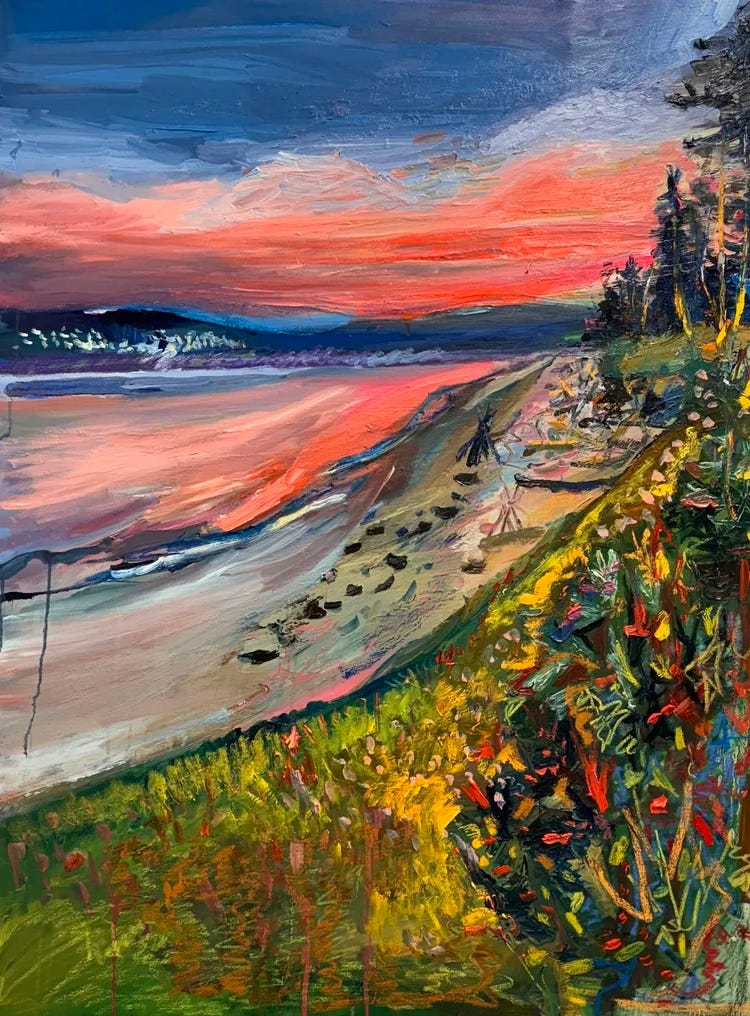
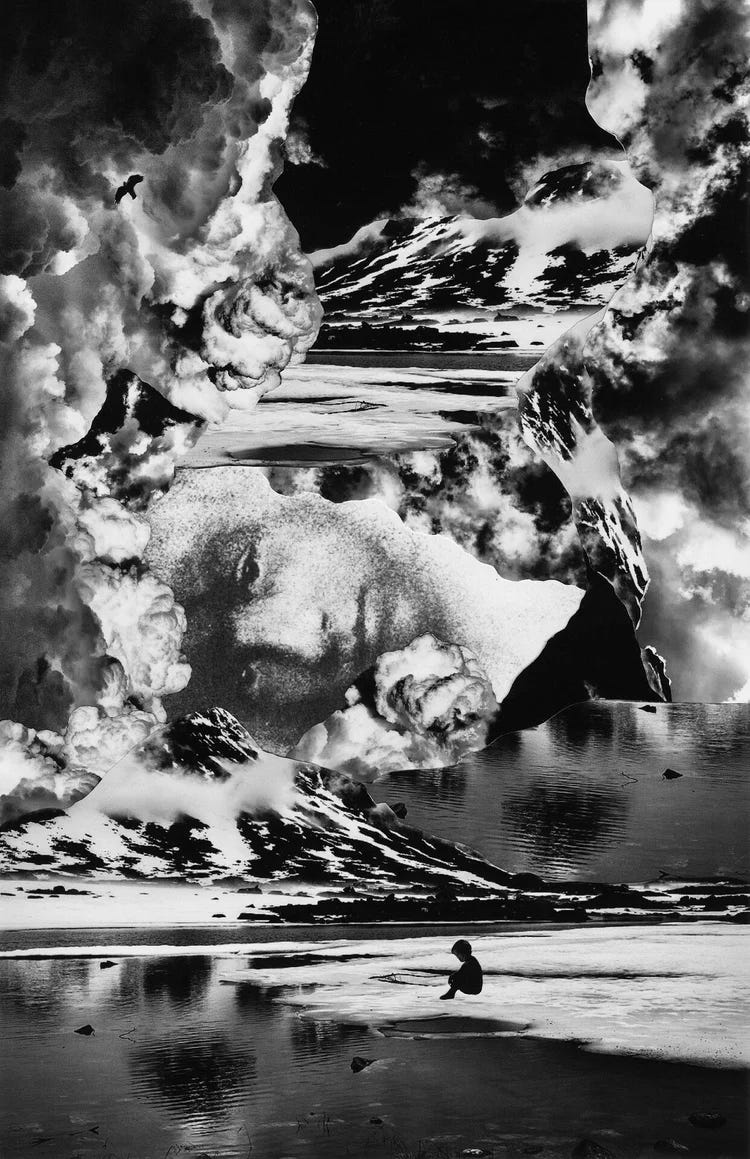
By noticing patterns in composition, I began to understand how familiar forms can be used to create a framework for complex themes to be layered.
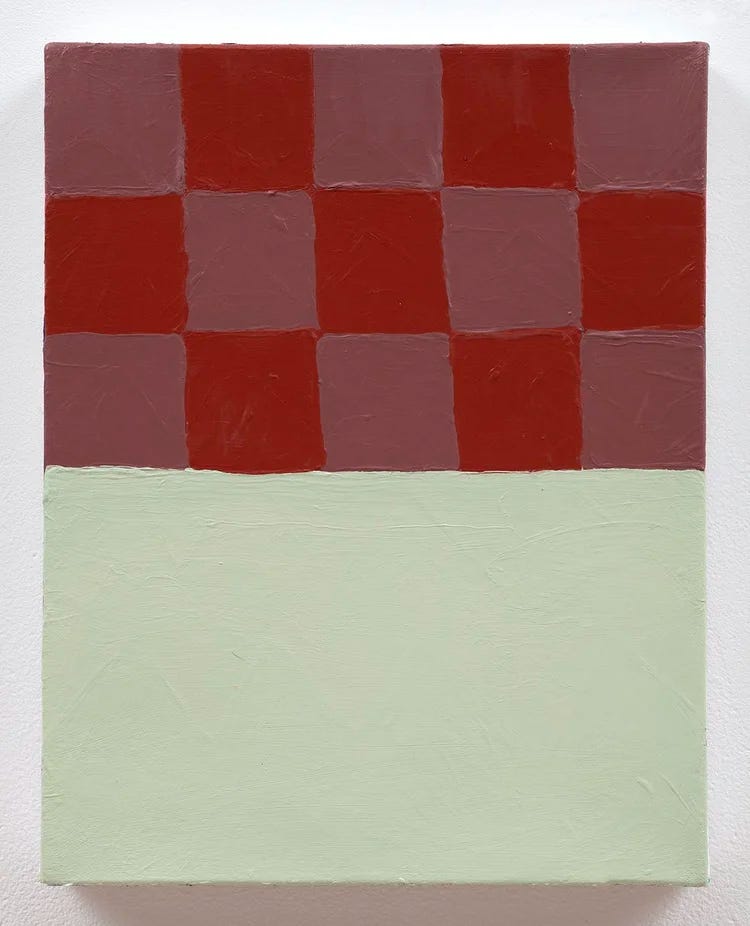
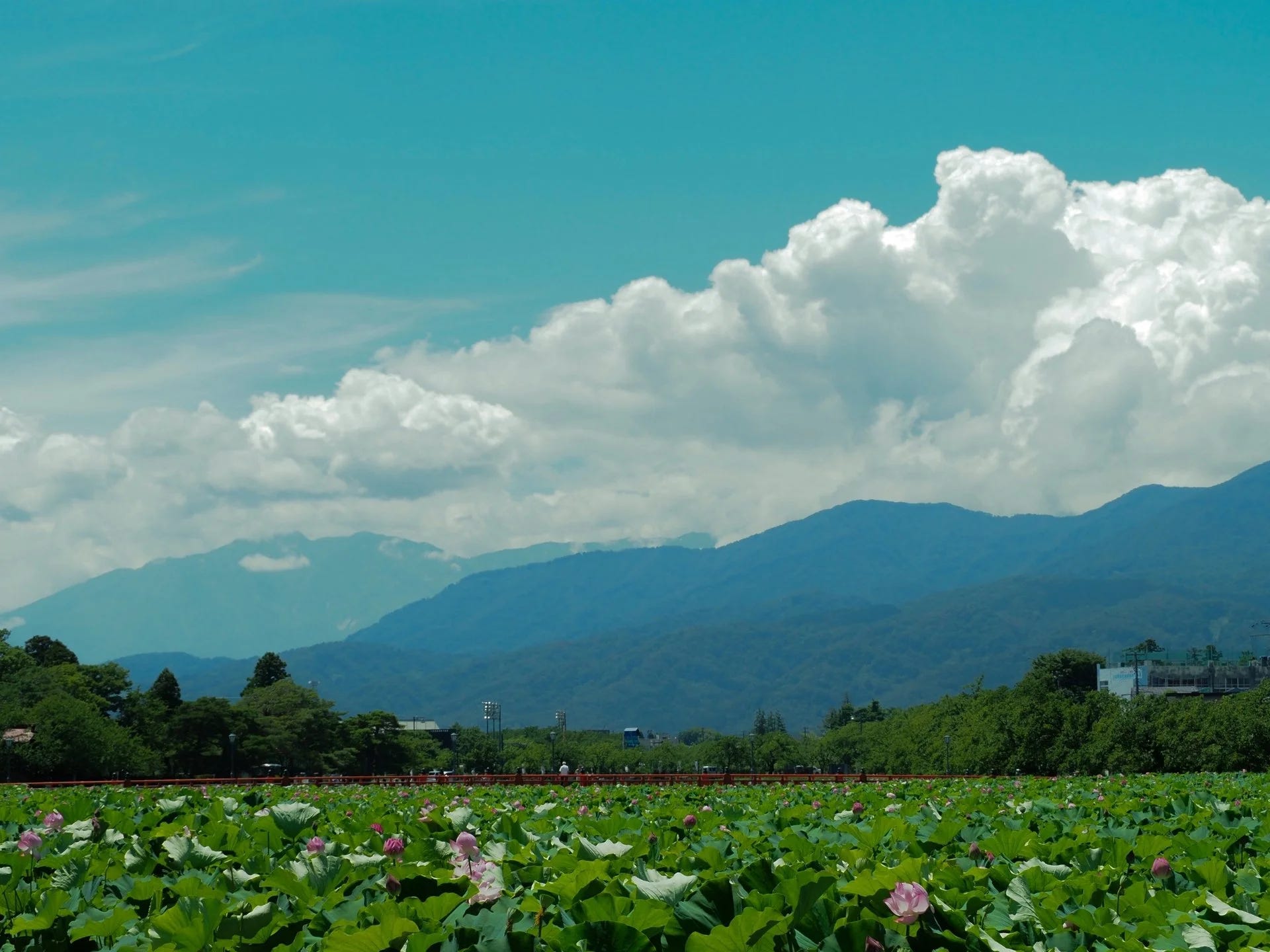
Perspective plays a huge role in depictions of landscape. The famous vanishing point so often found in landscapes is succinctly articulated by Julia Berkman in the form of abstraction. Sky above, land or sea below. I take comfort in this line, unreachable no matter how far one travels, in the stillness of Stephen Barton’s photograph and in the outreaches of the city in Julie Griffin’s painting. The landscape invites the viewer to enter.
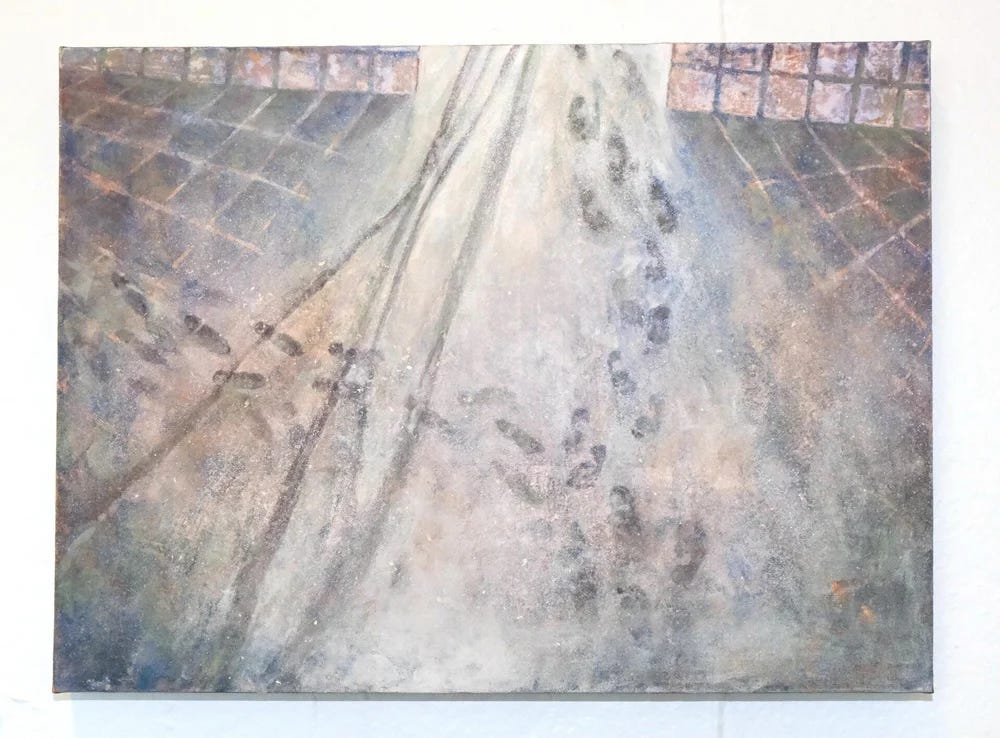
Then, there are the artists who forgo the vanishing point altogether, instead offering an intimate view of the landscape. The footsteps depicted by Yidong Ding, so slight and ghostly, one thinks of the coldest day of the year, of losing something in a dusting of snow and having to re-trace one’s steps. An entire story plays out in between the inches of 12 x 16.

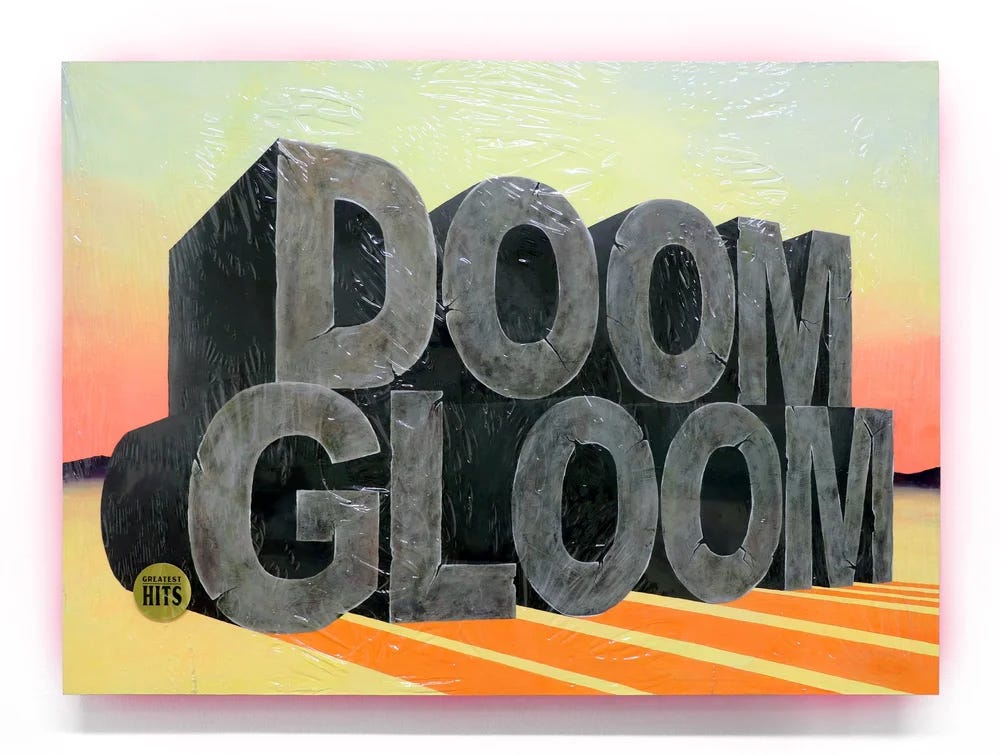
DOOM GLOOM sounds about right! The text of Kyle Kogut’s multimedia work rings true: things aren’t going great, the climate is changing, birds are going extinct, the world is on fire, the end is near. Often, these realities go unseen; here, the artists bring them to the forefront.
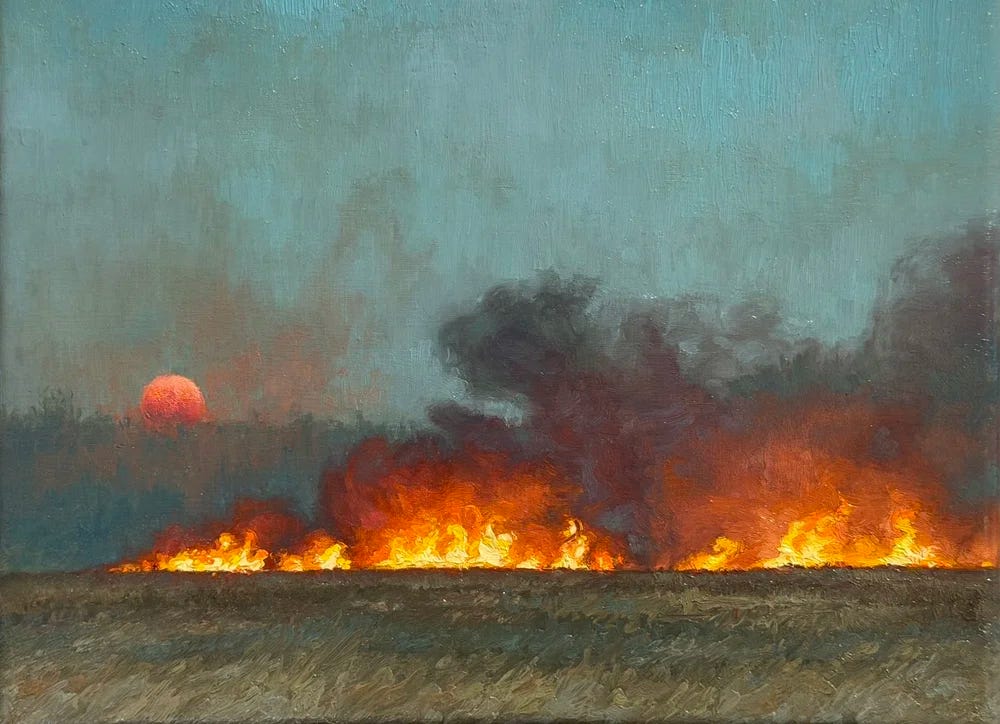
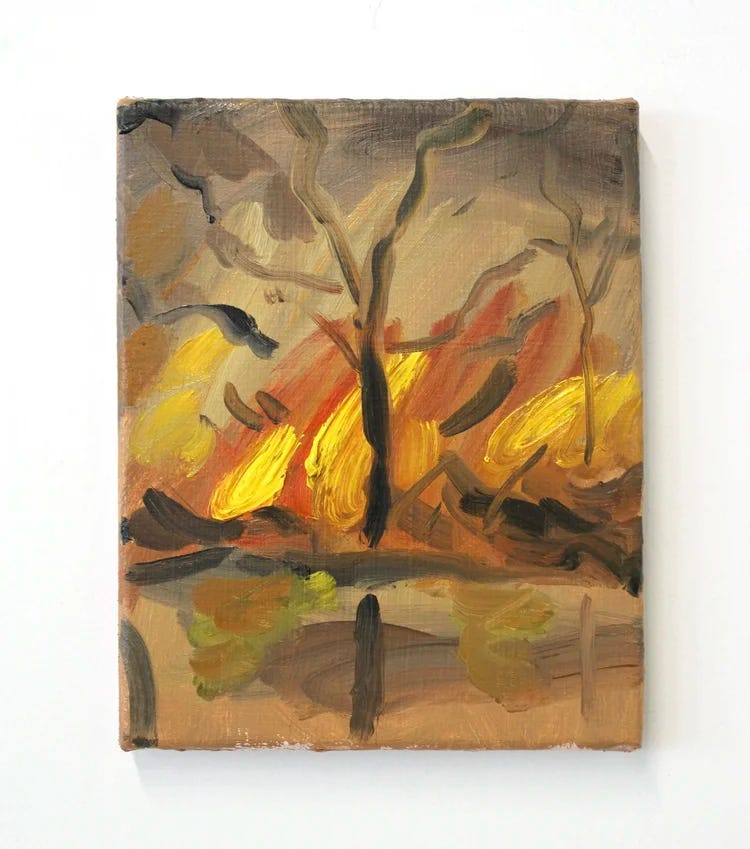
These works prove that landscapes don’t have to be serene: they can be blood-red, on fire, and infused with the realities of life. What’s notable is that, despite heavier topics, the work doesn’t lose sight of hope. In fact, the act of art making is inherently imbued with the desire to propel something into the future.
“Landscape in my work is both a witness and a metaphor. Elemental forces shape the narratives found within: storms, erosion, fires of unknown origin. Destruction and healing unfold in the same breath: ash nourishes new growth, ruin clears ground for renewal,” Casey Inch writes about his painting of a field aflame. “These paintings can be viewed as disappearing or emerging, hopeful or foreboding, elusive or already a memory. They are at once celebratory of the wonder of the natural world as well as a reminder of all that we have to lose.”
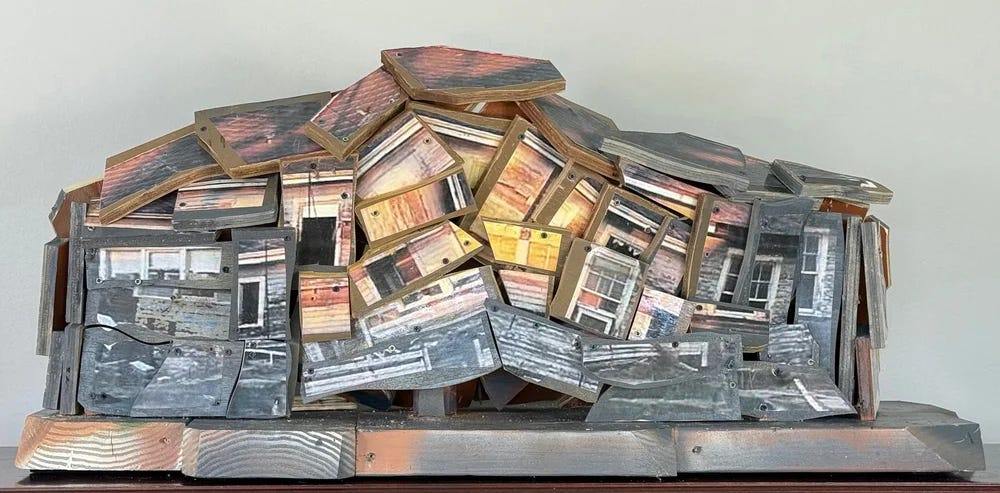
I’m drawn, especially, to the work of Julie Glass. Lakeview After Katrina is made from the wood of a house that was swept away after the levee along the canal broke during Hurricane Katrina. The fragmented photographs were taken by Glass during the crisis and are now assembled in a gesture of resilience.
(You can read part one of the text in last week’s newsletter here.)
No posts
Comments
Nothing yet. Say the first thing.
Sign in to join the conversation.