
Raphael is rightly regarded as one of the greatest painters of the High Renaissance - with a reputation that is matched only by the two other icons of that era; Leonardo da Vinci and Michelangelo Buonarotti.
But while Leonardo’s career lasted into his 60s, and Michelangelo worked pretty much right to the day of his death at age 89. . . Raphael sadly passed away after a short illness at only 37 years old.
Thus, there is always an extra kind poignancy when viewing the self portraits of this prodigiously gifted young man, as they always come with a certain sense of unfinished business or untapped potential.
_
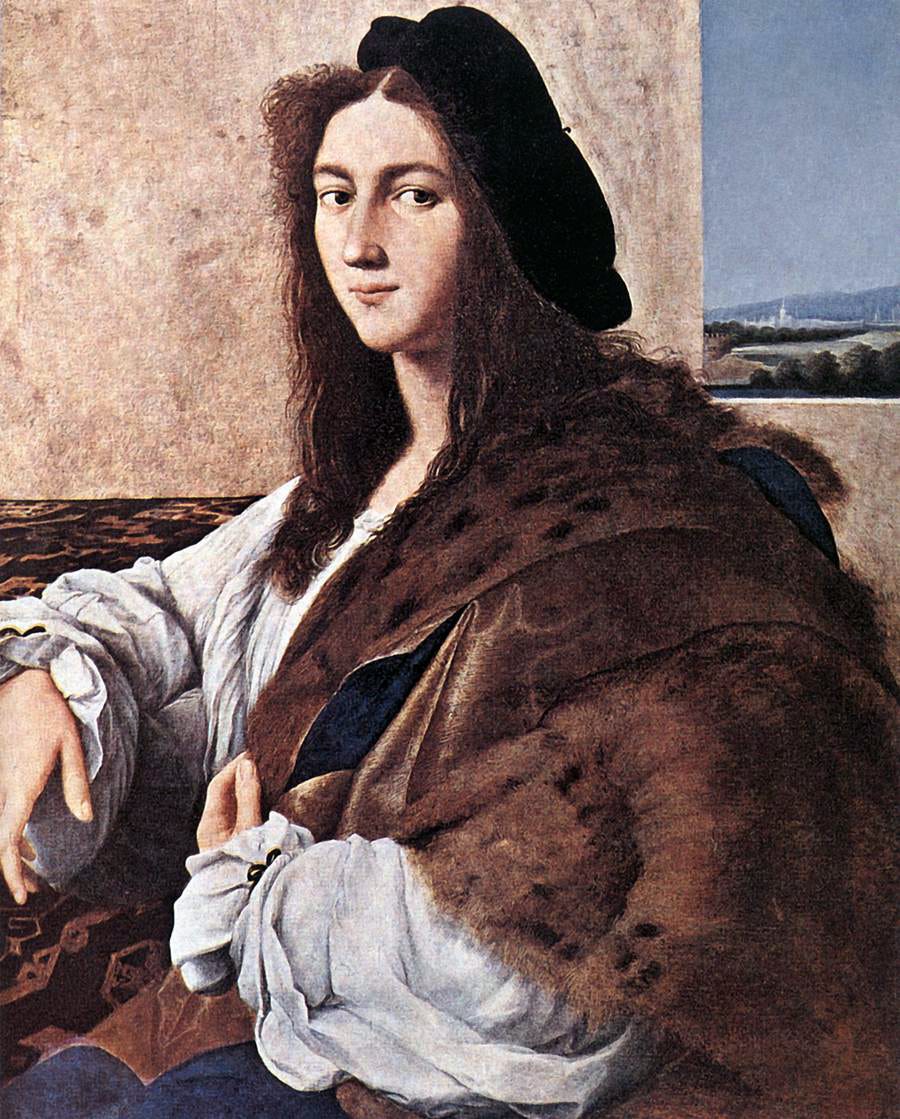
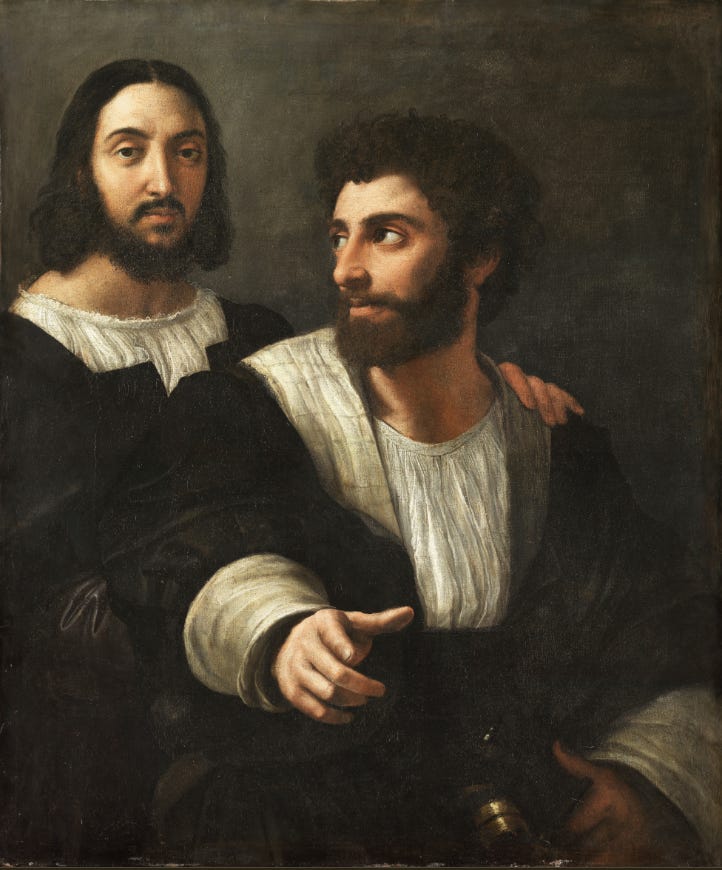
So for our article today, I wanted to bring together the collection of all 5 of Raphael’s major self portraits (Including one which has been lost for more than 80 years)
Seen together like this, they offer us further insight both into his extraordinary natural talent, and to how his painting style developed over the years. (All of which driven by the artist’s seemingly limitless desire to learn from his peers, and to integrate new ideas into his own work.)
But also, there is one other reason I want to cover as to why these portraits are so important in the context of Renaissance art.
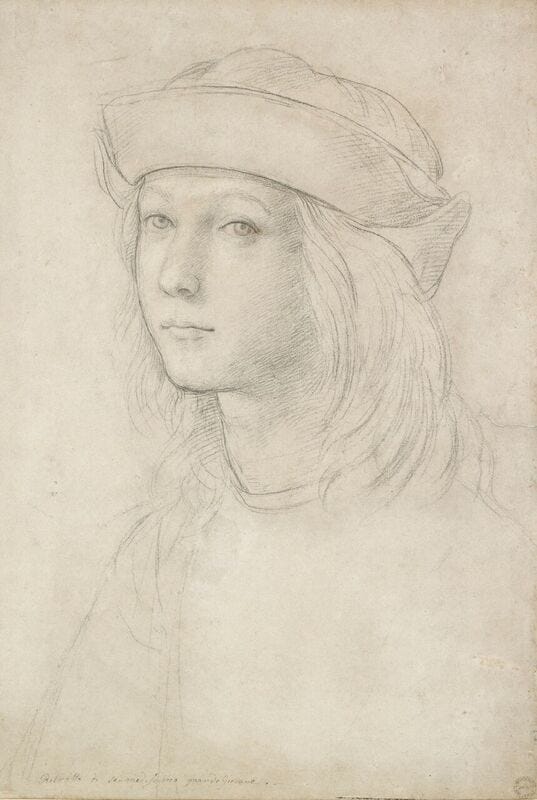
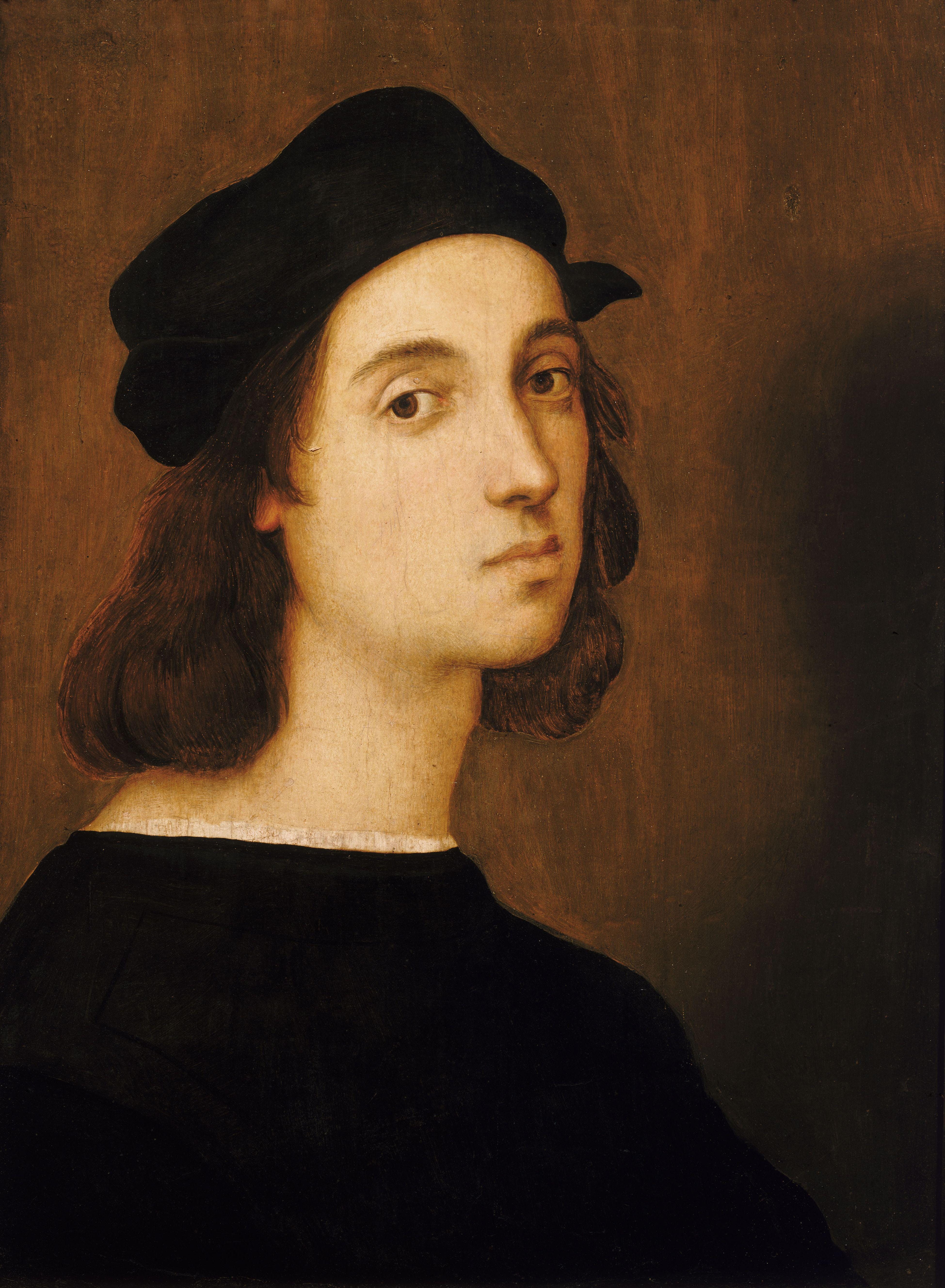
You see, for artists in the late 1400s and into the 1500s, self portraiture was nowhere near as commonplace as it has become over the rest of art history.
In fact, many of the other greatest painters of the early renaissance never painted themselves at all. And even for those who did - often, we only find these self portraits hidden in much larger crowd scenes, where the artist has essentially cast themselves as a character in their own painting.
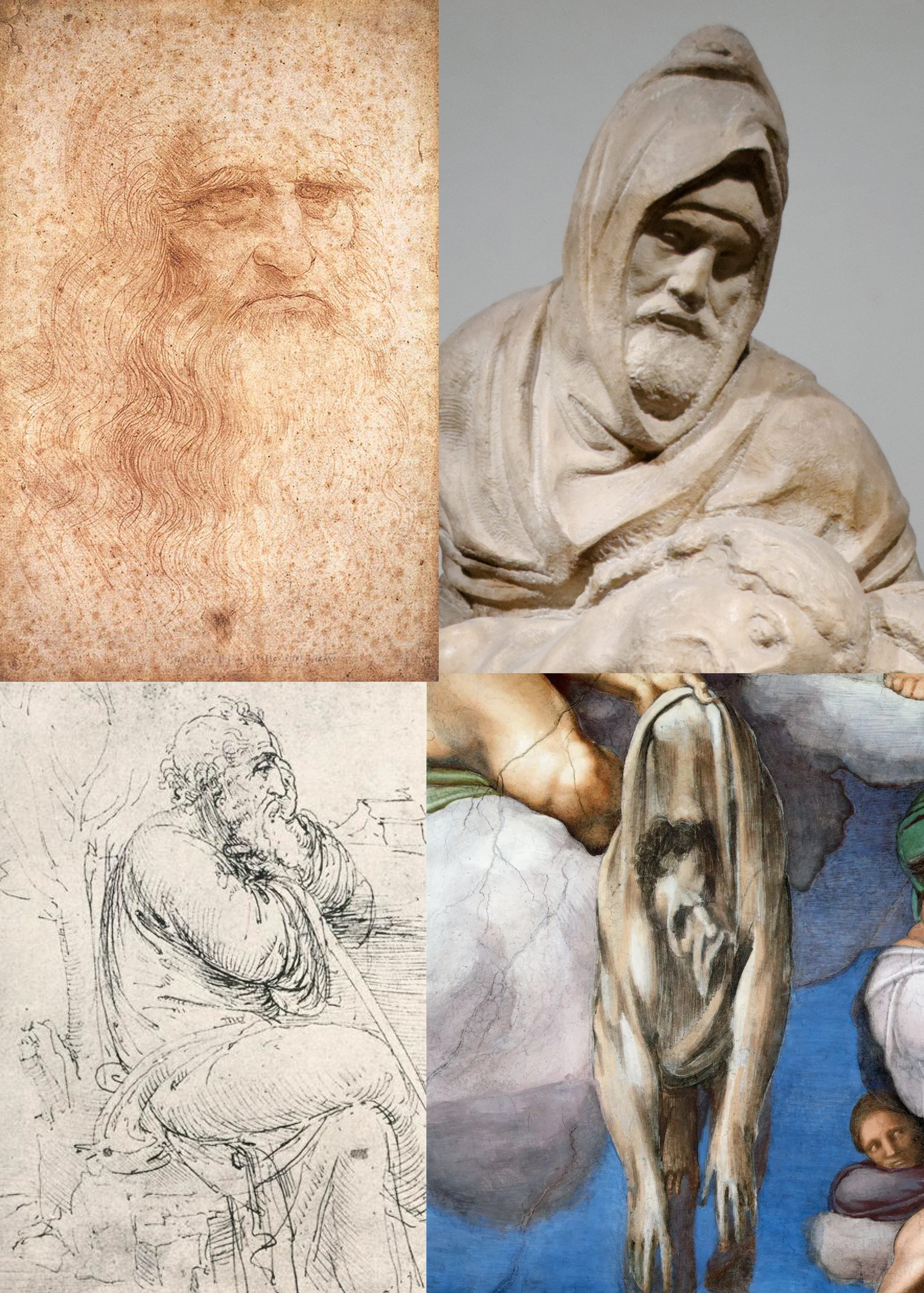
So, by comparison, we have (at most) only three drawings by Leonardo which are confidently believed to be self portraits. (And only one of these seems to be an intentional self portrait, with the others being more like quick character sketches)
While, with Michelangelo, we have only one sculpture where it is believed he loosely used his own features for the character of Nicodemus . . .and one other possible “self portrait”, found in a kind of grotesque, deflated body that can be seen amongst the crowds of his Last judgement painting at the Sistine Chapel.
Whereas, here with Raphael, we find something totally different.
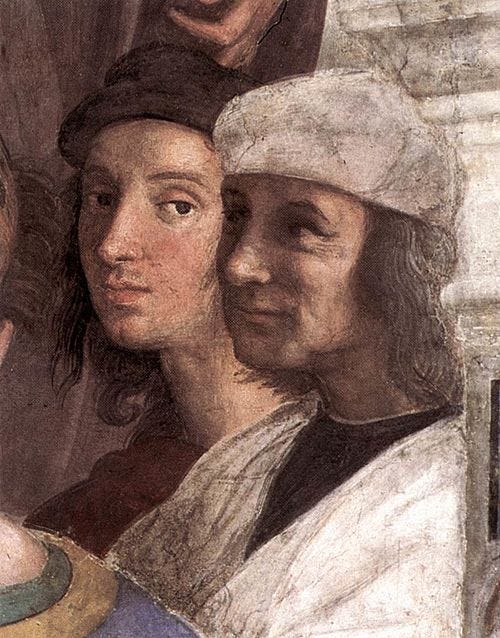
Aside from one occasion where he hides himself as a character in his iconic fresco “The School of Athens” - with all the other self portraits, Raphael’s intention is much more literal.
He is painting himself as the sole focus - not out of vanity, per se, but more so to take advantage of the changing attitudes of his era, where artists were starting to become famous in their own right, as opposed to being seen as essentially anonymous tradesmen.
And, of course, he also surely had one eye on the future here too . . . with an inner confidence, or a fundamental hope that even long after his career was over, people would still be admiring his art, and still wanting to know exactly who he was, or what he looked like.
Thank you for reading Art Every Day.
No posts
Comments
Nothing yet. Say the first thing.
Sign in to join the conversation.