
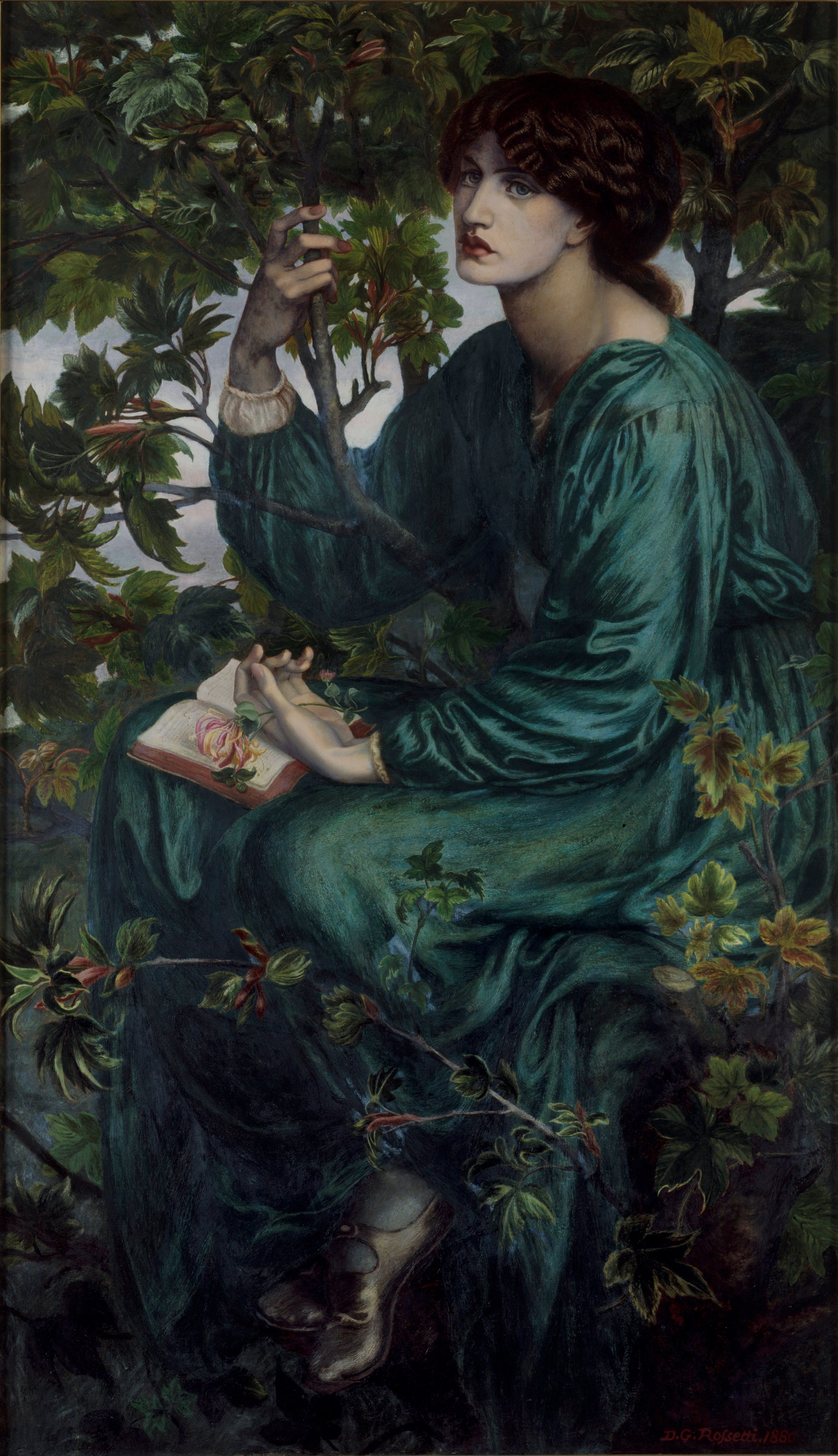
Painted in 1880, when Dante Rossetti’s fragile health was slowly slipping into a final decline - The Day Dream is often thought to be his last great masterpiece.
And in classic form, it is a tribute to three of the great loves of Rossetti’s life; Poetry, Art, and Jane Morris (his long time Muse/Model)
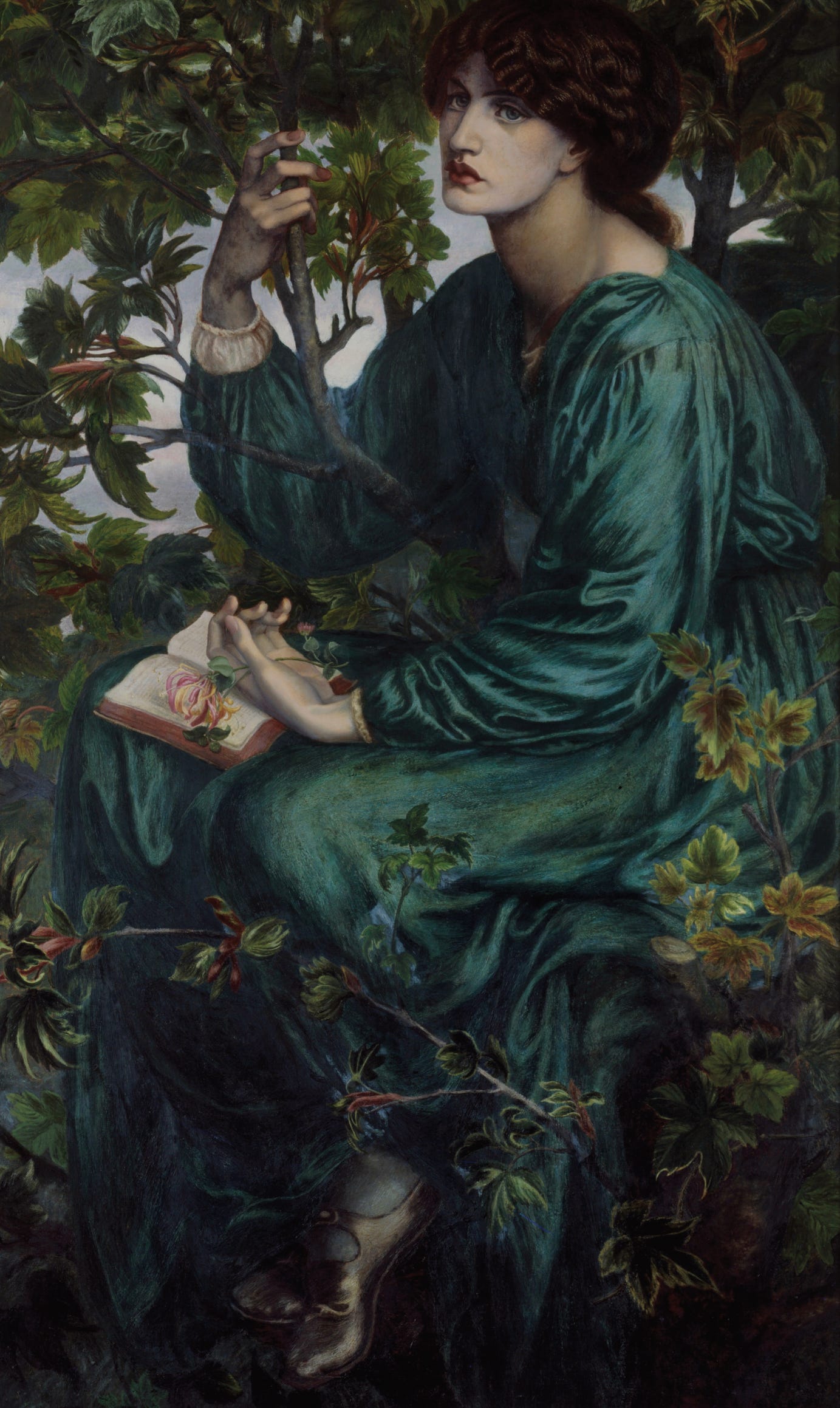
Of course, Jane’s face will be very familiar to anyone with even a passing interest in Pre Raphaelite art.
Starring in at least 30 works by Rossetti (including paintings and drawings)- she also modelled for Edward Burne-Jones, Evelyn de Morgan, and her own husband William Morris.
But in today’s picture, she seems slightly altered to how we have seen her before.
Her beauty is as we have always known it - yet there is something in her sad gaze which seems to be telling us that, this time, it might just be goodbye.
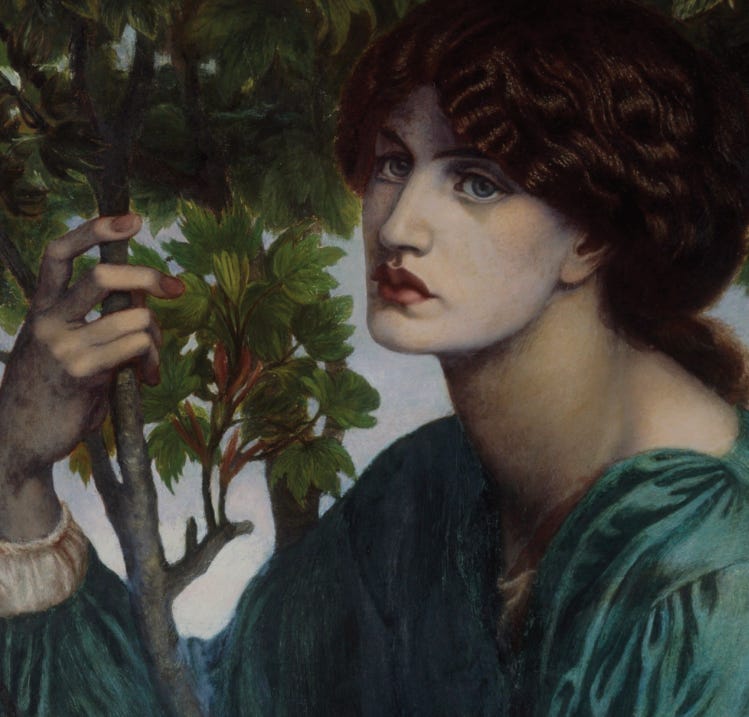
This would certainly be in-keeping with a Rossetti poem (also entitled The Day Dream) - which includes the lines “Still the leaves come new / / Yet never rosy-sheathed as those which drew / / their spiral tongues from spring-buds heretofore”
But it is also worth mentioning that the original title of this painting was actually “Monna Primavera” . . . which is a name drawn from the famous poem “La Vita Nuova” by the Italian poet Dante Alighieri.
And in that work, the poet (writing about his own lost lover, Beatrice) essentially declares that “Love” is the name of Spring; hence Beatrice herself can be called “Monna Primavera” as the embodiment of Love/Spring too.
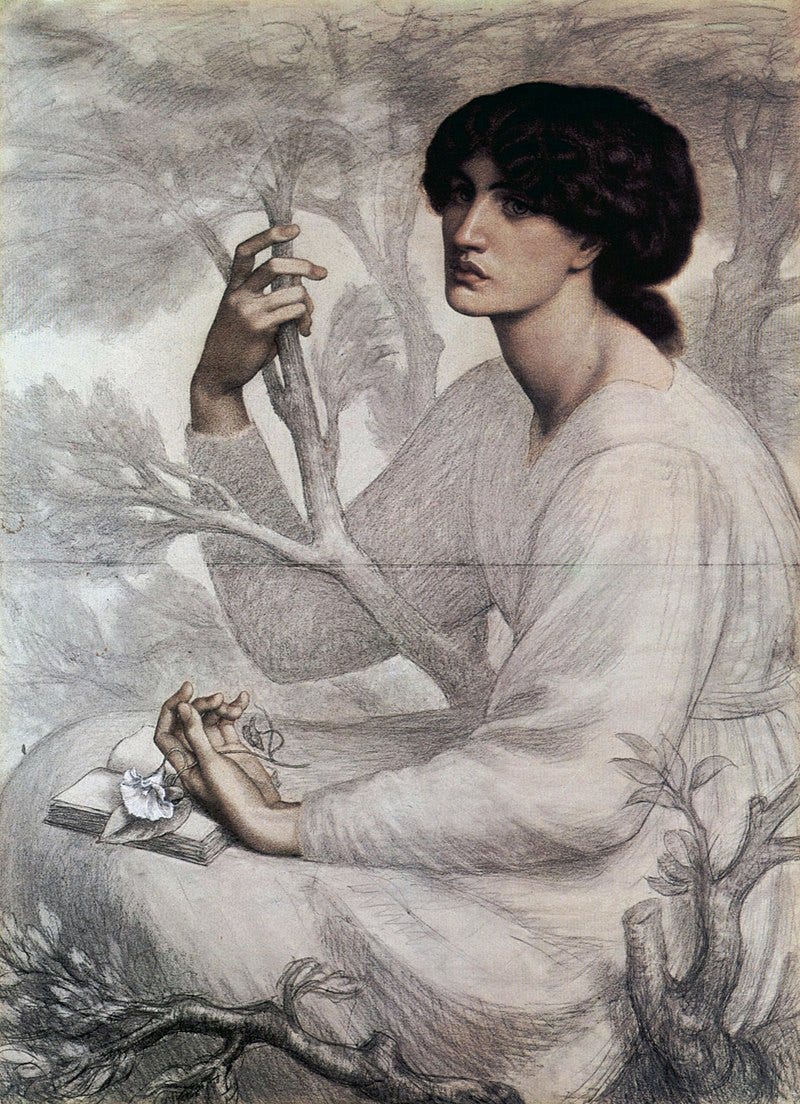
So, this is perhaps what Rossetti was originally aiming for here too. i.e to show that Jane, like Beatrice, is also like Love and Spring combined for him.
But if that is the case - it is even more revealing to note just how melancholy Rossetti’s vision of spring is here.
_
After all, there are no radiant colours or fragrant roses bushes in full bloom here, as we find in other masterpieces from Rossetti like “Lady Lilith” or “Blessed Damozel”.
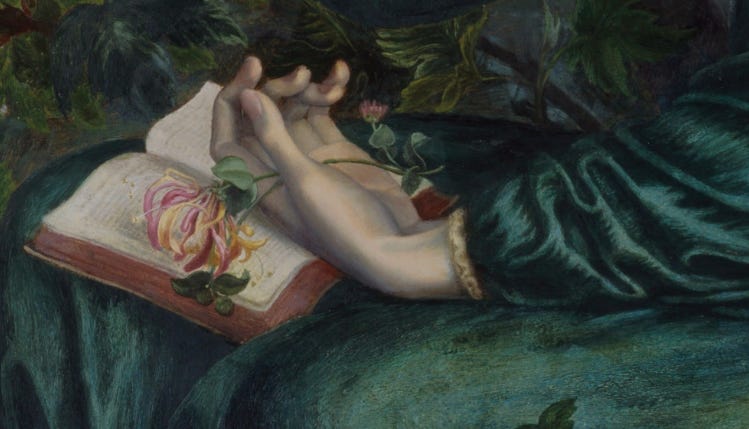
In fact, the single flower he paints into Jane’s hand seems to be dying. And the shadowy landscape she sits in has more of the quality of autumn dusk than a bright spring morning.
So, in spite of his original intentions, it seems pretty clear that Rossetti’s own emotional state at the time of this painting has come to alter its final form.
At this point in his life, Rossetti was somewhat estranged from Jane (and, indeed, from so many of his former friends.) And in his heart, this highly emotional man couldn’t escape this feeling that the years had taken too much of a toll on him.
From the early death of his first wife Elizabeth (due to an overdose of Laudanum, which he still blamed himself for) . . . to the widespread critical scorn that had met his poetry collection . . . to the mental breakdowns, physical ailments, alcoholism, and drug addictions which had left him a shell of the handsome young artist he had been in the days when he and his friends first formed their Pre Raphaelite Brotherhood . . . frankly, the course of his life had been a weight that was ever more difficult to hold.
Thus, in the months following this painting (which he likely never deemed to be “fully finished”) - Rossetti is believed to have only managed a handful of other small works or copies.
And in spring of 1882, at only 53 years old, he died as a result of a long term kidney disease.
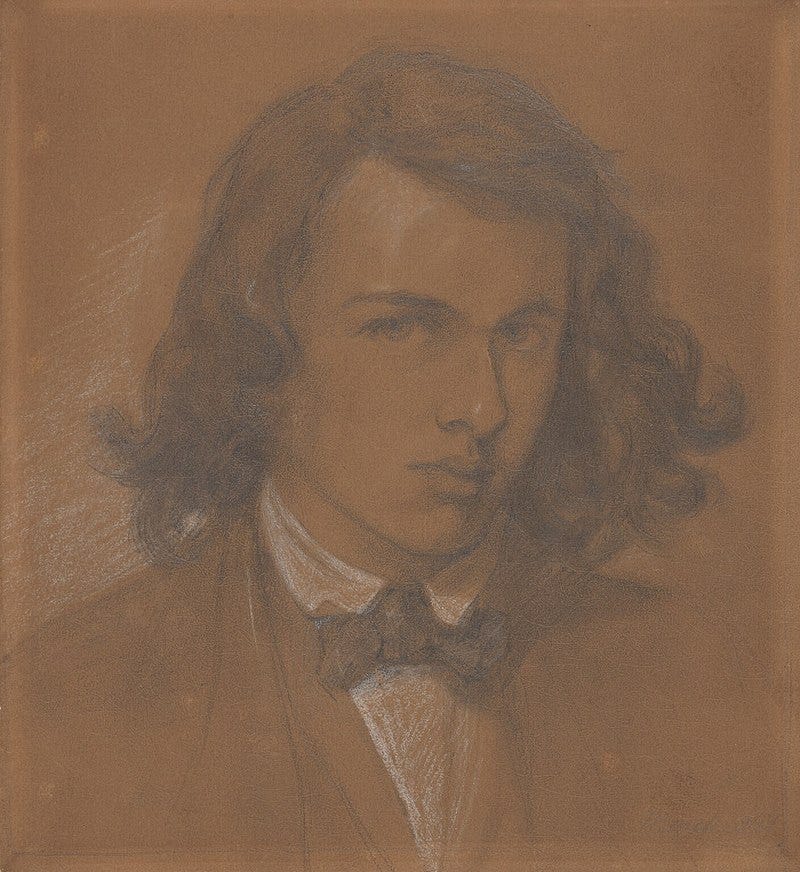
So, while it is admittedly a bit of a stretch for us to claim that this work is literally Rossetti foretelling his own death, or depicting one last goodbye with the woman who had arguably been the closest thing to a soul mate he had ever know . . . still, I can’t help wondering if there is a touch of the prophetic here.
Maybe on some level, Rossetti knew he had one last true masterpiece left in him. Or one more chance to paint the woman he adored.
And truly, what a masterpiece he left us with.
Thank you for reading Art Every Day.
No posts
Comments
Nothing yet. Say the first thing.
Sign in to join the conversation.