
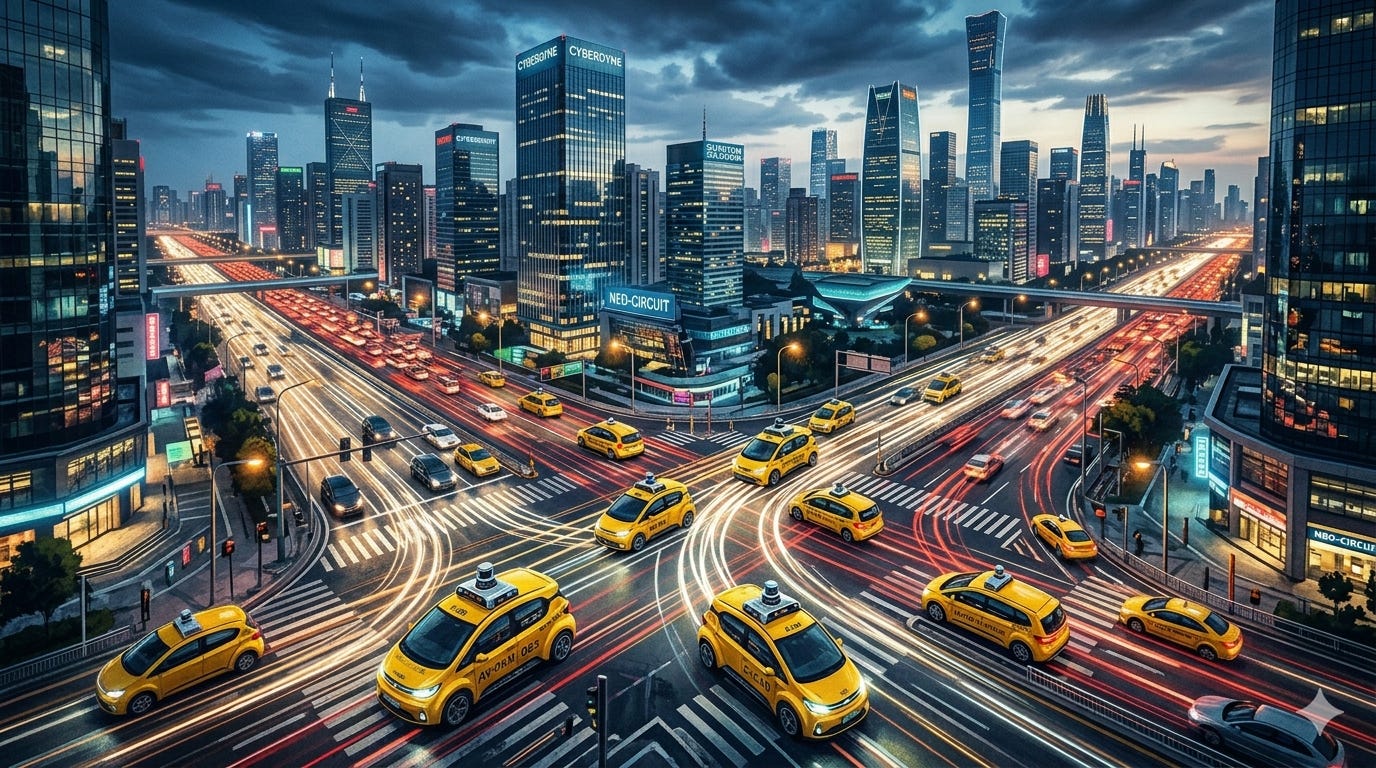
NVIDIA just drew the outline of how self‑driving actually goes mainstream. Not in a “someday” way, but in a “here’s the stack, plug your fleet into it” way.
On one side, you have new models for perception and planning that builders can download and start playing with. On another, you have a certified safety layer that’s meant to sit under serious Level 4 fleets, plus high‑performance hardware that pushes per‑vehicle costs down instead of up. Put together, this looks less like a science fair project and more like a template for turning robotaxis into a normal line of business.
China is already treating it that way. Companies like Pony.ai are rolling out new generations of autonomous kits that are dramatically cheaper than their predecessors, with normal consumer features like phone‑based unlocking, voice control and pre‑trip climate adjustments. These are not concept cars doing laps at a trade show; they’re working vehicles in major cities with fleet size targets, revenue goals and utilisation dashboards.
Meanwhile, analysts are starting to say the quiet part out loud: NVIDIA’s position in “physical AI” looks a lot like its position in datacenters. Once your fleet, your software stack and your partners are built around that ecosystem, switching isn’t just expensive, it’s politically painful inside an organisation. That’s exactly the kind of slow, boring lock‑in markets tend to underestimate at the beginning and overpay for at the end.
The part that isn’t getting enough airtime is the urban math. Robotaxis don’t get bored, don’t need to park and don’t care about rush hour, so they can just keep circulating between rides. That sounds like convenience; it also sounds like a recipe for more congestion if you suddenly drop thousands of “always on” vehicles into cities that already gridlock twice a day. Bloomberg has already flagged that large fleets may increase traffic rather than reduce it, and most city playbooks are nowhere near ready.
Inside companies, a different kind of script is running. Tech firms are announcing tens of thousands of job cuts with AI conveniently framed as the culprit, even as many post record revenues. Some leadership teams are treating AI as a permission slip to shrink headcount rather than a lever to re‑architect what their people can do. NVIDIA’s own CEO has been blunt: if you’re using AI just to cut, not to create, the real problem isn’t the model – it’s the imagination at the top.
From an Artemis lens, a few things stand out:
The “winner” narrative is a distraction. Whether a Chinese operator or a US brand gets better headlines matters less if the same infrastructure provider quietly monetises both.
The real power sits in being the layer everyone else depends on. Becoming the standard safety and compute platform for autonomous fleets is a much more durable position than running a single branded service.
The bottleneck is shifting from chips to streets. The tech is compounding quickly; governance, pricing of road space and public tolerance for constant movement are not.[thewirechina +1]
The question isn’t whether AI will replace people or drivers in a straight line. It’s who chooses to use the same technology to build more – streets, products, companies – instead of just quietly shrinking everything and calling it “efficiency.”
Sources: Daily Bite, CNBC, Bloomberg, Wire China.
No posts
Comments
Nothing yet. Say the first thing.
Sign in to join the conversation.