
In Australia, the Albanese Government confirmed the largest peacetime expansion of defence spending in Australian history: an additional $14 billion over the forward estimates and $53 billion over the coming decade. Total defence expenditure is now projected to reach $887 billion through to 2035–36. Military spending is forecast to reach 3 per cent of GDP—a fiscal tribute to the machine that dwarfs the rounding error of veteran rehabilitation.
Australia has found money for submarines. As the Department of Defence audits 67 military sites with a view to divestment, in order to pay for AUKUS.
It has not found money for Invictus Australia.
The priorities are explicit. Nuclear-powered submarines. Surface combatants. Long-range strike capability. The expansion of the Henderson Defence Precinct in Western Australia. Australia’s military future is being rebuilt around AUKUS, interoperability, and the industrial architecture of the Indo-Pacific.
In the same budget, federal funding for Invictus Australia was terminated.
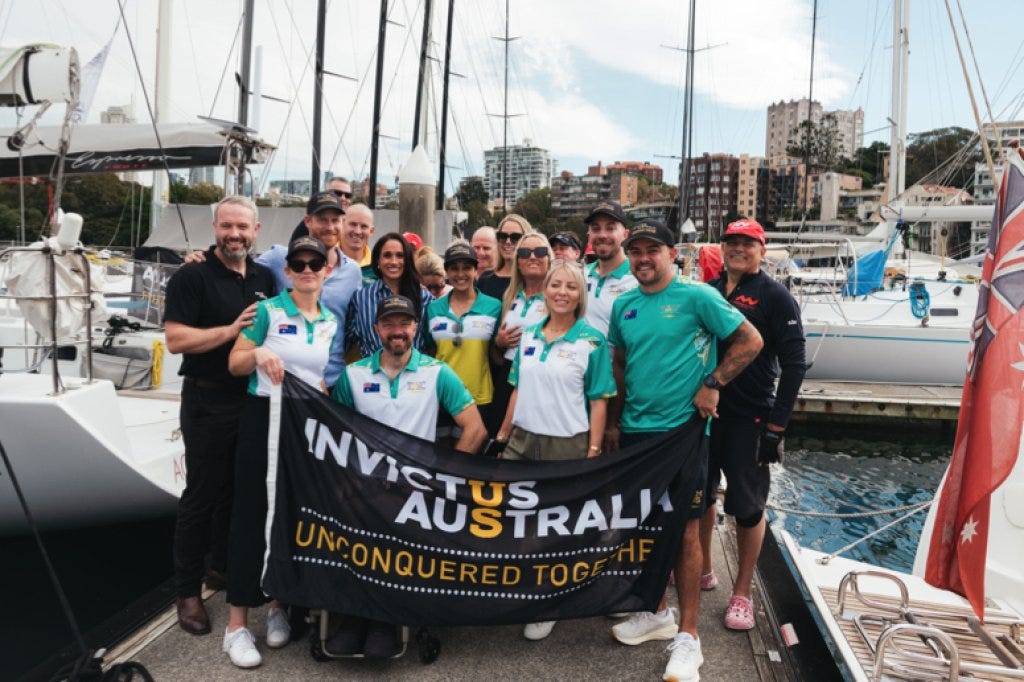
The federal government declined to renew a $9 million funding arrangement for Invictus Australia, the veteran rehabilitation organisation that grew from Australia’s participation in Prince Harry’s Invictus Games.
The money did not come from the Defence portfolio or the NDIS. It sat within the Department of Veterans’ Affairs budget and supported adaptive sport and rehabilitation programs for wounded, injured, and chronically ill former service personnel.
The contrast is difficult to miss.
Australia is preparing to spend nearly a trillion dollars building the military architecture of the future while withdrawing a comparatively modest funding stream tied to the human consequences of military service itself.
Deterrence is not merely a matter of hulls and long-range strike; it is the visible health of the society that sends them. When the state funds the capability but audits away the care, it signals a failure of national confidence. A nation that prioritizes the 'weapon system' because it no longer believes in the 'citizen-soldier'.
Invictus Australia chief executive Michael Hartung said notice was received only minutes before the budget announcement became public.
“We were deeply shocked and disappointed by the decision.” he said.
The organisation remains operational. But the language has changed.
For years, Invictus occupied protected symbolic territory. It combined military sacrifice, rehabilitation, public goodwill, and royal association. Governments did not merely fund it; they associated themselves with it. The institution carried emotional legitimacy beyond ordinary public programs.
That safeguard now appears vulnerable.
The government insists veteran wellbeing remains a priority. More than $770 million linked to recommendations from the Royal Commission into Defence and Veteran Suicide was highlighted within the broader budget framework. Yet the withdrawal of dedicated Invictus funding introduces a harder distinction between strategic capability and rehabilitative obligation.
Weapons systems expand. Rehabilitation programs compete.
This is not simply a story about Prince Harry. Nor is it entirely reducible to celebrity fatigue or public irritation with the Sussex brand, though those pressures exist.
The deeper issue is institutional.
Invictus emerged within the stabilising architecture of the Crown. The Games were founded by a working royal operating inside the discipline of monarchy itself: hierarchy, continuity, restraint, service beyond personality. That framework mattered. Royal patronage historically provided institutions with a form of symbolic insulation. It attached them to the continuity of the state rather than the volatility of individual reputation.
That position no longer exists in the same way.
Prince Harry remains the founder and public face of Invictus, but he no longer operates within the constitutional structure of the working monarchy. The organisation now stands adjacent to the Crown rather than beneath it.
Royal patronage historically provided organisations with continuity, bipartisan caution, and a degree of political insulation. Institutions associated with the Crown were often treated as extensions of national life rather than discretionary projects competing for annual funding.
That position changes once the institution becomes royal-adjacent rather than Crown-embedded.
That distinction may once have seemed semantic. It no longer does.
Invictus have entered the ordinary world of competitive funding models, political scrutiny, media volatility, and bureaucratic justification.
The language surrounding Invictus Australia reflects this shift precisely.
Officials increasingly describe its work through administrative terms: wellbeing outcomes, rehabilitation pathways, evidence-backed intervention, community participation. Invictus is being translated into the language of measurable governance.
That translation may be necessary. It may also alter the institution itself.
The irony is stark. Invictus Australia appears to have done exactly what modern governments demand from public-facing organisations. It adopted clinical frameworks. It aligned itself with measurable recovery outcomes. It integrated into veteran wellbeing systems. It produced evidence-based claims regarding prevention and rehabilitation.
Only days before the funding decision, Prince Harry and Meghan Markle visited Australia to meet members of the Invictus community. The visit generated publicity, photographs, and media attention. It did not generate institutional protection.
The message is difficult to avoid: symbolic legitimacy alone no longer guarantees fiscal protection.
This places fresh pressure on Perth Invictus Sports Festival
In October 2026, Western Australia will host the Invictus Australia Sports Festival, a reduced regional format involving Australia, New Zealand, and the Republic of Korea. The language surrounding the event has already shifted away from spectacle and toward measurable rehabilitation outcomes, adaptive sport pathways, and veteran wellbeing frameworks.
The change is not cosmetic. It reflects the new environment in which the organisation now operates.
The same government expanding the Henderson Defence Precinct and underwriting the AUKUS future has simultaneously withdrawn dedicated federal funding from one of the country’s most visible veteran rehabilitation organisations.
Australia’s defence future is being reorganised around capability acquisition and strategic integration. The human architecture surrounding that system appears increasingly required to justify itself inside managerial frameworks rather than inherited national obligation.
The old language of military service still exists. Politicians continue to speak of sacrifice, duty, and veterans “who have served our nation.”
But budgets reveal hierarchy more clearly than speeches.
The state remains willing to fund the machine.
The question now confronting Perth is whether it remains equally willing to fund the aftermath.
As Perth prepares to host its festival, it does so not as a royal mission, but as a reginal pilot required to justify its existence inside a ledger. In the cold light of the Albanese budget, symbolic legitimacy has been traded for fiscal vulnerability.
Prince Harry remains the founder and public face of Invictus. But he no longer operates within the constitutional discipline of the working monarchy. Invictus now carries the volatility attached to personality-driven public life while attempting to preserve the authority of a traditional military institution.
Invictus now occupies an unstable middle ground. It carries royal DNA without full royal shelter.
That leaves figures such as Peter Cosgrove.
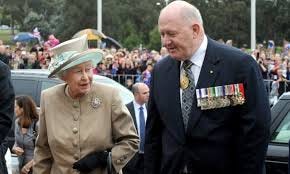
Cosgrove’s role in Invictus Australia has never been ornamental. His presence gave the organisation military legitimacy beyond celebrity and media cycles. He anchored it within the older Commonwealth language of service, duty, and institutional continuity. In Australia, few public figures carry greater trust across veterans’ communities than a former Governor-General and military commander. Cosgrove represents the "last of the institutional bridge-builders" who remember when the Crown and the Veteran were part of the same sacred architecture.
That credibility matters more now than ever.
Invictus Australia appears to have understood this before the budget arrived. The organisation has increasingly framed its work through the language governments now reward: evidence-based intervention, measurable outcomes, prevention frameworks, rehabilitation pathways, and community integration.
Yet the funding still ended.
That may prove the defining lesson of Perth.
The old Commonwealth model attached military service to a larger civic inheritance: Crown, nation, duty, continuity. The new model measures institutions through cost, delivery, integration, and administrative utility.
Perth now sits between two systems. One produced symbols and sustained a covenant. The other produces metrics and manages a budget. As the Henderson Defence Precinct expands to house the steel, the veterans of Perth will wait to see if the ledger has any room left for the soul.
By Catherine White
Comments
Nothing yet. Say the first thing.
Sign in to join the conversation.