
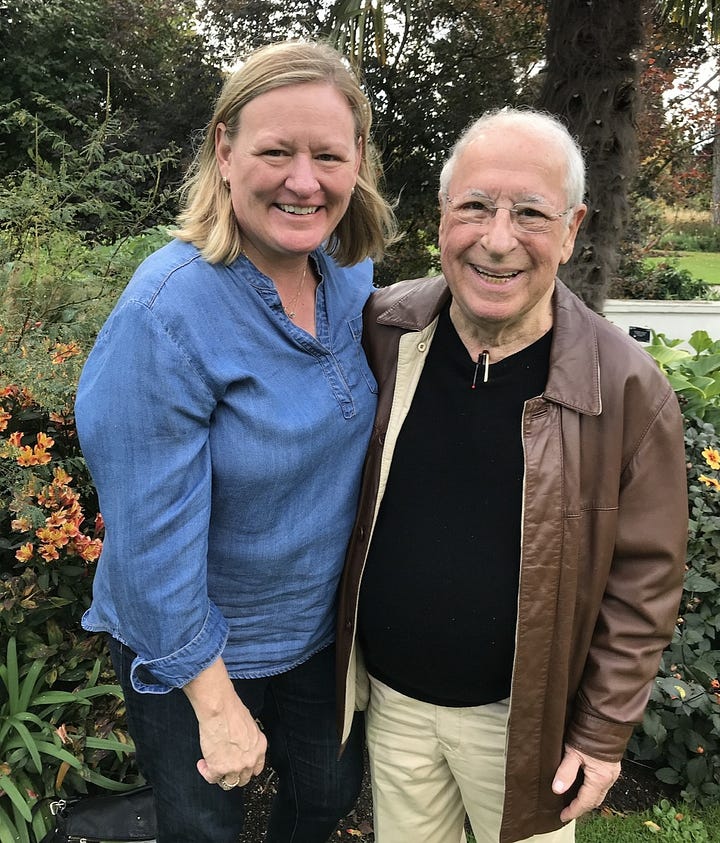
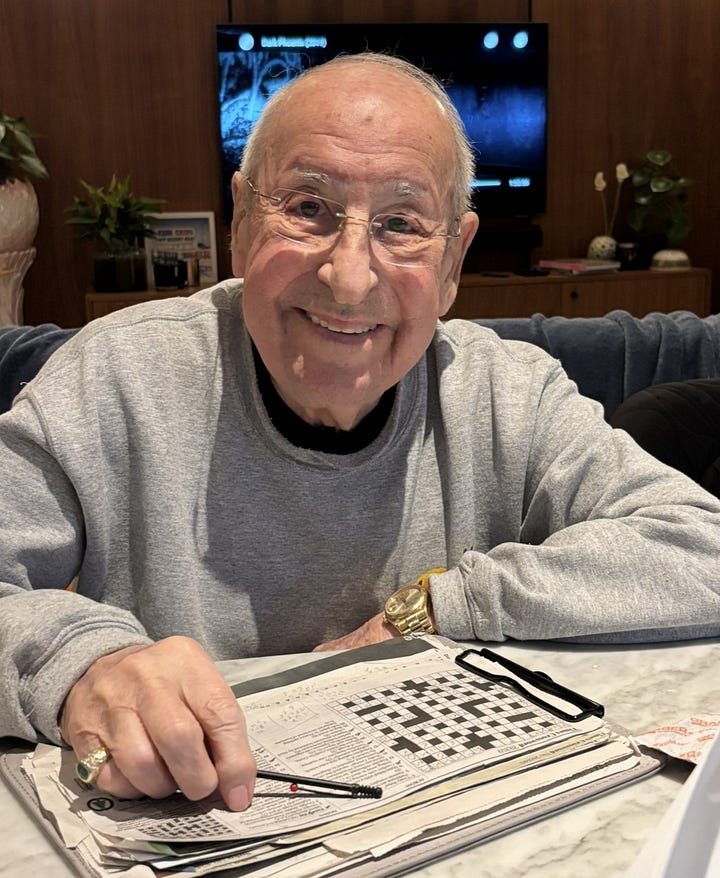
Lewis Casson, founder of the legendary fine-dining restaurant now known as Maxwell’s Beach Cafe, at Okoboji, Iowa, has died at age 88.
Lewis, who also operated restaurants in Sheldon and Spencer, Iowa, and Sioux Falls, South Dakota, over the years, opened Maxwell’s at Okoboji in 1986 and operated it with his wife, Julie Roth, until 2018, when it was sold to the current operators, Steven and Leah Jensen.
The restaurant was originally situated in the Central Emporium at Arnold’s Park and moved to its current location on the West Okoboji lakefront in the Park in 2000. The relocation seemed to call for a refinement in the name: Hence, Maxwell’s Beach Cafe.
Lewis’s trademark at Maxwell’s was building strong, ongoing relationships with his customers. He wanted to make sure his own high standards for fine dining were being met, and he wanted to know about his customers. He was a very social person. He often would sit on a stool at the end of the bar where he could see everyone who came in. Dressed in a pressed shirt and slacks, he made mental notes and soon would begin his rounds, touching every table.
To borrow a Yiddish word from Lewis’s ancestral Jewish history, he was Schmoozer in Chief at Maxwells from the day it opened until the day it was sold.
He loved a good laugh and always had a smile on his face.
Lewis’s earliest memories were of World War II and its impact in his native Liverpool, England. He remembered vividly the day the British government came to the family residence and tore down the iron fence and gate in front of the house to melt for armaments. After the war, it was the Holocaust survivors who had come to Liverpool for resettlement who drew his rapt attention.
He was the third of four children in an Orthodox Jewish family that prized education. His claim to fame from his teenage years was that he attended Quarry Bank High School for Boys in Liverpool with John Lennon. Lennon was known as a rebellious and disruptive student at Quarry Bank, which may be why, after telling of the connection, Lewis, always the gentleman, quickly would add that he did not know him.
Lewis was an avid tennis player from his youth and loved the cultural arts throughout his life – opera, classical music, art, and theater. He also enjoyed professional sports and was something of a fanatic about cryptic crossword puzzles, a kind of crossword that is popular in England. Each clue is a self-contained riddle that combines a direct definition with wordplay, such as anagrams, homonyms, homophones, and more.
He studied chemistry, biology, and languages in high school and college, trying to honor his parents’ desire that he become a pharmacist, or maybe a physician. He wanted none of that.
In 1957, at age 19, and with $300 in his pocket, he left for the United States. His mother facilitated the transition, arranging for him to live with family members in Chicago. He soon relocated to New York, where he lived with other family members and worked in a family business.
Business and its essential counterpart, numbers, it turned out, were Lewis’s occupational love and a core strength.
After about a year and a half in New York, he accepted an opportunity to relocate to Miami as a sales representative first for a wholesaler of camera equipment and supplies, then for a wholesaler of small electronics, such as microwave ovens and stereo equipment. He finally started his own business selling electronic products to retailers for manufacturers of that era, such as Panasonic.
His work in making sales calls carried him to residency around the country. After Miami, he lived in Birmingham, Alabama, San Francisco, St. Louis, and, finally, Kansas City. There, he met and married Joan Campbell, a divorcee with a young daughter. The union did not last long, but it produced two children, David and Jenine.
Joan was from Humboldt, Iowa, where her father and uncle were bankers. It wasn’t long before the uncle mentioned that there was a restaurant for sale in Sheldon that was upside down financially. Lewis had had some restaurant experience in Kansas City as an investor in a nightclub there. He also was ready for a change, having become unhappily bored with sales.
Part 2 of Lewis’s business career was about to begin.
He moved to Sheldon as owner and operator of the Iron Horse Restaurant in 1981 and eventually added a motel to the property to serve business travelers and attract transient diners.
Then another financially distressed restaurant, Maxwell’s, in Spencer, came on the market, and Lewis bought that as well.
When yet a third financially distressed restaurant, this one in the Emporium at Okoboji, became available, Lewis was reluctant to move on it. His staff, with whom he always maintained a close relationship, told him it would be crazy for him not to do it, however, and they vowed to work with him to make it a success.
There was little time. It was close to Memorial Day weekend, opening day for the summer, but Lewis and the staff were ready to open the door on May 15. It was a smash success from Day 1.
In the late 1980s, Lewis and a partner also opened a restaurant in Sioux Falls, The Northlander, near 57th and Minnesota, which ultimately was destroyed by fire. A downtown Sioux Falls restaurant, also named Maxwell’s, followed, but was closed after a couple of years due to a construction project on the property.
Lewis sold the Iron Horse in Sheldon in about 1993 and settled in with Julie to operate a single restaurant, Maxwell’s Beach Cafe.
Lewis met Julie at the Iron Horse in Sheldon, which is near where she grew up. Their relationship grew over the years. Ultimately, they became life and business partners. They were married in 1999 at the elegant and historic Kew Gardens in London, the largest and most diverse botanical gardens in the world. It was a good fit for a relationship that had long been in bloom.
They traveled the world – Australia, New Zealand, Israel, Jordan, Peru, South Africa, and most of the European countries – and Lewis instilled his love of travel in his children.
Lewis died on April 16 at Holy Cross Hospital in Fort Lauderdale, Florida, following a fall in which he hit his head, and the onset of pneumonia.
He was a fascinating man who led an interesting life.
Over the years, as he would read remembrances of people of note who had lived into their 80s and beyond, he would comment on them, using a sports metaphor. “That’s a pretty good swing at bat,” he would say.
Yes, Lewis, that was a pretty good swing at bat.
. . . a part of the Iowa Writers’ Collaborative, which represents more than 60 professional writers with Iowa roots. My goal today was to provide an enjoyable, informative, or worthwhile reading experience – ideally, two or three of these things. Although my subject matter is widely varied in an increasingly specialized Substack world, I hope you may view this diversity as added value that promotes thought. But I digress. This newsletter is and will remain free. Which makes me all the more appreciative of those who choose to contribute. I am deeply grateful for such entirely voluntary support. In response, I will give all net proceeds to nonprofit organizations that promote freedom of speech or cover local news in the Midwest. As a paid subscriber, you are thus encouraging me to continue writing so that both of us may effect some overall good for our society. Best wishes and happy reading.
No posts
Comments
Nothing yet. Say the first thing.
Sign in to join the conversation.