
During the 77 years since the founding of Israel, an estimated 150,000 American Jews have relocated to Israel.
That’s an average of about 2,000 a year, except that the annual number appears to have started much smaller, increasing to roughly 3,500 to 4,000 a year over the past decade, according to Nefresh B’Nefresh, an organization that facilitates making Aliyah. (The word is Hebrew for ascent or ascension, and the phrase references the act of a Jew relocating to Israel.)
The pace seems likely to continue, if not grow, considering the horrific increase in violent antisemitism in America, especially in the largest cities. Also, for some American Jews, the U.S.-Israeli war against Iran has prompted immigration to Israel, according to a recent article in The Jerusalem Post. “There’s a hunger to be with their fellow Jews during the war with Iran,” the article stated.
Nancy Coren and her husband, Charlie, made Aliyah from Lincoln, Nebraska, in 2020, a year in which the resettlement of American Jews in Israel spiked as a result of COVID.
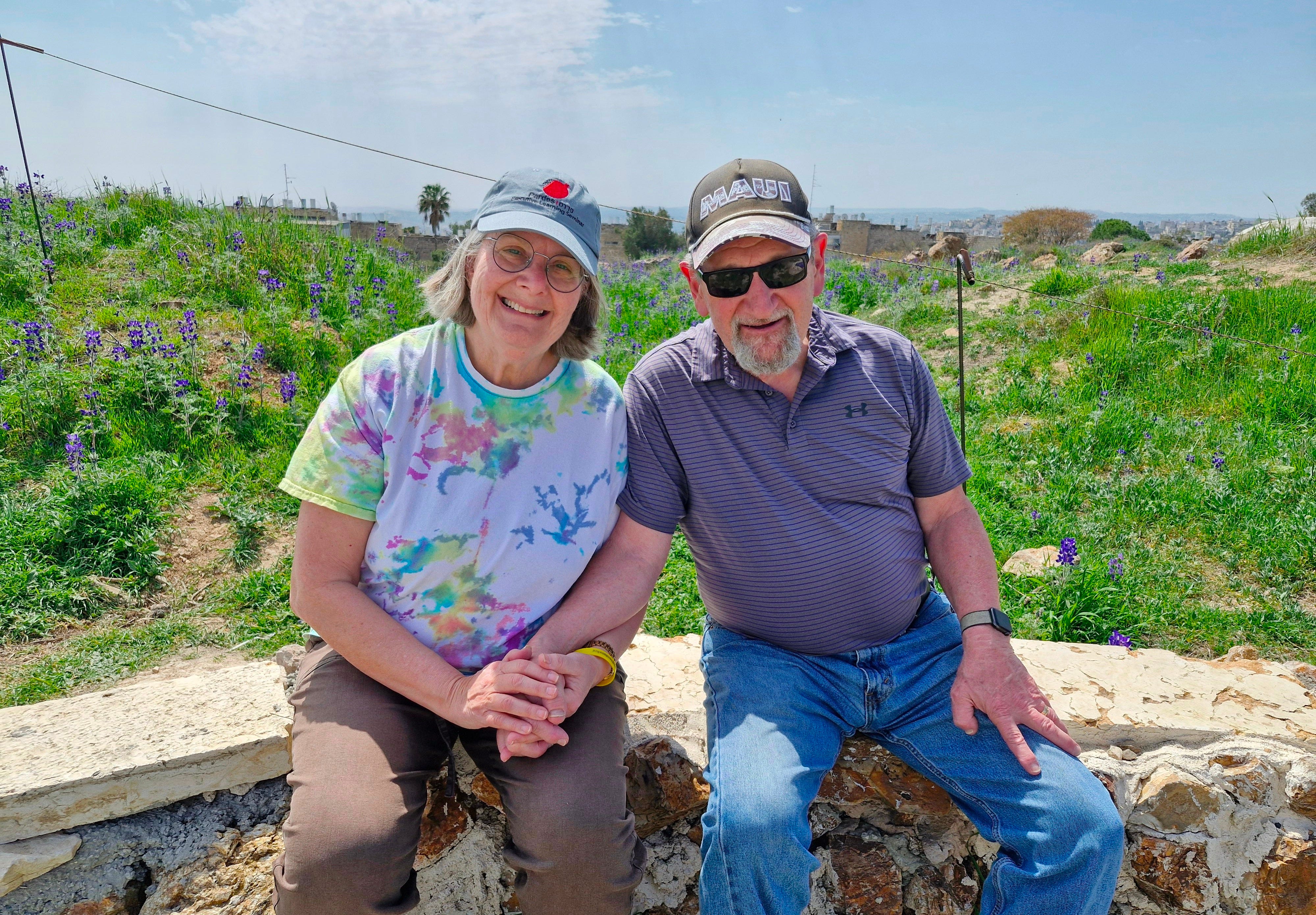
I met Nancy years earlier when she was a student in the Sunday School class I was teaching at Tifereth Israel Synagogue in Lincoln, my hometown; this was the early 1960s, when I was in college.
We reconnected years later when our paths crossed during my return visits to Lincoln for family events at a time when she was a wife, mother, teacher, and the religious leader of that congregation.
Nancy said in an interview that she dreamed about making Aliya for 50 years before finally taking the step. “I always wanted to do it when I was 21, 22, 23 years old, but it didn’t happen,” she said.
The move to Israel, specifically, Jerusalem, was timed well in one respect, however. It brought Nancy and her husband together with their son and his family, who had lived in Jerusalem for a number of years. Nancy and her husband thus have five grandchildren, now ages 10 to 22, close at hand. Nancy’s brother and his family also live in Jerusalem.
One noticeable difference compared with Jewish life in the U.S. is the greater threat of antisemitic violence in the U.S. “There’s more of a sense that the state wants to protect you” in Israel, Nancy said.
In the U.S., where virtually anyone who wants guns easily can get one – or more, synagogues generally have to be protected with sophisticated security systems, and often, armed guards. In contrast, few people in Israel are allowed to have guns unless they are members of the Israeli Defense Force. “It is really, really difficult to get a legal license to have a gun” in Israel,” she said.
Israel is a tiny country, about the size of New Jersey, and has been under attack or at war repeatedly during its relatively short history as an independent nation.
Despite this reality, however, Nancy said the country has worked hard trying to “make sure that its public is aware and safe.”
That was especially apparent, she said, during the 12-day war in June 2025, when Israel and the U.S. bombed Iran’s uranium enrichment sites – where nuclear weapons were being developed – and Iran, in turn, attacked Israel with missiles. It was 12 days of ongoing attacks on Israel by Iran.
Cell phones would flash telling people when to seek cover in safe rooms or shelters. “If you’re on the streets, there are signs, go this way, go that way, and you know exactly where to go,” she said.
During this time, Nancy and her husband needed to do some shopping at an outdoor market. She said she was nervous and planned the walk to the market carefully. “I’m like, we’re gonna walk this direction because there are three shelters on the way . . . If the alert goes off and we’re headed that way, there’s an underground shelter two blocks away. We can make it there in five minutes.” Sure enough, the alert did go off, signaling a five-minute warning, and they made it to the shelter.
Once in the shelter, everyone had apps on their phones telling them what to do. “You’ve got the government making sure you know what to do, that you’re not left undefended… There’s a lot of trust in that,” she said.
Nancy said that virtually all newer apartment buildings in Israel have safe rooms in the individual apartments or group shelters in the buildings. Their apartment in downtown Jerusalem is in a building with about 60 apartment units, each with its own safe room.
The safe room is constructed of concrete and has one window with a steel plate that goes over it and attaches to the concrete wall. The window has not been open since October 7, 2023, she said, when Hamas terrorists massacred 1,200 Israeli civilians, abducted 250 more, and triggered the lengthy war in Gaza.
One time, when she, her husband, and their granddaughter were sleeping in their safe room, which also functions as a bedroom, a bomb exploded nearby. The blast shook their entire apartment, she said.
During such times, care also needs to be taken in planning for such personal needs as a shower, she said. You don’t want to be caught in the shower when the alert goes off, or, worse, when the siren sounds, which means a 90-second warning. Happily, however, there’s an app for that, indicating times when the risk of an attack is relatively low. “OK, I can take a shower now,” she said.
One of the attractions of Israel is that it provides substantial benefits for Jews who make Aliyah. These include:
Health care – It is “provided for everybody, and it’s very proactive,” Nancy said. There are four or five different providers, and you pick the one you want. The first year [after making Aliyah] was free, and then billing occurs quarterly, “but you barely see it. Medications are just cheap. You barely, barely, barely see it.” When her husband had a “stroke event” and was hospitalized for three days for care and tests, there was no bill, she said.
Transportation – Bus and train travel anywhere in Israel is free for people over age 65.
Language assistance – Those who make Aliyah can take Hebrew classes at state-run language schools for 10 years, at no cost. Nancy could read and translate Hebrew when she moved to Israel, but she was not as fluent or as grammatically correct as she wanted to be in speaking. In addition to the availability of language classes, someone was assigned to assist her individually with Hebrew grammar. “He would call once a week…to have a conversation with me in Hebrew and help me.” Ultimately, she developed her fluency related to daily needs, such as being able to talk with a plumber or an electrician.
Individualized assistance in adjusting to life in Israel – Shortly after settling in Jerusalem, Nancy got a call from a man employed by the city. “I’m here from the city, and if you have questions, you can ask me,” he said. So, when she could not figure out how to pay her city taxes online, she called the man. He walked her through the process and stayed with her on the phone while she was doing it. “I’m sorry it took so long,” she said, and he responded, “You’re better than my mother would have been. Don’t worry about it.”
Rental assistance – The Israeli government provides rental assistance for five years for those who make Aliyah. The amount decreases each year. The money is deposited directly in the recipient’s bank account each month.
Nancy concedes that younger American Jews who make Aliyah while they are still working may face more challenges in adjusting to life in Israel than she did, especially learning the language quickly enough.
But for those who are retired, like Nancy and her husband?
“I gotta tell you,” she said, “It’s a good life. It’s a very good life.”
. . . a part of the Iowa Writers’ Collaborative, which represents more than 60 professional writers with Iowa roots. My goal today was to provide an enjoyable, informative, or worthwhile reading experience – ideally, two or three of these things. Although my subject matter is widely varied in an increasingly specialized Substack world, I hope you may view this diversity as added value that promotes thought. But I digress. This newsletter is and will remain free. Which makes me all the more appreciative of those who choose to contribute. I am deeply grateful for such entirely voluntary support. In response, I will give all net proceeds to nonprofit organizations that promote freedom of speech or cover local news in the Midwest. As a paid subscriber, you are thus encouraging me to continue writing so that both of us may effect some overall good for our society. Best wishes and happy reading. You can subscribe or upgrade to paid with the button below.
No posts
Comments
Nothing yet. Say the first thing.
Sign in to join the conversation.