
This is the second of five newsletters tied to the 250th anniversary of the birth of America. Each newsletter will summarize and explain key events during a 50-year timeframe.
Permanent British settlement in what is now America began in 1607, more than a dozen years before the Pilgrims arrived at Plymouth Rock. The settlement was situated at Jamestown, near the present-day city of Williamsburg, Virginia.
The arrival of slavery was not far behind.
In the late summer of 1619, the White Lion, a privately owned ship sailing under the British flag, cruised into the mouth of the James River in Virginia. A Jamestown colonist by the name of John Rolfe documented the arrival in his journal.
The ship’s cargo: some 20-plus Africans to be sold into slavery at farms in the area.
The number grew slowly at first. But steadily. And progressively. A few hundred a year. A few thousand a year. Ten thousand a year, then 50,000, and 100,000. By the beginning of the first decade of America’s second 50 years, the number of slaves in the U.S. was growing by half a million in one year, all as a result of the birth rate among the slaves. The importation of slaves had been made illegal in 1808.
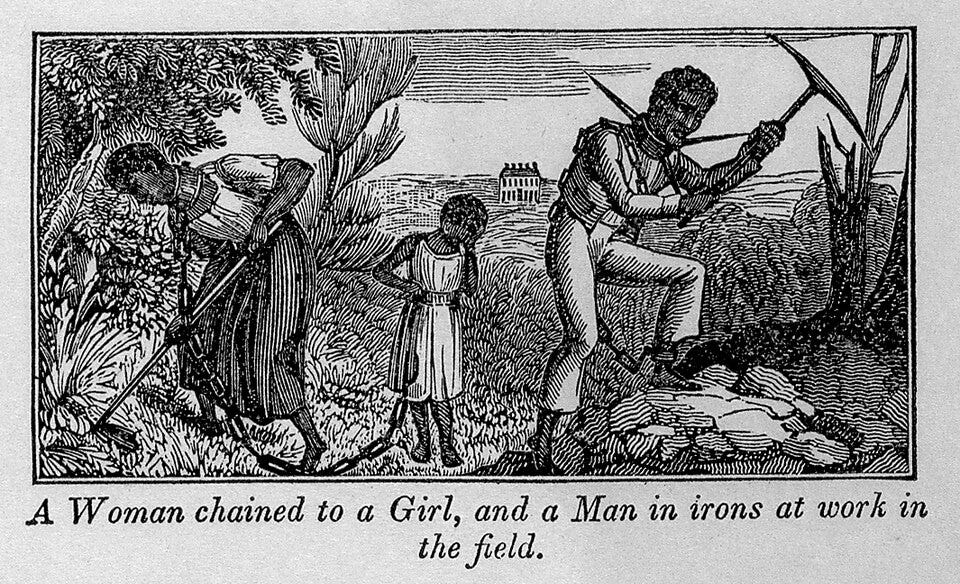
In 1860, with 4 million slaves being held in servitude, largely in the South, Abraham Lincoln ran for president on a platform of no more expansion of slavery in America. He won, even though he got just 40 percent of the popular vote. But with three other candidates in the race, the results were splintered in unusual ways. Lincoln barely won some of the larger Northern states, but did not even have his name on the ballot in 10 Southern states. The Electoral College vote easily put Lincoln over the top with almost 60 percent of the vote.
Within a month of his inauguration, seven of the nation’s 34 states seceded, eventually to be joined by another four states. The nation was at war. With itself. The Civil War, the bloodiest, deadliest war in American history, had begun. The death toll would reach 620,000, a startling 2 percent of the nation’s population.
The Confederate States of America, which comprised about one-third of the nation’s population, was mostly dominant in battle against the North for almost two years. Eventually, the balance tipped to the North, however.
The Battle of Gettysburg, July 1-3, 1863, grew out of an attempt by the South to invade the North. The South was defeated in a definitive turning point in the war for the North.
The numbers at Gettysburg, however, were staggering on both sides. The South brought 82,000 men to the battle against 75,000 men from the North. The South sustained 3,903 fatalities; the North, 3,155.
Initially, Lincoln’s goal in the Civil War had been reunification. But as the war progressed, many slaves began finding their way to freedom, often by running away and heading North.
On September 22, 1862, Lincoln issued a proclamation announcing that all slaves in the Confederate states would be freed on January 1, 1863. The document would have been meaningless had the North not won the war, but it did rally support in the North at a critical time. Suddenly, the war became a moral issue.
The Emancipation Proclamation was published on the promised date and further stirred support in the North, although it also had its critics, given the strong feelings on both sides of slavery. Ultimately, however, the action aged well. In 1962, on the centennial of its initial publication, Dr. Martin Luther King, Jr. placed it alongside the Declaration of Independence in terms of importance.
Still, the war proceeded for another two years. Richmond, Virginia, the capital of the Confederacy, fell to the North on April 2-3, 1865. The South hoped to find supplies and regroup at Appomattox Station in Virginia, and then head back into battle. The North, however, chased the South as it headed for Appomattox, ultimately managing to circle General Robert E. Lee’s forces and reach Appomattox first.
When Lee and his men finally reached the Courthouse in Appomattox, he realized that he was surrounded by the North. An attempt to fight his way out failed, and he suddenly understood that his situation was hopeless. He surrendered to the North’s General Ulysses S. Grant at the Courthouse on April 9, 1865. A series of surrenders by other Southern generals soon followed. The war was over. The North had won.
Five days later, however, on April 14, a southern sympathizer, John Wilkes Booth, made his way to Ford Theater in Washington, where the President and his wife were attending a play. Booth burst into the Presidential box and shot Lincoln in the head. The President died the next day, the first American President to be assassinated.
Vice-President Andrew Johnson was immediately sworn in. That wasn’t the way Booth’s attack had been planned, however. A companion would-be assassin was supposed to shoot Johnson as well — but lost his nerve.
Booth, on the run, was shot and killed on April 26 in Caroline County, Virginia, about 50 miles south of Washington, D.C.
One of the side benefits of the Civil War, in terms of importance for the future of the United States, was that after the secession of the 11 southern states, their elected members of the House and Senate, mostly Democrats, resigned.
This opened the door for Lincoln’s party, the Republicans, to gain firm control of both houses of Congress.
Some of the most progressive legislation that the Republican Party wanted suddenly became passable.
Two of the most notable new laws were the Homestead Act and the Land Grant College Act.
These two laws had a dramatic, long-term impact on America and its people. One of them opened up farmland ownership for anyone willing to stake a claim for 160 acres, live on the land, and improve it for a period of time. In turn, they would automatically receive ownership of the land within a few years.
The Homestead Act enabled 1.6 million people – usually families – to become landowners at no out-of-pocket cost between 1863 and 1986.
The Land Grant College Act opened higher education to millions of students nationwide. There is at least one land-grant college in every state, most of them known as state universities. They focused on agriculture, engineering, and contributing to economic development. They were intended to provide a college education for the working class and farmers. In more recent years, the focus of these colleges and universities has broadened substantially to include such fields as science, technology, and health care. During their first 100 years or so, tuition at these colleges/universities was relatively modest, making them affordable for the masses.
The Emancipation Proclamation, the Homestead Act, and the creation of land grant colleges and universities – freedom, land ownership, and higher education. Not a bad trio of major accomplishments. It would impact the country far into the future.
But wait, there was one more item in the major-accomplishment category. The era of mechanized long-distance travel in America began in 1830 with the first scheduled rail passenger service across southern South Carolina, from Charleston toward Augusta, Georgia, about 150 miles.
The railroads grew rapidly. By 1850, trains ran at up to 50 miles an hour, and there were 9,000 miles of track in the U.S.
All in all, the railroads were a major transformation in travel for people and the movement of goods – an enormous leap forward from the 30 miles-a-day limit for travel by horse and wagon.
Congress passed the Transcontinental Railroad Act in 1862, and the 1,911-mile rail line linking Omaha, Nebraska, and the California coast to existing rail lines in the eastern half of the country was completed in 1869. The simultaneous eastbound and westbound rail line construction projects came together at Promontory, Utah, where the final spike – a 17.6-karat golden spike – was driven into the line. It then was removed for permanent display at Stanford University and replaced with an iron spike.
As America’s second 50 years drew to a close, there were more than 50,000 miles of rail track crisscrossing the country, with more track being laid every year. How much? See Part 3 of this series.
The railroads literally brought America together – from Atlantic to Pacific, from Canada to Mexico.
Finally, Indians, the native people of this land, had been overrun by the European settlers, who began arriving in the New World in the early 1600s. As America’s second 50 years of existence was drawing to a close, however, the Indians made a statement about their place in this new country.
In the summer of 1876, three Indian tribes gathered in Western South Dakota to stand their ground as the American government decided to toss aside a treaty that had given the Indians control of this region. The discovery of gold in 1874, in the Black Hills had somehow changed the U.S. government’s thinking about the region.
General George Custer led the Seventh Cavalry, at least 600 men, toward the Indian encampment. He split his force into three battalions as he approached the Indian village. One battalion attacked at the south end of the settlement. Another blocked escape routes from the settlement. Custer personally kept command of the third group, 210 men, to attack from the north at the heart of the village.
Custer drastically misjudged the situation, however. The Indians were standing ready, 10,000 strong.
It would go down in history as the Battle of Little Bighorn and Custer’s Last Stand. Custer and all 210 of the men under his direct control died at Little Bighorn on June 25, 1876.
Unfortunately for the Indians, however, they won the battle but lost the war. The U.S. had the military forces needed to overpower the Indians and used it, ultimately forcing them off the open plains and onto reservations.

Next: America’s third half-century – Jim Crow laws, World War I, the Industrial Revolution, immigration and urban development, the automobile.
Arnold Garson, Second Thoughts is . . .
. . . part of the Iowa Writers’ Collaborative, which represents more than 60 professional writers with Iowa roots. My goal today was to provide an enjoyable, informative, or worthwhile reading experience – ideally, two or three of these things. Although my subject matter is widely varied in an increasingly specialized Substack world, I hope you may view this diversity as an added value that promotes thought about a wide range of issues. But I digress. This newsletter is free. Which makes me all the more appreciative of those who choose to contribute. I am deeply grateful for such entirely voluntary financial support. In response, I will contribute net proceeds to nonprofit organizations that promote freedom of speech or cover local news in the Midwest. As a paid subscriber, you are thus encouraging me to continue writing so that both of us may effect some overall good for our society. Best wishes and happy reading. You can subscribe or upgrade to paid with the button below.
Comments
Nothing yet. Say the first thing.
Sign in to join the conversation.